
Introduction
When you search “tennis courts near me,” you want more than a pin on a map. You want a court that plays true. You want one that drains well and holds up over time. Proximity matters, but surface quality decides whether your visit feels worthwhile. A court five minutes away can still disappoint you with a cracked, uneven surface. Meanwhile, a slightly longer trip often rewards you with a smoother, better-maintained finish.
This guide answers the question properly. It explains what makes a nearby court genuinely good. It covers how surface types differ, and what facility owners should check before building or resurfacing one. Along the way, you’ll learn how synthetic acrylic systems shape the modern game. You’ll also see why so many clubs now choose acrylic over traditional alternatives. Whether you’re scouting local courts or planning a new facility, this article gives you the full picture. By the end, you’ll understand exactly what separates a genuinely great court from an average one nearby.
What “Tennis Courts Near Me” Really Means for Players
Most players type this phrase hoping for a simple list of nearby venues. However, the real question underneath runs deeper. Players actually want to know which nearby court offers the best playing experience. That distinction changes how you should evaluate your options entirely.
Location Convenience Isn’t Enough
A court’s location only solves half the problem. Travel time matters, especially on a tight schedule. Still, a short drive to a poorly maintained court rarely beats a longer trip to a well-kept one. Consider these practical factors together:
- Distance and travel time from home, work, or your usual route
- Booking availability, and whether the venue accepts walk-ins
- Operating hours, including early morning or evening slots
- Parking and access, particularly at busy urban clubs
- On-site amenities, such as lighting, seating, and changing rooms
Weigh these practicalities against the factor most players overlook: the surface itself. Convenience gets you to the court. Surface quality determines whether you enjoy playing on it.
Surface Quality Defines the Experience
Every serve, rally, and sprint depends on how the court responds underfoot. A high-quality acrylic surface delivers consistent ball bounce and predictable footing. It also reduces strain on your knees and ankles over time. A degraded surface does the opposite. It produces uneven bounces, unpredictable traction, and a higher risk of slips.
Therefore, when comparing courts near you, look past the map pin. Ask about resurfacing history and drainage performance. Ask about general upkeep too. These details reveal far more about your future experience than distance alone.
Why This Search Term Matters More Than You Think
“Tennis courts near me” sounds like a simple local search. In reality, it reflects a genuine gap many players face. Court quality varies enormously even within a few kilometres of any given address. One club might resurface every few years, while another delays maintenance far too long. Understanding this variation helps you make smarter choices, rather than settling for the closest option by default.
How Search Results Can Mislead You
Map listings rarely mention surface condition or recent maintenance history. A venue can rank highly for proximity while still offering a tired, worn-out court. Photos on a listing page often show the facility soon after construction, not its current state. Therefore, treat search results as a starting point rather than a final answer. Call ahead, read recent reviews, and ask specific questions about surface upkeep. This extra step takes minutes but saves you from a disappointing first visit.
Types of Tennis Court Surfaces You’ll Find Nearby
Not every court near you uses the same material. Surface type shapes ball speed, bounce height, and even injury risk. Understanding these differences helps you choose wisely. Four surface families dominate the sport worldwide: clay, grass, hard courts, and cushioned acrylic systems.
Clay Courts
Clay courts produce a slow, high-bouncing game that rewards patience. Red clay and green clay, often called Har-Tru, both fall into this category. Clay requires regular watering, rolling, and line-sweeping to stay playable. This maintenance schedule makes clay demanding for smaller facilities to manage. Many players still love the sliding footwork clay allows, particularly on European club courts.
Grass Courts
Grass produces the fastest, lowest bounce of any surface available today. Wimbledon remains the most famous example of a grass court. However, grass appears far less frequently at the local level. It demands intensive mowing, watering, and reseeding throughout the season. As a result, few public or club facilities near you will likely offer grass courts.
Hard Courts and Acrylic Systems
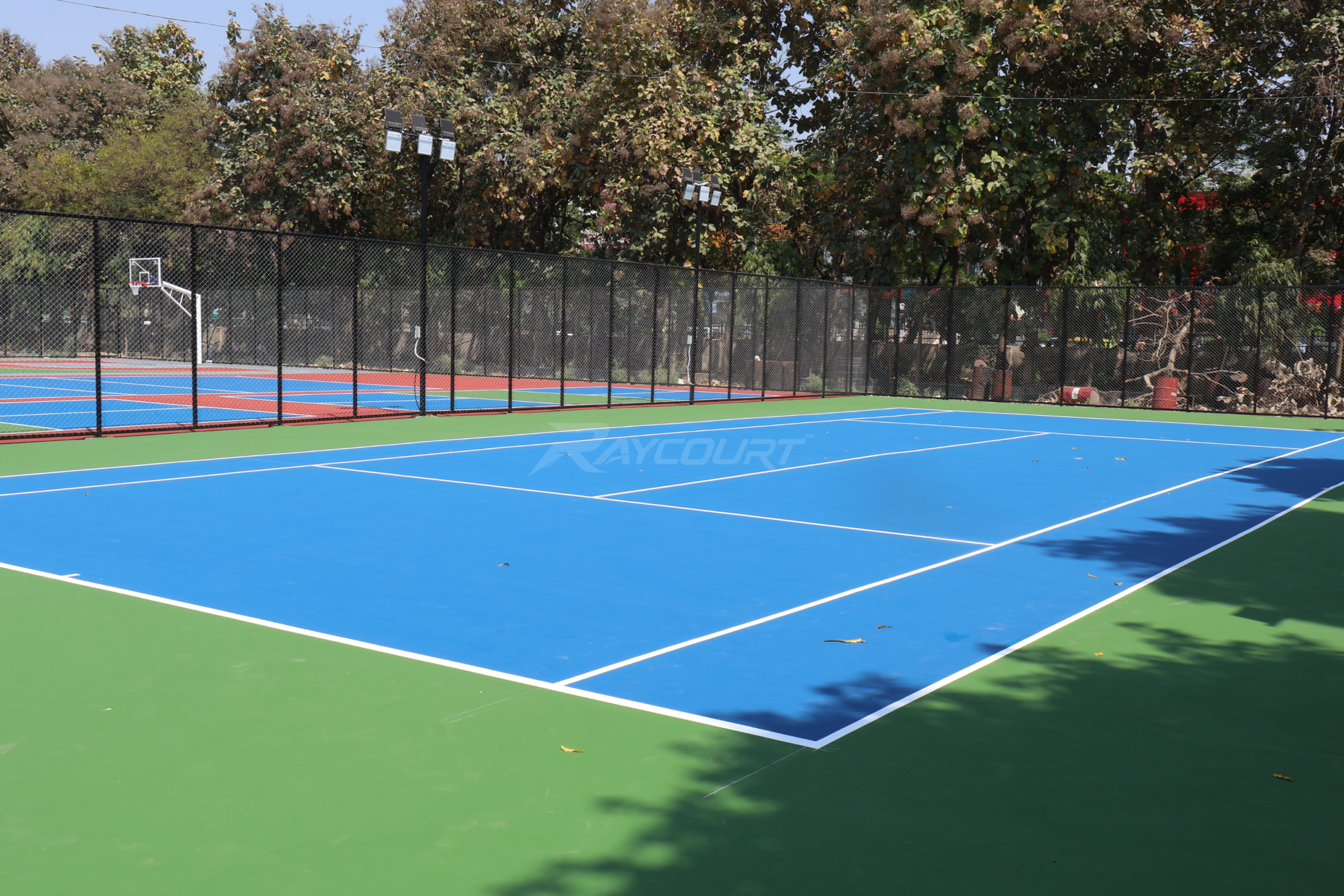
Hard courts dominate public parks, schools, and most private clubs. Builders typically construct a concrete or asphalt base first. They then apply a synthetic acrylic coating system on top of it. This acrylic layer controls colour, texture, cushioning, and most importantly, ball pace. Hard courts strike a practical balance overall. They offer moderate speed, manageable maintenance, and strong resistance to weather.
Cushioned Acrylic Systems
Within the hard-court family, cushioned acrylic systems add an extra layer of comfort. Builders apply rubber or foam-based coatings beneath the standard acrylic finish. This cushioning reduces impact on joints during long training sessions. It matters most for players who train frequently or manage existing joint sensitivity. Many academies now specify cushioned systems for exactly this reason.
Comparing Surface Types at a Glance
| Surface Type | Ball Speed | Maintenance Demand | Weather Durability | Typical Setting |
|---|---|---|---|---|
| Clay | Slow | High | Moderate | Clubs, academies |
| Grass | Fast | Very High | Low | Elite tournament venues |
| Hard (Acrylic) | Medium | Low to Moderate | High | Public parks, clubs, schools |
| Cushioned Acrylic | Medium | Low to Moderate | High | Academies, premium clubs |
This comparison shows why acrylic-coated hard courts appear so often near residential areas. They combine reasonable upkeep with strong resistance to sun, rain, and daily traffic.
Indoor vs Outdoor Courts Near You
Your search results likely include both indoor and outdoor venues. Each option brings distinct advantages worth weighing carefully before you commit.
Indoor Court Considerations
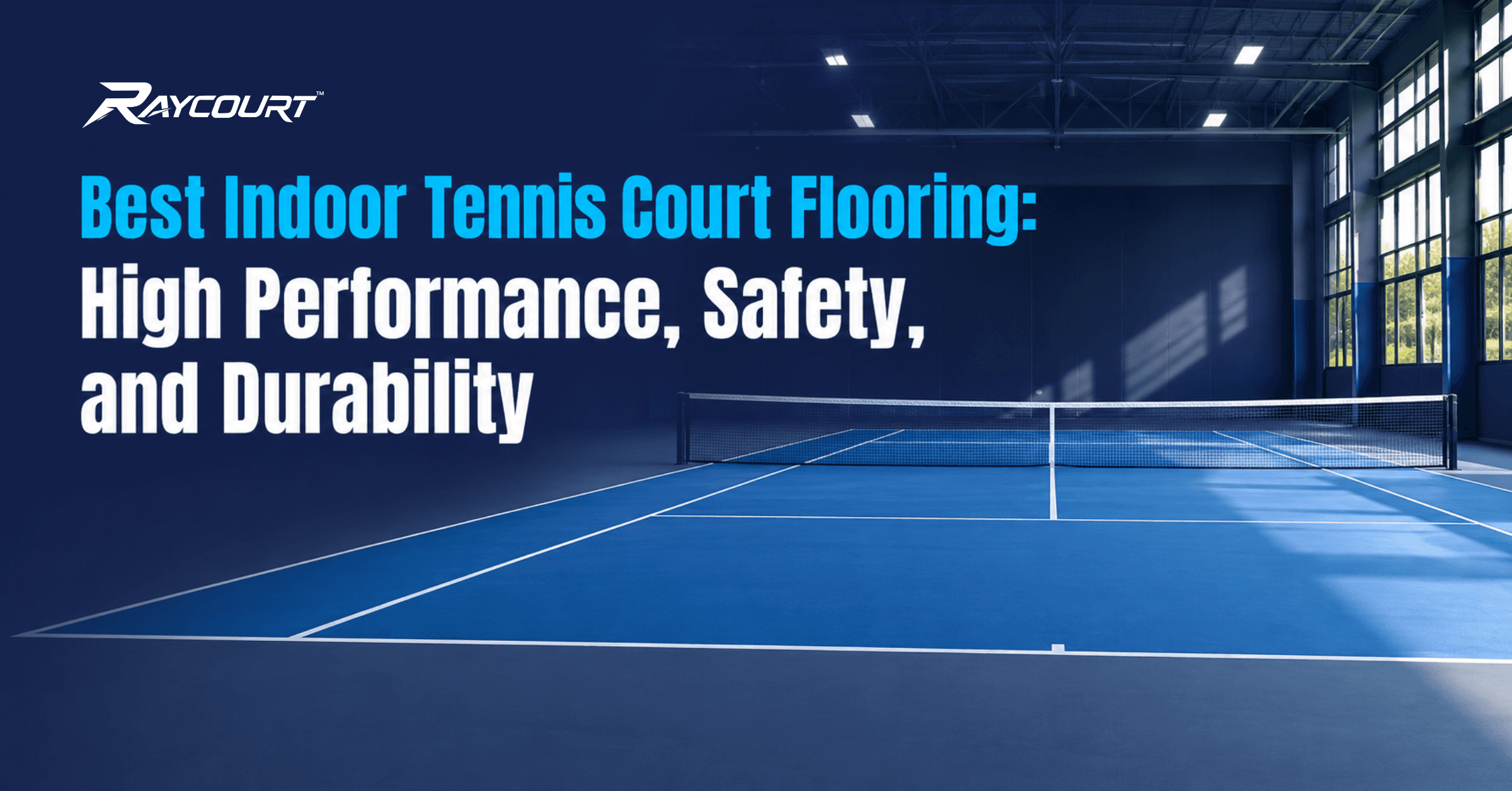
Indoor courts protect players from wind, rain, and direct sun exposure. This protection allows year-round play regardless of local weather patterns. However, indoor facilities often rely on synthetic sheet flooring or acrylic-coated hard surfaces. Lighting quality becomes especially important indoors, since natural light disappears entirely. Ask whether the facility uses even, glare-free lighting across the full court.
Outdoor Court Considerations
Outdoor courts offer natural light and open-air conditions many players prefer. They also depend heavily on weather-resistant acrylic coatings to stay playable. Wind can affect ball flight more noticeably outdoors, which changes strategy slightly. Additionally, outdoor courts need stronger UV protection to prevent premature fading. Ask about the coating’s weather resistance before committing to regular outdoor play.
Frequently Overlooked Court Features
Surface quality matters most, but several smaller features shape your overall experience too. Facility owners who invest in these details usually invest in surface upkeep as well.
Lighting Quality for Evening Sessions
Even lighting across the full court prevents shadowed patches near the baseline. Poor lighting hides ball trajectory and increases the risk of missed shots or falls. Ask whether lighting covers the entire playing area evenly, not just the net area.
Fencing and Wind Screens
Solid fencing keeps balls contained and reduces interruptions during play. Wind screens attached to fencing also reduce gusts that affect ball flight outdoors. Facilities near open fields or coastal areas benefit most from proper wind screening.
Shade and Seating
Shaded seating areas make waiting between sets far more comfortable. This feature matters especially during hot afternoons or long club sessions. While it doesn’t affect surface performance directly, it does affect your overall enjoyment of a venue.
Ready to build a court that performs for years to come?
Connect with Raycourt for sports flooring systems built for your project.
Why Synthetic Acrylic Surfacing Leads Modern Court Construction
Synthetic acrylic systems now dominate new court construction across most regions. Several practical advantages explain this shift clearly. Understanding them helps you appreciate what separates a great local court from a mediocre one.
Consistent Ball Bounce and Playing Speed
Acrylic coatings allow manufacturers to fine-tune texture through sand and aggregate content. A rougher texture slows the ball down noticeably. A smoother finish, by contrast, speeds play up considerably. This tuning gives facility owners real control over the experience they offer. Consequently, two acrylic courts can feel quite different depending on the formulation used.
Expert Tip: Before booking regularly at a new court, hit a few practice serves first. Consistent bounce height across the service boxes signals a well-applied acrylic system.
Weather Resistance Built for Durability
Outdoor courts face constant exposure to sun, rain, and shifting temperatures. Quality acrylic coatings resist UV degradation, which prevents premature fading and chalking. They also resist water penetration when applied correctly over a properly sloped base. This resistance extends the court’s usable life considerably. It also reduces how often owners need to schedule resurfacing work.
Customisation, Colour, and Line Marking Precision
Acrylic systems allow facilities to choose colours suited to branding or visibility needs. Contrasting colours between the playing area and surrounds improve ball visibility during fast rallies. Additionally, precise line marking depends heavily on coating quality. Blurred or fading lines create confusion during matches. They also signal that a court needs attention soon.
Reduced Long-Term Maintenance Burden
Compared with clay or grass, acrylic systems demand far less routine intervention. Facilities don’t need daily watering, rolling, or mowing to keep acrylic courts playable. This lower burden translates into more consistent availability for players like you. It also means fewer disruptions from ongoing maintenance closures throughout the year.
Quick Answers: Evaluating a Court Near You
Before committing to a regular booking, run through these quick checks. Each one takes seconds but reveals a lot about a court’s true condition.
Is the surface level and free of cracks?
Walk the full court and look for dips, bumps, or hairline cracks. Cracks widen over time. Eventually, they affect ball bounce and player safety.
How quickly does the court drain after rain?
Pooling water signals poor slope or ageing coating. A well-built acrylic court should drain within a reasonable window after rainfall stops.
Does the colour coating show fading or chalking?
Chalky residue on your hands or shoes after play indicates the top coat has begun breaking down. This often precedes cracking soon after.
Are the lines crisp, straight, and accurate?
Faded or peeling lines suggest inconsistent maintenance. This may point to broader coating issues across the entire court.
Does the surface feel cushioned or overly hard underfoot?
A quality acrylic system absorbs some impact naturally. A surface that feels like bare concrete likely lacks proper cushioning or has worn thin.
Does the court have visible standing puddles days after rain?
This points to a failing base slope or blocked drainage channels. Either issue shortens the surface’s remaining lifespan considerably.
Footwear, Grip, and How Surface Interacts With Your Game
Surface texture doesn’t just affect the ball; it affects your feet too. Acrylic coatings create friction levels that determine how easily you can slide or pivot. A rougher texture grips shoes firmly, which suits players who rely on quick directional changes. A smoother finish allows a small amount of controlled slide, similar to clay-style movement.
Wearing the wrong shoes on the wrong surface increases injury risk considerably. Hard-court shoes feature reinforced outsoles built for abrasive acrylic textures. Clay-court shoes use herringbone patterns designed for looser, granular surfaces instead. Before your next session, check that your footwear actually matches the court type. Many players overlook this small detail, yet it directly affects both performance and safety.
Tennis Court Dimensions and Regulation Basics
A quality surface matters, but correct dimensions matter just as much. Facility owners should confirm their court meets standard measurements before opening it to players.
Standard Court Dimensions
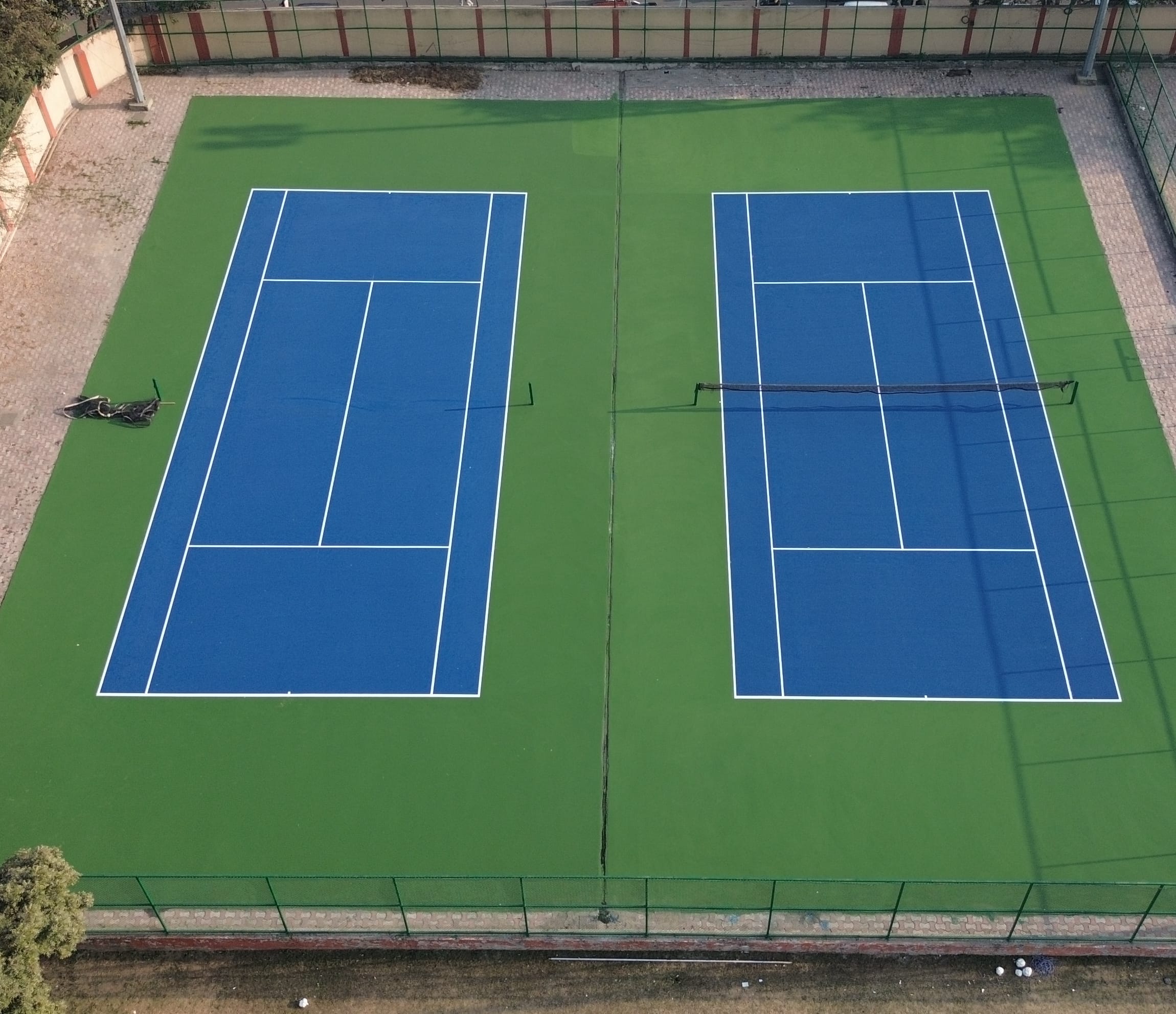
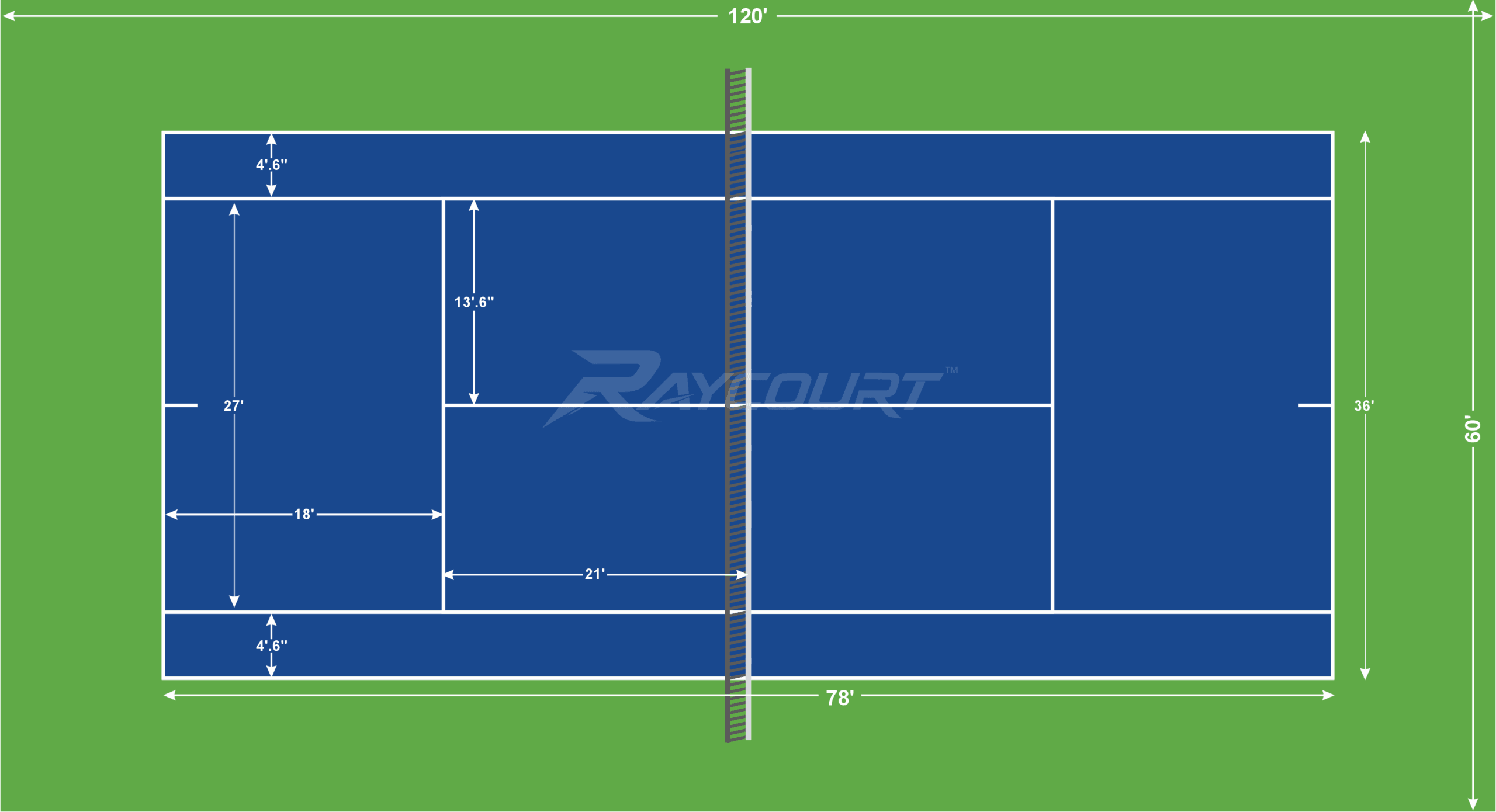
A regulation tennis court measures 23.77 metres long for singles and doubles play. The singles width measures 8.23 metres, while doubles width extends to 10.97 metres. Surrounding run-off space adds further length and width beyond these core measurements. Insufficient run-off space increases injury risk during fast, wide rallies.
Net Height and Line Specifications
The net stands 91.4 centimetres high at the centre of the court. It rises slightly higher near the posts on either side. Lines should measure between 2.5 and 5 centimetres wide, and stay clearly visible throughout matches. Poor line visibility often stems from ageing paint rather than incorrect original measurements.
The Anatomy of a Quality Acrylic Court System
Understanding what lies beneath the visible surface explains why some courts outperform others. A properly built acrylic tennis court consists of several distinct layers. Each layer serves a specific structural or performance purpose.
Layer-by-Layer Breakdown
- Base layer — Usually asphalt or concrete, providing stability and correct drainage slope.
- Patch and crack filler — Repairs base imperfections before coating work begins.
- Acrylic resurfacer — Fills minor irregularities and creates a uniform texture.
- Cushion layer (optional) — Rubber or foam coating that reduces joint impact.
- Colour coating — Textured acrylic layer defining pace, grip, and appearance.
- Line marking — Precise, high-contrast paint applied to regulation measurements.
Each layer must cure fully before the next application begins. Skipping steps shortens the court’s lifespan considerably, regardless of how good the final coating looks initially.
Standards and Classifications Facility Owners Should Know
Court pace isn’t just a feeling players describe casually. Organisations measure and classify it formally through recognised testing methods. The International Tennis Federation’s Court Pace Classification Programme rates surfaces from Category 1, slow, through Category 5, fast. This rating depends on how a ball’s speed changes after it bounces. The system helps buyers match surface products to their intended playing style and skill level.
Facility owners planning a build or resurfacing project should ask contractors which pace category applies. This single detail shapes the entire playing character of the finished court.
Why Base Preparation Matters Most
Many facility owners focus heavily on the visible top coat. However, base preparation actually determines most of a court’s long-term durability. A poorly graded or unstable base causes cracking regardless of coating quality above it. Proper compaction and slope work before any coating begins prevents most future structural problems. Skimping on this stage almost always leads to premature failure later.
Maintenance That Keeps Courts Near You Playable Year-Round
Even the best acrylic system needs consistent care to perform well over time. Maintenance frequency depends on climate, usage volume, and the product applied. Still, general principles apply almost everywhere.
Daily and Weekly Care
- Sweep debris, leaves, and dirt off the surface regularly
- Remove standing water promptly after rainfall
- Check nets, posts, and fencing for visible damage
- Inspect baseline and service line areas for early cracking
Seasonal and Annual Care
- Pressure-wash the surface to remove algae and grime
- Inspect drainage channels and clear any blockages
- Reapply line paint once fading becomes noticeable
- Schedule a professional inspection to catch structural issues early
- Plan resurfacing before minor cracks turn into major problems
Regular maintenance demands far less effort than emergency repairs later. A facility that follows a consistent schedule extends coating life significantly. Facilities that delay maintenance often face far more disruptive repairs down the line.
Signs a Court Needs Resurfacing Soon
Watch for widening cracks that spread across multiple areas of the court. Chalky residue appearing consistently after light contact also signals coating breakdown. Uneven bounce in specific spots, rather than across the whole court, points to localised base failure. Any of these signs suggest resurfacing should happen soon, before conditions worsen further.
Public Courts vs Private Club Courts vs Academy Courts
The facility type you choose also shapes your experience, separate from surface quality alone. Each category offers distinct trade-offs worth considering carefully.
| Feature | Public Courts | Private Clubs | Academy Courts |
|---|---|---|---|
| Access | Open to all, often first-come | Membership required | Enrolment or booking based |
| Maintenance Frequency | Variable, budget-dependent | Generally consistent | Typically rigorous |
| Surface Consistency | Can vary widely | Usually uniform | Highly controlled |
| Coaching Availability | Rare | Sometimes available | Core focus |
| Booking Flexibility | High | Moderate | Lower, schedule-based |
Public courts offer the most convenient access but sometimes suffer from inconsistent upkeep. Limited municipal budgets often explain this gap. Private clubs generally maintain tighter standards, since members expect reliable quality every visit. Academies, meanwhile, often invest heavily in premium acrylic systems. Consistent surfaces directly support accurate player training and development.
Booking, Scheduling, and Court Availability Near You
Finding a good court near you means little if you can never secure a slot. Booking systems vary widely between public parks, private clubs, and academies. Public courts often run on a first-come, first-served basis with no advance booking. This system works well for flexible players but frustrates anyone with a tight schedule.
Private clubs typically offer online booking systems with set time slots. Peak hours, usually early mornings and evenings, fill up quickly at popular venues. Academies often reserve courts entirely for enrolled students during structured training blocks. Before choosing a regular venue, ask about typical wait times during your preferred hours. A slightly further court with reliable availability often beats a nearby one you can never book.
Weekday mornings and late weekday afternoons often offer the most open availability. Weekends, by contrast, tend to fill quickly across nearly every facility type. If your schedule allows flexibility, shifting your sessions slightly can dramatically improve your booking success. Some clubs also offer waitlist notifications, which alert you the moment a slot opens up.
Climate Considerations for Outdoor Courts
Local climate plays a huge role in how well a nearby court holds up. Facility owners should factor climate into both material choice and maintenance planning.
Monsoon and High-Rainfall Regions
Courts in wet climates need excellent drainage design and moisture-resistant coatings. Poor drainage lets water seep beneath the surface. This weakens the base and accelerates cracking considerably. Facilities in these regions benefit from acrylic systems formulated specifically for high moisture resistance.
Extreme Heat and UV Exposure
Intense sun exposure accelerates coating breakdown through UV degradation over time. Surfaces in hot climates require formulations with strong UV stabilisers built in. Without this protection, colour coatings chalk and crack far sooner than expected. Facility owners in tropical or desert regions should prioritise this feature heavily.
Cold Climates and Freeze-Thaw Cycles
Courts in colder regions face a different challenge: freeze-thaw cycling. Water trapped in small cracks expands when it freezes, widening those cracks further. This cycle repeats through winter and worsens damage each time it occurs. Regular autumn inspections help catch small cracks before winter expansion turns them into larger problems.
Expert Tip: Ask facility staff whether their coating system includes UV-resistant additives if you play in a sunny region regularly. This detail significantly affects how long the surface stays smooth and safe.
Choosing a Court Based on Skill Level and Training Goals
Not every court suits every player equally well. Matching surface pace to your goals improves both enjoyment and performance over time.
Beginners and Recreational Players
New players benefit from medium-paced acrylic surfaces with forgiving, predictable bounce. A consistent surface lets beginners focus on technique rather than compensating for odd bounces. Recreational players also tend to prioritise comfort, so a cushioned system often suits them well.
Competitive and Advanced Players
Advanced players training for competition often prefer faster, firmer surfaces. These surfaces sharpen reaction time and reward aggressive net play. Many competitive players also train across multiple pace categories to prepare for different tournament conditions.
Junior and Academy Training
Junior academies frequently choose cushioned acrylic systems to protect developing joints. Young players train intensively, often multiple sessions per week, which increases cumulative joint strain. A properly cushioned surface reduces this strain without sacrificing consistent ball response.
Ready to build a court that performs for years to come?
Connect with Raycourt for sports flooring systems built for your project.
What to Look for When a New Court Is Under Construction Nearby
Sometimes your search leads you to a facility currently under construction. Watching this process, or simply asking the right questions, reveals a lot about eventual quality.
Ask whether the contractor addressed base drainage before applying any coating. A rushed base almost always causes problems later, regardless of coating quality. Ask how many acrylic layers the plan includes, since thin single-coat systems wear out fast. Finally, ask which manufacturer supplies the acrylic material, since formulation quality varies between suppliers significantly.
Facility owners should also confirm that contractors follow proper curing times between layers. Rushing this process traps moisture and weakens adhesion. That, in turn, leads to premature peeling or bubbling later on.
Common Myths About Tennis Court Surfaces
Several misconceptions circulate widely among players and facility owners alike. Clearing these up helps you make better decisions about courts near you.
Myth: All hard courts play the same way.
Texture, aggregate size, and coating thickness all change ball pace significantly. Two hard courts from different manufacturers can feel completely different underfoot.
Myth: A newer court is always a better court.
Age matters less than construction quality and ongoing maintenance history. A well-maintained older court often outperforms a poorly built new one.
Myth: Darker colours make courts hotter and less safe.
Colour affects heat absorption slightly, but proper formulation minimises this effect. Ventilation, shade, and playing time matter far more than coating colour alone.
Myth: Resurfacing fixes every structural problem.
Resurfacing addresses the top coating layer only. Base-level cracks or drainage failures need proper structural repair first, not just a fresh coat on top.
Myth: Any contractor can apply acrylic coating successfully.
Application skill varies significantly between contractors and directly affects the final result. Improper mixing, poor weather timing, or rushed curing all shorten a court’s lifespan considerably.
Choosing Materials for a New or Resurfaced Court
Facility owners planning construction or resurfacing face an important decision. Which acrylic system should they specify for the project? This choice affects ball pace, durability, and long-term appearance. It deserves careful research rather than a quick default choice.
Why Facility Owners Choose Raycourt Systems
Raycourt formulates synthetic acrylic coatings engineered for consistent pace and strong UV resistance. Our systems also deliver long-term colour stability across diverse climates. We support multiple pace categories, so contractors can match the finished surface to a club’s preferred style. We supply the material and technical guidance. Contractors then handle on-site application and installation themselves.
How Manufacturers and Contractors Work Together
This division of expertise matters more than many players realise. Raycourt concentrates entirely on formulation science, testing, and quality control at the material level. Contractors bring the on-ground application skill needed to translate material into a finished court. Together, this partnership produces surfaces built to perform season after season. Neither role replaces the other; both remain essential to a quality result.
Facility owners benefit most when they understand this split clearly before starting a project. A manufacturer can supply an excellent acrylic system, yet poor application still ruins the outcome. Similarly, a skilled contractor cannot compensate fully for a weak or poorly formulated coating. Choosing a reputable manufacturer and an experienced contractor together gives you the strongest possible result.
What to Ask a Manufacturer Before Specifying a System
- Which pace category does this coating system fall into?
- How does the formulation perform under local climate conditions?
- What cushioning options does the system support, if any?
- How does the colour range hold up against UV exposure over time?
- What surface preparation does the system require before application?
Asking these questions upfront helps contractors plan the project accurately. It also helps facility owners set realistic expectations for the finished court.
Sustainability and Long-Term Performance
Sustainable court construction increasingly influences purchasing decisions among facility owners today. Longer-lasting acrylic systems reduce how often a facility needs to resurface. This, in turn, reduces material waste across the court’s full lifetime. Additionally, durable coatings reduce the frequency of major repairs. Facilities disturb less material and generate less waste as a direct result.
Water-based acrylic formulations also tend to produce fewer harmful emissions during application. This compares favourably against older solvent-based alternatives still used in some regions. Facility owners increasingly prioritise these formulations, both for environmental reasons and for the health of on-site application teams.
Ultimately, a well-built, well-maintained acrylic court represents a genuinely sustainable choice. It delivers years of reliable play without frequent, resource-intensive interventions.
Multi-Use Synthetic Surfaces Near You
Many facilities near you now serve more than one sport on the same surface. Acrylic systems support multi-use line marking for tennis, pickleball, and badminton alike. This flexibility helps community centres and schools maximise limited space efficiently. A single acrylic-coated court can host several sports simply by adding different coloured lines.
This trend affects how you should evaluate a “court near me” search today. A venue advertised primarily as a tennis facility might also host pickleball sessions during off-peak hours. Shared use can affect booking availability, so ask about scheduling if you need dedicated tennis time. It also means surface durability matters even more, since multiple sports increase overall foot traffic. Facilities that plan for multi-use demand from the start tend to specify tougher, more resilient acrylic formulations.
Raycourt formulates acrylic systems that accommodate this multi-use trend directly. Our coatings support layered line marking without compromising the base tennis playing surface. This approach gives facility owners flexibility without forcing them to choose one sport permanently. As community demand for varied sports options grows, this flexibility becomes increasingly valuable for owners.
A Quick Checklist Before You Commit to a Court Near You
Bringing everything together, use this checklist during your next visit or booking decision:
- Confirm the surface feels level, with no visible cracks or dips
- Check drainage by asking about recent rainfall performance
- Look for consistent colour without heavy fading or chalking
- Verify lines appear crisp, straight, and clearly visible
- Ask about the facility’s resurfacing and maintenance schedule
- Confirm lighting quality if you plan to play in the evening
- Match your footwear to the specific surface type
- Ask about booking flexibility during your preferred playing hours
Running through this list takes only a few minutes at most. However, it prevents wasted trips to courts that ultimately disappoint you. A little upfront research consistently leads to a far better playing experience overall.
Frequently Asked Questions
Start with surface condition rather than distance alone. Look for visible cracks, fading colour, and uneven patches across the court. A smooth, evenly coated surface usually indicates strong long-term maintenance. This holds true even if the facility sits slightly further from home than your closest option.
“Better” really depends on your personal priorities as a player. Acrylic courts offer lower maintenance demands and more consistent playing conditions across seasons. Clay and grass offer unique playing characteristics many players genuinely prefer. However, both require significantly more upkeep to stay in good condition.
No, Raycourt manufactures the synthetic acrylic flooring systems contractors use during construction. Licensed contractors and court builders handle on-site installation and application work. Raycourt supports this process through material quality and technical formulation guidance instead.
Court pace determines how fast the ball travels after it bounces. This shapes rally length and rewards different playing styles accordingly. Faster courts favour aggressive, serve-and-volley play strategies. Slower courts reward patience and longer, more strategic rallies instead.
A resurfaced court reuses the existing base and adds fresh coating layers on top. A newly built court starts from scratch, including base construction and drainage design. Resurfacing causes less disruption overall, but only works well if the underlying base remains structurally sound.
Final Thoughts
Searching for “tennis courts near me” should lead you to more than a nearby location. It should lead you toward a surface that plays consistently and drains properly. It should hold up through repeated, regular use over time. Surface science, particularly acrylic formulation, sits at the heart of that experience. Most players never think about this directly, yet it shapes every single session.
For facility owners and contractors, choosing the right acrylic system shapes everything. Player satisfaction, long-term maintenance demands, and overall reputation all depend on this choice. Raycourt continues to formulate synthetic acrylic sports flooring designed for consistent performance. Our systems deliver strong weather resistance and dependable results across diverse climates.
Every point covered in this guide connects back to one simple idea. A great court near you starts with great material, applied correctly, and maintained consistently. Players benefit from that combination every time they step onto the court. Facility owners benefit from fewer repairs and happier members over the long run. Contractors benefit from working with formulations they can trust project after project. That shared benefit explains why surface quality deserves far more attention than it usually receives.
Ready to build a court that performs for years to come?
Connect with Raycourt for sports flooring systems built for your project.