
A great pickleball court rests on three essentials. First, it measures 20 feet by 44 feet (6.1 metres by 13.41 metres) inside the lines. Second, it sits on a flat, stable base that drains well. Third, it carries an acrylic surface with reliable texture that grips shoes, returns the ball evenly and resists sun, rain and heavy foot traffic. When a court delivers all three, players enjoy safer, faster and fairer games for many seasons.
Pickleball has grown quickly across schools, clubs, housing communities, resorts and public parks. As a result, more facility owners now ask a simple question. Which surface suits pickleball best? The direct answer is a professional-grade synthetic acrylic sports surface. It offers the traction, the bounce consistency and the colour range that pickleball demands.
This guide explains the game, the court layout and the science behind the playing surface. Moreover, it covers acrylic layers, colours, line marking, indoor and outdoor use, maintenance and planning. Raycourt manufactures the synthetic acrylic sports court flooring material, and trained contractors install it. Therefore, this guide focuses on what the material does and how to choose it well.
What Is Pickleball?
A Short History of Pickleball
Pickleball began in 1965 on Bainbridge Island in Washington State. Three friends, Joel Pritchard, Bill Bell and Barney McCallum, wanted a fun game for their families. They borrowed ideas from badminton, tennis and table tennis. Their first version used a plastic ball with holes, simple wooden paddles and a low badminton net. The game caught on quickly among neighbours and friends. Over time, it grew into an organised sport with national and international governing bodies. Today, players of all ages enjoy pickleball on dedicated courts around the world.
How Pickleball Works
Pickleball uses a solid paddle, a hollow plastic ball with holes and a low net. Players serve underhand and diagonally. After the serve, the ball must bounce once on each side before anyone volleys. This two-bounce rule keeps rallies long and fair. Next, players may volley the ball in the air, but not while they stand inside the non-volley zone. Most people call that zone the kitchen. Games usually run to 11 points, and a side must win by two.
Doubles play dominates the sport. Four players share a compact court, so the action stays close and social. Singles play also exists, and it uses the same court size. Consequently, one court layout serves every format.
Why Pickleball Attracts Such a Wide Audience
Pickleball is easy to learn. A beginner can rally within minutes. The court is small, so players cover less ground than they do in tennis. Consequently, the game welcomes children, adults and older players on the same court. It also builds friendships, because doubles encourages conversation between points.
For facility owners, this broad appeal means steady court use across the day. Early mornings bring groups of older players. Afternoons bring school sessions and coaching. Evenings bring social leagues and families. Therefore, the court surface must handle varied players and constant use.
What Pickleball Demands from a Court
Every sport asks something different from its surface. Pickleball asks for quick lateral movement, sudden stops and short, sharp pivots. The ball is light and hollow, so it reacts strongly to surface texture. Furthermore, players stand close together and move within a small area. Therefore, the surface needs reliable traction, a predictable bounce and clear visibility. The rest of this guide returns to these demands repeatedly.
The Rapid Growth of Pickleball
Participation in pickleball has climbed steadily over the past several years. Parks departments, schools and private clubs now add courts to meet demand. Owners no longer treat pickleball as a side activity. Instead, they build dedicated courts and plan layouts around the sport. Consequently, court quality now sits at the centre of the player experience. Players notice bounce, grip and lines immediately, and they choose venues accordingly.
This growth also brings many new players who have never used a racket sport surface before. These newcomers often wear casual shoes and move in unfamiliar ways. Therefore, a forgiving surface with reliable texture protects them while they learn. In short, a quality court supports both beginners and experienced players.
Pickleball Court Dimensions and Layout
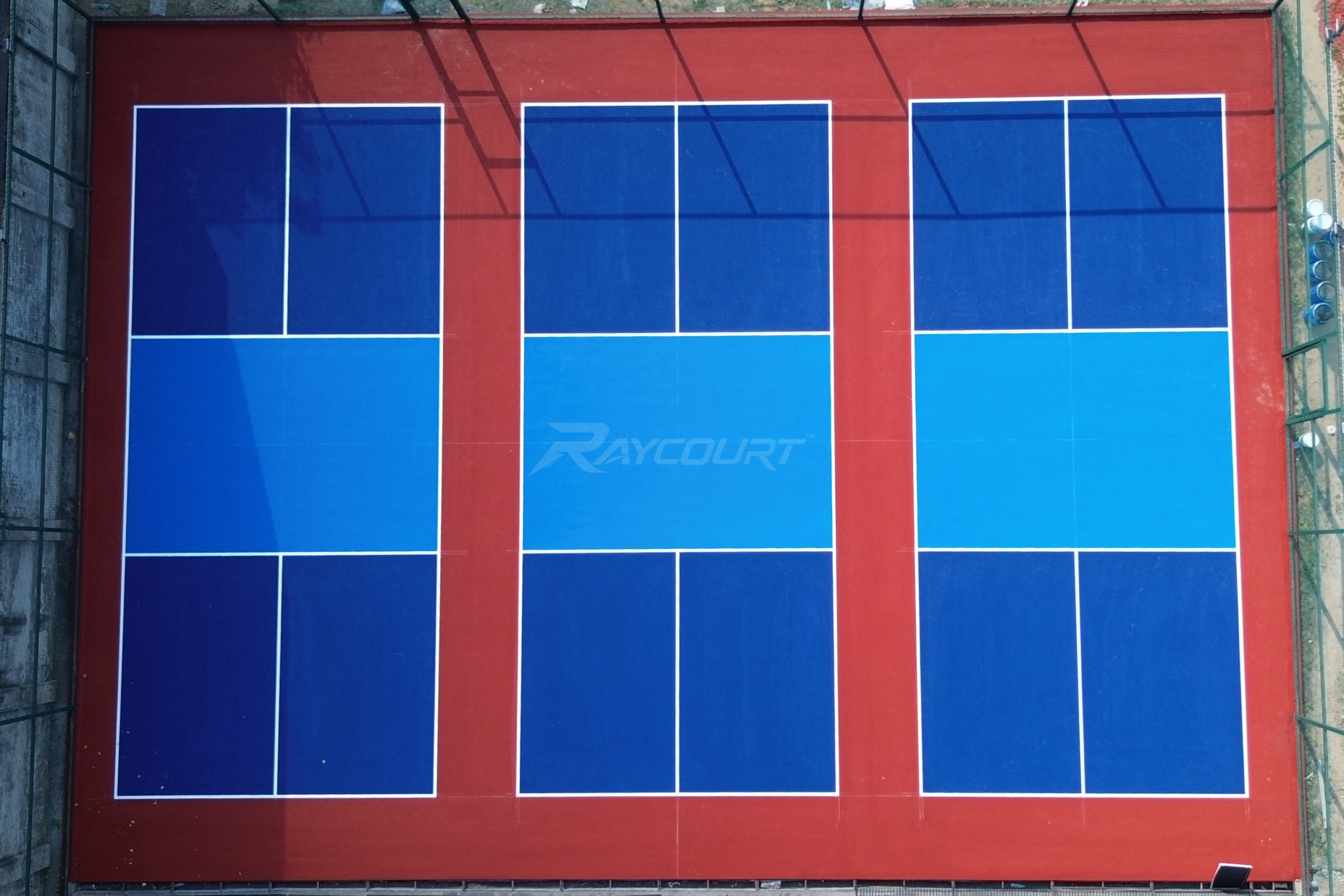
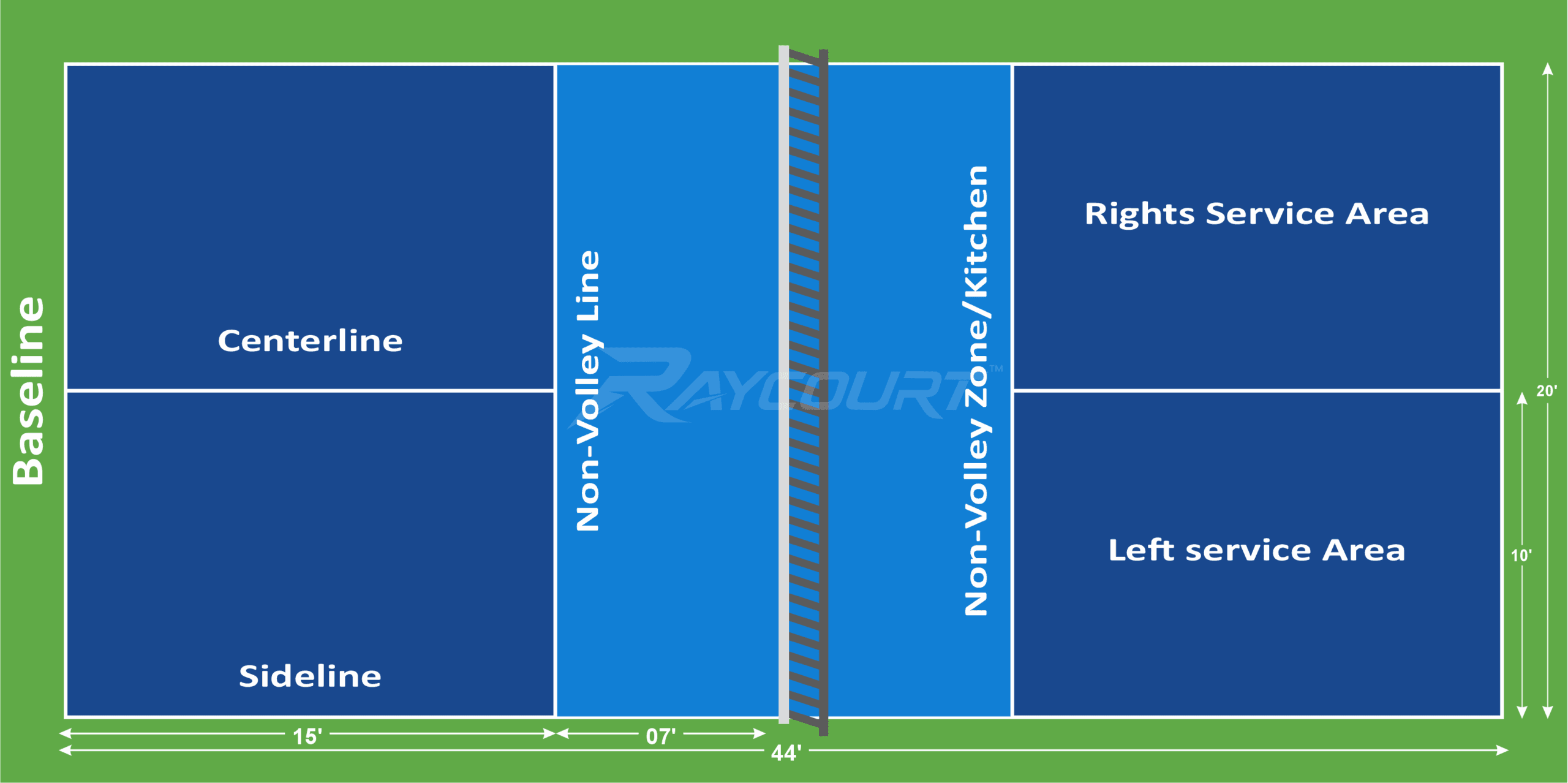
The pickleball court has the same size for singles and doubles. It measures 20 feet wide and 44 feet long, which equals 6.1 metres by 13.41 metres. Interestingly, a doubles badminton court has the same footprint. That similarity explains why many multi-purpose halls mark both sports. For the official rules and current equipment guidance, visit the USA Pickleball website, a leading governing body for the sport.
| Court Element | Imperial | Metric |
|---|---|---|
| Playing area | 20 ft × 44 ft | 6.1 m × 13.41 m |
| Non-volley zone depth | 7 ft from the net | 2.13 m |
| Service court depth | 15 ft | 4.57 m |
| Net height at sidelines | 36 in | 91.4 cm |
| Net height at centre | 34 in | 86.4 cm |
| Line width | 2 in | About 5 cm |
| Ideal overall area with run-off | 30 ft × 60 ft | 9.14 m × 18.29 m |
Court Markings Explained
Every line on a pickleball court has a clear job. The baseline marks the back edge. The sidelines mark the outside edges. The non-volley line sits 7 feet from the net on each side. The centreline splits each service area into a left box and a right box. A ball that touches a boundary line counts as in, so players need to see every line clearly. Accordingly, line paint quality matters as much as the base colour.
Run-Off Space and Overall Footprint
Players need space beyond the lines. The ideal overall area is 30 feet by 60 feet (9.14 metres by 18.29 metres) per court. This buffer lets players chase wide shots and retreat safely. Additionally, neighbouring courts need clearance so that players do not collide. Where space is tight, planners sometimes reduce the run-off. However, tighter layouts raise the risk of contact and injury. Therefore, plan generous margins whenever the site allows.
Orientation and Slope
Outdoor courts usually work best with the long axis running north to south. That layout keeps low sun out of players’ eyes during morning and evening play. The surface also needs a gentle slope for drainage, typically about 1 percent across the whole court. This slope sheds rainwater without affecting play. Furthermore, a flat, even base prevents birdbaths, which are shallow puddles that collect in low spots.
Expert Tip: Check the court slope and flatness before any acrylic material goes on. Coatings cannot fix a base that holds water. A level base that drains well protects both the surface and the players.
How the Playing Surface Shapes Pickleball
Ball Bounce and Consistency
The pickleball is light, hollow and perforated. Because of that, it responds to the surface more than a tennis ball does. A hard, even surface produces a true, predictable bounce. A rough or patchy surface produces erratic skids and awkward hops. Consistent bounce protects rally quality and fairness. Moreover, players trust their footwork more when they can predict the ball. Acrylic surfaces deliver this consistency across the full court.
Traction and Slip Resistance
Pickleball involves short bursts, split-steps and sharp direction changes. Shoes must grip enough to stop players quickly. However, too much grip can twist ankles and knees. The ideal surface strikes a balance. Acrylic systems achieve this balance through fine silica sand texture blended into the colour coats. Consequently, the surface grips shoes without dragging them.
Texture also influences ball speed. A coarser finish slows the ball and adds grip. A finer finish speeds the ball and reduces grip. Manufacturers and contractors therefore choose the texture level to suit the players and the venue.
Joint and Body Comfort
Pickleball players often play for hours and on several days each week. Hard surfaces transmit impact to knees, hips and backs. Therefore, comfort deserves real attention. An acrylic system with a cushion layer adds a resilient layer beneath the colour coats. This layer absorbs part of the impact and reduces fatigue. Meanwhile, the top coats keep the ball response crisp. Facilities that serve older players especially benefit from this extra comfort.
Visibility and Glare
Players track a small, fast ball, so visual contrast matters. A matte or low-sheen acrylic finish reduces glare. In addition, well-chosen colours make the ball stand out. Later sections explore colour selection in detail.
Weather and UV Exposure
Outdoor pickleball courts face sun, rain, heat and temperature swings. UV rays fade weak colours and break down poor coatings. Rain and standing water invite algae and moss. Meanwhile, hot days can soften low-quality materials. Therefore, choose acrylic materials that offer UV stability, flexibility and water resistance. High-quality systems hold their colour and bond strength through these stresses.
Surface Speed and Player Skill
Court speed describes how fast the ball travels after it bounces. Texture drives most of that speed. A finer texture lets the ball skid through and rewards attacking play. A coarser texture grips the ball and slows the rally. Beginners often prefer the slower option, because it gives them more time to react. Advanced players often prefer a faster, more direct bounce.
Therefore, owners should think about the player mix before they choose a texture. A community court with many new players may suit a medium texture. A competitive training court may suit a finer, faster finish. Whichever route you choose, aim for uniform texture across the whole court. Uniformity matters more than the exact speed, because inconsistent patches break rhythm and reward luck over skill.
Ready to build a court that performs for years to come?
Connect with Raycourt for sports flooring systems built for your project.
Climate Considerations for Pickleball Courts
Climate shapes every outdoor court. Hot, humid, dry and rainy regions all stress a surface in different ways. Understanding these stresses helps owners choose the right acrylic system.
Heat and Sun
Intense sun heats the surface and speeds up ageing. Strong UV resistance protects the colour coats and slows fading. In addition, lighter shades reflect more heat and feel cooler underfoot. Shade structures beside the court also help players rest between games. Owners who plan evening sessions can add lighting and avoid the hottest hours.
Rain and Humidity
Heavy rain tests drainage. A correct slope and a clean base let water run off quickly. Humidity encourages algae, especially in shaded corners. Regular cleaning and good airflow keep those areas clear. Moreover, water-resistant acrylic layers stop moisture from creeping into the base.
Temperature Swings
Materials expand and contract when temperatures change. A flexible acrylic system moves with the base and resists cracking. Rigid, brittle coatings crack more easily and let water in. Therefore, flexibility deserves a place on your material checklist.
Why Acrylic Surfaces Suit Pickleball
Several surfaces host pickleball, including concrete, asphalt, timber, modular tiles and acrylic-coated hard courts. Each has strengths. However, acrylic-coated hard courts dominate outdoor pickleball for good reasons.
Key Advantages of Acrylic for Pickleball
- Consistent ball bounce across the entire court
- Controlled traction through adjustable texture
- Colour flexibility for the court, the run-off and the lines
- Weather resistance for demanding outdoor conditions
- Straightforward maintenance through routine cleaning and periodic recoating
- Multi-sport compatibility with tennis, basketball and badminton markings
How Acrylic Compares with Other Pickleball Surfaces
| Surface | Typical Setting | Main Strength | Main Limitation |
|---|---|---|---|
| Acrylic-coated hard court | Outdoor and indoor | Consistent bounce, colour range, adjustable texture | Needs periodic recoating |
| Bare concrete or asphalt | Outdoor | Solid, familiar base | Texture and colour vary over time |
| Modular tiles | Indoor and outdoor | Quick installation of a playing surface | Joints can affect ball roll |
| Timber | Indoor | Familiar grip and bounce | Indoor use only, sensitive to moisture |
| Synthetic sheet | Indoor | Comfortable underfoot | Limited outdoor durability |
Why Acrylic Works So Well on Hard Courts
Acrylic resins bond strongly to properly prepared asphalt and concrete. They also stay flexible enough to move slightly with the base. This flexibility resists cracking when temperatures change. Meanwhile, the resin binds sand and pigment into a durable film. That film protects the base from water and sun. It also creates a uniform playing face.
Because manufacturers control the formulation, they can adjust texture, colour and flexibility for different sports. This adaptability explains why the same acrylic technology serves tennis, basketball, badminton and pickleball courts.
The Layers of an Acrylic Pickleball Surface
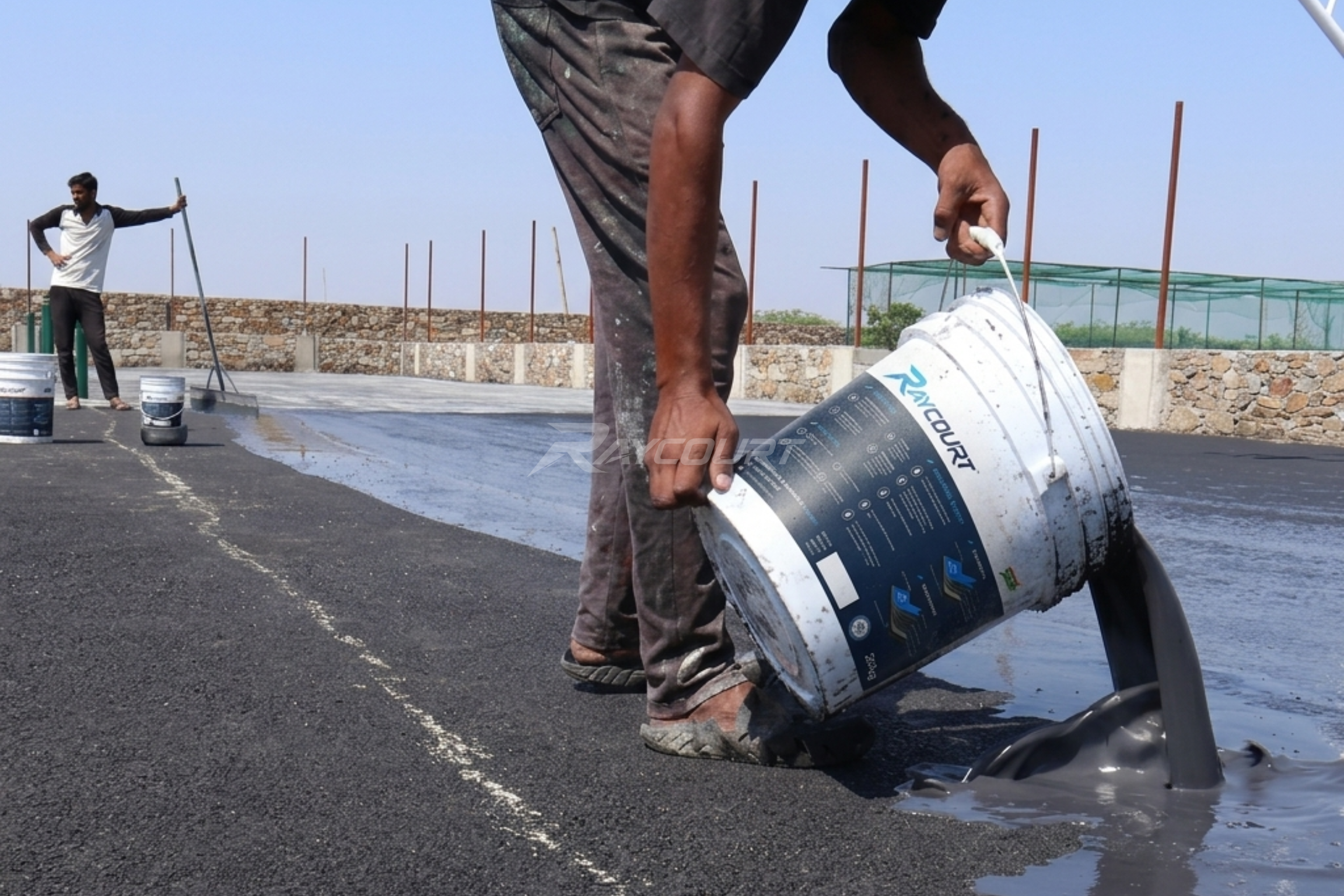
An acrylic sports surface works as a system, not as a single coat of paint. Each layer has a role. The system builds from the base upward, and every layer prepares the next one.
| Layer | Purpose |
|---|---|
| Prepared base (asphalt or concrete) | Provides a stable, level foundation |
| Resurfacer or filler coat | Fills minor imperfections and creates a uniform texture |
| Cushion layer (optional) | Adds shock absorption for comfort |
| Acrylic colour coats | Give colour, UV protection and controlled texture |
| Line paint | Marks the boundaries with crisp contrast |
Resurfacer and Filler Coats
The resurfacer smooths the base and fills small hollows. It also creates an even canvas for the colour coats. A uniform base layer leads to a uniform ball bounce. Therefore, this step shapes playing quality far more than most people expect.
Cushion Layers
A cushion layer sits between the base and the colour coats. It adds a softer feel underfoot. Additionally, it reduces the jarring impact that hard courts create over long sessions. Many venues choose cushioning for programmes that serve older players, school courts and recreational clubs.
Colour Coats
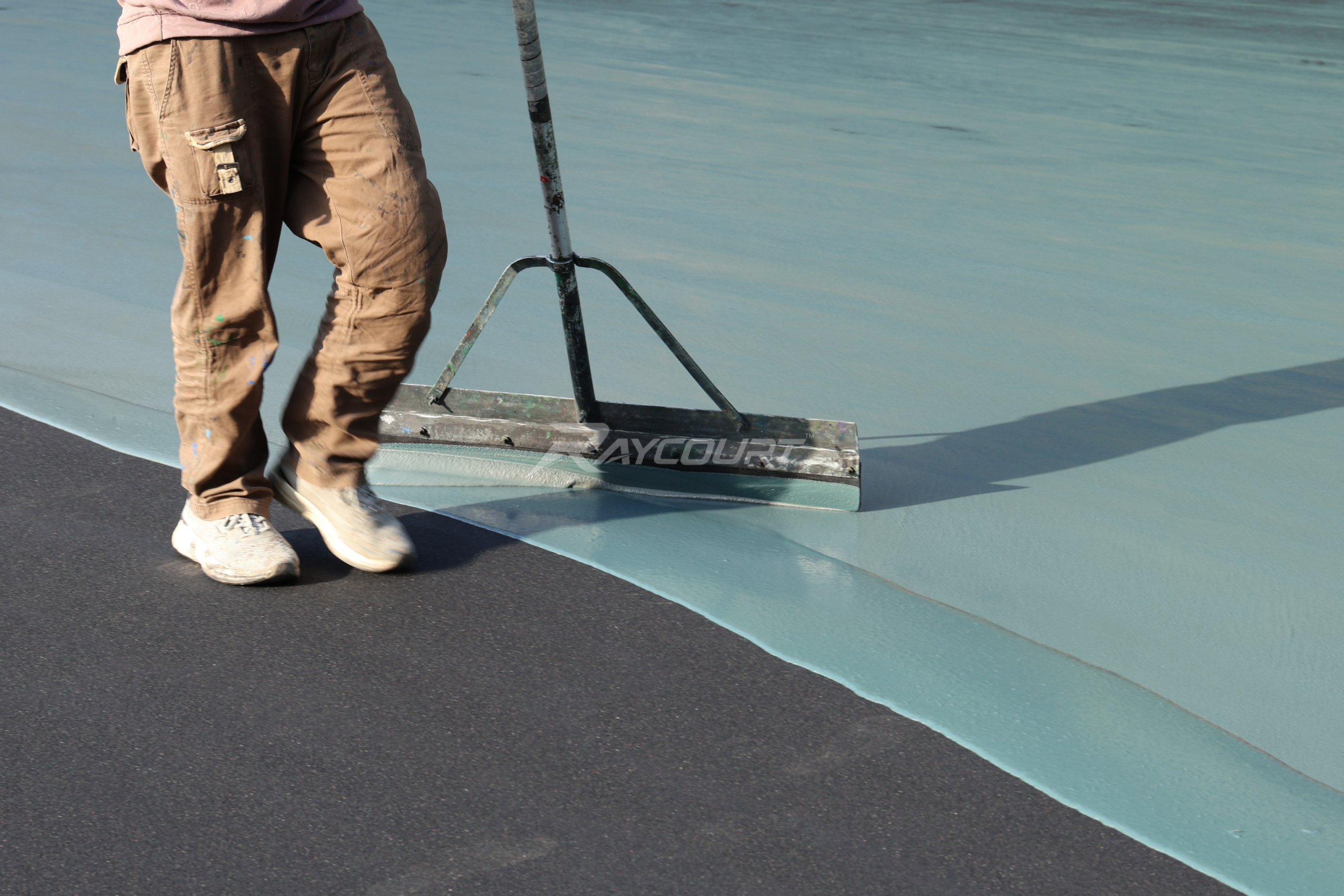
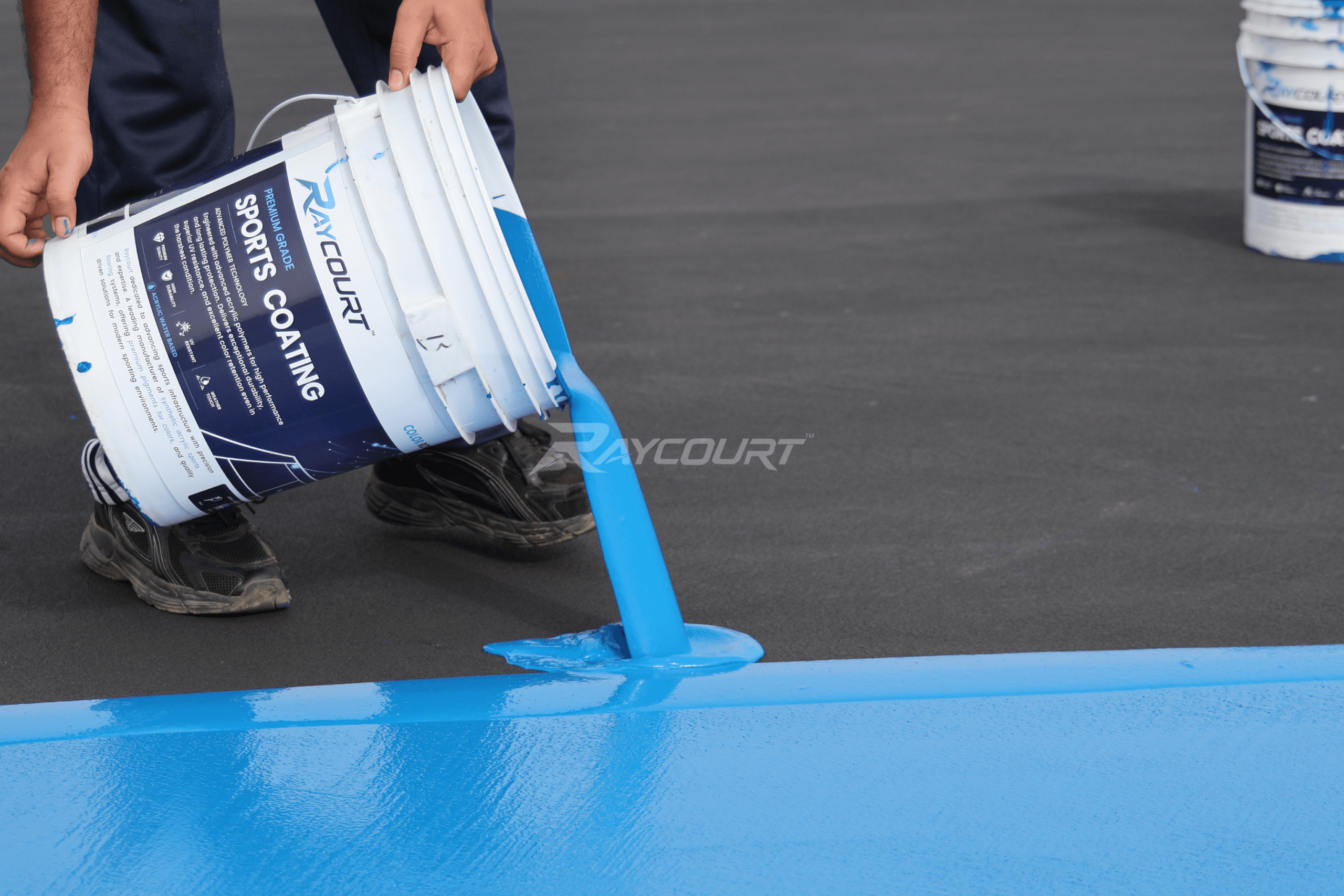
Colour coats deliver the visible finish. They also carry the sand texture that controls grip and ball speed. Quality colour coats resist fading, cracking and peeling. Consequently, they protect the layers beneath them from sun and water.
Line Paint
Line paint defines the game. It needs strong adhesion, a matte finish and good contrast against the court colour. Poor line paint wears quickly and can feel slippery when wet.
Expert Tip: Ask your contractor to follow the manufacturer’s application instructions for every layer. Mixing ratios, drying times and weather limits all affect the final performance of the acrylic system.
Ready to build a court that performs for years to come?
Connect with Raycourt for sports flooring systems built for your project.
Pickleball Questions Answered
Can You Play Pickleball on a Tennis Court?
Yes, you can. Pickleball works well on tennis courts, and many venues add pickleball lines to existing acrylic tennis surfaces. A standard tennis court footprint, including run-off, can hold up to four pickleball courts. The exact number depends on the layout. However, tennis nets and pickleball nets differ in height. Therefore, most venues use portable pickleball nets or lower the tennis net for shared play. Different line colours also help players tell the layouts apart.
Can You Play Pickleball on a Basketball Court?
Yes, with some planning. Basketball courts often offer enough space for one or two pickleball courts. Acrylic-coated outdoor basketball courts accept pickleball lines in a contrasting colour. However, planners must place the pickleball court so that it avoids hoop supports and the key. Portable net systems then make the space flexible for both sports.
Does Pickleball Need a Special Surface?
Pickleball does not need a specialised surface. It does need a smooth, hard, level and consistently textured surface. Acrylic-coated asphalt or concrete meets those needs and offers extra benefits such as colour choice and weather resistance. In contrast, rough, cracked or uneven surfaces produce unpredictable bounces and raise injury risk.
What Is the Best Surface for Outdoor Pickleball?
For most outdoor projects, an acrylic-coated hard court offers the best balance of performance and durability. It handles sun, rain and daily use. Moreover, contractors can adjust the texture and add a cushion layer to suit the players. Compared with bare concrete, it also gives a far more consistent playing experience.
Can Acrylic Flooring Work Indoors for Pickleball?
Yes. Acrylic systems suit indoor slabs in gyms, community halls and sports centres. Indoor courts avoid UV and rain, so the surface faces less environmental stress. Nevertheless, indoor courts still need a level, dry base and correct line marking. Cushion layers also help indoor players who play for long sessions.
Preparing the Base for a Pickleball Court
The finest acrylic material cannot rescue a poor base. Therefore, base quality deserves careful attention. Two base types dominate pickleball construction: asphalt and concrete. Both work well when contractors prepare them properly.
Asphalt Bases
Asphalt offers slight flexibility and a smooth finish. Contractors compact it in layers and check the slope carefully. Fresh asphalt needs a curing period before any acrylic goes on. During this time, oils and volatile compounds escape from the surface. As a result, the coatings bond properly and last longer.
Concrete Bases
Concrete provides a rigid, durable foundation. It usually needs about 28 days to cure before coating. Contractors must remove curing compounds and surface laitance so the acrylic can grip. In addition, they must repair cracks with suitable materials. Otherwise, cracks can telegraph through the finished surface.
Surface Checks Before Coating
Before any acrylic material goes on, contractors should confirm the following:
- Flatness: A water flood test reveals low spots and lingering puddles.
- Slope: The surface drains evenly in one direction.
- Cleanliness: Dust, oil, algae and loose material are gone.
- Cracks: Repairs have finished curing.
- Moisture: The base is dry and ready for coating.
Expert Tip: Raycourt supplies the acrylic sports flooring material, and professional contractors handle the on-site work. Choose an experienced sports surfacing contractor and share the manufacturer’s material guidance with them early.
Choosing Colours for a Pickleball Court
Colour affects more than appearance. It influences ball visibility, glare, surface temperature and the mood of the venue. Therefore, choose colours with the same care you give to texture and cushioning.
Contrast Between the Court and the Run-Off
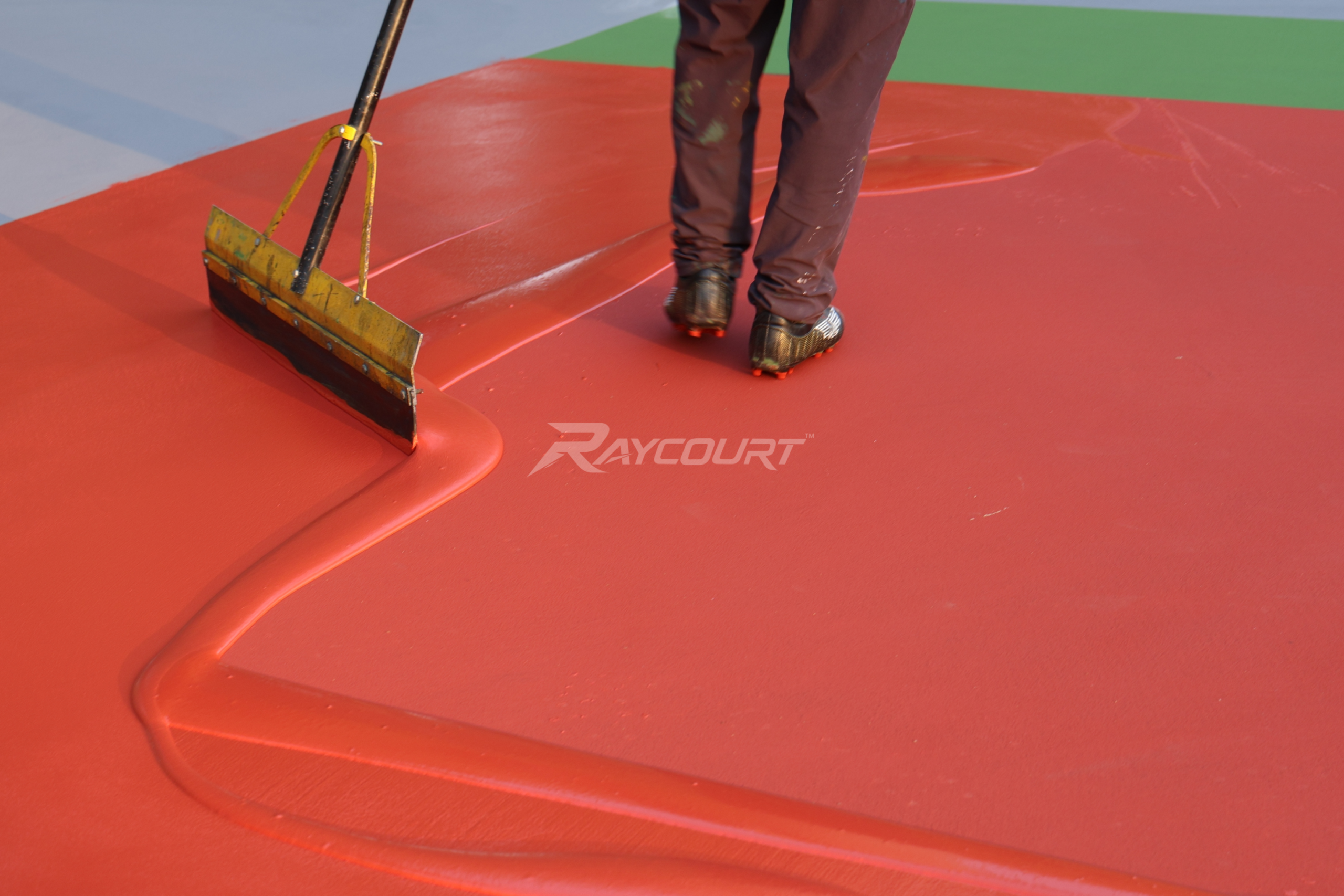
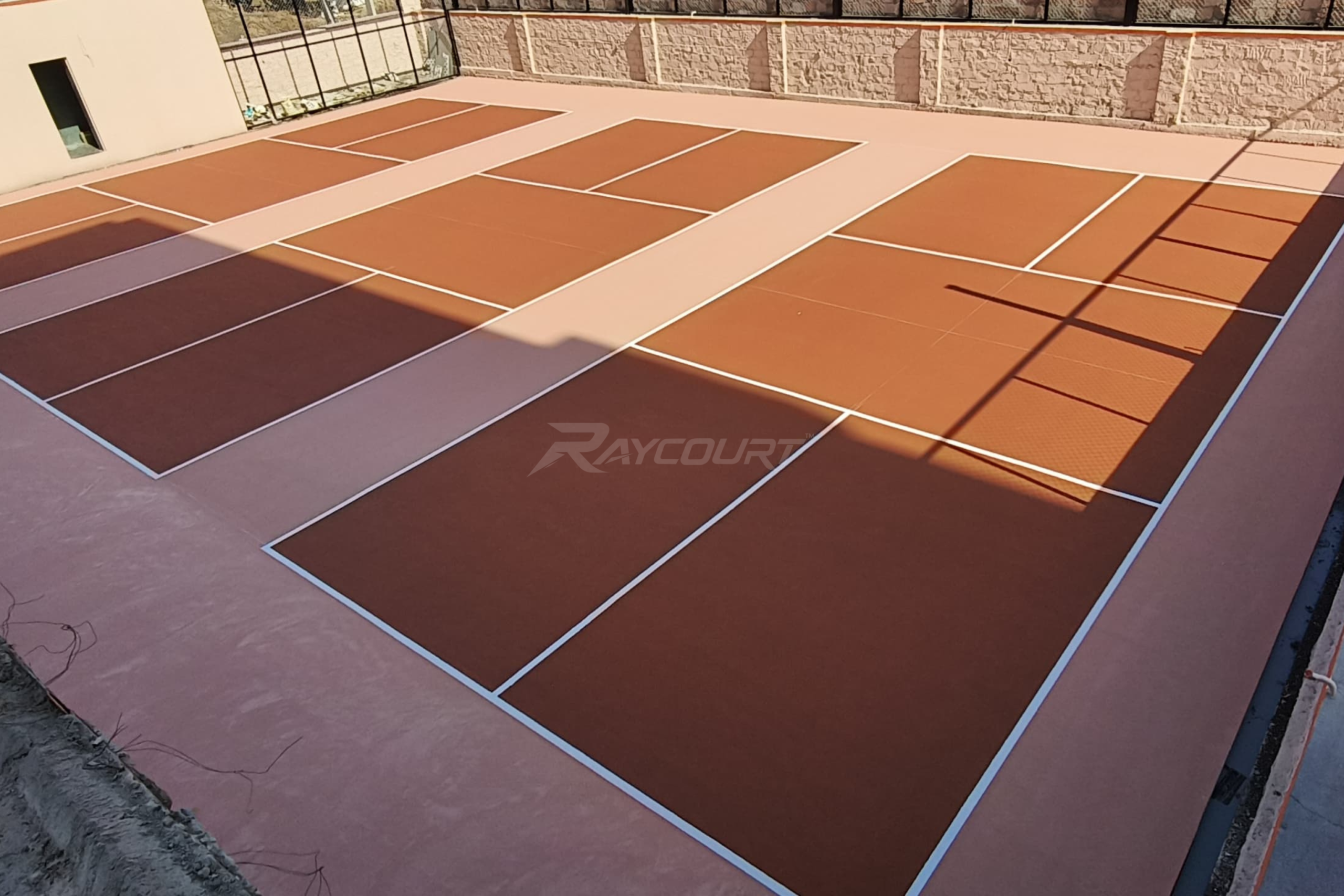
Most pickleball facilities use two tones. The playing court gets one colour, and the surrounding run-off gets another. This contrast shows players where the boundary lies. It also helps the eye follow a fast ball across the court. Furthermore, a two-tone layout gives the facility a polished, professional look.
Popular Colour Combinations
| Court Colour | Surround Colour | Visual Effect |
|---|---|---|
| Blue | Green | Strong contrast and a classic sports look |
| Teal | Navy | Modern, calm and easy on the eyes |
| Green | Red or terracotta | Warm contrast that frames the court well |
| Grey | Blue | Clean, contemporary and low glare |
Colour and Ball Visibility
Pickleballs usually come in bright yellow, green or orange. These colours stand out against blue and green surfaces. In contrast, a yellow ball can blend into a pale yellow court. Therefore, test colour samples with the real ball before you decide.
Colour and Surface Heat
Darker colours absorb more sunlight and feel warmer underfoot. Lighter shades reflect more light and stay cooler. In hot climates, this difference affects player comfort during afternoon play. However, very light colours can increase glare. So, balance heat and glare when you choose a shade.
Line Marking for Pickleball
Clear lines make the game fair. Every player, coach and official relies on them. Consequently, line marking deserves the same quality standards as the colour coats.
Line Colour and Contrast
Pickleball lines measure about 5 cm (2 inches) wide. White lines work well on darker courts. Yellow lines also stand out on blue and green surfaces. On shared courts, venues often choose a different colour for each sport. This choice prevents confusion between tennis, basketball and pickleball lines.
Line Paint Quality
Good line paint bonds firmly to the acrylic surface. It dries to a matte finish and resists wear. Thick, glossy paint can feel slippery when wet. Therefore, contractors apply line paint in thin, even coats. Crisp edges also matter, because players judge close calls by the line.
Overlaying Pickleball on Existing Courts
Many venues add pickleball lines to tennis or basketball courts. Contractors use tape or chalk to plan the layout first. Then they paint the final lines. This approach lets owners test player movement and net placement before making the layout permanent.
Indoor and Outdoor Pickleball Surfaces
Outdoor Pickleball Courts
Outdoor courts face the weather every day. Sun, rain, dust and temperature swings all test the coating. UV-stable acrylic colour coats protect the surface and hold their shade. Drainage also matters more outdoors. A gentle slope and a clean, level base keep water off the playing area.
Indoor Pickleball Courts
Indoor courts appear in gyms, sports halls and community centres. They avoid rain and direct sunlight, so coatings face less environmental stress. However, indoor slabs still need proper preparation. A dry, level base and a suitable cushion layer improve comfort and performance. Additionally, indoor lighting must give even, glare-free coverage across the court.
A Note on Sound
Many communities discuss the sound of pickleball. The paddle and ball create a distinctive pop. The surface itself plays a small role in this sound. Site planning, distance from homes and barriers matter far more. Therefore, consider the location carefully when you plan an outdoor court.
Pickleball on Shared and Multi-Sport Courts
Many venues add pickleball to courts that already host other sports. This approach saves space and expands the range of activities. Acrylic surfaces suit this strategy well, because contractors can add lines in contrasting colours without changing the base.
Tennis and Pickleball
Tennis courts offer the most natural home for shared pickleball play. The large footprint fits multiple pickleball courts. Portable nets allow quick changes between sports. Meanwhile, coloured lines keep each layout readable.
Basketball and Pickleball
Basketball courts work for pickleball when the layout avoids hoops and supports. Planners should check the space around the court for safe run-off. Additionally, a consistent acrylic finish across the whole area keeps play predictable.
Badminton, Multipurpose Halls and Pickleball
Badminton and pickleball share the same court size. As a result, halls can mark both layouts in different colours. Indoor acrylic surfaces suit this use, because they support comfortable footwork for both sports.
Dedicated Courts Versus Shared Courts
- Dedicated courts give pickleball players permanent nets, ideal run-off and no scheduling conflicts.
- Shared courts make use of existing space and serve several sports.
- Hybrid layouts combine both, with some permanent pickleball courts and some shared areas.
Consider your player numbers, your site space and your programme before you choose. In many cases, a hybrid approach works best.
Pickleball for Different Venues
Schools and Colleges
Schools need durable courts for physical education, clubs and events. Pickleball fits well, because students learn it quickly. A multi-sport acrylic surface lets schools host pickleball, basketball and tennis on the same area. Cushion layers also help students who spend long hours on the court.
Residential Communities
Housing societies and apartment complexes want amenities that residents use daily. Pickleball attracts families and older residents alike. Attractive colours also raise the visual appeal of the community. Consequently, a court with a quality finish becomes a social hub.
Clubs and Academies
Clubs and academies need performance and consistency. Players train hard and expect predictable bounce and grip. An acrylic system with the right texture supports serious training. Moreover, professional-looking lines and colours reinforce the club’s identity.
Resorts and Hospitality Venues
Resorts and hotels use pickleball as a guest activity. Guests value comfort, safety and appearance. A colourful, well-maintained court makes a strong impression. It also encourages guests to try the sport.
Footwear, Equipment and Surface Wear
Footwear affects both player safety and surface life. Players should wear non-marking court shoes with flexible soles and lateral support. Running shoes suit forward motion but offer little side support. Meanwhile, shoes with dark rubber soles can leave marks on lighter surfaces.
The ball also interacts with the surface. Outdoor pickleballs use harder plastic and smaller holes than indoor balls. Indoor balls feel softer and have larger holes. Both ball types behave best on a smooth, evenly textured surface. Consequently, surface quality shapes the entire equipment experience.
Finally, remember that wear concentrates in certain areas. Baselines, the non-volley zone and the areas near the net take the heaviest traffic. Regular inspection of these zones helps owners spot early wear and plan recoating.
Ready to build a court that performs for years to come?
Connect with Raycourt for sports flooring systems built for your project.
Safety Around the Pickleball Court
Player safety extends beyond the surface. Still, the surface plays a central role, so plan the whole court as one system.
Surface Safety
Players need a surface with even texture and no loose material. Sand, dust and debris create slip risks. Raised cracks and worn patches create trip risks. Regular inspection and quick repairs keep these hazards away. Furthermore, clean, matte lines give players secure footing when the court is wet.
Lighting and Visibility
Evening play needs even, glare-free lighting across the full court. Shadows and bright spots make the ball hard to track. Therefore, place light poles so that they cover the playing area and the run-off evenly. A matte acrylic finish also helps, because it reduces reflected glare.
Fencing, Nets and Surroundings
Fences keep balls on the court and protect people nearby. Net posts need secure fixing and padding where players may brush against them. Keep benches, water stations and bags outside the run-off. This habit clears the space for fast lateral movement.
Shade, Seating and Water
Players tire quickly in the sun. Shade structures, seating and drinking water make long sessions safer and more comfortable. As a result, players stay longer and enjoy the court more.
Maintaining an Acrylic Pickleball Court
A court that owners maintain well performs better and lasts longer. Fortunately, acrylic surfaces respond well to routine care.
Routine Cleaning
Sweep or blow off leaves, dust and debris regularly. Loose material acts like ball bearings under shoes and scratches the surface. Furthermore, debris traps moisture and encourages algae growth. Clean courts stay safer and look better.
Washing the Surface
Wash the court with low-pressure water and a mild cleaner when dirt builds up. Avoid harsh chemicals and high-pressure jets. They can damage the acrylic layers and lines. In addition, rinse thoroughly so that no residue remains. Residue can make the surface slippery.
Managing Water and Algae
Standing water invites algae and moss. Check the court after heavy rain and clear water from low spots. Algae make the surface slippery and hard to clean. Therefore, tackle any growth early with a suitable cleaner.
Crack and Damage Care
Small cracks grow with weather and use. Repair them early with suitable crack filler materials. Then recoat the area to keep the surface uniform. Prompt attention prevents larger problems later.
Knowing When to Recoat
Every acrylic surface eventually needs a fresh coat. Watch for these signs:
- Fading colour across the court or run-off
- Loss of texture, which makes the surface feel smooth and slick
- Worn or peeling lines
- Bare patches where the coating has thinned
- Hairline cracks that appear in several areas
Recoating restores colour, texture and lines. It also extends the life of the base and the earlier layers.
Expert Tip: Inspect your court at the start of every season. A quick walk-through often reveals small issues before they affect play.
Common Pickleball Surface Mistakes to Avoid
Even well-meaning projects can go wrong. Watch out for these common mistakes.
- Skipping the drainage check. Poor slope creates puddles, algae and early coating failure.
- Rushing the curing time. New asphalt and concrete need time before coating.
- Choosing the wrong texture. Too rough a finish hurts skin and shoes. Too smooth a finish creates slip risks.
- Using thick line paint. Heavy lines feel slippery when wet.
- Ignoring run-off space. Tight margins raise collision risks.
- Overlooking colour contrast. Poor contrast makes ball tracking harder.
- Neglecting maintenance. Small problems grow quickly when owners ignore them.
Each of these mistakes has a simple fix. Careful planning, quality material and good communication with your contractor prevent most of them.
Sustainability and Long-Term Performance
Durable surfaces reduce waste. A court that lasts longer needs fewer major interventions. Regular recoating renews colour and texture without rebuilding the base. Consequently, owners keep the existing foundation in service and avoid unnecessary demolition.
Shared courts also use land efficiently. One tennis footprint can host several pickleball courts, and one acrylic surface can serve many sports. In addition, consistent material quality reduces rework on site. Correct storage and careful application by contractors reduce material waste too.
When you compare manufacturers, ask about the environmental information they provide. Clear data sheets and honest answers help you make a responsible choice. Above all, remember that a court you plan well serves the community for many seasons. It also keeps demand for new materials low.
How to Choose a Sports Flooring Manufacturer for Pickleball
The manufacturer you choose shapes the quality of the finished court. Consequently, ask the right questions before you decide.
What to Look For
- Proven acrylic systems that suit outdoor and indoor sports
- Consistent batch quality so every delivery matches the last
- Technical data sheets with clear application guidance
- UV stability and flexibility for long-term colour and durability
- A broad colour and texture range for pickleball and multi-sport layouts
- Reliable supply so your project stays on schedule
- Support for contractors who apply the material
Why Manufacturer Focus Matters
A manufacturer that concentrates on sports flooring material understands how each product performs on real courts. Raycourt develops and supplies synthetic acrylic sports court flooring material and leaves installation to skilled contractors. This division of roles keeps each specialist focused on what it does best. As a result, owners get material expertise from the manufacturer and skilled workmanship from the contractor.
Ready to build a court that performs for years to come?
Connect with Raycourt for sports flooring systems built for your project.
Working With Your Contractor and Your Manufacturer
Great courts come from good teamwork. The manufacturer supplies the material. The contractor applies it. The owner sets the goals. Clear communication between all three prevents most problems.
What to Share With Your Contractor
- The number of courts and the layout you want
- The player mix and the expected traffic
- Your preferred court, run-off and line colours
- Whether you want a cushion layer
- Your timeline and local weather patterns
What to Ask Your Contractor
- Which base preparation steps will you follow?
- How will you test flatness and drainage?
- How will you protect the surface while it cures and dries?
- What weather limits apply to each coat?
- How will you mark the lines?
Why Application Conditions Matter
Acrylic coatings cure best in dry, moderate weather. Rain, extreme temperatures and high humidity can disturb the process. Therefore, good contractors watch the forecast and schedule each coat carefully. They also follow the mixing and drying guidance that the manufacturer provides. This discipline protects the bond between layers and preserves colour and texture.
Planning Your Pickleball Court: A Step-by-Step Roadmap
A clear plan keeps your project on track. Follow these steps in order.
- Define your players. Decide who will use the court and how often they will play.
- Confirm the site. Check the space, the orientation, the drainage and the surrounding buildings.
- Choose dedicated or shared courts. Decide how many courts you need and which sports they share.
- Assess the base. Inspect the asphalt or concrete for flatness, cracks and moisture.
- Select the acrylic system. Choose the layers, the texture and whether to add a cushion layer.
- Pick colours and lines. Test samples with the real ball and check contrast.
- Choose a contractor. Hire an experienced sports surfacing contractor and share the material guidance.
- Set a maintenance routine. Plan regular cleaning, inspections and eventual recoating.
Each step builds on the last. Skipping a step often causes problems later in the project.
Pickleball Court Trends to Watch
The sport keeps evolving, and court design evolves with it. Several trends now shape new projects.
- Dedicated pickleball complexes with many courts side by side
- Bold colour blocking that separates the court from the run-off
- Cushion layers that improve comfort for long sessions
- Permanent overlays on tennis and basketball courts
- Indoor pickleball halls that allow play in every season
These trends share one theme: quality. Players now expect courts that look sharp and play consistently. Owners, in turn, expect surfaces that last and recoat easily. Acrylic systems meet both expectations, because manufacturers can tune colour, texture and cushioning to each project.
Looking ahead, courts will likely serve even more players and more sports. Therefore, flexible layouts and durable materials will matter more than ever. Owners who plan for this flexibility today will adapt easily tomorrow.
Frequently Asked Questions About Pickleball Courts
A pickleball court measures 20 feet by 44 feet (6.1 metres by 13.41 metres) for both singles and doubles. Plan an overall area of about 30 feet by 60 feet (9.14 metres by 18.29 metres) per court. This extra space gives players room to move safely.
An acrylic-coated hard court suits most projects. It offers consistent bounce, controlled traction and a wide colour range. Contractors can also add a cushion layer for extra comfort.
Yes. Many venues mark pickleball lines directly on acrylic tennis courts and use portable pickleball nets. Choose a different line colour, and check that the surface is clean and level first.
The interval depends on climate, player traffic and the original system. Watch for fading colour, lost texture, worn lines and bare patches. Regular cleaning and prompt crack repair delay the need for a full recoat.
Conclusion: Building a Better Pickleball Court
Pickleball rewards courts that combine correct size, a well-prepared base and a high-quality playing surface. Acrylic systems deliver on all three. They provide consistent bounce, controlled grip, comfort and lasting colour. Moreover, they adapt to tennis, basketball and badminton layouts, so venues can offer more sports on the same space.
Start with a clear plan. Define your players, check your site and inspect your base. Then choose a proven acrylic system, select colours that boost ball visibility and mark crisp lines that bond firmly. Finally, commit to regular maintenance. These steps protect the court and keep players returning.
Raycourt supports your project with synthetic acrylic sports court flooring material that meets the demands of busy courts. Combine our material with an experienced contractor, and your pickleball facility will perform well for many years.