
Introduction
Synthetic tennis court flooring gives players a consistent, safe, and durable surface for every match. An acrylic coating system solves the problems that natural surfaces create: uneven bounce, surface erosion, and constant upkeep. This guide explains what synthetic tennis court flooring actually is. It also covers how manufacturers build it and why it remains the standard choice for modern courts. You will learn how to compare flooring types, understand performance standards, and plan maintenance before your next project begins.
This guide serves facility owners, sports consultants, architects, and contractors evaluating flooring options. Whether you manage a single recreational court or a multi-court academy, the fundamentals stay the same. Understanding material composition and performance standards helps you make a confident, informed decision.
Tennis facility owners often ask the same question first: which surface delivers the best balance of performance and longevity? Synthetic acrylic flooring answers that question directly. It combines a hard-wearing base with a textured, colour-stable topcoat that resists cracking, fading, and moisture damage. Unlike clay or grass, it needs no seasonal rebuilding. It simply performs, match after match, year after year.
What Is Synthetic Tennis Court Flooring?
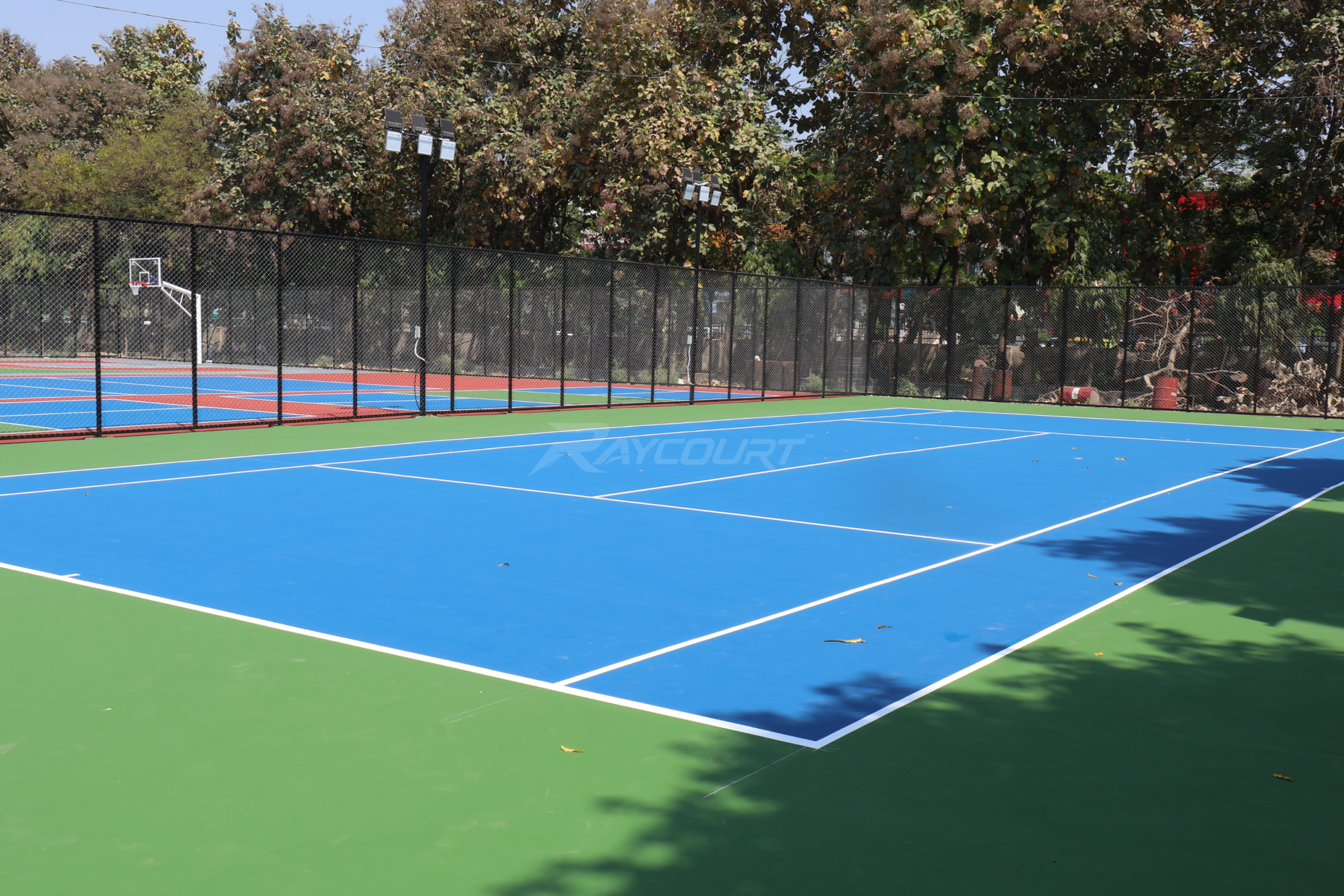
Synthetic tennis court flooring is a multi-layer acrylic coating system. Manufacturers apply it over a rigid base, typically asphalt or concrete. They formulate the resin to bond tightly with that base. At the same time, the resin stays flexible enough to resist cracking under stress. The result is a surface that behaves consistently, regardless of local weather or court usage levels.
Unlike a single-layer paint, a true synthetic system builds performance in stages. Each layer serves a distinct purpose: levelling, cushioning, colour, and texture. Together, these layers create predictable ball bounce, reliable traction, and a comfortable playing experience for athletes at every level.
The Role of Acrylic Resin Systems
Acrylic resin acts as the binding agent that holds each layer together. The resin cures into a tough, weather-resistant film soon after application. Manufacturers blend the resin with silica sand, rubber granules, or fibres to fine-tune texture, hardness, and cushioning. This blending process reveals a manufacturer’s true formulation expertise, and it makes the biggest difference in final court quality.
Raycourt formulates its acrylic resins to resist UV degradation, water ingress, and surface chalking. These three factors cause most premature failures in lower-quality synthetic systems. A well-formulated acrylic layer keeps its colour, texture, and grip for years of active play.
Manufacturers test each resin batch under controlled laboratory conditions before it leaves the factory. This testing confirms viscosity, drying time, and long-term flexibility all meet strict specifications. Consistent batch testing protects court quality across every project a manufacturer supplies, large or small.
Why Synthetic Acrylic Surfaces Dominate Modern Tennis Court Construction
Court owners, federations, and academies increasingly specify synthetic acrylic flooring over natural alternatives. The reasons go beyond simple convenience. Acrylic systems solve structural, safety, and performance challenges that older surface types cannot match.
Consistent Ball Bounce and Player Confidence
Players depend on predictable ball behaviour to compete at their best. A synthetic acrylic surface delivers this consistency because manufacturers control every variable during production. The texture, thickness, and resin ratio stay uniform across the entire court. Grass and clay, by contrast, shift with weather, wear patterns, and maintenance quality.
Consistent bounce also builds player trust. Athletes can commit fully to a shot when they know how the ball will respond. This reliability matters at every level, from recreational clubs to competitive academies.
Aesthetic Consistency and Branding Opportunities
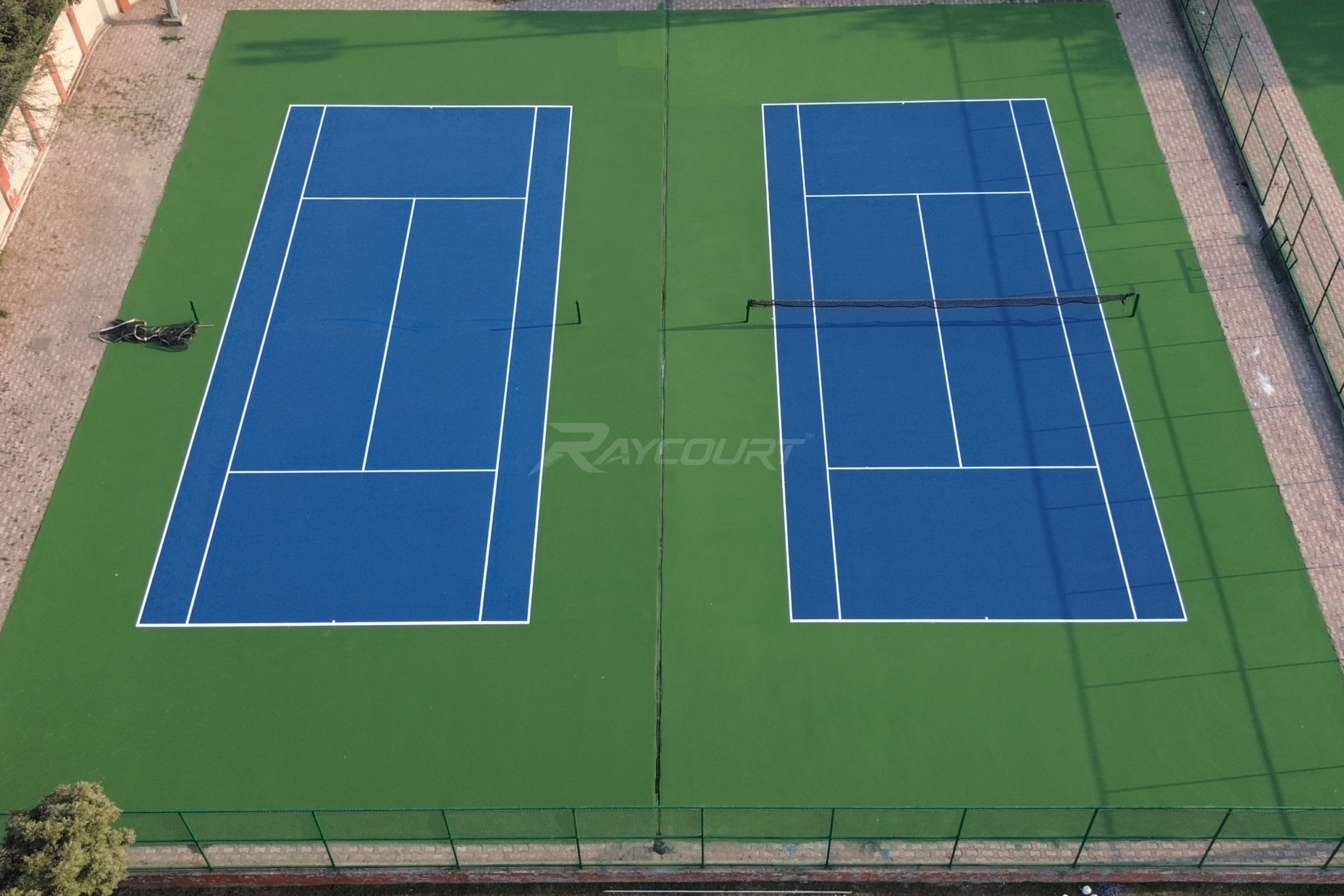
Synthetic acrylic systems let facility owners choose precise, consistent colour combinations. Clubs and academies often use colour to reinforce branding across multiple courts. This visual consistency also helps players and spectators distinguish court boundaries clearly during play.
Manufacturers can match specific colour codes across large multi-court installations. This matching matters considerably for academies managing a unified visual identity across several venues. Clear colour contrast between the court and surrounding run-off areas also improves visibility for players and spectators alike. Broadcast cameras and photographers benefit from this same visual clarity during tournament coverage.
Durability Against Weather and Wear
Synthetic acrylic flooring withstands intense sun, heavy rain, and temperature swings far better than natural surfaces. The cured resin layer forms a protective barrier against moisture penetration. This barrier reduces the risk of base cracking. Base cracking ranks among the most expensive long-term problems a court can develop.
Raycourt formulates its systems to flex slightly under thermal stress. This flexibility prevents the brittle cracking that rigid, low-quality coatings often show after a few seasons. A durable topcoat also resists abrasion from constant foot traffic and equipment use.
Safety and Injury Prevention
Player safety depends heavily on surface consistency and shock absorption. A textured acrylic finish provides reliable traction, which reduces slipping during quick lateral movements. Cushioned acrylic systems also absorb impact forces, lowering stress on players’ joints during long matches.
Uneven or degraded surfaces increase injury risk considerably. Cracks, puddles, and worn patches create unpredictable footing. A well-maintained synthetic system removes these hazards through consistent thickness and controlled texture across the full court area.
Low Maintenance Demands
Synthetic acrylic courts need far less upkeep than clay or grass surfaces. Owners avoid daily rolling, watering, or line marking that natural courts typically require. Routine cleaning and periodic recoating keep an acrylic surface performing well for many playing seasons.
This lower maintenance burden frees up facility staff for other priorities. Clubs and schools can dedicate more time to programming and coaching rather than constant surface repair.
Expert Tip: Schedule a full court inspection at the start of each season. Early detection of hairline cracks prevents small issues from becoming costly structural repairs later.
Understanding the Layer System Beneath Every Court
A synthetic tennis court is never just a single coat of paint. It is a layered system, and each layer contributes a specific function. Understanding this structure helps facility owners evaluate flooring quality more effectively.
Base and Levelling Courses
The base layer, typically asphalt or concrete, provides structural stability for the entire system. Contractors must grade and compact this base correctly before any acrylic coating begins. A poorly prepared base undermines even the best acrylic formulation, since cracks and unevenness telegraph straight through to the surface.
Above the base, manufacturers often specify an acrylic resurfacer layer. This layer fills minor imperfections and creates a smooth, uniform canvas for subsequent coats. It also improves adhesion between the base and the cushioning layers above it.
Cushioning and Acrylic Coating Layers
Cushioned systems add one or more acrylic layers that include rubber granules. This combination creates a resilient surface that absorbs shock during play. Standard hard-court systems skip this cushioning step, relying instead on textured acrylic coats for grip and durability.
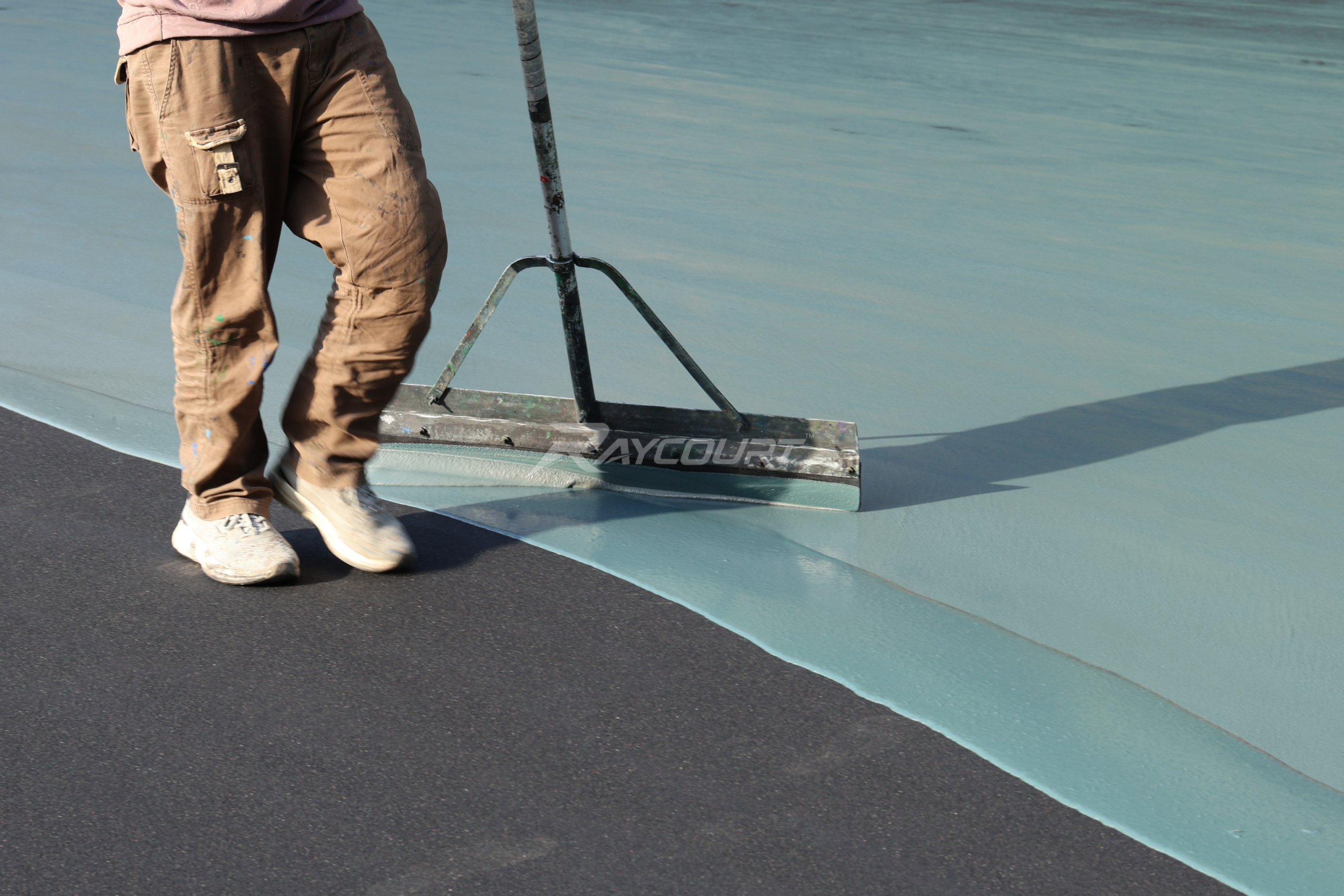
The final coats introduce colour and texture through a blend of acrylic resin, silica sand, and pigment. Manufacturers apply these coats in multiple thin layers rather than one thick pass. This approach produces a more even, durable finish that resists peeling.
Number of Coats and Application Thickness
Manufacturers typically specify multiple thin coats rather than one thick application layer. Thin coats cure more evenly and bond more reliably to the layer beneath them. This approach reduces the risk of bubbling, cracking, or uneven texture across the finished surface.
Total system thickness varies depending on whether a project includes cushioning layers. Cushioned systems generally require greater total thickness than standard hard-court configurations. Manufacturers specify exact coat counts and thickness targets within their technical documentation.
| Layer | Primary Function | Typical Composition |
|---|---|---|
| Base course | Structural stability | Asphalt or concrete |
| Resurfacer | Levelling and adhesion | Acrylic resin blend |
| Cushion coat (optional) | Shock absorption | Acrylic and rubber granules |
| Colour coat | Aesthetics and UV protection | Pigmented acrylic resin |
| Texture/line coat | Traction and markings | Acrylic with silica sand |
This layered approach explains why synthetic tennis court flooring performs so predictably. Every layer works with the others, rather than in isolation, to produce a stable, high-performing playing surface.
Ready to build a court that performs for years to come?
Connect with Raycourt for sports flooring systems built for your project.
What to Discuss With Your Installation Contractor
Raycourt manufactures flooring materials, and qualified contractors handle the physical installation on site. Informed buyers still benefit from understanding key installation factors, even without handling the work themselves. These factors directly affect how well the finished court performs for years afterward.
Base Preparation and Drainage Planning
Contractors must grade the base correctly to prevent water pooling on the finished surface. A gentle, consistent slope across the court allows rainwater to drain quickly after storms. Poor drainage planning undermines even the highest-quality acrylic system over time.
Application Conditions and Curing Time
Temperature and humidity both affect how acrylic coatings cure during application. Contractors should follow manufacturer guidelines regarding minimum and maximum application temperatures closely. Rushing the curing process can weaken adhesion between layers and shorten overall court lifespan.
Line Marking Accuracy
Accurate, consistent line markings matter for fair play and a professional appearance. Contractors typically apply these markings during the final coating stage using precise templates. Buyers should confirm that their contractor follows official court dimension standards throughout this process.
Coordinating Timelines Between Manufacturer and Contractor
Material delivery schedules must align closely with the contractor’s installation timeline. Acrylic products often have specific storage and shelf-life requirements before application. Early coordination between manufacturer and contractor prevents costly delays once installation work begins.
Expert Tip: Request a written application and curing schedule from your contractor before work begins. This schedule helps you plan facility downtime accurately.
Types of Synthetic Tennis Court Flooring Systems
Not every synthetic tennis court needs the same system. Climate, usage intensity, and player level all influence which acrylic configuration works best. Raycourt manufactures several system types to match these varied requirements.
Cushioned Acrylic Systems
Cushioned systems add rubber-modified acrylic layers beneath the colour coat. This construction reduces impact stress on players’ joints during extended play sessions. Academies and clubs that host frequent, high-volume play often choose cushioned systems for player comfort and injury prevention.
Standard Hard Acrylic Systems
Standard hard-court systems skip the rubber cushioning layer entirely. They rely on multiple acrylic coats over a well-prepared base for durability and consistent bounce. This configuration suits high-traffic public courts where maximum durability matters more than added cushioning.
Textured Acrylic Overlays
Textured overlays increase silica sand content within the topcoat to boost traction. Coaches and players who prioritise quick lateral movement often prefer this added grip. Manufacturers can adjust texture levels to create faster or slower ball-pace characteristics, depending on player preference.
Colour-Coated Acrylic Finishes
Every synthetic system finishes with a pigmented acrylic topcoat. This coat determines the court’s final colour, UV resistance, and visual consistency. Raycourt formulates these finishes to resist fading, so courts keep their appearance through years of sun exposure.
| System Type | Key Characteristic | Best Suited For |
|---|---|---|
| Cushioned acrylic | Shock absorption | High-volume academies and clubs |
| Standard hard acrylic | Maximum durability | High-traffic public courts |
| Textured acrylic overlay | Enhanced traction | Fast-paced competitive play |
| Colour-coated finish | UV and colour stability | All court types |
Synthetic Acrylic Flooring Compared With Other Tennis Court Surfaces
Facility owners often weigh synthetic acrylic flooring against clay, natural grass, and other hard-court systems. Each surface type offers a different balance of speed, maintenance demand, and long-term durability. Understanding these trade-offs helps buyers match a surface to their specific facility goals.
Synthetic Acrylic vs Clay Courts
Clay courts produce a slow, high-bounce game that many players genuinely enjoy. However, clay requires daily watering, rolling, and levelling to remain playable. Synthetic acrylic flooring delivers a faster, more consistent game while needing far less daily attention.
Synthetic Acrylic vs Natural Grass Courts
Grass courts offer a fast, low-bounce surface prized in several traditional tournaments. Grass also demands constant mowing, watering, and reseeding to remain playable throughout a season. Synthetic acrylic systems provide reliable performance without this intensive horticultural upkeep.
Synthetic Acrylic vs Artificial Turf for Tennis
Artificial turf uses synthetic fibres and infill rather than a cured acrylic coating. This construction can suit multi-sport facilities that host tennis alongside other activities. Dedicated acrylic systems, however, typically offer more precise, tennis-specific bounce and traction control.
Synthetic Acrylic vs Cushioned Rubber Hard Courts
Some hard courts rely on rubber-based cushioning systems rather than acrylic coatings. These systems can offer strong shock absorption but often involve more complex build-ups. Cushioned acrylic variants deliver comparable comfort with a simpler, more consistent layer structure.
| Surface Type | Ball Pace | Maintenance Intensity | Weather Sensitivity |
|---|---|---|---|
| Synthetic acrylic | Medium | Low | Low |
| Clay | Slow | High | High |
| Natural grass | Fast | Very high | High |
| Artificial turf | Medium-fast | Moderate | Low |
Facility owners should weigh these characteristics against their own player base and climate. A club hosting frequent junior programmes may prioritise consistent, forgiving bounce above all else. A facility in a wet climate, meanwhile, may prioritise drainage and moisture resistance most heavily.
Ready to build a court that performs for years to come?
Connect with Raycourt for sports flooring systems built for your project.
Quick Answers: Synthetic Tennis Court Flooring at a Glance
Does synthetic acrylic flooring work in hot climates?
Yes. Acrylic resin resists UV degradation and maintains colour stability under intense, prolonged sun exposure.
Can manufacturers customise court colour and speed?
Yes. Pigment ratios control colour, while sand content and texture adjust ball pace and traction levels.
Does synthetic flooring need a special base?
Yes. A properly graded and compacted asphalt or concrete base supports long-term surface performance.
Do synthetic tennis court systems need professional installation?
Yes. Trained contractors ensure correct base preparation, coating application, and curing for reliable long-term performance.
Performance Standards That Define Court Quality
Court performance is not a matter of opinion; measurable standards define it. Manufacturers, federations, and testing bodies use specific benchmarks to evaluate ball bounce, traction, and shock absorption. Understanding these standards helps buyers separate genuine quality from marketing claims.
Ball Bounce and Court Pace Rating
The International Tennis Federation classifies court surfaces using a Court Pace Rating system. This rating ranges from Category 1 (slow) to Category 5 (fast), based on how the surface affects ball speed and bounce height. Synthetic acrylic courts typically fall into medium-pace categories, offering balanced play for a wide range of skill levels.
Manufacturers test acrylic formulations against this classification framework during product development. Consistent pace rating across an entire court, corner to corner, indicates strong manufacturing quality control.
Buyers should ask their manufacturer directly which Court Pace Rating category a specific formulation targets. This information helps coaches and players anticipate how a new court will feel during play.
Traction and Slide Control
Traction determines how confidently a player can start, stop, and change direction. Silica sand within the topcoat gives acrylic surfaces controlled traction. Too little texture creates a slippery surface; too much increases injury risk from excessive grip during pivots.
Raycourt calibrates sand particle size and distribution to balance these two extremes carefully. The goal is a surface that grips reliably without restricting natural movement.
Shock Absorption and Player Comfort
Shock absorption reduces the impact force that travels through a player’s legs and joints during play. Cushioned acrylic systems measurably outperform hard-court configurations in this category. Facilities that host junior programmes or frequent tournament play often prioritise this performance metric.
Independent testing labs measure shock absorption using standardised force-reduction tests. Buyers should request this documentation when comparing systems from different manufacturers.
Expert Tip: Always request Court Pace Rating documentation and shock-absorption test data before finalising a flooring specification. Independent verification protects your investment.
Weather Resistance and Climate Adaptability
Climate conditions place enormous stress on any outdoor sports surface. Synthetic acrylic flooring must perform reliably across intense heat, heavy rainfall, and, in some regions, freezing temperatures. Manufacturers formulate their systems specifically to withstand these varied conditions.
UV Stability and Colour Retention
Prolonged sun exposure breaks down poorly formulated coatings over time, causing fading and chalking. High-quality acrylic resin resists this breakdown through UV-stable pigment technology. Courts installed in intense-sun regions particularly benefit from this formulation approach.
Colour retention also affects visibility and playability. A faded court surface can make line markings harder to see, affecting fair play during matches.
Performance in Humid and Monsoon Climates
Heavy rainfall and high humidity test a surface’s drainage and moisture resistance. Properly formulated acrylic coatings resist water absorption, which prevents the base layer from weakening over time. Correct court slope and drainage planning work alongside the acrylic system to shed water quickly after rain.
Facilities in monsoon-prone regions should prioritise systems with proven moisture resistance credentials. Poor drainage combined with weak acrylic formulation accelerates surface failure considerably.
Performance in Cold and Freeze-Thaw Climates
In colder regions, freeze-thaw cycles can crack rigid surfaces that lack flexibility. Manufacturers formulate some acrylic systems with flexible polymer blends specifically for this challenge. These systems resist cracking far better than brittle alternatives. They also allow the surface to expand and contract slightly without permanent damage.
Facility owners in variable climates should discuss regional performance data with their flooring manufacturer before committing to a specific formulation.
Performance in Coastal and High-Salinity Environments
Coastal facilities face salt-laden air, which can accelerate wear on poorly formulated coatings. Salt exposure can weaken pigment stability and increase surface degradation over time. Manufacturers formulate corrosion-resistant acrylic systems specifically to withstand these demanding coastal conditions.
Facility owners near coastlines should discuss salt-air performance data with their manufacturer directly. This conversation helps confirm the formulation suits the specific local environment closely.
Maintenance Practices That Extend Court Life
Even the best synthetic acrylic system needs consistent maintenance to perform well over many years. Fortunately, this maintenance remains far simpler than natural surface upkeep. A clear routine protects the investment and keeps courts safe for players.
Routine Cleaning
Regular sweeping and washing remove debris, algae, and organic growth from the court surface. Neglected debris traps moisture against the acrylic coating, which can accelerate wear in humid climates. Facility staff should clean courts on a consistent schedule, particularly after storms or heavy pollen seasons.
Pressure washing works well for deeper cleaning, though operators should avoid excessive pressure that could damage the topcoat. Mild detergent solutions handle most organic staining effectively without harming the acrylic surface.
Preventing Standing Water and Algae Growth
Standing water after rainfall encourages algae and moss growth on acrylic surfaces. This growth creates a genuinely slippery, hazardous playing surface if facility staff leave it unaddressed. Staff should clear standing water and treat algae promptly after wet weather.
Proper court slope, established during initial construction, prevents most standing water problems from developing. Facilities in consistently humid climates should inspect for algae growth more frequently than drier regions do.
Periodic Recoating
Acrylic surfaces benefit from a fresh topcoat every few years, depending on usage intensity and climate exposure. Recoating restores colour vibrancy, texture consistency, and UV protection. This process extends court lifespan considerably compared to leaving an ageing topcoat in place.
Facility managers should track usage hours and visual wear indicators to plan recoating schedules proactively. Waiting until visible deterioration appears often means the base layer has already started absorbing damage.
Crack Monitoring and Repair Coordination
Hairline cracks can develop in the base layer beneath even a well-maintained acrylic coating. Facility staff should inspect courts regularly for these early warning signs. Since Raycourt supplies flooring materials rather than installation services, we recommend coordinating repairs promptly with a qualified surfacing contractor.
Addressing small cracks early prevents water infiltration and further structural damage. A proactive repair approach costs far less effort than reconstructing a severely damaged court later.
Expert Tip: Keep a simple maintenance log for each court, noting cleaning dates, recoating cycles, and any repairs. This record helps predict future maintenance needs accurately.
Ready to build a court that performs for years to come?
Connect with Raycourt for sports flooring systems built for your project.
Sustainability in Synthetic Court Flooring Manufacturing
Sustainability increasingly influences how facilities select construction materials, including sports flooring. Synthetic acrylic systems offer several environmental advantages over natural surface alternatives. Understanding these benefits helps facility owners make more informed, responsible decisions.
Acrylic courts require no ongoing irrigation, unlike grass surfaces that consume significant water resources. This reduction in water use matters considerably in drought-prone regions. Synthetic systems also generate less waste over their lifespan, since recoating extends usable life rather than requiring full reconstruction.
Manufacturers increasingly formulate acrylic resins with reduced volatile organic compound content. Lower-VOC formulations improve air quality during and after application. Facility owners who prioritise environmental responsibility should ask manufacturers directly about VOC content and sourcing practices.
Raycourt continues refining its formulations to balance performance with environmental responsibility. This ongoing development reflects broader industry trends toward more sustainable sports surface manufacturing.
Synthetic Tennis Court Flooring for Different Facility Types
Facility type significantly influences which synthetic acrylic system best suits a project. Recreational clubs, schools, academies, and public parks all place different demands on court flooring. Matching system characteristics to facility type improves both player experience and long-term value.
Recreational and Community Clubs
Recreational clubs typically host moderate, varied usage across players of different skill levels. A standard hard acrylic or lightly cushioned system often suits this usage pattern well. These facilities benefit most from durability and low maintenance rather than specialised performance tuning.
Schools and Educational Institutions
School courts face heavy, concentrated usage during term time and lighter use during holidays. Durability and slip resistance become particularly important, given the wide range of student skill levels present. A textured acrylic finish helps maintain consistent traction across many different play styles.
Competitive Academies and Training Centres
Academies training competitive players need highly consistent bounce and precise pace control. Cushioned acrylic systems help protect young athletes’ joints during intensive daily training sessions. Consistency across every court within an academy also supports fair, comparable training conditions.
Public Parks and Municipal Facilities
Public courts endure heavy foot traffic and minimal day-to-day supervision compared with private clubs. Standard hard acrylic systems, valued for their durability, typically suit these high-traffic public settings well. Municipal facilities also benefit from the lower long-term maintenance these systems demand.
Facility owners can also evaluate a manufacturer’s raw material sourcing practices during their sustainability assessment. Manufacturers who source responsibly and test rigorously tend to produce more consistent, longer-lasting systems. This durability itself reduces long-term material waste, since fewer resurfacing cycles occur across a court’s working life. A durable, well-formulated court ultimately supports both player experience and environmental goals together.
How to Choose the Right Synthetic Tennis Court Flooring Manufacturer
Selecting a flooring manufacturer significantly affects long-term court performance and reliability. Several factors separate dependable manufacturers from those offering inconsistent or poorly tested products. Facility owners should evaluate these factors carefully before committing to a supplier.
Material Consistency and Quality Control
Consistent material quality across every batch matters enormously for long-term court performance. Manufacturers with strong quality control processes test raw materials and finished products regularly. This consistency ensures that a court built today performs identically to one built years earlier using the same specification.
Ask potential suppliers about their testing protocols and quality assurance processes directly. Reputable manufacturers document these processes transparently and share results when requested.
Technical Support and Documentation
Strong manufacturers provide clear technical documentation, including application guidelines and performance specifications. This documentation helps contractors install the system correctly and helps facility owners understand what they are purchasing. Responsive technical support also proves valuable when questions arise during or after installation.
Raycourt provides detailed technical data sheets and application guidance for every product in our range. This transparency helps contractors achieve consistent, high-quality results on every project.
Manufacturer Reputation and Industry Standing
A manufacturer’s reputation often reflects years of consistent product performance across many installations. Facility owners can research a manufacturer’s standing within sports flooring and tennis federation communities. Positive relationships with contractors and consultants also signal dependable, professional manufacturing practices.
Raycourt has built its reputation through consistent material quality and responsive technical support. This reputation reflects our ongoing commitment to dependable acrylic formulations for every project we support.
Range of System Options
Different facilities have different performance priorities, from cushioning to speed to traction levels. A manufacturer offering multiple system configurations can match products more precisely to specific project needs. This flexibility proves valuable whether you’re building a single recreational court or a multi-court academy facility.
Facility owners should discuss their specific priorities openly with manufacturers before selecting a system. This conversation helps identify which formulation best matches the intended use case.
Common Specification Mistakes to Avoid
Even experienced facility owners sometimes make avoidable mistakes when specifying synthetic tennis court flooring. Recognising these pitfalls early protects both the project timeline and long-term court performance.
Choosing a System Without Considering Usage Volume
Some buyers select a system based on appearance alone, ignoring expected usage volume. High-traffic facilities need more durable, often cushioned, systems than occasional recreational courts see. Matching system type to actual usage prevents premature wear and unnecessary early recoating.
Overlooking Regional Climate Data
Buyers sometimes apply a generic specification without accounting for local climate conditions. A formulation suited to dry, temperate regions may underperform in intense heat or heavy monsoon rainfall. Discussing regional performance data with your manufacturer prevents this costly mismatch.
Skipping Base Assessment Before Resurfacing
Facility owners occasionally assume an existing base can support new acrylic coating without inspection. Underlying cracks or drainage issues can undermine even a premium resurfacing system quickly. A thorough base assessment should always precede any resurfacing decision.
Ignoring Long-Term Maintenance Planning
Some buyers focus entirely on initial installation and neglect ongoing maintenance planning. Skipped cleaning and delayed recoating shorten court lifespan considerably over time. Building a maintenance schedule from day one protects the investment for years ahead.
Overlooking Manufacturer Documentation
Buyers sometimes skip requesting technical data sheets and performance documentation from their supplier. This documentation confirms formulation quality and helps contractors apply the system correctly. Always request full documentation before finalising any material order.
Frequently Asked Questions
Synthetic tennis court flooring uses a layered system of resins, fillers, and pigments. Manufacturers engineer this system specifically for sports performance, not decoration. Ordinary acrylic paint lacks the texture, cushioning, and durability that dedicated sports formulations provide. Manufacturers design each layer for a specific structural or performance purpose.
Lifespan depends heavily on climate, usage intensity, and maintenance consistency. Courts that receive regular cleaning and periodic recoating maintain strong performance for many playing seasons. Neglected maintenance, by contrast, shortens useful lifespan considerably regardless of initial material quality.
In many cases, manufacturers can formulate resurfacing systems for existing asphalt or concrete bases. However, the base must first meet structural and levelling requirements before any acrylic coating begins. A qualified surfacing contractor should assess the existing base before recommending a resurfacing approach.
Yes, surface composition directly affects ball speed and bounce height. Acrylic systems typically produce a medium-pace surface, according to Court Pace Rating standards. Manufacturers can adjust texture and formulation slightly to shift pace characteristics within that medium range.
Yes, manufacturers formulate acrylic systems for both environments, though outdoor formulations emphasise UV and weather resistance more heavily. Indoor courts face different challenges, such as consistent temperature and controlled humidity. Discussing your specific installation environment with your manufacturer ensures the correct formulation.
Building a Court That Performs for Years to Come
Synthetic tennis court flooring combines engineering precision with practical, long-term durability. From base preparation through the final colour coat, every layer contributes to a surface that plays consistently and safely. Facility owners who understand this layered system make far better decisions when comparing manufacturers and specifications. That understanding pays off across every season a court remains in active use.
Raycourt continues developing acrylic formulations that balance performance, durability, and environmental responsibility. Our technical team supports contractors and facility owners throughout the specification process. This support spans initial material selection through long-term maintenance planning. As a dedicated materials manufacturer, we focus entirely on material performance. We deliver consistent, high-performing acrylic systems for every court we help bring to life.
Every section in this guide points toward one central idea: informed specification produces better courts. Facility owners who understand layer structure, performance standards, and climate factors make stronger purchasing decisions. Raycourt stands ready to support that decision with proven acrylic formulations and clear technical guidance.
Ready to build a court that performs for years to come? Connect with Raycourt for sports flooring systems built for your project.
Ready to build a court that performs for years to come?
Connect with Raycourt for sports flooring systems built for your project.