

Introduction: What Makes a Great Badminton Ground?
A badminton ground is a flat, precisely marked playing area measuring 13.4 metres by 6.1 metres for doubles. However, size alone does not make a court great. A truly reliable badminton ground combines three essentials: accurate dimensions, enough clear space and the right playing surface.
Most people focus on the lines and the net first. Yet the surface beneath the players shapes every lunge, jump and recovery step. A poor surface leads to slips, sore joints and uneven footing. In contrast, a well-engineered surface gives players confident grip, controlled cushioning and a true, level feel.
That is where synthetic acrylic flooring comes in. Acrylic systems suit both indoor halls and outdoor courts. Moreover, they resist weather, hold their colour and need simple care. As a result, more schools, residential societies and academies now choose acrylic for their badminton ground projects.
In this guide, we explain everything you need to know. First, we cover official dimensions, markings and clearances. Next, we compare popular surface options and break down each layer of an acrylic system. Finally, we share practical planning steps, maintenance advice and answers to common questions.
Whether you manage a school, a sports club or a housing society, this guide will help you plan with confidence. Let us start with the basics.
What Is a Badminton Ground?
A badminton ground is the complete playing area for the sport. It includes the marked court, the net system, the surrounding run-off space and the surface underfoot. Many people use “badminton court” and “badminton ground” interchangeably. However, the word “ground” often hints at the full facility rather than just the painted rectangle.
Badminton looks simple from the stands. In reality, it ranks among the fastest racket sports in the world. Players change direction constantly, lunge deep into corners and leap for powerful smashes. Consequently, the ground must support explosive movement without causing strain or injury.
A well-planned badminton ground does several jobs at once:
- Defines fair play through accurate lines and net height
- Protects players with a stable, slip-resistant surface
- Supports performance by returning energy and cushioning impact
- Lasts for years with minimal repairs and simple upkeep
Therefore, every decision matters, from the base underneath to the final coat of line paint.
Indoor vs Outdoor Badminton Grounds
Competitive badminton almost always takes place indoors. The shuttlecock weighs only around five grams, so even a light breeze can push it off course. Indoor halls also give players steady lighting and controlled temperatures.
That said, outdoor badminton grounds remain hugely popular for recreation. Housing societies, schools, parks and resorts often build open-air courts for casual and community play. Outdoor courts work well for morning and evening sessions when winds tend to settle.
Each setting brings its own surface needs:
- Indoor grounds need grip, cushioning and a low-glare finish
- Outdoor grounds need UV resistance, weather durability and good drainage
Fortunately, synthetic acrylic flooring adapts to both environments. We explore this in detail later in the guide.
Badminton Ground Dimensions and Layout
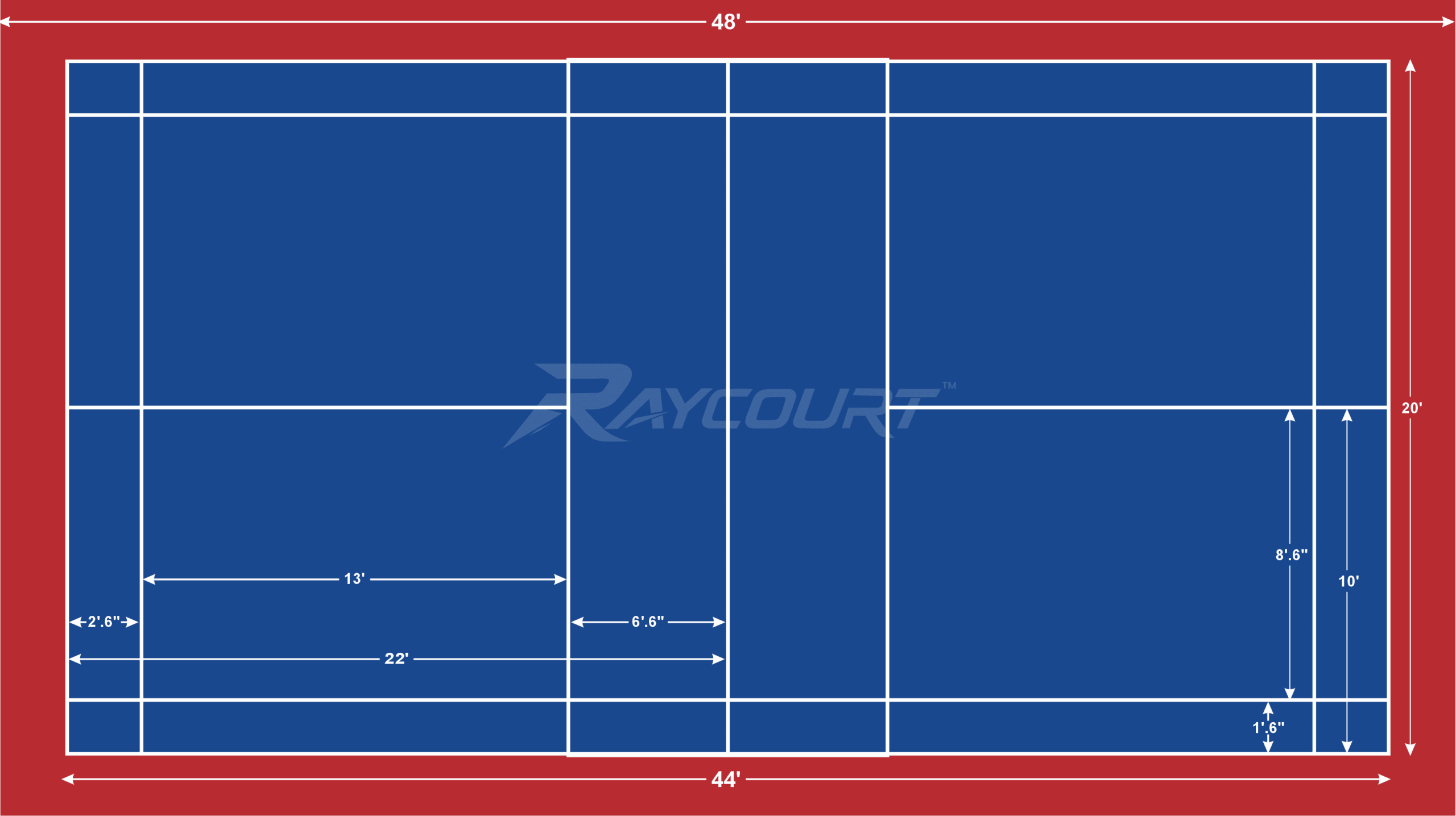
Accurate dimensions form the foundation of any badminton ground. The Badminton World Federation (BWF) sets these measurements in its official Laws of Badminton. Following them ensures your court feels familiar to every player who steps onto it.
The table below summarises the key measurements for a standard badminton ground.
| Element | Measurement |
|---|---|
| Overall court length | 13.40 m |
| Doubles court width | 6.10 m |
| Singles court width | 5.18 m |
| Short service line from net | 1.98 m |
| Doubles long service line from back boundary | 0.76 m |
| Line width | 40 mm |
| Net height at centre | 1.524 m |
| Net height at posts | 1.55 m |
| Court diagonal (full court) | 14.723 m |
One court layout serves both singles and doubles. The outer side lines mark the doubles boundary. Meanwhile, the inner side lines mark the singles boundary. Similarly, the back boundary line acts as the singles long service line, while a separate inner line serves doubles.
Court Lines and Markings
Lines carry real weight in badminton. Officials judge every close call by them. According to BWF rules, all lines must measure 40 mm wide. Moreover, the rules recommend white or yellow lines for easy visibility.
A standard badminton ground includes these markings:
- Side lines for doubles – the outer edges along the length
- Side lines for singles – the inner edges along the length
- Back boundary lines – the end lines at each side
- Short service lines – 1.98 m from the net on each side
- Long service lines for doubles – 0.76 m inside each back boundary
- Centre line – divides each service area into left and right courts
Here is a crucial detail many builders overlook. Each line forms part of the area it bounds. In other words, a shuttle landing on the line counts as “in”. Therefore, lines must stay sharp, straight and consistent in width.
Expert Tip: Use a dedicated acrylic line paint rather than ordinary road or wall paint. Acrylic line paint bonds with the court surface, resists fading and keeps edges crisp for longer.
Net and Post Requirements
The net divides the badminton ground into two equal halves. The top of the net sits 1.524 m above the floor at the centre. Over the doubles side lines, it rises slightly to 1.55 m.
The posts stand directly on the doubles side lines. They must stay firm and upright, even when players hit the net. Additionally, the net must stretch fully from post to post, without gaps at either end.
Many outdoor facilities use ground sleeves for the posts. These sleeves sit flush with the surface, so owners can remove the posts when needed. As a result, the same space can host other activities.
Plan your post positions before you lay the surface. Fitting sleeves later means cutting into a finished court. That risks cracks and water entry around the post holes.
Overhead Clearance and Surrounding Space
A badminton ground needs more than just the marked court. Players need room to move beyond the lines, and the shuttle needs height to travel.
Run-off space refers to the clear area around the court. Players often step beyond the lines to return deep shots. Many facility planners recommend leaving around 2 metres behind each baseline and beside each side line. Where several courts sit side by side, a similar gap between courts keeps players safe.
Overhead clearance matters just as much. High lifts and clears travel well above head height. For recreational halls, planners often work with clearances of around 7.5 metres or more. However, competitive and tournament venues aim for considerably greater heights.
Keep these points in mind:
- Remove beams, lights or ducts that hang directly over the playing area
- Avoid walls, fences or benches too close to the court boundaries
- Mark the full run-off area with the same surface for safe footing
For outdoor courts, also consider nearby trees. Overhanging branches can block shots and drop leaves that make the surface slippery.
Why the Surface Matters on a Badminton Ground
Of all the elements in a badminton ground, the surface influences players most directly. Players feel it with every step, every turn and every landing. A good surface improves performance and reduces injury risk. A poor surface does the opposite.
Badminton involves an enormous number of rapid movements. Players perform split steps, lunges, sharp turns and jumps throughout a single rally. Over a full match, those movements add up to heavy stress on ankles, knees and hips.
So what makes a surface right for a badminton ground? Three qualities stand above the rest:
- Consistent grip for safe, controlled footwork
- Shock absorption to protect joints during landings
- Visual clarity so players track the shuttle with ease
Beyond these, durability, weather resistance and easy maintenance shape long-term value. Let us look at each core quality more closely.
Grip, Footwork and Player Safety
Grip determines how confidently players can move. Too little grip leads to slipping during lunges. Too much grip, however, can lock the foot in place during turns. That sudden stop puts the knee and ankle at serious risk.
The ideal badminton ground offers balanced traction. It holds the shoe firmly during a push-off yet allows a slight, controlled release during pivots. Acrylic surfaces achieve this balance through their textured top coats. Manufacturers blend fine silica sand into the coating to create a uniform, slip-resistant finish.
Consistency matters just as much as the grip level. Players adjust their movement to the surface within minutes. If grip changes from one area to another, players lose confidence. Consequently, a uniform surface texture across the entire badminton ground supports safer play.
Shock Absorption and Joint Protection
Every jump smash ends with a landing. Every deep lunge sends force through the front leg. On a hard, unforgiving surface, the body absorbs most of that impact. Over time, this can lead to fatigue, sore joints and overuse injuries.
Cushioned surfaces spread and soften these impact forces. They reduce the load on the knees, ankles and lower back. As a result, players can train longer and recover faster.
Cushioning also benefits younger players and casual users. Children at school grounds and older players at community courts both appreciate a forgiving feel. Therefore, many facility owners now prefer cushioned acrylic systems for their badminton grounds.
Visibility, Colour and Contrast
Badminton demands sharp visual tracking. The shuttle moves fast, changes speed suddenly and often travels against a busy background. A well-chosen surface colour helps players follow it more easily.
Good colour planning focuses on contrast. The court lines should stand out clearly against the playing area. Likewise, the playing area should contrast with the surrounding run-off zone. This helps players judge their position without looking down.
Matte, low-glare finishes also make a big difference. Shiny floors reflect overhead lights and sunlight, which can dazzle players during high shots. Acrylic systems offer a naturally matte finish that keeps glare under control.
Ready to build a court that performs for years to come?
Connect with Raycourt for sports flooring systems built for your project.
Comparing Surface Options for a Badminton Ground
Facility owners can choose from several surface types for a badminton ground. Each option suits different settings, uses and levels of play. Understanding their strengths helps you make a confident, informed choice.
The table below compares the most common surfaces on performance factors alone.
| Surface Type | Indoor Use | Outdoor Use | Grip | Cushioning | Weather Resistance | Maintenance |
|---|---|---|---|---|---|---|
| Synthetic acrylic (cushioned) | Excellent | Excellent | Balanced | Good to high | High | Low |
| Synthetic acrylic (hard) | Very good | Excellent | Balanced | Low | High | Low |
| PVC or vinyl mats | Excellent | Poor | High | Good | Low | Moderate |
| Wooden flooring | Excellent | Not suitable | Good | High | Low | High |
| Polyurethane (PU) | Very good | Fair | Good | Good | Moderate | Moderate |
| Bare concrete | Fair | Fair | Uneven | None | Moderate | Low |
Several patterns stand out from this comparison. Wooden floors and PVC mats perform well indoors but struggle outdoors. Bare concrete offers durability yet gives players no cushioning and inconsistent grip. Meanwhile, synthetic acrylic performs strongly in both settings.
A Closer Look at Each Surface
Wooden flooring delivers a classic indoor feel with natural spring. However, it reacts badly to moisture and humidity. It also needs regular sanding, polishing and careful climate control.
PVC or vinyl mats appear at many international tournaments. They provide excellent grip and comfort indoors. Yet sunlight, rain and heat quickly damage them, so they rarely suit open-air courts.
Polyurethane surfaces offer a seamless, resilient finish for multi-purpose indoor halls. Still, many PU systems lose colour and performance under strong UV exposure.
Bare concrete remains common at schools and public parks. Unfortunately, it feels harsh on joints and turns slippery when dusty or wet.
Synthetic acrylic bridges these gaps. It bonds directly to a concrete or asphalt base and forms a seamless, textured playing layer. It withstands sun and rain, keeps its colour and offers optional cushioning. For these reasons, acrylic has become a preferred choice for badminton grounds across India.
Why Synthetic Acrylic Suits a Badminton Ground
Synthetic acrylic flooring combines durability, comfort and visual appeal in one system. It suits school campuses, housing societies, clubs, academies and multi-sport facilities alike.
Here are the main benefits of choosing acrylic for your badminton ground:
- All-weather performance: Acrylic resists UV rays, heat and rain, making it ideal for outdoor courts.
- Consistent grip: Textured top coats provide uniform traction across the full playing area.
- Optional cushioning: Rubberised layers add comfort and help protect players’ joints.
- Colour stability: Quality pigments resist fading, so the court looks fresh for longer.
- Seamless finish: The coating forms one continuous surface without joints or seams.
- Low maintenance: Regular sweeping and occasional washing keep the surface in good shape.
- Recoatable: Owners can refresh worn courts with new top coats instead of full replacement.
- Multi-sport flexibility: One acrylic surface can carry lines for badminton, pickleball, volleyball and more.
In short, acrylic gives owners a dependable surface that performs well from day one and for years afterwards.
The Layers of an Acrylic Badminton Ground System
An acrylic badminton ground does not consist of a single coat of paint. Instead, it builds up in carefully engineered layers. Each layer performs a specific role.
A typical acrylic system includes these layers, from the bottom up:
- Base (concrete or asphalt): The solid, level foundation that supports the entire system.
- Primer: Bonds the coating system firmly to the base and seals its pores.
- Acrylic resurfacer: Fills minor surface pores and creates a smooth, even foundation.
- Cushion layers (optional): Rubber-filled acrylic coats that add shock absorption and comfort.
- Colour coats: Pigmented, textured acrylic layers that create grip, colour and the final playing feel.
- Line paint: Durable acrylic line markings in contrasting colours.
Each layer depends on the one beneath it. A weak base or a skipped primer can undermine the entire system. Therefore, contractors should follow the manufacturer’s application guidance closely at every stage.
Expert Tip: Always use materials from the same acrylic system for every layer. Mixing products from different brands can cause poor bonding, peeling or uneven texture.
Cushioned vs Non-Cushioned Acrylic Systems
Acrylic systems come in two broad forms: hard court and cushioned court. Both share the same textured top coats. The difference lies in the layers beneath.
A hard acrylic system applies the colour coats directly over the resurfacer. It offers a firm, fast feel and excellent durability. Many multi-sport courts and busy public facilities choose this option.
A cushioned acrylic system adds several rubber-filled layers before the colour coats. These layers soften impact and reduce fatigue. As a result, cushioned systems suit training academies, schools and courts with heavy daily use.
How do you choose between them? Consider these questions:
- Who will use the badminton ground most often?
- How many hours of play will the court see each day?
- Will coaches run long training sessions on the surface?
- Does the court also need to handle other sports?
Generally, more intense and frequent play calls for more cushioning. For casual and community courts, a hard acrylic system often works perfectly well.
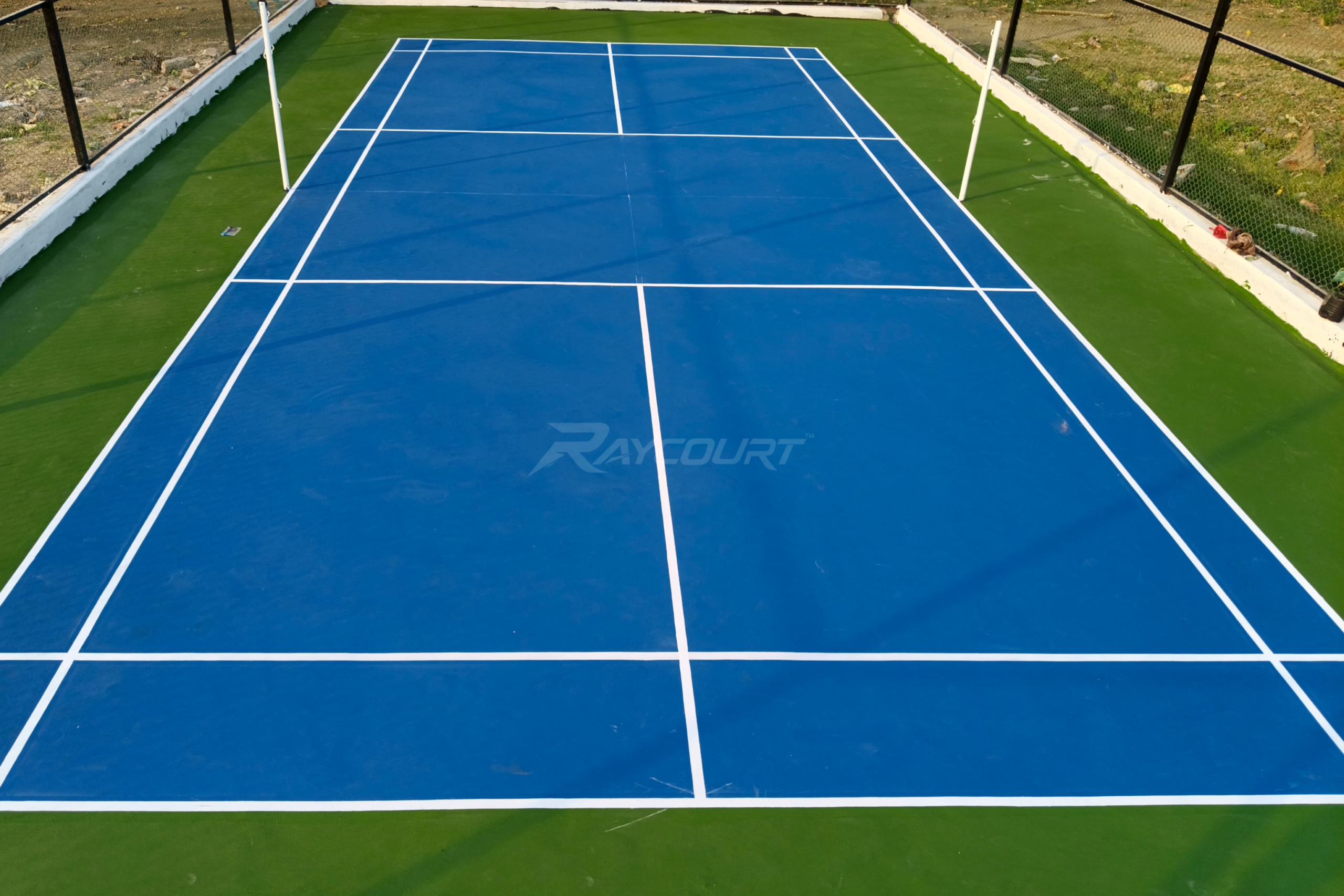
How to Plan a Badminton Ground: A Step-by-Step Approach
Good planning prevents most problems before they start. A clear plan also helps your contractor, architect and material supplier work together smoothly. The following steps outline a sensible approach for any badminton ground project.
Step 1: Assess the Site
Start by studying the site carefully. Measure the available space, including room for run-off areas. Check the ground for slopes, soft soil, poor drainage or underground services.
For outdoor sites, note the direction of the prevailing wind and the sun’s path. Ideally, align the court roughly north to south. This orientation reduces glare during morning and evening sessions.
For indoor sites, measure the ceiling height carefully. Also check lighting positions, ventilation outlets and any structural beams over the court area.
Step 2: Prepare a Sound Base
The base supports everything above it. Most acrylic badminton grounds sit on either reinforced concrete or hot-mix asphalt.
A sound base must stay level, stable and free of cracks. It also needs a proper surface finish. For concrete, contractors often use a light broom finish to help the primer grip.
Patience pays off at this stage. New concrete needs time to cure fully before any coating goes on. Industry practice usually calls for at least 28 days of curing. Rushing this step can trap moisture and cause the acrylic layers to blister later.
Step 3: Plan Slope and Drainage
Outdoor badminton grounds need a way to shed rainwater quickly. Contractors usually build in a gentle, uniform slope of around 1 percent. This slope runs in a single plane across the court, not towards the centre.
Players barely notice such a gentle gradient. Yet it prevents water from pooling on the surface. Standing water can damage coatings, create slippery patches and encourage algae growth.
Additionally, plan perimeter drains or channels to carry water away. Check that surrounding soil or paving does not direct water back onto the court.
Step 4: Choose Colours and Line Paint
Colour choice affects both appearance and playability. Popular combinations for badminton grounds include green with a red or terracotta surround. Blue with a green surround also works well.
Focus on these principles when selecting colours:
- Choose a playing area colour that contrasts with the shuttle
- Pick a surround colour that clearly frames the court
- Use white or yellow lines, as BWF rules recommend
- Favour mid-tone shades, which hide dust and wear better than very light or very dark tones
If the court will host several sports, plan the line colours together. Distinct colours for each sport help players focus on the right markings.
Step 5: Work With a Qualified Installer
Raycourt manufactures and supplies synthetic acrylic flooring materials. We do not carry out installation ourselves. Instead, experienced contractors apply our systems on site.
Choose an installer with a strong track record in acrylic sports surfaces. Ask to see completed courts and speak with previous clients. A skilled installer understands mixing ratios, curing times, weather windows and application techniques.
Furthermore, encourage your installer to follow the manufacturer’s technical guidelines closely. Good materials deliver their best results only when contractors apply them correctly. A strong partnership between supplier and installer gives your badminton ground the best possible start.
Indoor Badminton Ground Considerations
Indoor courts offer the most controlled playing environment. Even so, several factors deserve close attention during planning.
Lighting ranks among the most important. Players look upwards constantly to follow high shots. Therefore, avoid placing bright lights directly above the court. Instead, position fixtures along the sides to reduce glare.
Air movement also matters a great deal. Fans and air-conditioning vents can push the light shuttle off course. Plan airflow so that it does not blow across the playing area during matches.
Backgrounds influence visibility too. Dark, plain walls behind the court help players spot the white shuttle. Busy patterns, windows and bright colours make tracking harder.
Ventilation and humidity affect both comfort and the surface. Good ventilation keeps the air fresh and helps prevent condensation on the floor. A dry surface stays safer and longer-lasting.
Acrylic surfaces perform reliably indoors. Their matte texture limits reflections, and their seamless finish simplifies cleaning. Cushioned acrylic systems also bring the comfort that indoor training players expect.
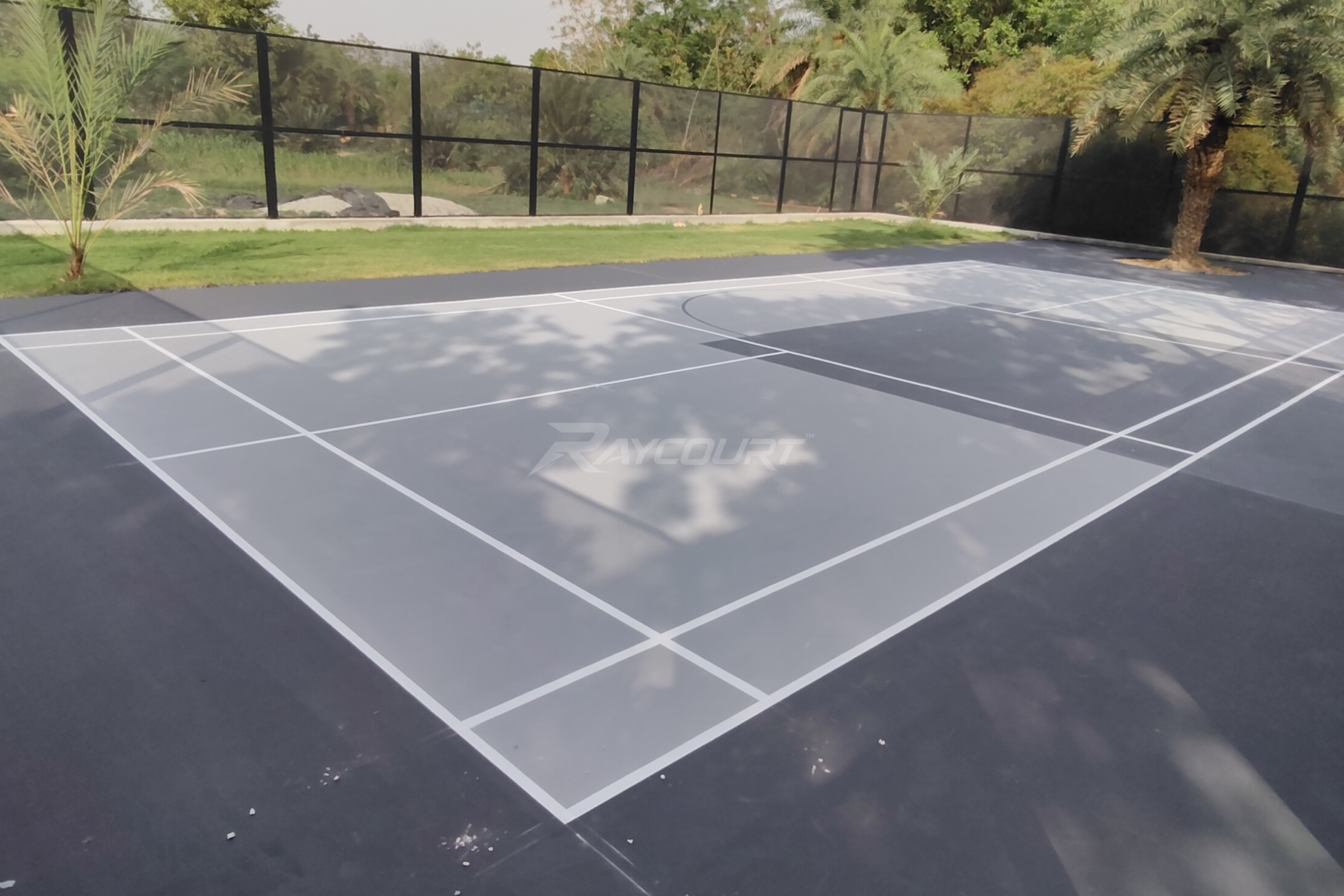
Outdoor Badminton Ground Considerations
Outdoor courts face sun, rain, heat, dust and wind every day. Consequently, the surface must handle tough conditions without losing performance.
UV resistance comes first. Strong sunlight breaks down weak coatings and fades their colours. Quality acrylic systems use UV-stable resins and pigments that hold their appearance for years.
Heat tolerance follows closely. Surfaces in hot regions can soften, crack or feel uncomfortable. Lighter shades of acrylic absorb less heat, which helps keep the surface cooler underfoot.
Rain and drainage come next. A correct slope and good perimeter drainage let the court dry quickly after showers. Acrylic surfaces also resist water damage far better than wooden or vinyl alternatives.
Wind protection helps outdoor badminton most of all. Consider windbreak fencing, hedges or nearby buildings to shelter the court. Even partial protection can make play far more enjoyable.
Dust and debris need regular attention. Leaves, sand and dust reduce grip and wear down the surface. Plan easy access for cleaning equipment and avoid placing courts directly beneath trees.
Expert Tip: For outdoor badminton grounds, schedule play in early mornings and evenings. Winds usually drop at these times, and players avoid the harshest sunlight.
Quick Answers
Some questions come up again and again during badminton ground projects. The short guides below answer them directly.
How Long Does an Acrylic Badminton Ground Last?
A well-built acrylic badminton ground can serve players for many years. Its lifespan depends on the base quality, the system type, the climate and the level of use. Regular cleaning and timely recoating extend it considerably.
Typically, the top colour coats wear first, especially in high-traffic zones near the service lines. Owners can recoat these layers without removing the entire system. As a result, the court regains its grip and colour, while the base stays intact.
Can a Badminton Ground Share Space With Other Sports?
Yes, it certainly can. Many facilities design multi-sport courts that combine badminton with pickleball, volleyball or basketball. The acrylic surface suits all these sports equally well.
Careful line planning makes this work. Use a different line colour for each sport so players can focus on their own markings. Also, choose removable posts with ground sleeves for each net system. That way, the space switches between sports in minutes.
Which Surface Colour Works Best for Badminton?
No single colour suits every court. However, green and blue remain the most popular choices for the playing area. Both offer good contrast with a white shuttle and white or yellow lines.
Indoors, consider the walls and ceiling too. A darker court and background help the shuttle stand out. Outdoors, mid-tone shades hide dust and reflect less heat than very dark colours.
Is a Cushioned Surface Worth Choosing?
For most training and school facilities, the answer is yes. Cushioning reduces impact on joints during jumps and lunges. Players feel less fatigue after long sessions.
Nevertheless, a hard acrylic court still suits many recreational and multi-sport spaces. Match the system to how often and how intensely players will use the court.
Maintaining Your Badminton Ground
Good maintenance protects your investment and keeps players safe. Fortunately, acrylic surfaces need relatively simple care. A consistent routine makes all the difference.
Daily and Weekly Care
Regular cleaning keeps grip consistent and prevents premature wear. Follow these simple habits:
- Sweep or blow off leaves, dust and sand regularly
- Remove standing water after rain with a soft squeegee
- Wipe up spills such as drinks or oil as soon as possible
- Ask players to wear non-marking court shoes only
- Keep sharp objects, furniture and vehicles off the surface
Additionally, wash the court gently every few weeks with water and a mild detergent. Use a soft brush rather than a hard scrubber or high-pressure jet. Strong pressure can damage the textured top coat.
Seasonal Checks and Recoating
Beyond routine cleaning, inspect the badminton ground carefully every few months. Look for these warning signs:
- Fine cracks in the surface or base
- Areas where water pools after rain
- Faded or worn patches, especially near service lines
- Algae, moss or mildew in shaded corners
- Loose or damaged net posts and sleeves
Address small issues early before they spread. Contractors can fill minor cracks with acrylic crack fillers from the same system. Likewise, they can treat algae with suitable cleaners.
Eventually, every acrylic court benefits from fresh top coats. Recoating restores colour, texture and grip. It also renews the line markings so they look sharp again.
Expert Tip: Keep a simple maintenance log for your badminton ground. Record cleaning dates, inspections and any repairs. This history helps you plan recoating at the right time.
Common Mistakes to Avoid When Building a Badminton Ground
Even well-funded projects can go wrong through avoidable errors. Watch out for these common mistakes:
- Skipping the curing period: Coating fresh concrete too soon traps moisture and causes blistering.
- Ignoring slope and drainage: Flat outdoor courts collect water and deteriorate faster.
- Using ordinary paint: Wall or floor paints lack the grip, flexibility and UV resistance that sports surfaces need.
- Mixing product brands: Layers from different systems may not bond well together.
- Leaving too little run-off space: Tight boundaries increase collision and injury risk.
- Placing lights above the court: Direct overhead glare makes tracking high shots difficult.
- Choosing inexperienced installers: Poor application ruins even the best materials.
- Neglecting maintenance: Dirt and standing water shorten the life of any surface.
Avoiding these pitfalls saves time, effort and frustration. More importantly, it gives players a safer and more enjoyable badminton ground.
Ready to build a court that performs for years to come?
Connect with Raycourt for sports flooring systems built for your project.
Who Needs a Quality Badminton Ground?
Badminton enjoys enormous popularity across India. People of all ages play it, from schoolchildren to retirees. As a result, demand for well-built badminton grounds continues to grow in many sectors.
Schools and colleges use badminton grounds for physical education, inter-house events and competitive teams. Durable acrylic surfaces handle heavy daily use from large groups of students.
Residential societies and townships add badminton grounds as a valued community amenity. Residents enjoy morning and evening games close to home. Outdoor acrylic courts suit these open spaces especially well.
Sports clubs and academies need consistent, high-performance surfaces for coaching and competition. Cushioned acrylic systems support long training sessions and protect young athletes.
Hotels, resorts and corporate campuses offer badminton grounds as part of their wellness and leisure facilities. An attractive, well-kept court adds real appeal for guests and employees.
Municipal parks and sports complexes provide badminton grounds for the wider public. These courts need tough, low-maintenance surfaces that stand up to heavy, unsupervised use.
Whatever the setting, the same principles apply. Accurate dimensions, enough space and a reliable surface create a badminton ground that people love to use.
Why Choose Raycourt Materials for Your Badminton Ground
Raycourt brings years of experience in manufacturing synthetic acrylic sports court flooring materials. We focus entirely on producing reliable surface systems. Our clients and their installers then bring those systems to life on site.
Here is what sets Raycourt apart:
- ITF Classified manufacturer: Our credentials reflect a commitment to recognised international performance standards.
- Complete acrylic systems: We supply primers, resurfacers, cushion layers, colour coats and line paints that work together.
- Indoor and outdoor solutions: Our materials perform reliably in climate-controlled halls and under harsh Indian sun alike.
- Consistent quality: Careful manufacturing gives every batch the same colour, texture and performance.
- Technical guidance: Our team supports contractors and project owners with product advice and application guidelines.
- Fast regional supply: Our Vadodara warehouse offers same-day delivery to Ahmedabad and Vadodara, with quick dispatch to other major cities.
Importantly, Raycourt operates as a materials manufacturer. We do not install courts ourselves. Instead, we partner with project owners and their chosen contractors. This focus lets us concentrate fully on what we do best: building better surface systems.
Expert Tip: Share your court plans, intended use and site conditions with your flooring supplier early. This helps the supplier recommend the right system, colour scheme and layer build-up for your badminton ground.
Frequently Asked Questions
A standard badminton court measures 13.4 metres long and 6.1 metres wide for doubles. For singles, the width reduces to 5.18 metres, while the length stays the same. Most facilities mark both sets of lines on one court. Additionally, plan for clear run-off space around the court, often around 2 metres on each side.
Synthetic acrylic flooring stands out as an excellent choice for outdoor badminton grounds. It resists UV rays, heat and rain far better than wood, vinyl or many PU systems. It also offers balanced grip and optional cushioning. Moreover, owners can refresh it with new top coats rather than replacing the entire surface.
In many cases, yes. Acrylic systems bond well to sound, stable concrete and asphalt bases. However, the existing base must stay level, free of major cracks and clean of oil or loose material. A qualified contractor should inspect the base and repair any defects first. Then the primer and acrylic layers can follow.
Regular cleaning makes the biggest difference. Sweep away dust, sand and leaves frequently, because these particles reduce grip. Remove standing water after rain and treat any algae promptly. Furthermore, ask all players to wear proper non-marking court shoes. A textured acrylic finish also helps maintain consistent traction across the court.
Conclusion: Build a Badminton Ground That Performs
A great badminton ground does far more than mark out a rectangle. It combines official dimensions, generous clear space and a carefully chosen surface. Together, these elements create a court that feels fair, safe and enjoyable for every player.
Among the available surfaces, synthetic acrylic flooring offers a rare balance of strengths. It delivers consistent grip, optional cushioning, strong weather resistance and easy maintenance. Moreover, it suits both indoor halls and outdoor community courts.
Success, however, depends on the full chain of decisions. Plan the site carefully, build a sound base and design proper drainage. Then choose a complete acrylic system and a skilled installer. Finally, protect your investment with a simple, regular maintenance routine.
With the right materials and the right approach, your badminton ground can serve players for many years.
Ready to build a court that performs for years to come?
Connect with Raycourt for sports flooring systems built for your project.