
What Are the Best Tennis Court Surfaces?
The best tennis court surfaces match how you play, where you build and how much upkeep you can manage. For most venues today, a synthetic acrylic hard court offers the strongest balance. It delivers consistent bounce, adjustable pace, weather resistance and low maintenance in a single system.
That said, no single surface wins every argument. Clay slows the ball and rewards patience. Grass speeds play up and favours aggressive serving. Artificial grass and indoor carpets, meanwhile, serve recreational and multi-use settings well. Each option changes the game in noticeable ways.
In short, your choice shapes ball speed, player comfort, injury risk, maintenance routines and court lifespan. Therefore, it deserves careful thought before any work begins on site.
This guide walks you through every major type of tennis court surface. First, we explain how each surface behaves under play. Next, we unpack court pace and the ITF classification system. After that, we look closely at acrylic systems, layer by layer. Finally, we cover selection criteria, colours, line marking and long-term care.
Expert Tip: Start with your players, not the surface. A junior academy, a private home court and a tournament venue need very different playing characteristics.
Why Tennis Court Surfaces Matter More Than You Think
Many owners treat the surface as a finishing touch. In reality, it acts as the engine of the whole court. The surface decides how the ball grips, skids or kicks after each bounce.
Moreover, the surface influences how players move. A forgiving top layer reduces stress on knees, ankles and the lower back. In contrast, a hard and unforgiving finish can tire players quickly during long sessions.
Durability matters too. A well-specified surface resists ultraviolet light, heavy rain and constant foot traffic for years. Conversely, a poor specification can crack, fade or lose its texture within a few seasons. For these reasons, smart surface selection protects your players and your investment alike.
The Main Types of Tennis Court Surfaces
Tennis courts around the world fall into a handful of surface families. Each family uses different materials and creates a different playing experience. Below, we explore each one in detail, starting with the most widely specified option.
Acrylic Hard Courts
Acrylic hard courts form the backbone of modern tennis. Contractors apply several layers of acrylic coating over a stable asphalt or concrete base. Together, these layers create a smooth, textured and colourful playing surface.
The appeal lies in control and consistency. Manufacturers can tune the texture of the top coat to make the court faster or slower. As a result, the same base can suit a recreational club or a competitive training centre.
Acrylic surfaces also handle weather well. Quality coatings resist ultraviolet fading, shed rainwater quickly and dry faster than natural surfaces. Furthermore, they need far less daily care than clay or grass.
For these reasons, acrylic hard courts dominate schools, clubs, academies, residential complexes and public parks. Several major professional tournaments also play on acrylic-based hard courts. That reach speaks volumes about the surface’s reliability.
Key strengths of acrylic hard courts include:
- Predictable, true bounce across the entire court
- Adjustable pace through texture and sand content
- Low routine maintenance compared with natural surfaces
- Wide colour choice for branding and visibility
- All-weather playability with quick drying after rain
Cushioned Acrylic Courts
A cushioned acrylic court adds rubber-filled layers beneath the acrylic top coats. These cushion layers absorb part of the impact each time a player lands or changes direction.
Consequently, players feel less strain on their joints during long sessions. Many coaches prefer cushioned systems for junior development, older players and high-volume academies. The ball still bounces true, yet the court feels noticeably kinder underfoot.
In addition, cushioning softens the sound of play and adds a premium feel. The trade-off involves more material layers and careful application. However, the comfort benefits usually justify the effort for busy facilities.
Expert Tip: If your court will host daily coaching for several hours, consider a cushioned acrylic system. Your players’ knees will thank you over the long run.
Clay Courts
Clay courts use crushed brick, shale or stone on top of a carefully graded base. The loose top layer slows the ball and produces a high, heavy bounce.
Because of this, clay rewards patience, spin and long rallies. Players slide into shots, and points tend to last longer. Many coaches value clay for teaching footwork, shot construction and tactical thinking.
However, clay demands constant attention. Groundstaff must water, roll, brush and top-dress the surface regularly. Heavy rain can halt play for hours, and hot, dry weather can make the surface dusty and loose. In regions with intense monsoons or extreme summer heat, clay becomes difficult to manage well.
Natural Grass Courts
Natural grass remains the oldest and most traditional tennis surface. Closely mown turf sits on a firm, well-drained soil base.
Grass produces a fast, low and sometimes irregular bounce. Consequently, it favours big servers and players who attack the net. Rallies stay short, and slices skid through the court sharply.
Despite its charm, grass carries heavy demands. It needs daily mowing, watering, rolling and expert turf management. Moreover, wear patterns appear quickly along the baseline. Rain also stops play immediately. As a result, very few facilities outside elite venues maintain natural grass courts today.
Artificial Grass Courts
Artificial grass courts use synthetic fibres filled with sand. This surface mimics the look of grass while cutting maintenance dramatically.
The sand infill gives players a slightly sliding movement and a moderate, low bounce. Many clubs choose artificial grass for recreational and social tennis. It drains quickly and stays playable through wet seasons in many climates.
On the downside, artificial grass rarely suits high-level competitive training. The bounce can feel less consistent, and the infill needs regular brushing and topping up. Over time, fibres can flatten in high-traffic zones.
Carpet and Indoor Surfaces
Carpet and indoor tennis court surfaces include textile carpets, rubber tiles and modular systems. Operators often roll these surfaces out over existing floors in sports halls.
Indoor surfaces usually play fast because no wind, sun or moisture interferes. They also allow year-round play regardless of the weather outside. However, removable carpets can shift or ripple without proper fixing. For permanent indoor courts, many facilities now prefer acrylic or cushioned acrylic systems over a concrete slab.
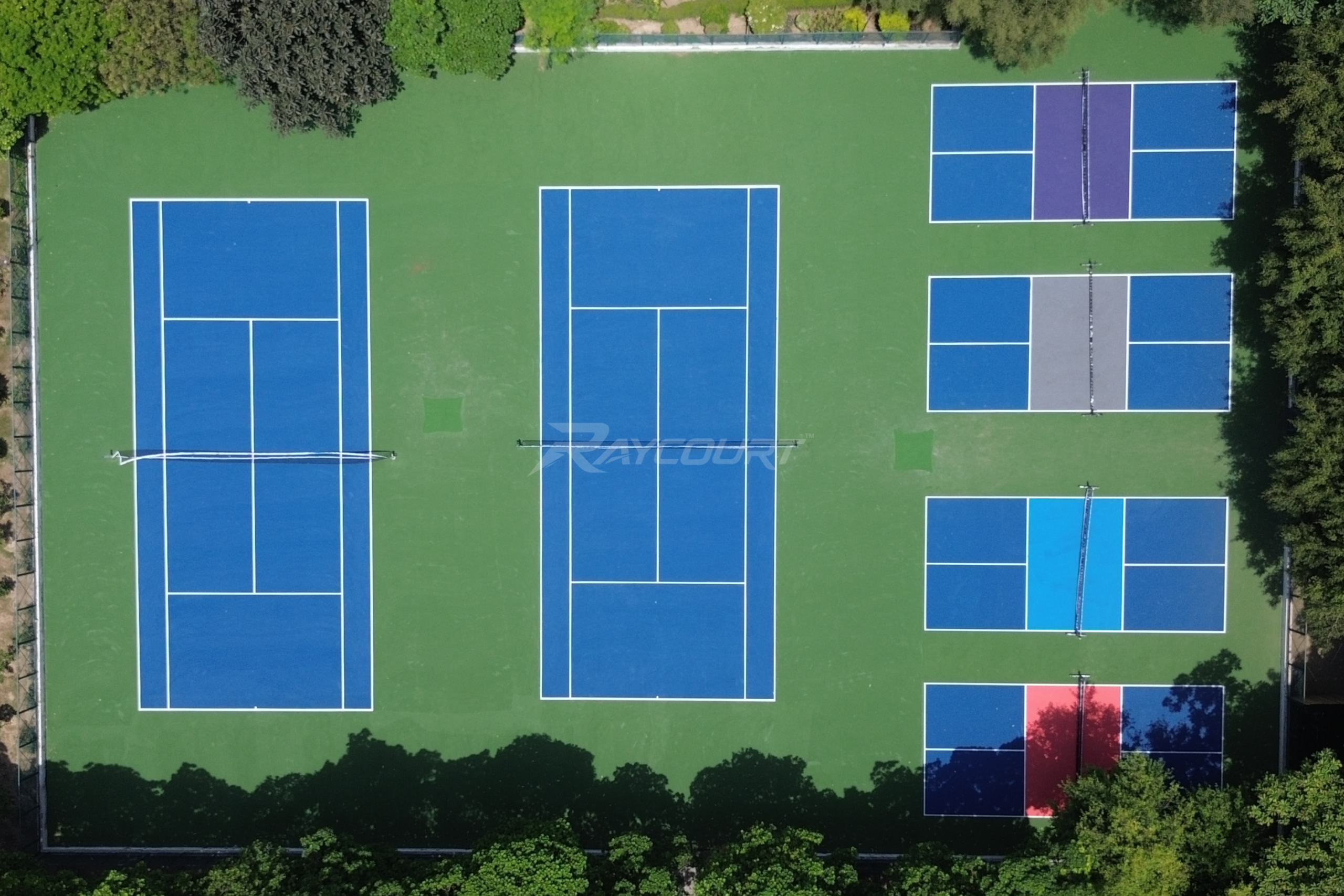
Tennis Court Surfaces Compared at a Glance
The table below summarises how the major surfaces behave. Use it as a quick reference while you weigh your options.
| Surface | Typical Pace | Bounce Height | Maintenance Demand | Weather Resilience | Best Suited For |
|---|---|---|---|---|---|
| Acrylic hard court | Adjustable, slow to fast | Medium, consistent | Low | High | Clubs, schools, academies, homes |
| Cushioned acrylic | Adjustable, medium | Medium, consistent | Low | High | Academies, juniors, older players |
| Clay | Slow | High | Very high | Low to moderate | Clay-focused training, clubs |
| Natural grass | Fast | Low | Very high | Low | Elite and heritage venues |
| Artificial grass | Medium-slow | Low to medium | Moderate | Moderate to high | Recreational and social play |
| Carpet or indoor tiles | Medium to fast | Medium | Low to moderate | Indoor only | Sports halls, indoor centres |
Court Pace, Bounce and the ITF Classification System
Every conversation about tennis court surfaces eventually turns to pace. Pace describes how quickly the ball travels off the surface after it bounces. It shapes rally length, shot selection and even the type of player who thrives on a court.
What Does Court Pace Actually Mean?
Two physical factors drive court pace. The first is surface friction, which decides how much the court grips the ball. The second is restitution, which decides how much energy the ball keeps after impact.
A rough, gritty surface grabs the ball and slows it down. Meanwhile, a smoother surface lets the ball skid through quickly. Bounce height follows a similar logic. Surfaces that grip more tend to throw the ball higher, while slicker ones keep it lower.
For acrylic courts, the sand content and texture of the top coat control most of this behaviour. More sand creates more friction and a slower court. Less sand creates a quicker, lower-bouncing court. This tunability explains why acrylic systems suit so many different venues.
How the ITF Classifies Tennis Court Surfaces
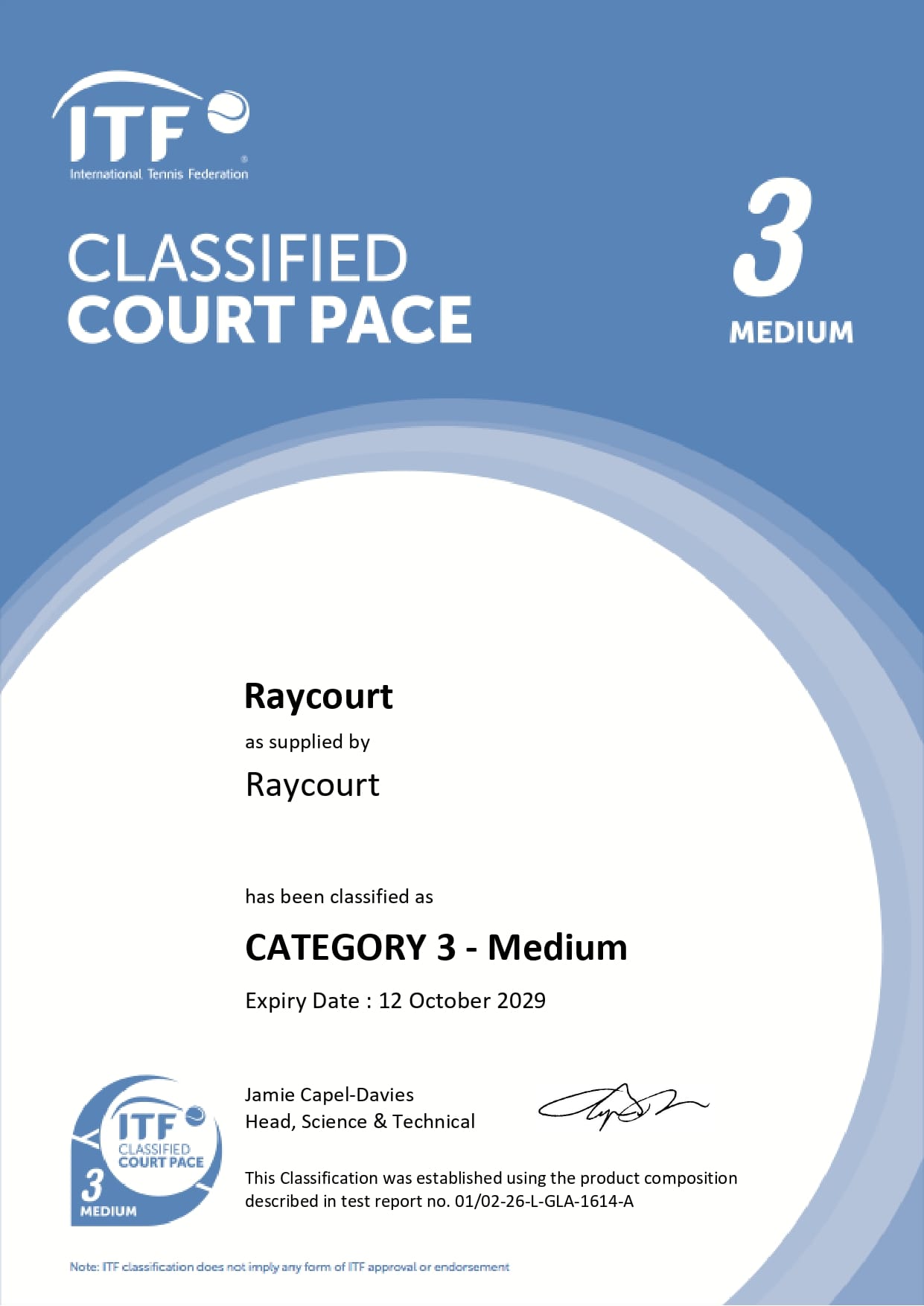
The International Tennis Federation (ITF) runs the Court Pace Classification Programme. This programme tests surface products and assigns each one a Court Pace Rating (CPR). You can browse the official list of ITF Classified Surfaces on the ITF website.
ITF-accredited laboratories carry out the testing. They fire a ball at the surface and measure the speed it loses on impact. The ITF then places the product into one of five categories:
| ITF Category | Pace Label | Court Pace Rating | Typical Surface Examples |
|---|---|---|---|
| Category 1 | Slow | 29 or below | Most clay courts |
| Category 2 | Medium-slow | 30 to 34 | Textured acrylic coatings |
| Category 3 | Medium | 35 to 39 | Most acrylic hard courts |
| Category 4 | Medium-fast | 40 to 44 | Smoother acrylics, some carpets |
| Category 5 | Fast | 45 or above | Grass, artificial grass, some carpets |
A classification remains valid for three years. Notably, the ITF does not treat classification as an endorsement. Instead, it gives buyers an objective way to compare surface products on pace alone.
Expert Tip: Always ask your materials supplier which ITF category their system targets. An ITF Classified product gives you measurable confidence instead of marketing claims.
Does Surface Speed Change How Players Play?
Absolutely, and the effect shows up quickly. On slow surfaces, players have more time to reach the ball. Consequently, rallies stretch longer and defensive skills pay off.
On fast surfaces, however, the ball arrives sooner and stays lower. Big serves and flat drives become more dangerous. Points end faster, and quick reactions matter more than endurance.
Medium-paced courts sit in the sweet spot for most facilities. They reward all-round skills without punishing beginners. For this reason, many clubs and academies choose a medium or medium-slow acrylic specification.
Why Consistency Matters as Much as Speed
Pace numbers tell only half the story. Players also need the ball to behave the same way on every part of the court. An uneven surface creates bad bounces, frustrates players and can even cause injuries.
Consistency depends on three things. First, the base must stay flat and stable. Second, each coating layer must go down evenly. Third, the top coat must hold its texture over time. Quality acrylic materials help on all three fronts because they bond strongly and wear slowly.
Why Acrylic Systems Lead Modern Tennis Court Surfaces
Across the globe, acrylic systems have become the default choice for new and refurbished tennis courts. The reasons go beyond convenience. Acrylic coatings offer a rare mix of performance control, durability and design freedom.
Unlike clay or grass, an acrylic court does not depend on daily grooming to play well. Instead, its performance comes from engineered materials applied in precise layers. Once the system cures, it holds its playing characteristics for years with simple care.
Furthermore, acrylic systems adapt to almost any setting. They work outdoors under harsh sun, in humid coastal air and inside covered halls. This flexibility makes them especially valuable in India, where climates vary widely from region to region.
Anatomy of an Acrylic Tennis Court Surface
A high-performance acrylic court works like a team of specialised layers. Each layer has a clear job, and together they create the final playing experience. Here is how a typical system builds up from the ground:
- Prepared base: A stable asphalt or concrete slab with correct slopes for drainage. The base must cure fully before coating begins.
- Primer or sealer: This layer improves adhesion and seals the pores of the base. It helps every coat above it bond firmly.
- Acrylic resurfacer or filler coats: These coats fill minor surface voids and create a smooth, uniform foundation.
- Cushion layers (optional): Rubber-filled acrylic layers add shock absorption and comfort underfoot.
- Colour and texture top coats: These coats deliver the final colour, slip resistance and ITF pace characteristics.
- Line marking paint: Specialised acrylic line paint creates crisp, durable court lines.
Expert Tip: Never rush the base. Even the best acrylic coatings cannot hide cracks, poor slopes or ponding water underneath.
The Role of Each Layer in Performance
The primer may stay invisible, yet it protects the entire system from early failure. Without strong adhesion, top coats can peel or blister under heat and moisture.
Meanwhile, resurfacer coats control flatness. They smooth out the tiny irregularities that would otherwise create unpredictable bounces. Consequently, players enjoy a truer, more consistent game.
Cushion layers change how the court feels rather than how it plays. They absorb impact, reduce fatigue and soften the sound of footsteps. The number of cushion coats decides how soft the court feels.
Finally, the top coats carry the most visible responsibility. They set the colour, the grip and the pace. Their quality decides how well the court resists fading, scuffing and surface wear.
Key Benefits of Acrylic Tennis Court Surfaces
Acrylic systems deliver a long list of practical advantages. Below, we break down the benefits that matter most to owners, coaches and players.
UV and Weather Resistance
Quality acrylic coatings use durable pigments and binders that resist ultraviolet light. As a result, courts keep their colour much longer under strong sun. They also shed rainwater quickly and dry fast, so play resumes sooner after showers.
Consistent, Tunable Pace
Manufacturers can adjust sand grading and texture to hit specific ITF categories. Therefore, a club can choose a slower, friendlier court or a quicker competition feel.
Slip Resistance and Player Safety
The textured finish gives shoes reliable grip in dry and damp conditions. Additionally, cushioned options reduce joint stress during long sessions.
Low Maintenance Demands
Acrylic courts need regular cleaning, not daily grooming. Simple sweeping, washing and periodic inspections keep them in excellent shape.
Design Flexibility
Owners can pick from a wide palette of colours. Moreover, the same system can carry lines for tennis, pickleball or other sports on one surface.
Can You Apply Acrylic Coatings Over an Existing Court?
In many cases, yes. Acrylic resurfacing often gives tired asphalt or concrete courts a second life. However, the existing base must stay structurally sound.
First, your contractor should inspect the court for cracks, ponding and loose material. Next, they should repair any defects and clean the surface thoroughly. Only then should fresh primer and acrylic coats go down. With proper preparation, a resurfaced court can play like new.
Ready to build a court that performs for years to come?
Connect with Raycourt for sports flooring systems built for your project.
How to Choose the Right Tennis Court Surface
Choosing among tennis court surfaces can feel overwhelming at first. However, a few clear questions narrow the field quickly. Think about your climate, your players, your usage patterns and your maintenance capacity. Then match those needs to the surface that serves them best.
Factor 1: Climate and Local Weather
Climate often decides the matter before any other factor. Surfaces behave very differently under heavy rain, intense heat or high humidity.
In much of India, courts face scorching summers, strong ultraviolet exposure and heavy monsoon rains. Under these conditions, clay struggles to stay playable, and natural grass demands enormous effort. Acrylic hard courts, by contrast, shed water quickly and resist sun damage.
Consider these climate questions before you decide:
- How many days of heavy rain does your region see each year?
- Does the site receive direct sun for most of the day?
- Will dust, leaves or coastal salt settle on the court regularly?
- Do temperatures swing sharply between day and night?
If your answers point to harsh or changeable weather, an acrylic or cushioned acrylic system usually makes the most sense.
Factor 2: Who Will Play on the Court
Next, think carefully about your players. Beginners, juniors and older players benefit from slower pace and gentler surfaces. Competitive players, on the other hand, often want a quicker, tournament-like feel.
For a junior academy, a medium-slow acrylic surface gives children more time to develop strokes.For a club with older members, cushioned acrylic reduces joint strain and keeps members playing longer. Meanwhile, a competitive training centre may target a medium or medium-fast ITF category.
Mixed-use facilities need balance. In these cases, a medium-paced acrylic court suits the widest range of abilities.
Factor 3: Frequency and Intensity of Use
A private home court might host a few matches each week. A busy school or academy, however, might see play from dawn until late evening. Heavy use punishes weak surfaces quickly.
High-traffic courts need durable top coats with strong abrasion resistance. They also benefit from cushioning, which protects players during long training blocks. Low-traffic courts can opt for simpler systems without losing quality.
Factor 4: Indoor or Outdoor Setting
Outdoor courts face sun, rain, wind and temperature swings. Therefore, they need surfaces with excellent weather and ultraviolet resistance.
Indoor courts avoid most weather stress but bring their own concerns. Lighting, ventilation and floor moisture all affect surface performance. Acrylic and cushioned acrylic systems work well indoors on a sound concrete slab. Additionally, indoor courts often play slightly faster, so many owners choose a more textured top coat.
Factor 5: Maintenance Capacity
Be honest about the care your team can provide. Clay and grass need skilled groundstaff every single day. Artificial grass needs regular brushing and infill top-ups.
Acrylic courts ask for far less. Routine cleaning and periodic inspections cover most needs. Consequently, facilities without dedicated groundstaff almost always lean towards acrylic systems.
Expert Tip: Write down your top three priorities before you speak with any supplier. Clear priorities lead to a tighter specification and fewer surprises later.
Factor 6: Multi-Sport Requirements
Many modern facilities want one court to serve several sports. Schools, residential communities and clubs often combine tennis with pickleball, volleyball or basketball lines.
Acrylic surfaces handle multi-sport layouts with ease. Contractors can paint lines for each sport in contrasting colours on a single surface. As a result, owners gain more playing value from the same footprint.
Which Tennis Court Surface Suits a School or Residential Complex?
For most schools and residential communities, an acrylic hard court offers the best fit. It withstands heavy, varied use from players of all ages. It also needs minimal supervision and dries quickly after rain.
Where comfort matters most, adding cushion layers makes the court friendlier for children and older residents. Moreover, multi-sport lines let the same court host tennis, pickleball and other games. In short, acrylic delivers versatility, safety and durability in one package.
Quick Selection Checklist
Use this checklist to confirm your choice before you finalise a specification:
- Confirm the climate demands and pick a weather-resistant system.
- Define your main player groups and their preferred pace.
- Estimate weekly playing hours to gauge durability needs.
- Decide between an indoor and an outdoor location.
- Assess your realistic maintenance capacity.
- List any additional sports that will share the court.
- Ask your supplier for the ITF category of the proposed system.
Ready to build a court that performs for years to come?
Connect with Raycourt for sports flooring systems built for your project.
Colours, Line Marking and Visual Performance
Colour does far more than make a court look attractive. It affects ball visibility, player focus and even surface temperature. Therefore, colour selection deserves the same attention as pace and cushioning.
How Colour Choices Affect Play
Players track the ball against the court surface hundreds of times in every match. A strong contrast between the yellow ball and the court helps them read spin and speed earlier. For this reason, blue, green and red remain popular choices for the playing area.
Many venues also use a two-tone layout. One colour fills the playing area, while a second colour frames the surrounds. This contrast helps players judge court boundaries instinctively.
Lighter colours reflect more sunlight and can keep the surface slightly cooler. Darker colours, meanwhile, absorb more heat but often hide marks and wear well. Balance these factors against your climate and the look you want.
Popular Tennis Court Colour Combinations
Here are some colour pairings that work well across many settings:
- Blue inside, green outside: A classic, high-contrast look for tournaments and clubs
- Green inside, red outside: A traditional pairing with a natural feel
- Blue inside, light blue outside: A clean, modern finish for academies
- Red inside, green outside: A warm, distinctive option for resorts and homes
- Grey or purple tones: Bold, contemporary choices for branded venues
Expert Tip: Test colour swatches under your actual site lighting before you commit. Colours can look very different under floodlights compared with daylight.
Line Marking That Lasts
Crisp lines matter for fair play and professional appearance. Contractors usually apply a dedicated acrylic line paint after the top coats cure. They mask each line carefully, seal the edges and then paint.
High-quality line paint bonds tightly with the acrylic surface beneath. As a result, it resists peeling, chipping and fading under heavy traffic. On multi-sport courts, contrasting line colours help players focus on their own game.
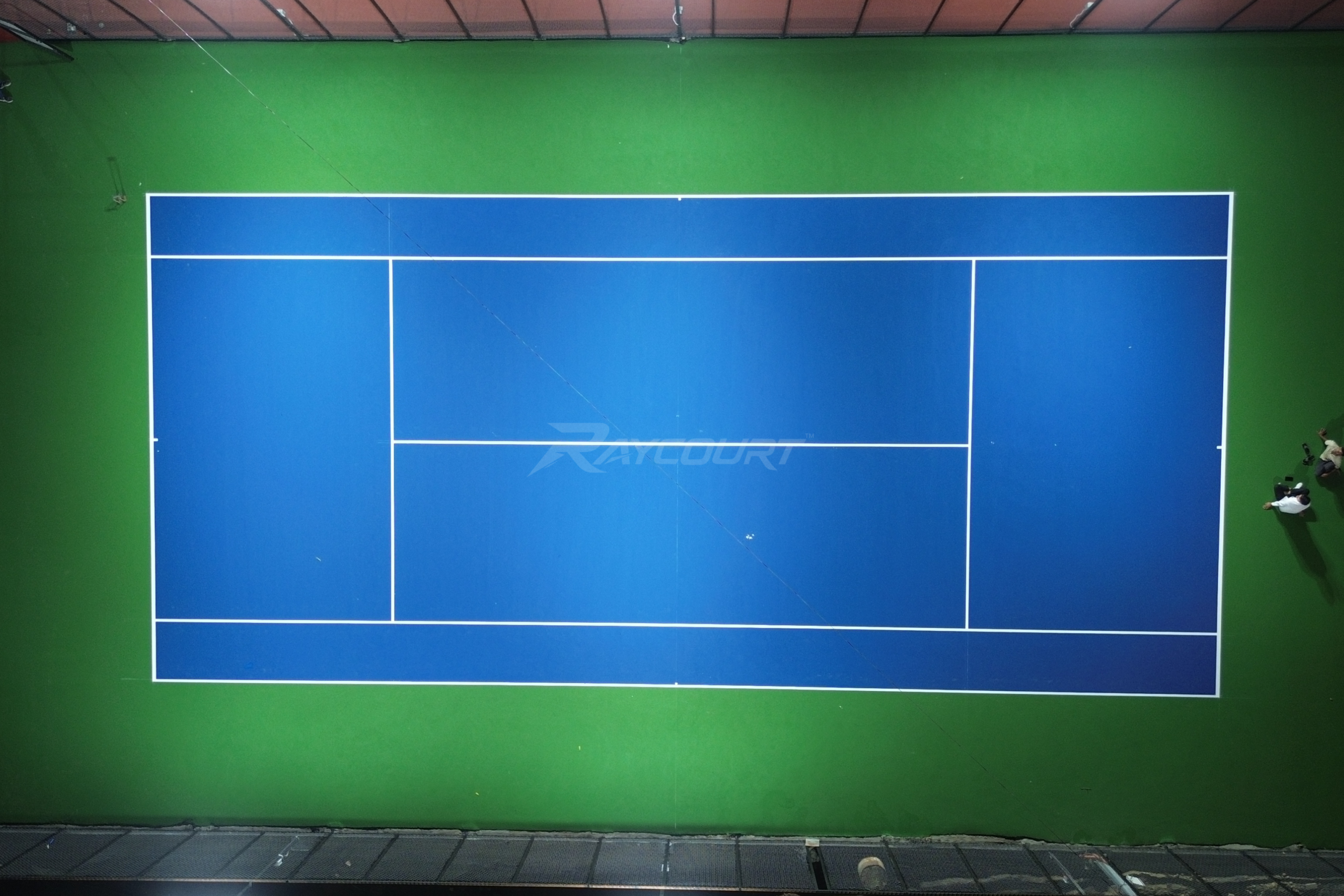
Maintaining Acrylic Tennis Court Surfaces
Even the toughest surface performs best with sensible care. Fortunately, acrylic courts need simple routines rather than daily grooming. A consistent schedule protects colour, texture and playing quality for years.
Daily and Weekly Care
Start with the basics. Regular attention prevents small issues from turning into larger problems.
- Sweep or blow away leaves, dust and debris.
- Remove standing water with a squeegee after heavy rain.
- Ask players to wear proper non-marking tennis shoes.
- Keep chairs, benches and heavy equipment off the playing area.
- Clean up spilt drinks or food quickly to avoid staining.
Monthly and Seasonal Care
Beyond daily habits, plan deeper cleaning sessions throughout the year. A gentle wash with a low-pressure hose and soft brush removes ground-in dirt. Additionally, inspect the court for algae or moss in shaded, damp corners.
Before and after the monsoon, check drainage paths carefully. Clear any blockages around the court edges and fencing. Moreover, look for hairline cracks, low spots or areas where water lingers.
Signs Your Court Needs Resurfacing
Over time, every acrylic surface wears. Fortunately, resurfacing restores performance without rebuilding the entire court. Watch for these warning signs:
- Faded or patchy colour across heavily used zones
- Smooth, shiny patches where texture has worn away
- Noticeable changes in pace or inconsistent bounce
- Cracks, blisters or peeling in the top coats
- Dull or broken lines that players struggle to see
Most well-maintained courts need fresh top coats every few years, depending on use and climate. Timely resurfacing keeps players safe and protects the base underneath.
How Long Do Acrylic Tennis Court Surfaces Last?
Lifespan depends on material quality, application, climate and usage. A well-applied acrylic system on a sound base can serve for many years. Meanwhile, the top coats usually need refreshing every several years.
Courts with heavy daily use wear faster, especially along baselines and service lines. On the other hand, private courts with light traffic can go much longer between resurfacing. In every case, regular care and quality materials extend the life of the surface.
Hard Court vs Clay: Which Surface Suits Beginners Better?
Beginners often ask this question first, and the answer depends on their goals. However, for most new players, a medium-slow acrylic hard court offers the smoothest learning curve.
First, a hard court gives a true, predictable bounce on every shot. As a result, beginners can focus on technique instead of chasing bad bounces. Moreover, acrylic courts stay playable in most weather, so coaches rarely cancel practice sessions.
Clay, on the other hand, slows the ball and teaches patience. Therefore, some coaches like it for developing rally skills and footwork. Still, clay requires sliding skills that many beginners find tricky at first. In addition, clay courts close more often after rain.
For these reasons, many academies start juniors on acrylic courts. Later, they introduce clay sessions to broaden tactical skills. In short, acrylic builds the foundation, and clay adds variety once players progress.
Safety and Sustainability Considerations for Tennis Court Surfaces
Today, owners also weigh safety and environmental impact alongside performance. Fortunately, modern acrylic systems perform well on both fronts.
Player Safety Features
First and foremost, a safe surface offers reliable grip. Accordingly, textured acrylic top coats help players stop and change direction with confidence. Furthermore, cushioned layers reduce the shock that travels through ankles, knees and hips.
Similarly, good drainage protects players from slips on wet patches. Consequently, correct base slopes and quick-drying coatings work together to keep the court safe. Bright, contrasting lines also help players read boundaries quickly and avoid collisions.
Environmental Benefits of Acrylic Systems
Acrylic coatings use water-based formulations in most modern systems. As a result, they release fewer harsh solvents during application than older coating types. Moreover, acrylic courts need no daily watering, unlike clay or natural grass.
Additionally, resurfacing extends the life of an existing court rather than replacing it. Therefore, owners can refresh the surface while keeping the original base in service. Over the long term, this approach reduces waste and conserves resources.
What Should You Ask Your Materials Supplier?
Before you finalise any specification, a short conversation with your supplier can prevent unwelcome surprises. Similarly, the right questions reveal how much technical depth a supplier truly offers. Consider asking:
- Does your acrylic system hold a current ITF Classification?
- Which ITF pace category does the proposed top coat target?
- How many coats does each layer need for best results?
- Which cushion options suit juniors, older players or academies?
- How do your pigments resist ultraviolet fading in hot climates?
- What surface preparation do you recommend for new and existing bases?
- Can your team guide our contractor during application?
Ultimately, clear answers to these questions signal a reliable partner. In turn, that reliability shows up in every rally on the finished court.
Common Mistakes to Avoid When Choosing Tennis Court Surfaces
Even experienced owners sometimes make avoidable errors. Fortunately, a little foresight prevents most of them. Watch out for these common pitfalls:
- Copying another venue blindly: A surface that suits a professional arena may not suit a school.
- Ignoring climate: Clay or grass can become a constant headache in hot, rainy regions.
- Skipping base preparation: Coatings cannot fix poor slopes, cracks or weak foundations.
- Overlooking player comfort: Busy academies often regret skipping cushion layers.
- Choosing unverified materials: Unclassified products leave pace and durability to guesswork.
- Neglecting maintenance plans: Even low-maintenance surfaces still need regular cleaning.
In each case, the fix starts with clear priorities and a reliable materials partner. That combination keeps your project on track from specification to first serve.
Why Choose Raycourt for Your Tennis Court Surface Materials
Raycourt manufactures synthetic acrylic sports court flooring materials for tennis and other court sports. We focus entirely on materials, so we pour our expertise into coating quality and consistency. Your chosen contractor handles the application on site using our systems.
Our tennis coatings carry ITF Classification, which gives specifiers objective confidence in pace performance. Moreover, our range covers every layer of a modern court. It includes primers, resurfacers, cushion coats, colour top coats and line paints.
Here is what sets Raycourt apart:
- Years of experience in sports surface chemistry and formulation
- ITF Classified acrylic systems with predictable, measurable pace
- UV-stable pigments that keep colours vivid under strong sun
- Cushioned options that comfort for juniors and older players
- Technical guidance for contractors, architects and facility owners
- Fast dispatch from our Vadodara warehouse across western India
Furthermore, our new Vadodara warehouse offers same-day delivery to Ahmedabad and Vadodara. As a result, contractors keep projects moving without long material delays.
Expert Tip: Share your climate, player profile and usage hours with your materials supplier early. Better inputs lead to a better surface specification.
Ready to build a court that performs for years to come?
Connect with Raycourt for sports flooring systems built for your project.
Frequently Asked Questions
Acrylic hard courts remain the most common surface worldwide. They offer consistent bounce, adjustable pace and low maintenance. Consequently, schools, clubs, academies and public parks choose them far more often than clay or grass.
A cushioned acrylic surface usually feels kindest on the joints. Its rubber-filled layers absorb impact during running, stopping and landing. Clay also feels forgiving, yet it demands far more upkeep than cushioned acrylic.
Surface friction and bounce behaviour decide court pace. Rougher, sandier top coats grip the ball and slow it down. Smoother finishes let the ball skid through faster and lower.
ITF Classified means an accredited laboratory has tested the product’s pace. The ITF then assigns it one of five pace categories, from slow to fast. This classification helps buyers compare surface products objectively.
Yes, acrylic courts handle multi-sport layouts very well. Contractors can paint pickleball lines in a contrasting colour alongside tennis lines. This approach gives schools and communities more value from one court.
Conclusion: Building a Tennis Court That Plays Right for Years
The right tennis court surface balances pace, comfort, durability and practicality. Clay, grass, artificial grass and carpets each have a place. However, acrylic and cushioned acrylic systems offer the strongest all-round value for most modern facilities.
Start with your climate, your players and your usage. Next, choose an ITF Classified system that matches those needs. Finally, partner with a skilled contractor and commit to simple, regular care. Follow these steps, and your court will reward players for many seasons.
Above all, remember that a tennis court is a long-term asset. The surface you choose today will shape every lesson, match and tournament for years. Therefore, invest time in research, ask detailed questions and insist on verified materials. With the right foundation, your court becomes a place where players grow, compete and enjoy the game.
Ready to build a court that performs for years to come?
Connect with Raycourt for sports flooring systems built for your project.