
For most modern projects, the best tennis court flooring material is a multi-layer synthetic acrylic system. It sits over a sound concrete or asphalt base. This system delivers a predictable bounce, controlled court pace, strong UV resistance and low upkeep. Clay and grass still have their place. However, they demand far more daily care and suit only specific climates and maintenance capacities.
So, why does the choice matter so much? The surface decides how fast the ball travels, how high it bounces and how players move. It also decides how long your court keeps its colour and texture. A poor material choice can bring cracks, slippery patches and faded lines within a few seasons.
In this guide, we explain every major type of tennis court flooring material. Then, we break down how an acrylic system works layer by layer. After that, we cover court pace, performance properties and climate. Finally, we share practical tips on selection and care.
Throughout, we write as a manufacturer. Raycourt supplies the flooring materials, while qualified contractors handle site preparation and application. This split matters, and we explain why later in the article.
What Is Tennis Court Flooring Material?
Tennis court flooring material refers to the engineered top system that sits on a court’s base. It forms the playing surface that players and the ball actually touch. In simple terms, it acts as the skin of the court.
On a hard court, this skin includes several coatings. Each coating has its own job. Some fill tiny voids in the base. Others add cushioning, colour or grip. Together, they create one bonded surface with uniform playing properties.
On natural courts, the “material” looks very different. Clay courts use crushed brick, shale or stone over drainage layers. Grass courts rely on living turf grown on carefully prepared soil. Artificial grass uses synthetic fibres with sand infill.
Each family of materials behaves differently. For instance, clay slows the ball and raises the bounce. Grass keeps the ball low and fast. Acrylic sits in between, and manufacturers can tune it across a wide pace range.
That tunability explains why acrylic dominates new construction today. Owners can pick a speed that suits their players. Moreover, they gain a surface that copes with sun, rain and heavy use.
Why the Surface Shapes Every Rally
Every shot reacts to the surface the moment the ball lands. Two forces matter most here. First, friction between the ball and the court slows the ball’s horizontal speed. Second, the coefficient of restitution decides how much energy returns in the bounce.
A rougher texture grips the ball more. As a result, the ball slows down and kicks up higher. A smoother texture lets the ball skid through. Consequently, rallies get shorter and serves become more dominant.
The surface also affects the body. A hard, unforgiving floor sends more shock into ankles, knees and hips. A cushioned system absorbs part of that impact. Therefore, players can train longer with less fatigue.
Footing matters too. Players need enough grip to change direction quickly. Yet they also need a little give, so sudden stops do not jar the joints. The right tennis court flooring material balances both needs.
Expert Tip: Before you choose any surface, list who will play on it most often. Juniors, seniors, club players and elite athletes each benefit from different pace and comfort settings.
Ready to build a court that performs for years to come?
Connect with Raycourt for sports flooring systems built for your project.
Main Types of Tennis Court Flooring Material
Tennis has a long history of different playing surfaces. Today, five broad families cover nearly every court worldwide. Let us look at each one in turn.
Acrylic Hard Courts
Acrylic hard courts use water-based acrylic resin coatings over concrete or asphalt. Silica sand and fillers in the coating create texture. Pigments add colour that resists fading.
These courts offer a true, consistent bounce across the whole playing area. They drain quickly after rain and dry within hours. Furthermore, they need only light routine care, such as sweeping and occasional washing.
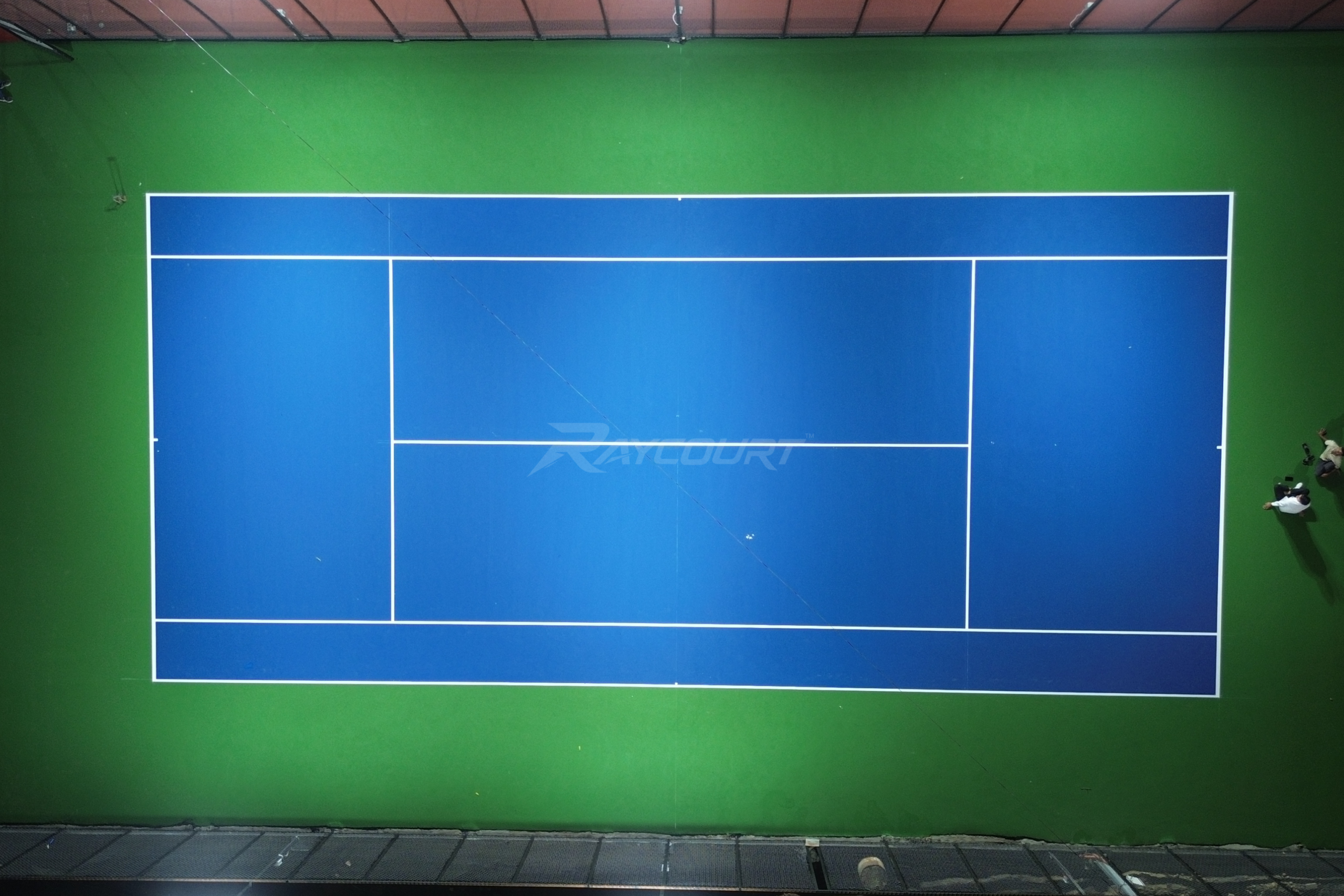
Acrylic also gives designers wide freedom. You can choose from many colours for the in-play area and surrounds. Many venues use blue or green inside the lines and a contrasting shade outside.
Most importantly, manufacturers can adjust sand grading and coat count to control pace. This flexibility lets one product family serve a beginner academy and a competitive club alike.
Cushioned Acrylic Systems
Cushioned acrylic systems add rubber-filled layers between the base and the colour coats. These layers soften each footstep and reduce stress on joints.
Players often describe cushioned courts as kinder on the legs. They also tend to feel quieter and slightly slower underfoot. Coaches value them for long training blocks and junior development.
The cushion depth varies by product. Fewer layers give a firmer feel. More layers give a softer, more forgiving surface. Your choice depends on player age, playing hours and comfort goals.
Importantly, the top coats stay the same as on standard acrylic courts. So you keep the same colour options, line clarity and pace control.
Clay Courts
Clay courts use crushed brick, shale or stone packed over a drainage base. They produce a slow pace and high bounce. Players can also slide into shots, which suits a patient, tactical style.
However, clay asks a lot from its owners. Staff must brush, water and roll the surface regularly. Heavy rain can wash out the top layer. Hot, dry weather can make it dusty and loose.
Because of this, clay works best at clubs with dedicated ground staff. It rarely suits schools, housing societies or busy public venues.
Natural and Artificial Grass
Natural grass offers the fastest, lowest bounce in tennis. It feels unique, and players prize it for its tradition. Yet it needs constant mowing, rolling, watering and seasonal rest.
Wear also builds quickly around the baseline. Within weeks, worn patches can change the bounce. For most venues, these demands rule natural grass out.
Artificial grass uses synthetic fibres filled with sand. It feels softer than hard courts and drains well. It also stays playable in damp conditions.
On the other hand, the bounce can feel less predictable. The sand infill also shifts over time and needs brushing. Many players regard it as a recreational surface rather than a competitive one.
Modular and Other Surfaces
Modular tiles snap together over a flat base. They install quickly and suit temporary or multi-use spaces. However, they can sound hollow and give a different bounce from coated courts.
Carpet and textile surfaces appear mostly indoors. They often play fast and low. Yet they suit only controlled indoor settings with no moisture risk.
These options fill niche roles. For permanent outdoor tennis, acrylic systems remain the practical favourite.
Comparing the Main Surface Types
The table below summarises how each tennis court flooring material performs on key factors.
| Surface Type | Typical Pace | Bounce | Routine Care | Weather Tolerance |
|---|---|---|---|---|
| Acrylic hard court | Adjustable, slow to fast | High consistency | Low | Excellent |
| Cushioned acrylic | Medium to slow | High consistency | Low | Excellent |
| Clay | Slow | High | Very high | Weak in heavy rain |
| Natural grass | Fast | Low | Very high | Weak in drought and rain |
| Artificial grass | Slow to medium | Variable | Moderate | Good |
| Modular tiles | Medium to fast | Moderate | Low | Good |
As the table shows, acrylic systems combine adjustable pace with low upkeep. That pairing explains their wide adoption across schools, clubs and academies.
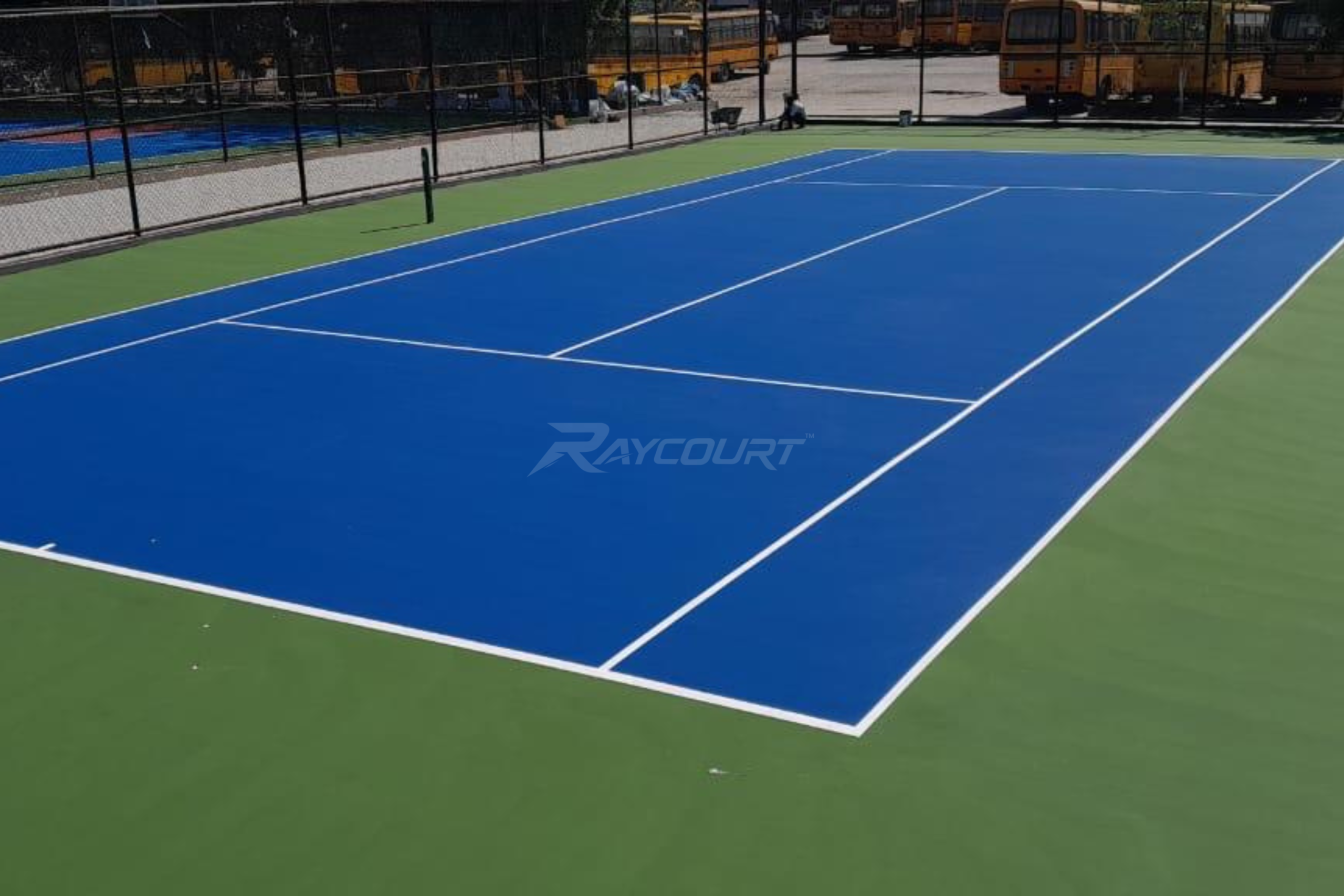
Why Synthetic Acrylic Leads Modern Court Construction
Owners today want courts that play well and stay that way. They want fewer closures, fewer repairs and steady performance across seasons. Synthetic acrylic meets these goals better than most alternatives.
Here are the key reasons:
- Consistent bounce: The bonded coatings create one uniform surface with no loose particles.
- Adjustable pace: Sand grading and texture let manufacturers fine-tune speed for each project.
- Fast drying: Water runs off the sealed surface, so play resumes quickly after rain.
- UV-stable colour: Quality pigments and binders resist fading under strong sun.
- Low maintenance: Sweeping, washing and periodic recoating keep the court in shape.
- Design freedom: Owners can pick colour pairs that match a brand, school or club.
- Multi-sport potential: The same system can carry lines for other racket sports.
Beyond these points, acrylic also suits a broad range of players. Beginners enjoy a predictable surface. Advanced players appreciate a reliable bounce for tactical play.
Another advantage involves renewal. When the top coats wear, contractors can apply fresh colour coats over the existing system. You avoid tearing up the whole court. This cycle extends the life of your investment in the base.
Expert Tip: Ask your supplier for the full system specification, not just the colour coat. A great top coat cannot rescue a poor primer or a missing resurfacer layer.
Inside a Synthetic Acrylic Tennis Court Flooring System
An acrylic court works like a layered cake. Each layer supports the one above it. If one layer fails, the whole surface suffers. So let us walk through the system from the ground up.
The Base: Concrete or Asphalt
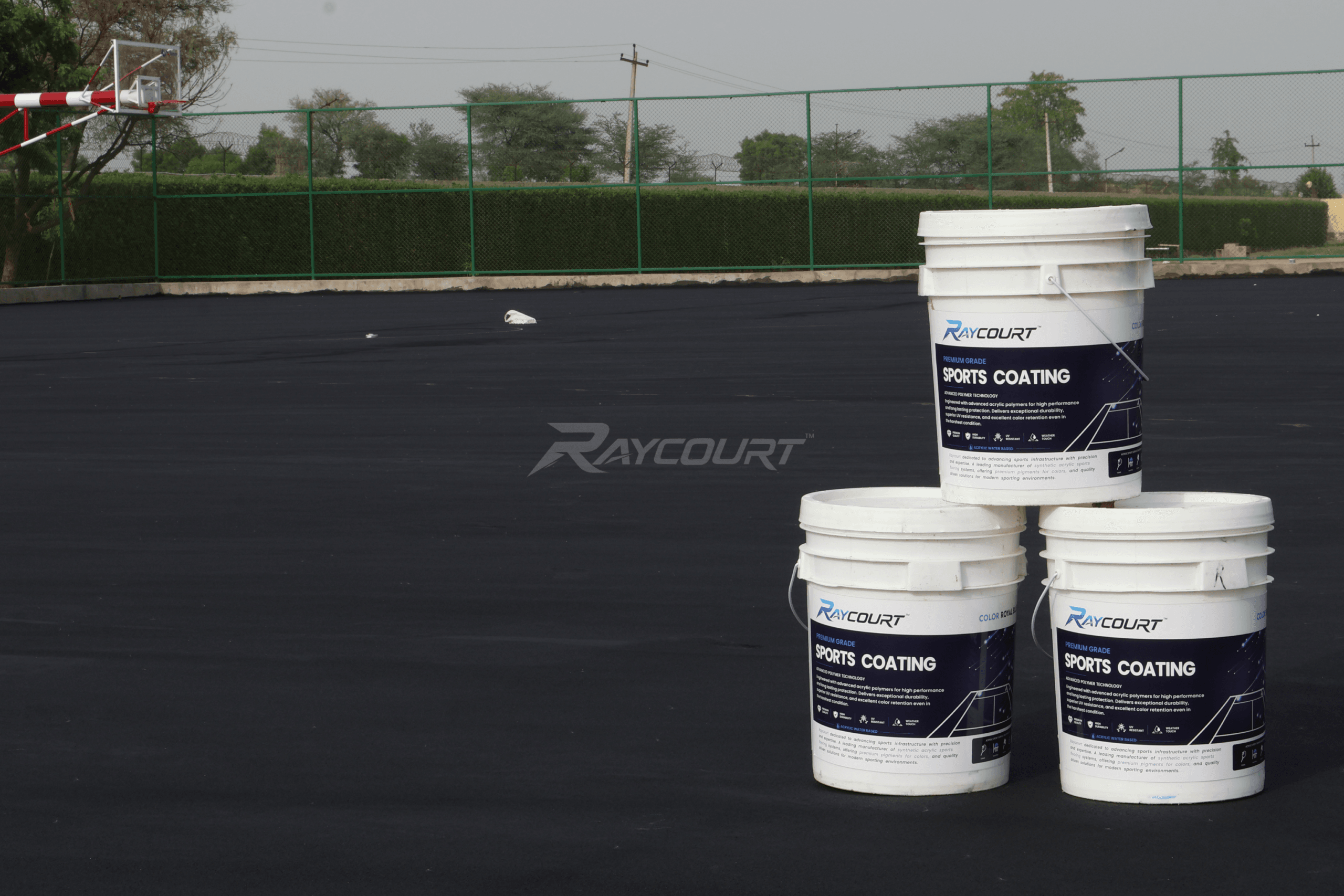
Every acrylic system needs a stable, well-built base. Most projects use post-tensioned or reinforced concrete or hot-mix asphalt. The base must have the right slope for drainage and a smooth, even finish.
Concrete needs proper curing before any coating goes on. Fresh concrete releases moisture and alkaline salts. These can push coatings off the surface if contractors rush the job.
Asphalt also needs time to cure and release oils. A rushed schedule often leads to blistering or poor bonding later.
In short, the base sets the ceiling for court quality. Your contractor and civil engineer own this stage. Raycourt’s materials then build on that foundation.
Primer and Adhesion Layer
The primer prepares the base to accept the acrylic coatings. It penetrates the surface pores and creates a strong bonding bridge.
On concrete, the primer also helps manage minor surface dust and laitance. On asphalt, a dedicated filler or sealer often takes this role.
Skipping the primer may save a day on site. However, it often leads to peeling and delamination within a few seasons.
Resurfacer and Filler Coats
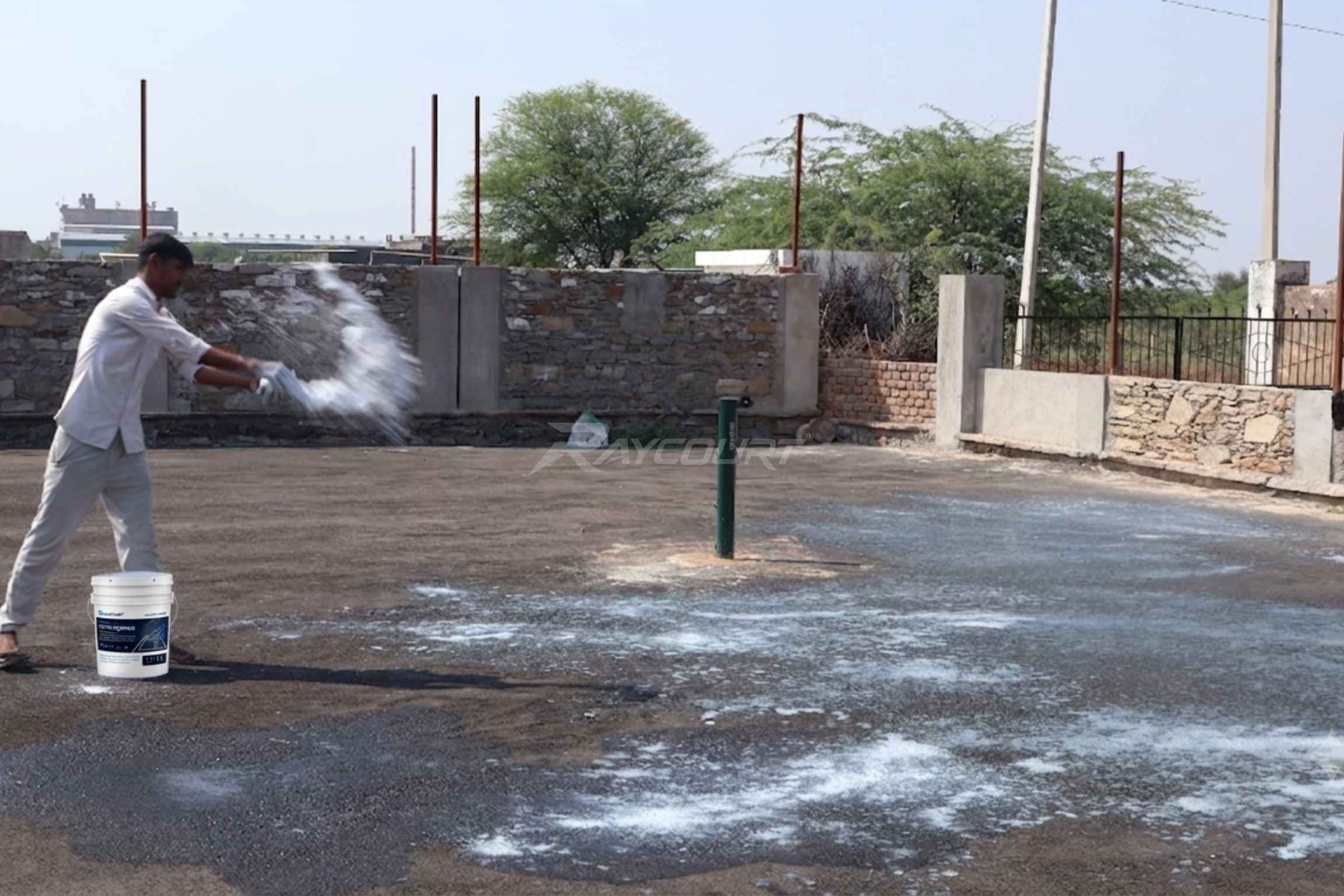
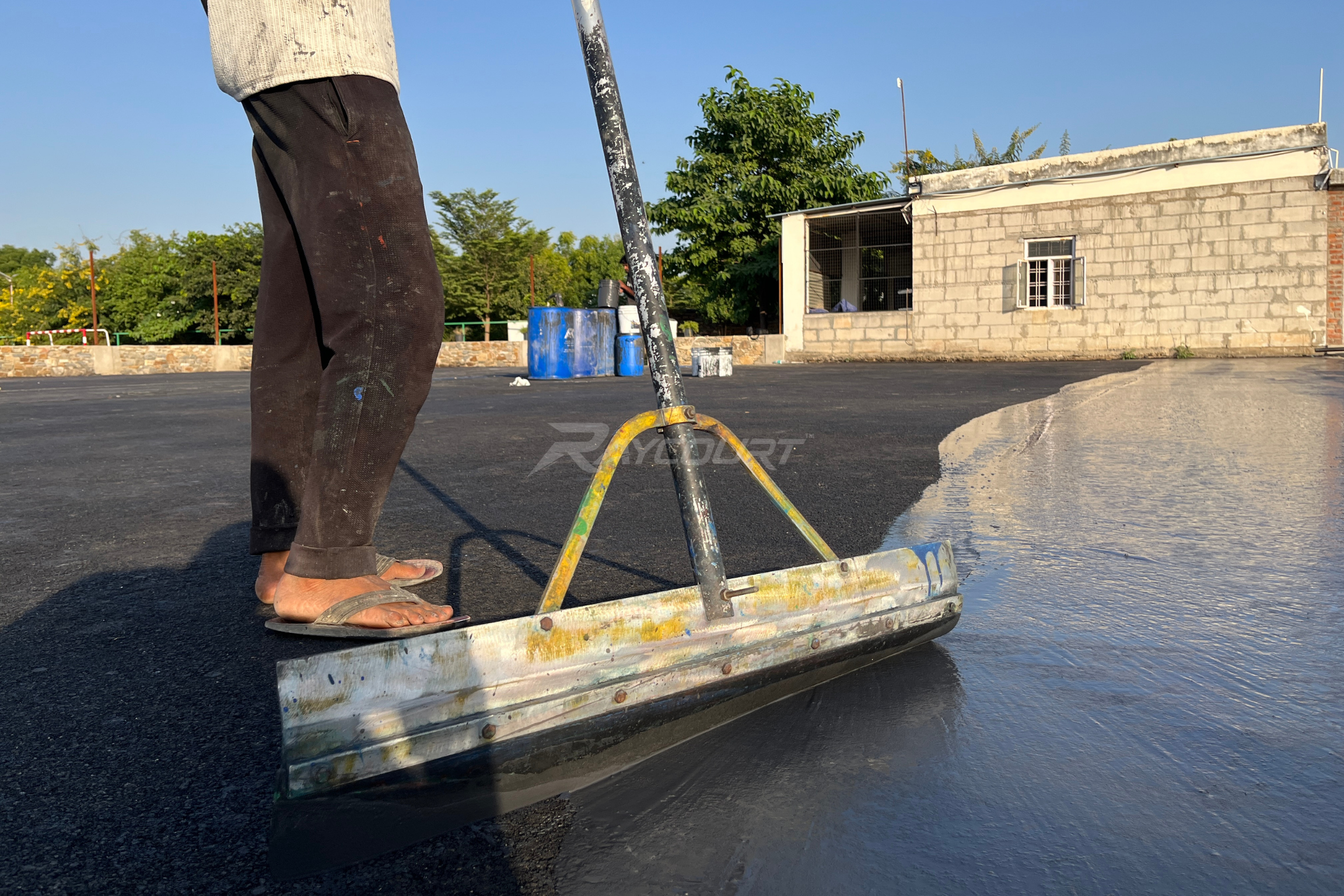
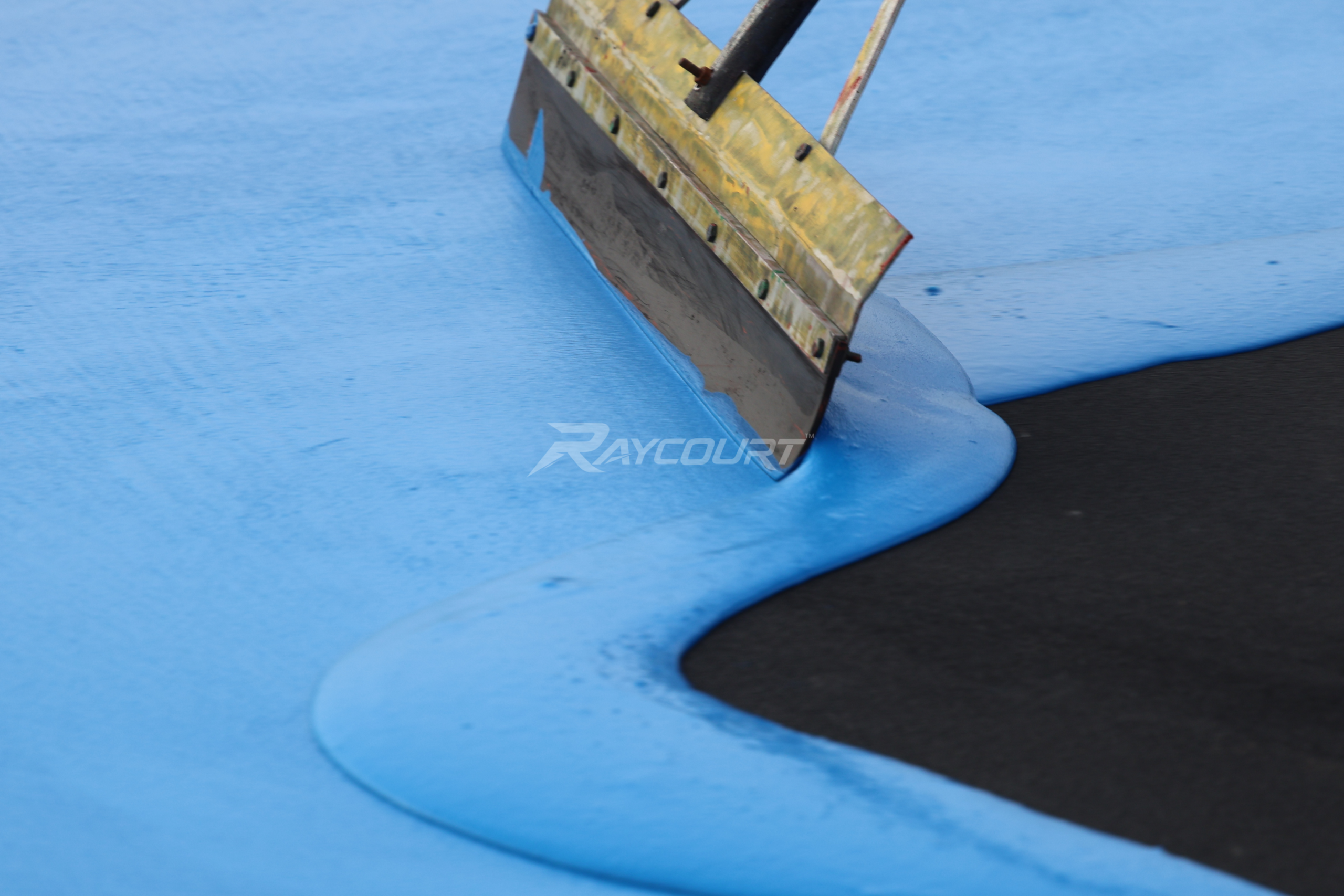
Next come the resurfacer or filler coats. These heavily filled acrylic layers level small dips and smooth the base texture.
They create an even platform for the cushion or colour coats. Moreover, they help the final surface look and play uniformly from baseline to net.
Contractors usually apply one or two resurfacer coats. They let each coat dry fully before the next one. Patience at this stage pays off in a flatter, more consistent court.
Cushion Layers
In cushioned systems, the cushion layers sit above the resurfacer. They contain rubber granules bound in acrylic resin.
Each layer adds a little more comfort and impact absorption. Manufacturers design these layers to stay flexible over time. Good cushion coats resist cracking and keep their spring for years.
Standard hard court systems skip this stage. Instead, they move straight from resurfacer to colour coats.
Colour and Texture Coats
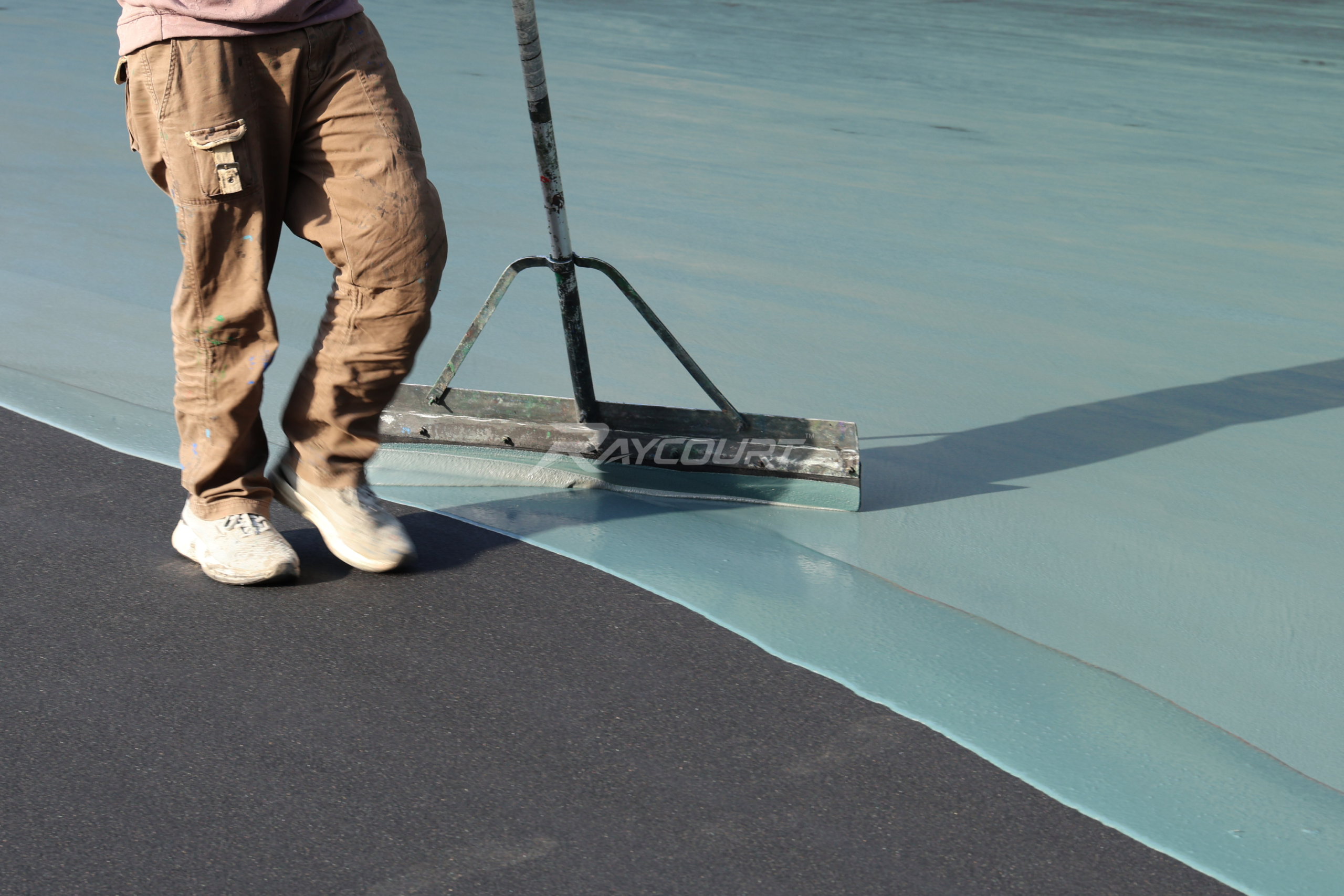
The colour coats form the visible, playable top of the court. They combine acrylic binder, pigment and graded silica sand.
The sand size and amount control texture. In turn, texture controls friction and court pace. Finer sand produces a faster surface. Coarser sand slows the ball down.
These coats also carry the system’s UV protection. Quality binders hold pigment firmly and resist chalking under sun. Most specifications call for two or more colour coats for full coverage.
Line Paint
Finally, contractors apply line paint to mark the court. Tennis lines need crisp edges and strong contrast with the playing colour.
Good line paint bonds tightly with the colour coat. It resists peeling and stays bright over many seasons of play.
Layer Order at a Glance
- Base: concrete or asphalt with correct slope and finish
- Primer or sealer: bonds coatings to the base
- Resurfacer coats: level and smooth the base texture
- Cushion coats: add comfort (optional, for cushioned systems)
- Colour and texture coats: set pace, grip and appearance
- Line paint: marks the playing area
Understanding Court Pace and ITF Classification
Court pace describes how a surface affects the ball’s speed and bounce after impact. It influences playing style more than almost any other factor.
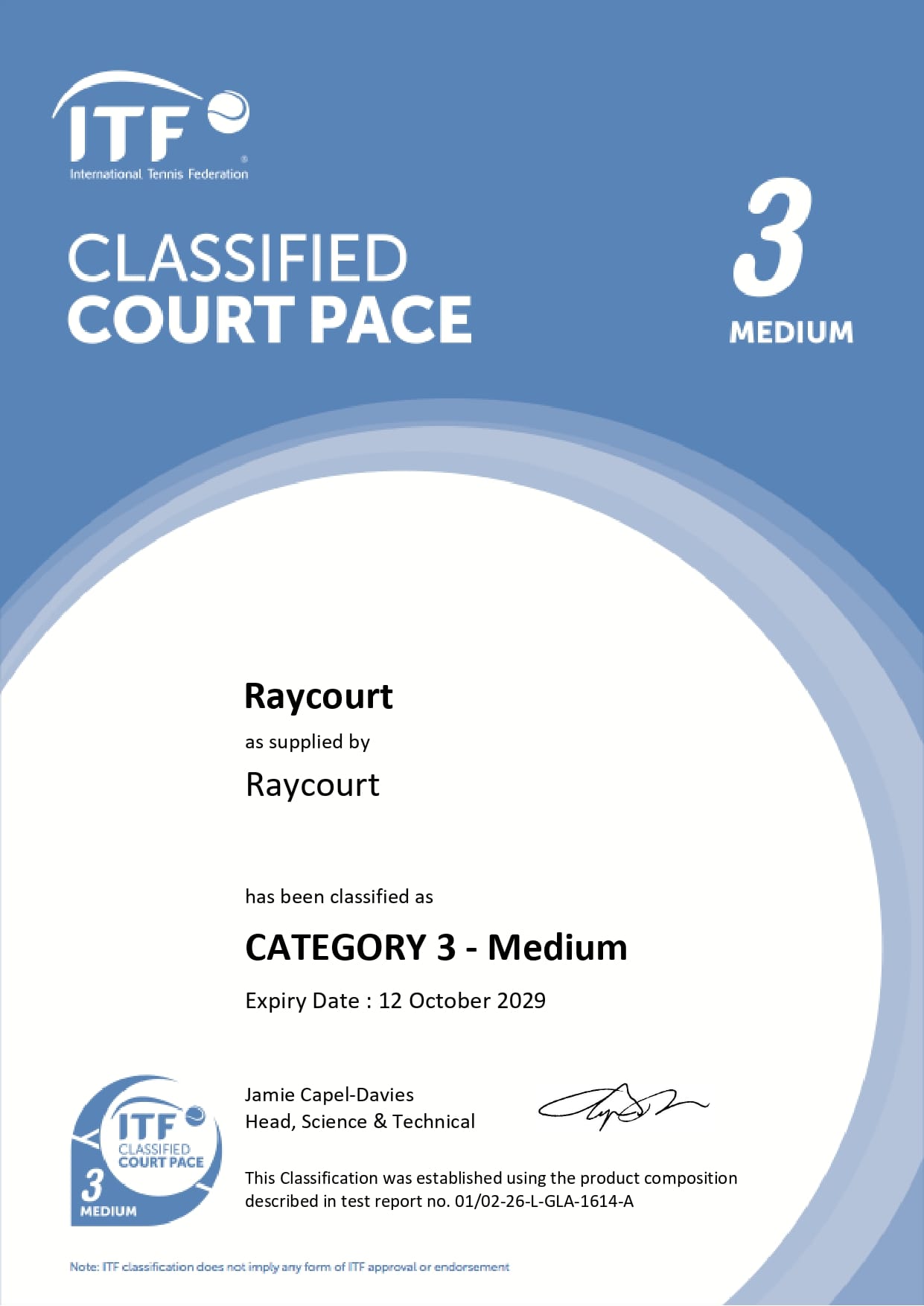
The International Tennis Federation runs the Court Pace Classification Programme to rate surfaces objectively. Under this scheme, accredited laboratories test surface products and assign a Court Pace Rating (CPR). You can read the official guidance on the ITF Classified Surfaces page.
This programme gives buyers a common language. Instead of vague terms like “quick” or “grippy”, you can compare tested ratings. That clarity helps owners pick a tennis court flooring material with confidence.
Notably, ITF classification reflects measured pace only. It does not mean the ITF endorses a product. Still, a classified surface shows that a manufacturer has submitted its system to independent testing.
The Five ITF Pace Categories
The ITF groups surfaces into five categories by their Court Pace Rating.
| Category | Pace | Court Pace Rating | Typical Playing Feel |
|---|---|---|---|
| 1 | Slow | 29 and below | High bounce, long rallies |
| 2 | Medium-slow | 30 to 34 | Extra time for players |
| 3 | Medium | 35 to 39 | Balanced for all styles |
| 4 | Medium-fast | 40 to 44 | Rewards big serves |
| 5 | Fast | 45 and above | Low, skidding bounce |
Most acrylic systems sit between categories two and four. This range suits club play, coaching and competition alike.
How Material Composition Controls Pace
Manufacturers control pace mainly through the top coat texture. The key variable involves the silica sand inside the colour coats.
Coarser, more angular sand raises friction. As a result, the ball loses more forward speed on contact. Finer, rounder sand lowers friction and lets the ball skid.
The amount of sand matters as well. A heavily filled coat feels slower. A lightly filled coat plays quicker.
Coat count also plays a role. Each extra textured layer builds a slightly rougher profile. Contractors must follow the specified number of coats to hit the target pace.
Cushion layers add a smaller effect. They absorb some energy and can make the bounce feel a touch softer.
Because of these variables, consistency in manufacturing matters a great deal. At Raycourt, we control raw material grading so each batch performs the same way. That way, your court plays as the specification promises.
Choosing a Pace for Your Players
So which pace should you choose? Start with your main users.
- Beginners and juniors: A slow to medium-slow court gives them more time to reach the ball.
- Club and recreational players: A medium court offers balanced rallies for every style.
- Competitive and elite players: A medium to medium-fast court mirrors many tournament conditions.
- Coaching academies: Many academies pick medium pace, so players adapt to most surfaces later.
Also think about climate. Heat can make balls travel faster through the air. A slightly slower surface can balance that effect.
Finally, consider long-term use. A court for mixed age groups usually benefits from a medium setting. It keeps everyone comfortable without favouring one style.
Expert Tip: If you host tournaments, check the event’s surface requirements early. Then choose a tennis court flooring material whose classified pace fits those rules.
Ready to build a court that performs for years to come?
Connect with Raycourt for sports flooring systems built for your project.
Key Performance Properties to Evaluate
Pace tells only part of the story. A good tennis court flooring material must also perform well across several other properties. Let us explore the most important ones.
Ball Bounce Consistency
Players need every bounce to behave the same way. A dead spot or soft patch can cost a point and damage confidence.
Acrylic systems deliver this consistency because they bond into one continuous layer. No loose infill moves around. No turf wears down unevenly.
However, consistency also depends on the base. Dips, cracks or hollow areas will show through any coating. So insist on a flat, well-compacted base before coating starts.
Manufacturing quality adds the final piece. Uniform binder and sand ratios keep texture even across the court. Raycourt holds tight control over these ratios in every batch.
Traction and Slip Resistance
Traction lets players start, stop and change direction safely. Too little grip leads to slips. Too much grip can stress ankles and knees.
The sand in the colour coats provides this grip. A well-balanced texture lets shoes hold firmly while allowing a natural pivot.
Wet conditions test traction most. A quality acrylic surface sheds water quickly and keeps reasonable grip when damp. Still, players should avoid playing on standing water.
Line paint deserves attention too. Some line paints feel slippery when wet. Choose a textured line paint that matches the court’s grip as closely as possible.
Shock Absorption and Player Comfort
Every stride sends force back through a player’s body. On a rigid surface, joints absorb most of that force.
Cushioned acrylic systems reduce this load. The rubber-filled layers compress slightly on impact and then recover. This action softens landings and quick stops.
The benefit shows most over long sessions. Players report less leg fatigue after extended training. Players of every age and level often find cushioned courts far more comfortable.
That said, more cushioning also slows the surface slightly. So balance comfort with your preferred pace. A skilled supplier can help you find that middle ground.
UV Stability and Colour Retention
Outdoor courts face intense sunlight for many hours a day. Weak pigments and binders break down under ultraviolet light. The result looks chalky and faded.
High-grade acrylic binders hold pigments tightly and resist UV attack. As a result, colours stay vivid for longer between recoats.
Colour retention affects more than looks. Faded courts reduce contrast between lines and ball. That makes play harder, especially under bright sun.
Therefore, always ask about the binder quality and pigment type in any system you consider. Raycourt formulates its colour coats for strong UV stability under harsh sun.
Water Resistance and Drainage
Water threatens every court. It can lift coatings, feed algae and leave puddles that halt play.
Acrylic systems seal the surface against water penetration. Combined with a correctly sloped base, they let rain run off rather than pool.
The slope itself belongs to the base design. Even the best coating cannot fix a flat or back-sloped base. Your contractor must build drainage into the base from day one.
Moisture from below also matters. Courts built on damp ground need proper vapour control in the base. Otherwise, rising moisture can push coatings up and cause blisters.
Matching Tennis Court Flooring Material to Indian Climate Conditions
India’s climate puts unusual stress on outdoor courts. Strong sun, heavy monsoons and dust all test the surface. Choosing a material built for these conditions protects your court’s performance.
Handling Intense Heat and Sunlight
Summer surface temperatures can climb very high in much of India. Heat softens weak coatings and speeds up UV damage.
A quality acrylic system copes with these conditions. Its binders stay stable across a wide temperature range. Its pigments resist fading under months of direct sun.
Colour choice also helps. Lighter shades absorb less heat than very dark ones. Many owners now pick mid-tone blues and greens for a cooler, more comfortable surface.
Heat also affects the ball. Balls travel a little faster in hot air. A medium or medium-slow court can help balance that change.
Coping with Monsoon Rains
Monsoon months bring long spells of heavy rain. Courts must shed water fast and resist moisture damage.
Acrylic systems handle this well because they form a sealed, continuous surface. Water runs off along the base slope instead of soaking in.
After rain stops, the surface dries quickly in sun and wind. Play can often resume the same day.
Owners should also clear drains and gutters before the monsoon begins. Blocked drainage causes standing water, which encourages algae and staining.
Expert Tip: Schedule any recoating well before the monsoon. Coatings need dry, warm weather to cure properly and bond fully.
Managing Dust and Coastal Air
Dust settles on courts across much of north and west India. Over time, it dulls colour and reduces grip.
Fortunately, acrylic courts clean easily. Regular sweeping and periodic washing restore both colour and traction.
Coastal venues face salty, humid air. This environment can speed up wear on weaker coatings. Quality acrylic binders resist salt and humidity better than cheaper alternatives.
In both cases, routine cleaning extends the life of the surface. A few minutes of care each week saves major work later.
Quick Answers to Common Selection Questions
Many owners ask similar questions when they plan a new court. Here are short answers to the most frequent ones.
Can You Use Acrylic Flooring for Indoor Tennis Courts?
Yes, acrylic systems work very well indoors. They give the same consistent bounce and pace control as outdoor courts.
Indoors, UV exposure drops sharply, so colours last even longer. However, owners should consider lighting and glare. A matte finish helps reduce reflections under artificial lights.
Cushioned systems prove especially popular indoors. Indoor venues often host long coaching sessions, so player comfort becomes a priority.
Ventilation still matters during application. Contractors need good airflow so coatings can cure correctly.
Can You Resurface an Existing Tennis Court?
In most cases, yes. If the base remains structurally sound, contractors can repair cracks and apply new coatings.
The process usually starts with cleaning and crack repair. Next, they level low spots with resurfacer. Finally, they apply fresh colour coats and line paint.
Resurfacing gives an old court a new playing surface without full reconstruction. It also offers a chance to change pace or colour.
However, deep structural cracks or base movement need engineering attention first. Coatings cannot hide a failing base for long.
Can One Court Serve Tennis and Other Sports?
Yes, an acrylic tennis court can carry lines for other sports. Pickleball works especially well on the same surface.
Owners should plan line colours carefully. Tennis lines usually stay white, while secondary lines use a contrasting colour.
Keep in mind that each sport has its own preferred pace. A medium setting often works as a sensible compromise.
Raycourt supplies acrylic systems for tennis, pickleball, basketball and other court sports. So you can source one compatible system for a multi-sport venue.
How Long Does an Acrylic Tennis Surface Last?
Lifespan depends on climate, play volume, base quality and maintenance. A well-built court with regular care lasts many years.
The top colour coats wear first, especially in high-traffic zones near the baseline. Contractors can recoat these surfaces without replacing the full system.
Good maintenance makes the biggest difference. Clean courts with clear drainage age far more slowly than neglected ones.
How to Choose the Right Tennis Court Flooring Material
Choosing a surface feels easier when you follow a clear process. Use these steps to guide your decision.
- Define your users. List the ages, skill levels and playing hours you expect. This list shapes every later choice.
- Decide on indoor or outdoor use. Outdoor courts need strong UV and weather resistance. Indoor courts focus more on comfort and glare.
- Choose your pace category. Match the ITF pace category to your players and climate.
- Select hard or cushioned. Pick cushioned layers if comfort and long training sessions matter most.
- Check the base plan. Confirm your contractor will build a sound, sloped, fully cured base.
- Review the full system specification. Ask for every layer, from primer to line paint.
- Check independent testing. Look for ITF classification and published technical data.
- Plan colour and lines. Pick contrasting colours and plan lines for any extra sports.
- Confirm supply and support. Choose a manufacturer that offers technical guidance and reliable delivery.
- Plan maintenance from day one. Agree on a cleaning routine and a recoating outlook.
Each step reduces risk. Together, they help you choose a tennis court flooring material that performs well for years.
Manufacturer vs Installer: Understanding the Roles
Many buyers assume one company handles everything. In reality, two distinct roles shape every acrylic court.
The manufacturer develops, tests and produces the flooring materials. This work covers primers, resurfacers, cushion coats, colour coats and line paints. The manufacturer controls formulation, quality and batch consistency.
The installer or contractor prepares the site and applies those materials. They build or repair the base, manage curing times and apply each coat to specification.
Raycourt works strictly as a manufacturer. We do not install courts. Instead, we focus entirely on producing high-performance tennis court flooring material and supporting the professionals who apply it.
This focus benefits owners. It means our team spends its energy on formulation, testing and consistency. Meanwhile, your chosen contractor brings site expertise and local knowledge.
For the best result, involve both parties early. Share the manufacturer’s specification with your contractor. Then confirm that they understand each layer, coat count and curing time.
Expert Tip: Ask your contractor whether they have applied the specific system before. Familiarity with a product’s mixing and drying behaviour leads to a smoother finish.
Ready to build a court that performs for years to come?
Connect with Raycourt for sports flooring systems built for your project.
Maintaining Your Tennis Court Flooring Material
Even the best surface needs care. Fortunately, acrylic courts ask far less of owners than clay or grass. A simple routine keeps them safe, attractive and consistent.
Routine Care
- Sweep or blow off debris such as leaves, dust and twigs several times a week.
- Remove standing water with a squeegee after rain.
- Keep drains clear so water exits the court quickly.
- Ban unsuitable footwear, such as running spikes or black-soled shoes that mark the surface.
- Keep heavy objects off the court, including vehicles, chairs with thin legs and sharp equipment.
These habits take little time. Yet they prevent most common surface problems.
Periodic Cleaning
Every few months, give the court a deeper clean. Use a low-pressure wash with water and a mild, suitable cleaner.
Pay extra attention to shaded corners. These areas stay damp longer and can grow algae or moss. Treat any growth promptly before it spreads.
Also inspect the surface during each clean. Look for small cracks, bubbles or worn patches. Early repairs cost far less effort than major fixes later.
Recoating and Renewal
Over time, foot traffic and weather wear down the colour coats. The texture smooths out, and the court may start to play faster.
At that point, contractors can apply fresh colour coats over the existing system. This step restores texture, colour and pace.
Plan recoating during dry, warm weather. Coatings need suitable conditions to cure and bond correctly.
Regular renewal keeps your tennis court flooring material playing to its original specification. It also protects the underlying layers from wear.
Common Mistakes to Avoid When Selecting Court Flooring
Many court problems trace back to early decisions. Avoid these frequent mistakes to protect your project.
- Rushing the base. Coating uncured concrete or asphalt causes blistering and peeling.
- Ignoring drainage slope. Flat or uneven bases leave puddles that damage coatings.
- Skipping layers. Missing primers or resurfacers weakens the whole system.
- Choosing pace without a plan. A surface that suits elite players may frustrate beginners.
- Mixing incompatible products. Combining materials from different systems can cause bonding failures.
- Picking colours only for looks. Poor contrast between lines, ball and surface hurts visibility.
- Neglecting maintenance. Dirt, algae and blocked drains shorten surface life quickly.
- Applying coatings in poor weather. Rain, high humidity or cold slow curing and weaken bonds.
Each of these mistakes is easy to prevent. Careful planning and a complete system specification remove most of the risk.
Why Choose Raycourt for Tennis Court Flooring Material
Raycourt brings years of experience to the design and manufacture of synthetic acrylic sports flooring. Our focus stays simple: produce materials that perform consistently, court after court.
Here is what sets our systems apart:
- ITF Classified materials: Our surfaces have undergone independent court pace testing.
- Complete systems: We supply primers, resurfacers, cushion coats, colour coats and line paints.
- Tunable pace: We formulate textures that suit beginners, clubs and competitive players.
- UV-stable colours: Our colour coats resist fading under strong Indian sun.
- Weather resilience: Our systems handle heat, monsoon rain and dust.
- Multi-sport range: We also supply flooring for pickleball, basketball and other court sports.
- Reliable supply: Our Vadodara warehouse supports fast dispatch across western India.
Most importantly, we work as a dedicated manufacturer. That focus lets us invest fully in formulation, quality control and technical support.
Our team also guides contractors and project owners through system selection. We help you match pace, comfort and colour to your players and site. As a result, you can move forward with clarity and confidence.
Frequently Asked Questions
For most outdoor courts, a synthetic acrylic system offers the best balance. It gives a consistent bounce, adjustable pace and strong weather resistance. It also needs far less upkeep than clay or grass. Cushioned versions add comfort for players who train for long hours.
Both systems share the same color and texture coats on top. However, cushioned courts add rubber-filled layers beneath those coats. These layers absorb impact and reduce strain on joints. As a result, cushioned courts feel softer and play slightly slower.
The surface texture controls friction between ball and court. Coarser textures slow the ball and raise its bounce. Smoother textures let the ball skid through faster. Manufacturers adjust sand grading and coat count to set a specific pace category.
ITF classification gives you an independent, tested pace rating. It helps you compare products using one standard scale. Classification does not mean the ITF endorses a product. Still, it shows that the manufacturer has submitted its system to accredited laboratory testing.
Recoating frequency depends on climate, play volume and maintenance quality. Watch for faded colour, smoother texture and a faster feel. These signs show the colour coats need renewal. Regular cleaning and clear drainage help you stretch the time between recoats.
Conclusion
The right tennis court flooring material shapes every rally, every stride and every season of play. For most modern venues, a multi-layer synthetic acrylic system offers the strongest all-round package. It combines consistent bounce, tunable pace, player comfort and low upkeep.
Still, success depends on the full system. A sound base, the correct layer sequence and skilled application all play their part. Equally, routine care keeps the surface performing as intended.
Start with your players. Then choose a pace, decide on cushioning and review every layer of the specification. Finally, partner with a manufacturer that stands behind its materials with testing and technical support.
Ready to build a court that performs for years to come?
Connect with Raycourt for sports flooring systems built for your project.