
Introduction
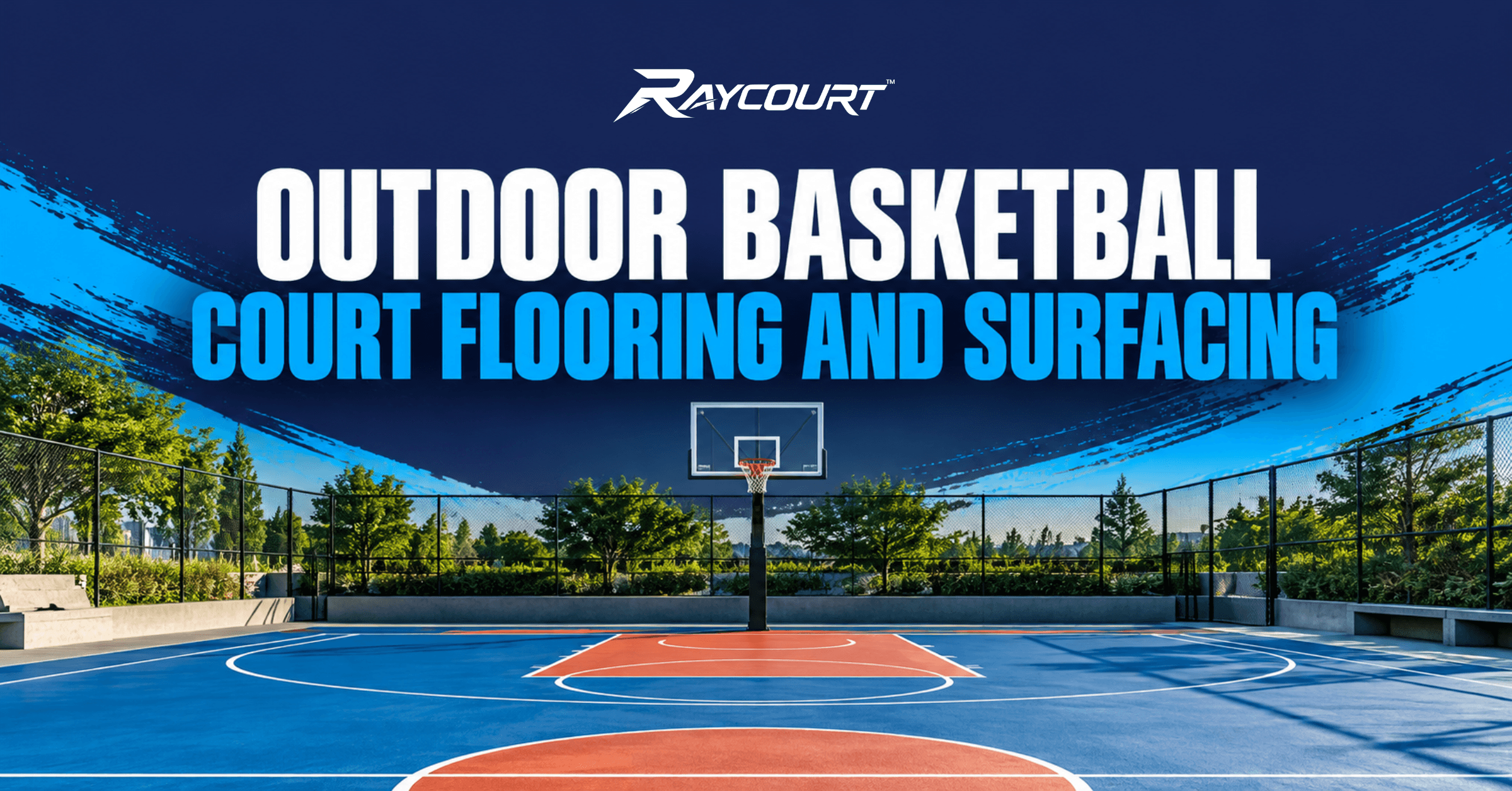
Outdoor basketball court flooring is the surfacing system that protects a court from sun, rain, and heavy foot traffic. It also withstands temperature swings and keeps the game safe. The best systems combine a stable sub-base, a cushioning layer, and a weather-resistant acrylic coating. Together, these layers deliver reliable ball bounce and traction in every season. Choosing the wrong material leads to cracking, fading, and dangerous slip conditions within a few short years. Choosing the right one, however, protects your investment and keeps players safe for the long haul.
This article walks through every layer of that decision. You will learn what outdoor basketball court flooring actually consists of and how acrylic coating systems work. You will also discover which performance features matter most. We also cover maintenance, climate considerations, industry standards, and the most common mistakes facility owners make. By the end, you will know exactly what to look for. You can then specify or purchase flooring material for your next outdoor court project with confidence.
Facility owners often approach this decision from very different starting points. A school district might already have an aging asphalt court that needs a complete transformation. A private homeowner, meanwhile, might be planning a brand-new driveway court from scratch. Regardless of your starting point, the fundamentals stay the same. You need a stable base and a properly engineered acrylic system. A solid maintenance plan protects your investment for years to come.
What Is Outdoor Basketball Court Flooring?
Outdoor basketball court flooring refers to the complete surfacing system installed over a concrete or asphalt base. Together, these layers create a playable, weather-resistant court. Unlike indoor hardwood courts, outdoor surfaces face direct sun, rain, and freeze-thaw cycles. They also endure dramatic temperature shifts throughout the year. As a result, manufacturers design outdoor court materials differently than indoor products from the ground up.
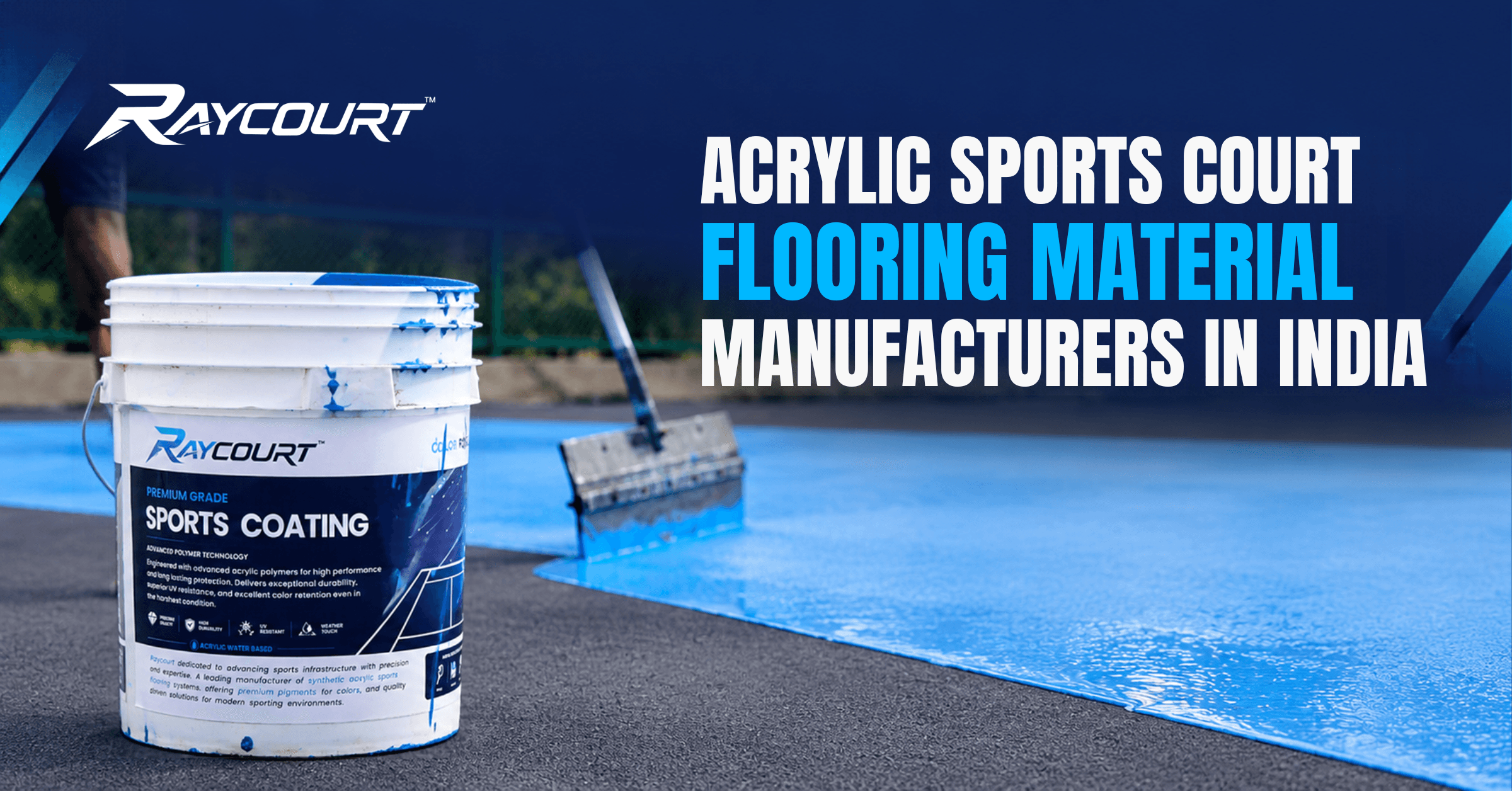
Most modern outdoor courts use one of three surfacing approaches. These include acrylic-coated asphalt or concrete, modular interlocking tiles, and poured polyurethane systems. Acrylic coatings remain the most widely specified option for public parks, schools, and residential courts. They balance performance, appearance, and long-term durability well. Raycourt manufactures the acrylic resurfacers, texture coats, and color layers that make this system work.
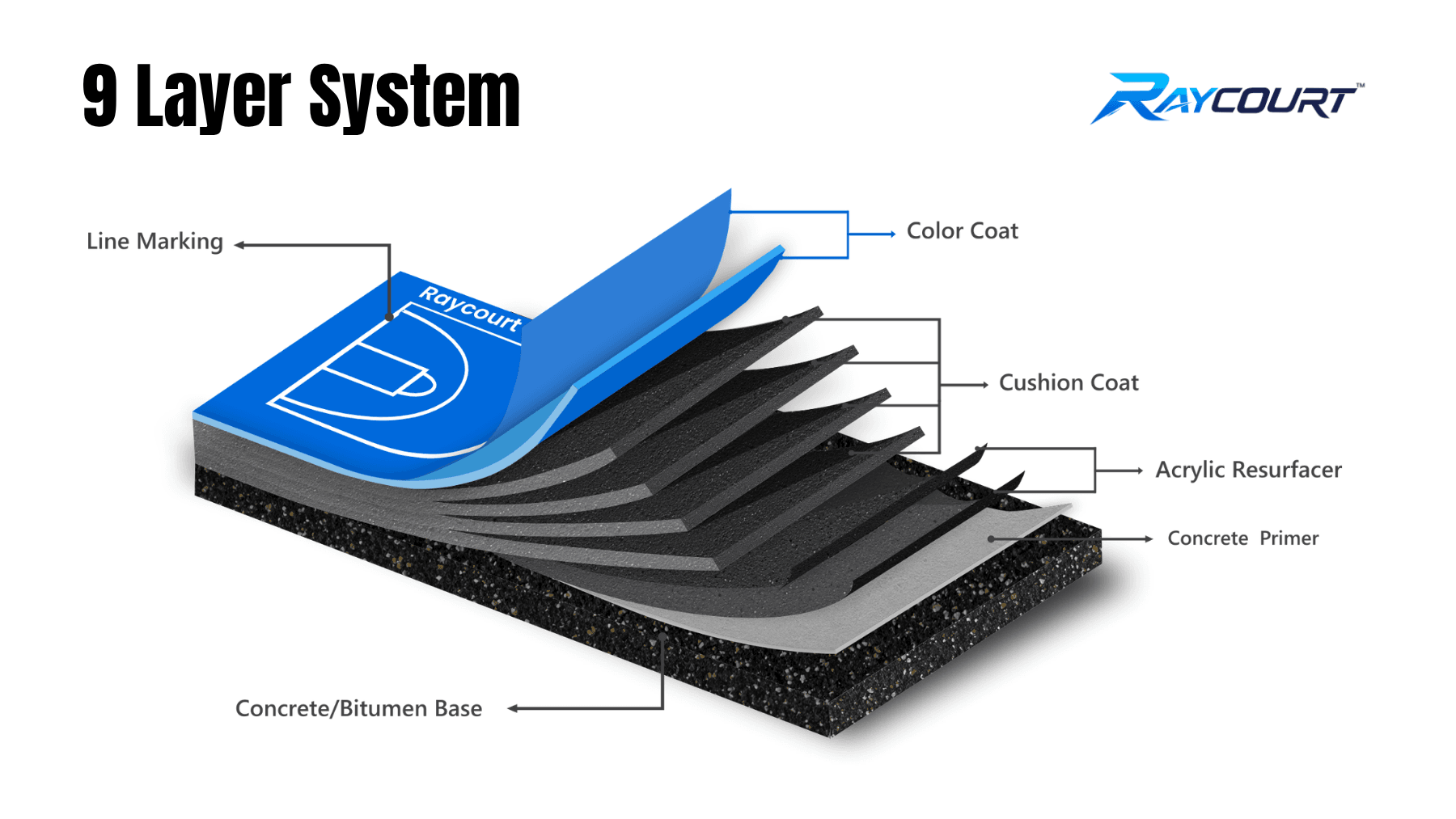
The flooring itself is never just a single layer. Instead, it functions as a system of several coordinated layers, each contributing a specific property. A patch-and-crack-repair layer stabilizes the base. A cushion or texture coat manages shock absorption and ball response. Finally, color coats and line-marking paint create the finished, playable surface. Together, these layers determine how the court looks, feels, and performs for years to come.
Understanding this layered structure matters because it shapes every decision you make afterward. Every choice, from base preparation to topcoat selection, affects how long the court lasts and how it plays. Consequently, facility owners who understand the system make far better purchasing decisions than those who focus on price alone.
Why Outdoor Basketball Court Flooring Matters
The flooring you choose directly affects player safety, game quality, and the long-term cost of ownership for your facility. A poorly designed surface cracks, fades, and becomes slippery within a short time. A well-engineered acrylic system, on the other hand, resists these problems and continues performing consistently for many playing seasons.
Player safety sits at the center of this decision. Slip resistance and shock absorption reduce the risk of falls and joint strain during quick lateral movements. Meanwhile, consistent ball bounce across the entire court prevents unpredictable gameplay and reduces disputes during competitive matches. These performance factors matter on a neighborhood park court. They matter just as much on a school or club-level facility.
Weather resistance also plays a critical role. Outdoor courts endure UV radiation, rainfall, humidity, and in many regions, freezing winters. Without proper UV stabilizers, acrylic coatings chalk and fade within a couple of years. Without adequate flexibility, coatings crack under thermal expansion and contraction. Raycourt engineers its acrylic formulations specifically to resist these stresses. This engineering helps courts maintain their color, texture, and performance far longer than generic paint-based alternatives.
Finally, flooring quality shapes the overall experience of the court. Bright, well-marked lines improve visibility for players and officials. A smooth, properly cushioned surface reduces fatigue during long games or practice sessions. Outdoor courts often serve entire communities. Investing in the right flooring material extends the useful life of this shared public asset.
Expert Tip: Always match your acrylic system’s flexibility rating to your local climate. Regions with wide seasonal temperature swings need more flexible formulations to prevent hairline cracking.
Core Types of Outdoor Basketball Court Flooring Materials
Facility owners typically choose between three broad categories of outdoor basketball court flooring. Each option carries distinct performance characteristics, so understanding the differences helps you match the right material to your project’s needs.
Acrylic Coating Systems
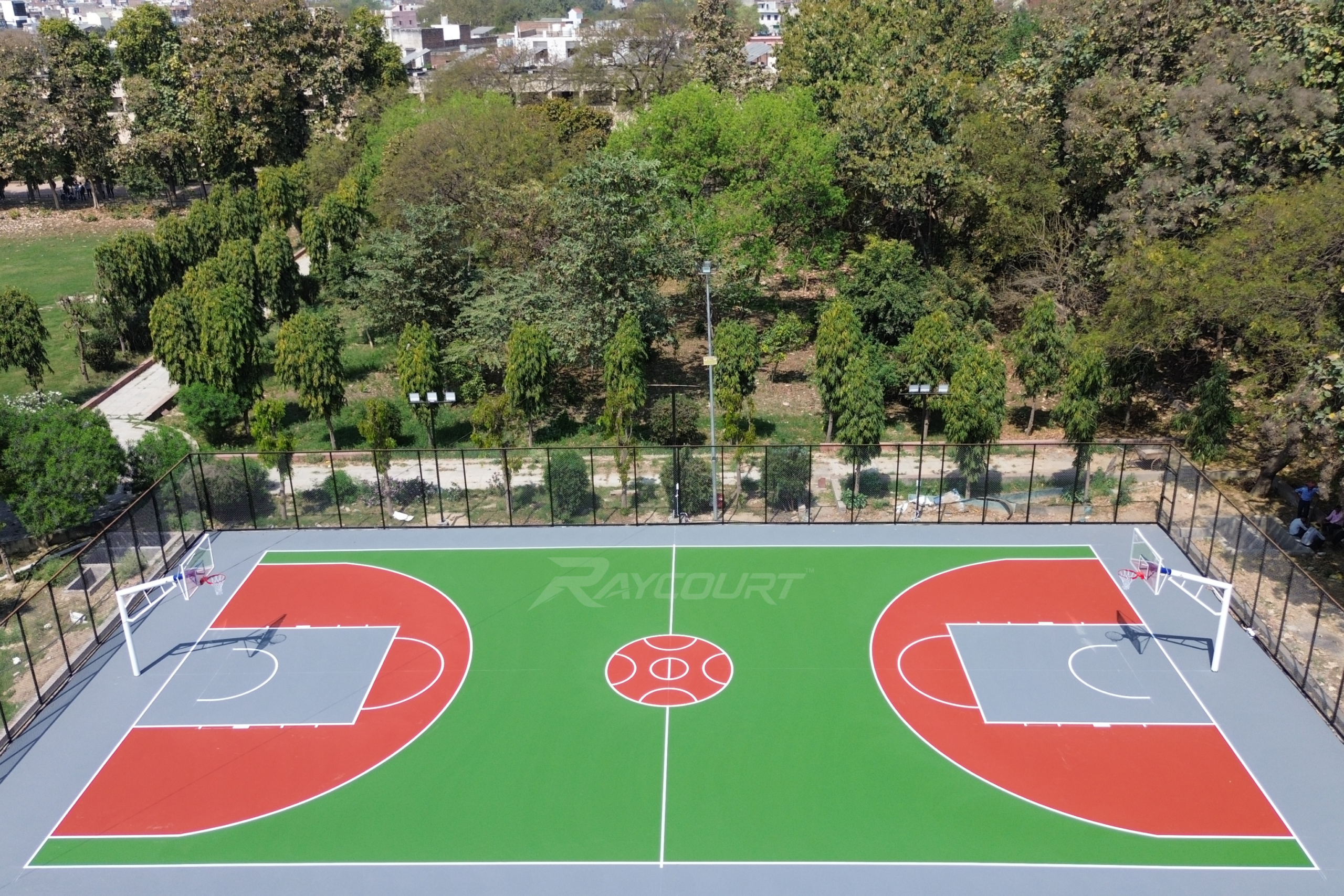
Acrylic coating systems apply multiple layers of specially formulated resurfacers, cushion coats, and color topcoats directly over asphalt or concrete. This approach delivers excellent color retention and strong UV resistance. Installers can also tailor the playing surface to different performance levels. Raycourt produces the full range of acrylic products this system requires, from crack fillers to line-marking paint.
Acrylic systems also allow facility owners to choose between standard, cushioned, and championship-grade builds. A standard system suits recreational parks and driveways. A cushioned build adds rubber granules to the texture coat, improving shock absorption for high school or club courts. Championship-grade systems layer additional cushion coats for maximum comfort during extended competitive play.
Modular Interlocking Tiles
Modular tiles snap together over a compacted base without adhesives. This makes them a popular choice for temporary courts or budget-conscious residential installations. These tiles typically feature a textured, perforated surface that channels rainwater away quickly. However, they generally offer less color customization and a different playing feel compared to acrylic-coated surfaces.
Because installers can lift and relocate modular tiles, this option suits multi-use spaces or venues that need occasional reconfiguration. Permanent public courts and school facilities, however, often prefer a different look. They favor the seamless finish and consistent bounce that acrylic coatings provide.
Asphalt and Concrete Base Surfaces
Some budget installations skip a dedicated topcoat entirely and play directly on sealed asphalt or concrete. While this approach lowers material requirements, it sacrifices color customization, cushioning, and long-term surface protection. Uncoated asphalt also weathers faster, developing cracks and surface raveling much sooner than a properly coated system.
Most facility owners treat asphalt or concrete as the structural base layer rather than the finished playing surface. A quality acrylic coating system then protects that base. It also creates the color, texture, and line markings players interact with during a game.
Comparing the Three Options
| Feature | Acrylic Coating System | Modular Interlocking Tiles | Uncoated Asphalt/Concrete |
|---|---|---|---|
| Color customization | Extensive, multi-color capable | Limited to tile color options | None |
| Surface feel | Smooth, consistent bounce | Slightly springy, segmented | Hard, inconsistent over time |
| Drainage | Relies on base slope | Built-in perforated drainage | Relies on base slope |
| UV and weather resistance | High, with proper formulation | Moderate to high | Low without sealant |
| Relocation flexibility | Permanent installation | Fully relocatable | Permanent installation |
| Line marking clarity | Sharp, long-lasting paint lines | Pre-marked or painted tiles | Fades quickly |
Comparing Outdoor Acrylic Flooring to Indoor Court Systems
Many facility owners manage both indoor and outdoor courts. Understanding how these systems differ clarifies why manufacturers formulate them so differently. Indoor courts typically use hardwood or PVC surfaces because they never face rain, UV exposure, or freeze-thaw cycling. Outdoor courts, by contrast, need materials engineered specifically to survive constant environmental stress.
Hardwood flooring delivers excellent ball response and player comfort, but it warps and deteriorates quickly outdoors. Moisture infiltration causes boards to swell, crack, and separate within a single rainy season. Consequently, no reputable manufacturer recommends hardwood for outdoor installations, regardless of climate.
PVC and rubber sports tiles work well indoors because manufacturers optimize them for climate-controlled environments. Some PVC products do transition to outdoor use. However, they generally require UV-stabilized formulations that differ significantly from standard indoor products. Facility owners should never assume an indoor-rated product performs safely outdoors without checking its specific weather rating first.
Acrylic coating systems solve this problem directly. Manufacturers design them from the start for direct sun, rain, and temperature swings. Raycourt formulates every outdoor acrylic product with these stresses in mind, rather than adapting an indoor product after the fact. This distinction matters enormously when you compare long-term performance between indoor and outdoor sport surfacing categories.
Ultimately, the right choice always depends on where the court sits and how it gets used. Indoor facilities can prioritize ball response and comfort without worrying about weather. Outdoor facilities, however, must balance performance with durability. This is precisely why acrylic systems dominate the outdoor basketball flooring market today.
Ready to build a court that performs for years to come?
Connect with Raycourt for sports flooring systems built for your project.
The Raycourt Acrylic System: How It Works
Raycourt’s acrylic flooring system builds up in coordinated layers, and each layer serves a distinct purpose in the finished court. Understanding this sequence helps installers and facility owners appreciate why a proper acrylic system outperforms simple paint or sealant applications.
Base Preparation and Crack Repair
Every successful acrylic system starts with a sound, stable base. Installers first inspect the asphalt or concrete for cracks, low spots, and drainage issues. They then apply an acrylic patch-and-crack filler to stabilize any surface flaws before coating begins. Skipping this step almost always leads to premature cracking once installers apply the topcoats.
Proper slope and drainage also matter enormously at this stage. Standing water accelerates surface degradation and creates dangerous playing conditions. Consequently, installers grade the base to shed water quickly, typically with a gentle, consistent slope across the court.
Resurfacer and Cushion Layer
Next, installers apply an acrylic resurfacer that fills minor surface imperfections and creates a uniform texture across the entire court. For facilities that want added shock absorption, Raycourt offers cushion-coat formulations that incorporate rubber granules into the acrylic base. This layer significantly reduces impact stress on players’ joints during jumps and quick direction changes.
The cushion layer also affects ball response and player comfort during extended play. Thicker cushion systems feel softer underfoot and reduce fatigue. This matters for facilities that host frequent tournaments or daily community use.
Color Coats and Texture
Once the resurfacer cures, installers apply two or more coats of colored acrylic. Raycourt formulates these color coats with UV-stable pigments that resist fading under constant sun exposure. Many facilities choose contrasting colors for the key, three-point arc, and out-of-bounds areas. This choice improves visibility for players and spectators alike.
Texture also plays a functional role beyond appearance. A slightly textured finish improves traction, especially when the court gets wet from rain or morning dew. Raycourt balances texture and smoothness carefully, since overly rough surfaces cause excessive shoe wear while overly smooth surfaces reduce grip.
Line Marking
Finally, installers apply precise line markings using acrylic line-marking paint. Accurate, high-contrast lines improve gameplay and reduce officiating disputes. Raycourt’s line paint shares the same acrylic technology as the color coats. It bonds seamlessly and weathers at a matching rate. This prevents lines from fading faster than the surrounding surface.
Expert Tip: Always allow full cure time between acrylic coats, especially in humid climates. Rushing this step traps moisture and weakens adhesion between layers.
Key Performance Features to Evaluate
Selecting outdoor basketball court flooring requires more than picking a color scheme. Several technical performance features determine how well a court plays and how long it lasts. Facility owners should evaluate each of these factors carefully before finalizing a material choice.
UV and Weather Resistance
Outdoor courts sit under direct sunlight for thousands of hours every year. Without strong UV stabilizers, acrylic coatings chalk, fade, and lose their protective properties within a few seasons. Raycourt formulates its color coats with UV-resistant pigments and binders specifically engineered for prolonged outdoor exposure.
Weather resistance extends beyond sun exposure alone. Rainfall, humidity, and temperature swings all stress the coating over time. A well-formulated acrylic system flexes with thermal expansion instead of cracking. It also resists moisture infiltration that could otherwise undermine the bond between layers.
Slip Resistance and Traction
Player safety depends heavily on consistent traction, particularly during wet conditions. Textured acrylic topcoats create enough grip for quick cuts and stops without becoming abrasive on players’ skin during falls. Raycourt balances this texture carefully across its product line to meet safety expectations for competitive and recreational play alike.
Wet-Weather Performance
Outdoor courts inevitably get wet, whether from rain, sprinklers, or morning condensation. A quality textured coating channels water effectively and maintains grip even when damp. Facilities in humid or rainy climates should prioritize texture level when selecting their acrylic system.
Shock Absorption
Repeated jumping and running place significant stress on players’ knees and ankles. Cushioned acrylic systems reduce this impact by incorporating rubber granules into the texture layer. Over time, this cushioning noticeably reduces player fatigue, especially during long practice sessions or tournament days.
Ball Bounce Consistency
A quality outdoor court delivers predictable, consistent ball bounce across every square foot of the playing surface. Inconsistent bounce disrupts gameplay and frustrates players at every skill level. Properly formulated and applied acrylic systems maintain uniform density and thickness, which keeps bounce response consistent from baseline to baseline.
Color Retention and Aesthetics
Beyond performance, appearance matters for community courts, schools, and private facilities that want their investment to look sharp for years. UV-stable pigments resist the yellowing and fading that plague cheaper paint products. As a result, a quality acrylic court still looks vibrant long after installation. This reinforces the perceived value of the facility.
Ready to build a court that performs for years to come?
Connect with Raycourt for sports flooring systems built for your project.
Climate and Environmental Considerations
Outdoor basketball court flooring must perform reliably across a wide range of environmental conditions. Climate varies dramatically by region. Facility owners often ask specific questions about how acrylic systems handle heat, cold, and rain. The following mini-guide addresses the most common concerns.
How does outdoor flooring perform in intense heat?
High-quality acrylic coatings tolerate extended heat exposure without softening or losing structural integrity. Raycourt formulates its topcoats to resist thermal degradation, even in regions that regularly exceed high summer temperatures. However, dark colors absorb more heat than lighter shades. Facilities in extremely hot climates sometimes choose lighter color schemes to reduce surface temperature during peak sun hours.
What happens during freeze-thaw cycles?
Freeze-thaw cycles pose a serious challenge for outdoor surfaces. Water expands as it freezes, which stresses any cracks in the base layer. Proper base preparation and crack repair before coating dramatically reduce this risk. Flexible acrylic formulations also expand and contract with temperature changes instead of cracking under stress. This flexibility helps courts in colder climates maintain their integrity through repeated winters.
How does the flooring handle heavy rainfall?
A properly sloped base sheds rainwater quickly, preventing puddling that could otherwise damage the coating or create slip hazards. Textured acrylic topcoats also improve traction on wet surfaces, allowing games to resume safely soon after rain passes. Facilities in high-rainfall regions should prioritize both drainage design and topcoat texture during the specification process.
Does humidity affect acrylic coating performance?
Humidity primarily affects the application and curing process rather than the finished product’s long-term performance. Installers should avoid applying acrylic coatings during periods of extremely high humidity. Moisture can slow curing and weaken adhesion between layers. Once fully cured, however, Raycourt’s acrylic systems resist ongoing humidity exposure without issue.
Maintenance Best Practices for Outdoor Basketball Court Flooring
Regular maintenance protects your investment and extends the usable life of any outdoor basketball court flooring system. Fortunately, acrylic-coated courts require relatively simple, low-effort upkeep compared to many alternative surfacing options. Establishing a consistent maintenance routine, however, makes a significant difference over the life of the court.
Routine cleaning removes debris, leaves, and dirt that could otherwise trap moisture against the surface. Facility staff should sweep or blow debris off the court regularly, especially during autumn months when leaf litter accumulates quickly. Periodic washing with mild detergent and water also removes grime that builds up from foot traffic and airborne pollutants.
Inspecting the court for cracks, chips, or worn areas matters greatly. It allows facility managers to address small problems before they grow into larger repairs. Acrylic systems bond directly to the base. Catching cracks early prevents water infiltration that could compromise the entire coating system. Most facilities benefit from a seasonal inspection routine, particularly after severe weather events.
Recoating extends the life of the court significantly and refreshes its appearance. Over time, UV exposure and foot traffic gradually wear down the topmost color coat. Applying a fresh coat restores both color vibrancy and surface protection. Facilities typically schedule recoating on a multi-year cycle depending on usage intensity and climate severity.
Recommended Maintenance Schedule
| Task | Frequency | Purpose |
|---|---|---|
| Sweep or blow debris | Weekly | Prevents moisture retention and staining |
| Wash surface with mild detergent | Monthly to quarterly | Removes grime and pollutants |
| Inspect for cracks or wear | Seasonally | Catches damage before it spreads |
| Check drainage and low spots | Seasonally | Prevents standing water and coating damage |
| Recoat topcoat layer | Multi-year cycle | Restores color and surface protection |
Expert Tip: Address small cracks immediately after they appear. A minor repair today prevents a much larger resurfacing project down the road.
Standards, Testing, and Certification
Reputable manufacturers test outdoor basketball court flooring against established performance benchmarks before releasing products to the market. These standards typically evaluate factors like ball rebound consistency, shock absorption, slip resistance, and UV stability. Facility owners should always request documented performance data rather than relying solely on marketing claims.
Sports federations and international bodies also publish detailed guidance on outdoor court construction, including base materials, drainage, and surface requirements. The FIBA Venue Guide on outdoor courts and facilities outlines official recommendations for sub-base selection and slope. It also details proper drainage design. Referencing these guidelines during the planning phase helps ensure your finished court meets recognized performance expectations.
Raycourt formulates its acrylic products with these performance categories in mind throughout every stage of development. Specific certification requirements vary by project type and region. Working with a manufacturer that tests against recognized benchmarks gives facility owners confidence in long-term performance. Always ask your installer which acrylic products they plan to use. Confirm those products meet the performance level your project requires.
Choosing the Right Outdoor Basketball Court Flooring for Your Project
Selecting the ideal flooring system depends on several project-specific factors, including intended use, climate, and expected traffic levels. A community park court, for example, has different priorities than a school facility that hosts organized competitions throughout the year. Matching the system to the use case prevents both overspending on unnecessary features and underspending on critical performance factors.
Start by evaluating how frequently and intensively players will use the court. High-traffic facilities benefit from cushioned systems that reduce wear and protect players from repetitive impact stress. Lower-traffic residential or driveway courts, on the other hand, can often skip extra cushioning. A standard acrylic system usually works well for them.
Climate should also drive your material selection. Regions with intense sun exposure need strong UV-resistant formulations to prevent premature fading. Areas with harsh winters require flexible coatings that withstand freeze-thaw cycling without cracking. Meanwhile, high-rainfall regions benefit from textured topcoats and carefully engineered drainage slopes.
Finally, consider the level of customization your facility wants. Schools and clubs often request specific team colors or logo placement within the key or center circle. Public parks might prioritize high-visibility, high-contrast color schemes that work well for players of all ages. Because acrylic systems offer extensive color flexibility, most facilities can achieve their desired look without sacrificing performance.
Working closely with your installer throughout this process ensures the finished court matches both your performance needs and aesthetic goals. Ask detailed questions about base preparation, cushioning options, and topcoat formulations before committing to a final specification. A well-informed decision at this stage pays dividends throughout the entire life of the court.
Ready to build a court that performs for years to come?
Connect with Raycourt for sports flooring systems built for your project.
Multi-Sport and Multi-Use Considerations
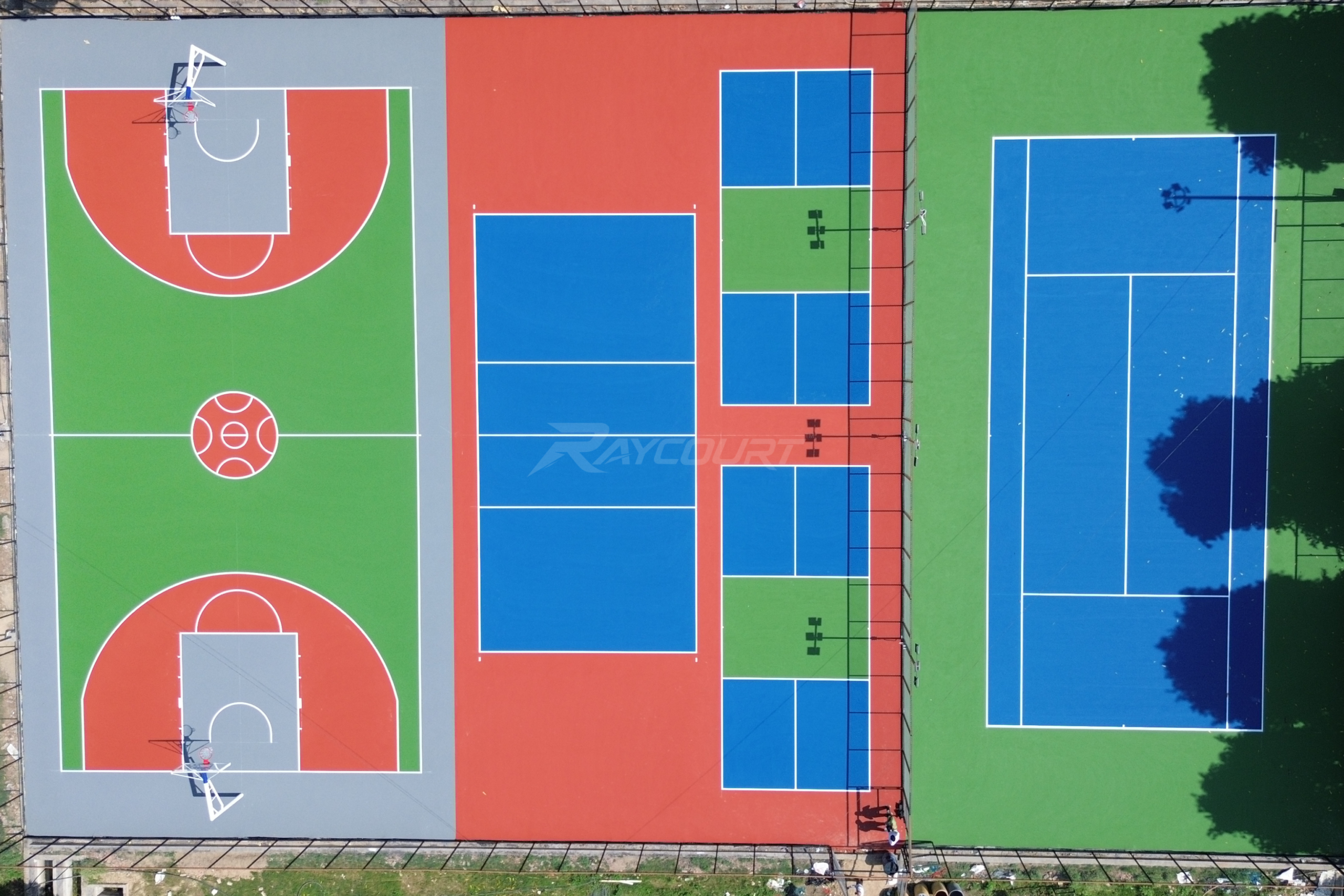
Many outdoor courts serve more than one purpose throughout the week. A single surface might host basketball practice, pickleball games, and community events at different times. Acrylic systems handle this versatility well. Installers can add multiple sets of line markings in contrasting colors without compromising the base coating.
When you plan a multi-sport court, communicate every intended use to your installer up front. This allows them to select topcoat textures and cushioning levels that work well across every planned activity. They avoid optimizing for a single sport alone. Thoughtful planning at this stage prevents compromises later, once the court is already in daily use.
Working with Local Installers
Even though Raycourt manufactures the flooring materials, your local installer plays an equally important role in the finished result. Experienced installers understand regional climate challenges, proper application techniques, and how to sequence each coating layer correctly. Choosing a qualified installer who works regularly with quality acrylic systems significantly improves your final outcome.
Before construction begins, ask your installer which specific products they plan to use and why. A knowledgeable installer should explain how each layer contributes to the finished court. They should also describe how local weather shapes their material choices. This conversation helps ensure your project benefits from both quality materials and skilled application.
Common Mistakes to Avoid
Even well-intentioned facility owners sometimes make avoidable mistakes when specifying outdoor basketball court flooring. Recognizing these pitfalls in advance helps you avoid costly problems down the road.
- Skipping proper base preparation. Installers who rush crack repair or leveling work set the entire system up for premature failure.
- Ignoring drainage design. Standing water accelerates coating degradation and creates unsafe, slippery playing conditions.
- Choosing color without considering heat absorption. Extremely dark colors in hot climates raise surface temperature during peak sun hours.
- Neglecting routine maintenance. Skipping regular cleaning and inspection allows small issues to grow into major repairs.
- Underestimating cushioning needs. High-traffic facilities that skip cushion coats often see faster player fatigue and increased wear.
- Delaying recoating. Waiting too long to refresh the topcoat allows UV damage and surface wear to compound over time.
Avoiding these mistakes starts with working alongside experienced installers and choosing a manufacturer that provides clear, honest product guidance. Outdoor courts represent a long-term investment. Taking time to plan properly at every stage pays off across the entire lifespan of the facility.
Why Facility Managers and Contractors Choose Raycourt
Raycourt manufactures acrylic sports flooring materials engineered specifically for the demands of outdoor basketball courts. Our formulations prioritize UV stability, flexibility, and consistent performance across a wide range of climates and usage levels. Contractors trust Raycourt products because they deliver predictable results, coat after coat, project after project.
We understand that facility owners need flooring that performs reliably without constant intervention. That is why Raycourt engineers every product in its acrylic system to work together. This includes everything from crack fillers to line-marking paint. Municipal parks, schools, and private sports facilities across diverse climates use Raycourt acrylic systems. These courts stay protected season after season.
Raycourt focuses exclusively on manufacturing high-quality flooring materials. We channel our full attention into product research, testing, and formulation. Our team stays closely engaged with installers and facility owners to understand real-world performance needs. This focus allows us to continually refine our acrylic systems. Every batch meets the durability and performance standards outdoor courts demand.
Ready to build a court that performs for years to come?
Connect with Raycourt for sports flooring systems built for your project.
Sustainability and Long-Term Value of Acrylic Court Systems
Durable flooring delivers value that extends well beyond the initial installation. Every time a facility avoids premature resurfacing, it reduces material waste. It also lowers the environmental impact of manufacturing and transporting replacement products. Choosing a properly engineered acrylic system from the start supports this kind of long-term efficiency.
Water-based acrylic formulations also offer environmental advantages compared to some alternative coating technologies. These systems cure through evaporation rather than chemical solvents, so they generally produce lower emissions during application. Installers appreciate this characteristic on projects near schools, parks, or residential neighborhoods. Air quality matters greatly to the surrounding community.
Long-term value also extends to how a court serves its community over time. A well-maintained court continues hosting practices, games, and casual play for many years without requiring major intervention. This reliability matters enormously for schools and municipalities. They plan facility budgets years in advance and need predictable performance from their sports infrastructure.
Raycourt designs its acrylic systems with this long view in mind. Our formulations do not optimize purely for initial appearance. Instead, they prioritize how the court performs after repeated seasons of sun, rain, and heavy use. This approach ultimately delivers more value to facility owners than products designed only to look good on installation day.
Frequently Asked Questions
A well-installed and properly maintained acrylic system can last many years before requiring a full resurfacing. Regular recoating extends this lifespan by refreshing UV protection and surface texture.
Installers should never apply acrylic coatings directly over significant cracking. They must fill and stabilize cracks first, or the new coating fails prematurely.
Plain paint lacks the UV stabilizers, flexibility, and textured grip that acrylic sports coatings provide. Acrylic systems also add cushioning and precise line marking for lasting performance.
Outdoor courts often benefit from cushioned acrylic systems, since players face harder base surfaces than indoor gym flooring. Cushioning also offsets added weather-related joint stress.
Recoating frequency depends on traffic levels, climate severity, and the original acrylic system. High-traffic courts in intense sun typically need recoating sooner.
Conclusion
Outdoor basketball court flooring plays a far bigger role in facility performance than most people initially realize. From base preparation to final line marking, every layer of the system matters. Each one shapes how the court plays, looks, and holds up against the elements. Facility owners who understand this layered approach make smarter, more informed decisions when specifying materials for their next project.
Raycourt manufactures the acrylic resurfacers, cushion coats, color layers, and line-marking paints that make high-performing outdoor courts possible. Our formulations prioritize UV resistance, flexibility, and consistent playability across diverse climates and usage patterns. Whether you manage a community park, a school facility, or a private sports complex, the right acrylic system matters. It protects your investment for years of reliable play.
Careful planning, proper installation, and consistent maintenance together determine how well any outdoor court performs over time. By applying the guidance in this article, you can approach your next flooring project with confidence. You will know exactly what separates a durable, high-performing court from one that fails prematurely.
Ultimately, a court built on quality materials rewards its community for many seasons of play. From the first crack repair to the final line marking, every decision matters. Each one shapes how that court performs under real-world conditions. Partner with a manufacturer who understands these details. Your outdoor basketball court flooring will keep players moving safely for years to come.