
What Is the Best Flooring Material for an Indoor Pickleball Court?
The best flooring material for an indoor pickleball court is a cushioned, slip-resistant synthetic acrylic surface with a flat, stable base below it. This system delivers true ball bounce, dependable traction, and comfortable shock absorption. It also protects players’ joints during fast, repetitive movement.
An indoor pickleball court looks simple at first glance. However, the surface beneath the players controls almost everything about the game. Flooring affects how the ball bounces and how players cut, slide, and stop. It also affects how tired legs feel after three games. In addition, it shapes noise levels, glare, and long-term durability.
In this guide, Raycourt explains how to choose flooring material for an indoor pickleball court with confidence. First, we cover how indoor play differs from outdoor play. Next, we review court dimensions, common flooring options, and the layers inside a quality acrylic system. Then we explore lighting, acoustics, color, maintenance, and planning. Finally, we answer the questions that facility owners ask most often.
A quick note about our role: Raycourt manufactures synthetic acrylic sports court flooring material. We do not install courts. Instead, we supply the material, and qualified contractors handle the installation. This guide therefore focuses on material choices, performance, and planning. You can use it to make informed decisions before any work begins.
💡 Expert Tip: Decide on your playing priorities before you compare surfaces. Recreational groups, competitive clubs, and school programs each value different traits. A clear priority list makes every later decision easier.
Why an Indoor Pickleball Court Needs Purpose-Built Flooring
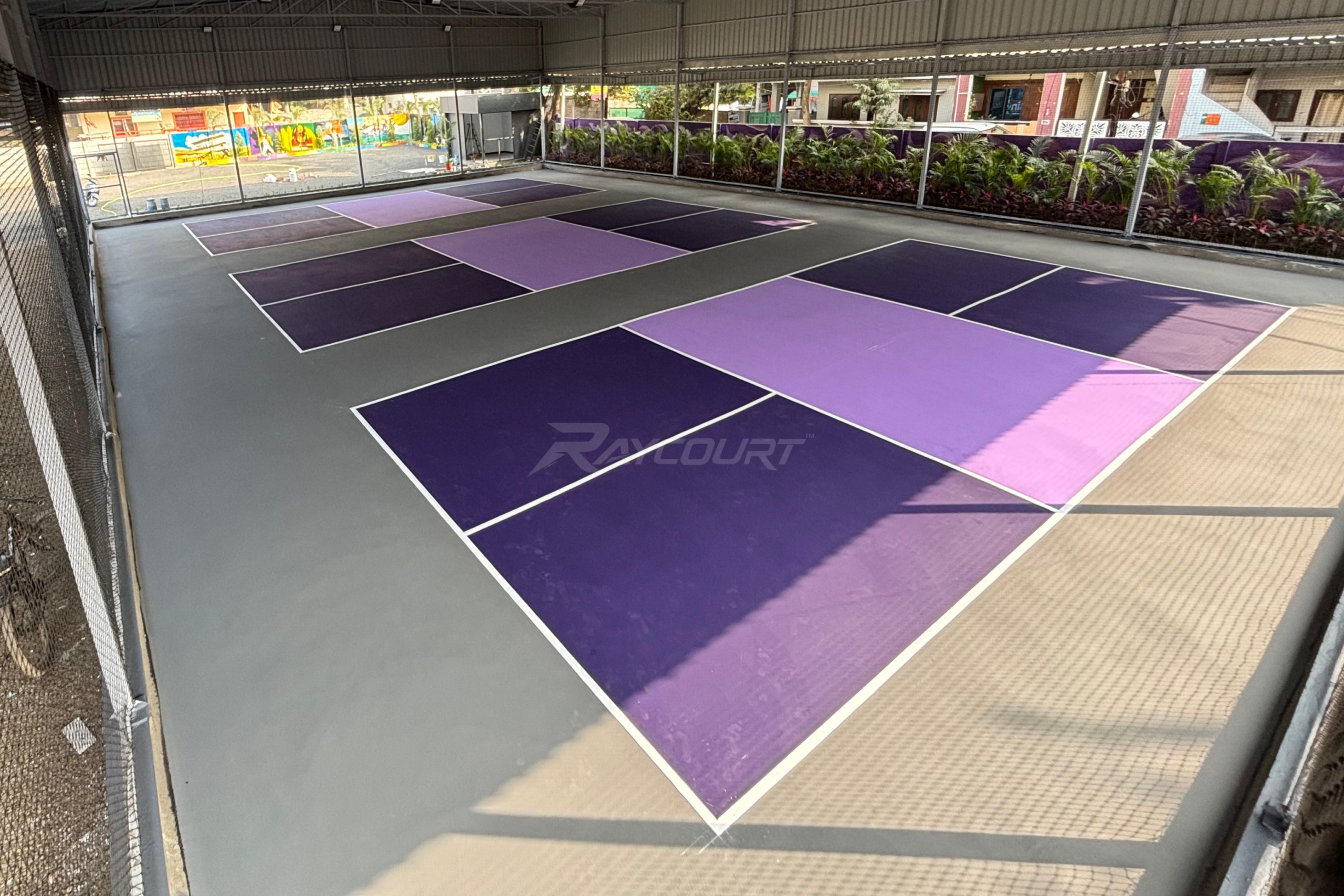
Pickleball has grown from a backyard pastime into a mainstream sport. Consequently, gyms, community centers, schools, and private clubs now create dedicated indoor pickleball court spaces. Each venue wants the same result: a surface that plays well and lasts. Achieving that result starts with understanding what the sport demands from a floor.
How Pickleball Movement Stresses a Floor
Pickleball looks gentle, but the footwork tells a different story. Players shuffle sideways, lunge forward, and stop suddenly at the kitchen line. They also pivot, split-step, and push off in short bursts. These movements place repeated lateral and rotational loads on both the shoe and the surface.
A floor that grips too little makes players slip and lose confidence. A floor that grips too much locks the shoe and strains knees and ankles. Therefore, the ideal indoor pickleball court surface balances traction with a small amount of controlled slide. Synthetic acrylic surfaces achieve this balance through their texture and their layered construction.
How the Ball Interacts With the Surface
The pickleball is a light, perforated plastic ball. It reacts quickly to the surface it strikes. A dead spot or an uneven patch changes the bounce in ways that frustrate players. Likewise, a surface that plays too fast robs players of reaction time.
For this reason, bounce consistency ranks among the most important traits of any indoor pickleball court flooring material. Acrylic surfaces deliver predictable bounce across the entire playing area. Players can trust the ball to behave the same way at the baseline, the kitchen, and the sideline.
How Indoor Conditions Change the Equation
Outdoor courts battle sun, rain, and temperature swings. Indoor courts avoid those extremes, but they face different challenges. Indoor spaces amplify sound, so noise becomes a real concern. Lighting also plays a bigger role, because glare from fixtures can reflect off a glossy surface. Meanwhile, indoor floors often share space with other sports, which adds wear and layout complexity.
An indoor environment does offer one major advantage. It protects the surface from weather, so the floor keeps its color and texture longer. As a result, a well-chosen indoor pickleball court surface can perform consistently for many seasons.
Where Indoor Pickleball Courts Appear
Indoor pickleball courts appear in many settings. Understanding your setting helps you match the surface to the use.
- Dedicated pickleball facilities that host leagues, lessons, and tournaments
- Community and recreation centers that offer open play to all ages
- School gymnasiums that share space between physical education classes and athletic programs
- Fitness clubs and country clubs that add pickleball to their amenities
- Converted warehouses and commercial buildings that become full-time pickleball venues
- Senior and wellness centers that prioritize joint-friendly play
Each setting places different demands on the floor. A dedicated facility needs lasting durability and crisp line definition. A school needs versatility. A wellness center needs superior comfort. Because Raycourt’s synthetic acrylic materials come in flexible systems, they can support all of these goals.
Indoor Pickleball Court Dimensions and Layout
Before you pick a flooring material, you need to understand the footprint of an indoor pickleball court. Dimensions drive material planning, line layout, and the number of courts your space can hold.
Official Court Measurements
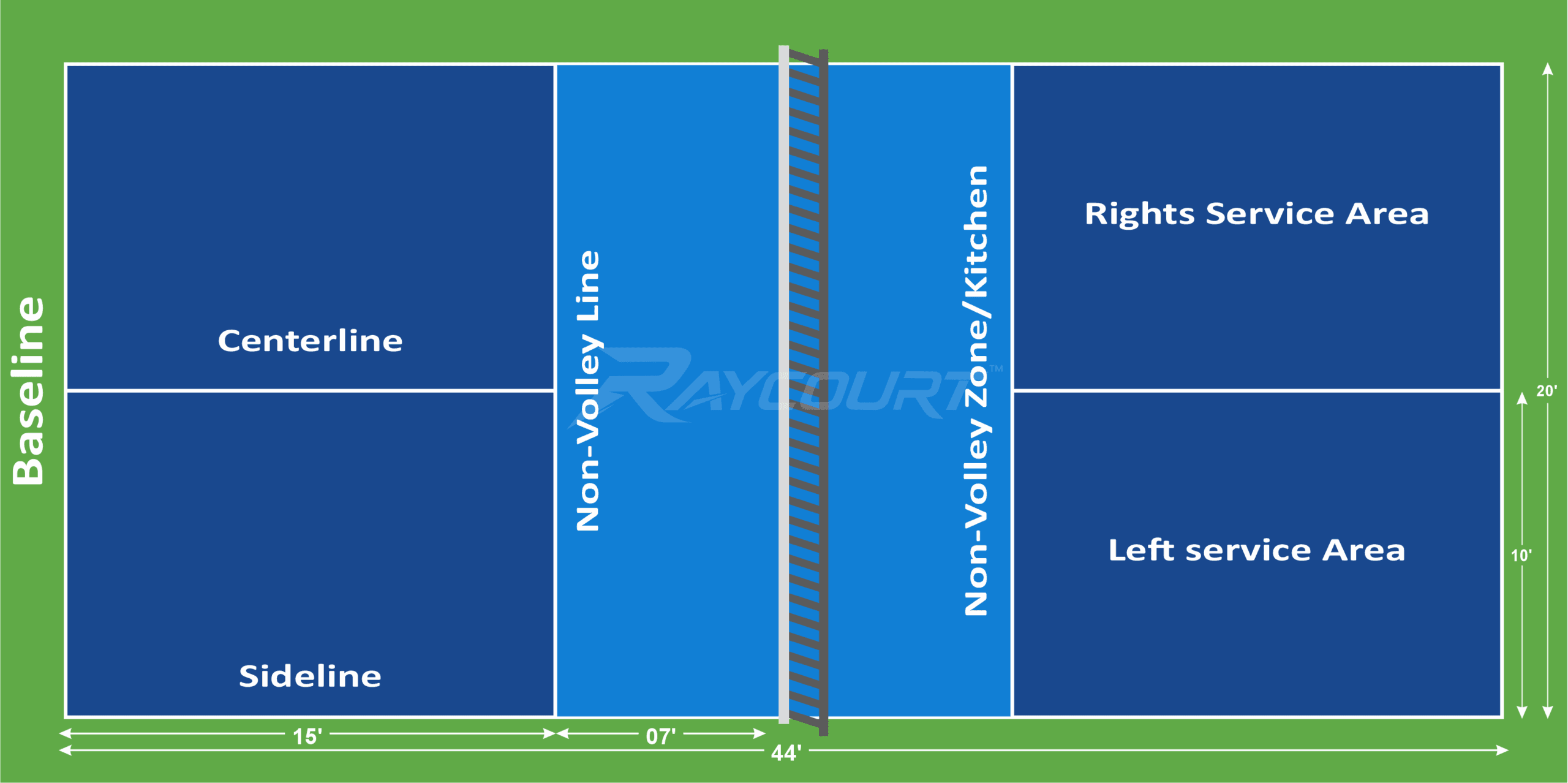
According to USA Pickleball, the governing body for the sport in the United States, a standard court measures 20 feet wide by 44 feet long. Singles and doubles play use the same dimensions. The non-volley zone, which players call the kitchen, extends 7 feet from the net on each side. The net hangs 36 inches high at the sidelines and 34 inches at the center.
Always confirm the current rules with the governing body before you finalize a layout. Rules and recommendations can change, and local leagues sometimes add their own requirements.
| Court Element | Standard Measurement |
|---|---|
| Court width | 20 feet |
| Court length | 44 feet |
| Non-volley zone (kitchen) depth | 7 feet from the net |
| Net height at sidelines | 36 inches |
| Net height at center | 34 inches |
| Suggested overall play area per court | About 30 feet by 60 feet |
Run-Off Space Matters
The court itself covers only part of the story. Players chase wide shots and retreat for lobs, so they need run-off space around the lines. Most planners allow an overall play area of about 30 feet by 60 feet for a single court. This extra room improves safety and gives players freedom to move.
Your flooring material should extend across the full play area, not just the lines. A consistent surface from edge to edge prevents surprises underfoot. In addition, a uniform surface looks cleaner and more professional.
Fitting Multiple Courts Into One Space
Many facilities want several courts under one roof. Fortunately, pickleball makes efficient use of space. A standard tennis court commonly fits four pickleball courts. A gym floor often fits two or three, depending on its size and shape.
When you plan multiple courts, consider these points:
- Spacing between courts affects safety and stray-ball control.
- Orientation affects glare, because players should not face bright windows or fixtures.
- Line coordination matters if the floor serves other sports.
- Spectator and bench areas need clear boundaries.
- Entry and exit paths should not cut across active courts.
💡 Expert Tip: Sketch your layout to scale before you order material. A drawing reveals spacing conflicts, and it helps your contractor estimate quantities accurately.
Height Clearance and Overhead Space
Pickleball players hit lobs and overhead smashes, so an indoor pickleball court needs generous ceiling clearance. Low ceilings interfere with play and frustrate advanced players. Lights, ducts, sprinklers, and beams all count as obstacles. Therefore, check the clear height of your building early, and consult your governing body about recommended clearance.
Ready to build a court that performs for years to come?
Connect with Raycourt for sports flooring systems built for your project.
Indoor Pickleball Court Flooring Options Compared
Facility owners can choose from several flooring materials for an indoor pickleball court. Each option has strengths and limits. Understanding those trade-offs helps you choose wisely.
Hardwood and Sprung Wood Floors
Hardwood gyms dominate many schools and recreation centers. These floors offer a warm look and good shock absorption, especially when they sit on a sprung system. However, hardwood presents challenges for pickleball. Line marking takes careful planning, and permanent pickleball lines can clash with basketball or volleyball lines. In addition, the finish can turn slippery or grip unevenly, depending on conditions.
Vinyl Sport Flooring
Vinyl sheet flooring provides a smooth, cushioned surface and comes in many colors. It works well in multipurpose rooms. Nevertheless, some vinyl surfaces play faster than players like, and seams can attract wear over time. Ball bounce also varies with the specific product.
Modular Polypropylene Tiles
Interlocking tiles allow flexible layouts, and they suit temporary or portable setups. Their raised, open grid can influence ball bounce and paddle feel. Moreover, tiles can shift or separate under heavy use if the base is not perfectly flat. Players sometimes notice the seams underfoot.
Rubber Flooring
Rubber surfaces absorb impact very well, so they suit fitness areas and multipurpose spaces. However, some rubber floors feel too soft for quick pickleball footwork. Soft floors can slow lateral movement and tire the legs. Ball bounce may also suffer on very soft surfaces.
Synthetic Acrylic Court Systems
Synthetic acrylic systems consist of layered coatings and cushioning materials that build a seamless, textured playing surface. Manufacturers such as Raycourt engineer these systems for sports, so each layer has a specific job. The result offers consistent bounce, controlled traction, and excellent color and line definition. In addition, acrylic surfaces adapt to concrete and other rigid bases.
Side-by-Side Comparison
| Flooring Material | Ball Bounce | Traction | Shock Absorption | Line Flexibility | Best Fit |
|---|---|---|---|---|---|
| Hardwood / sprung wood | Good | Varies with finish | Good to very good | Limited by existing lines | Multi-sport gyms |
| Vinyl sport flooring | Varies by product | Moderate to good | Moderate to good | Good | Multipurpose rooms |
| Modular polypropylene tiles | Varies with tile design | Good | Low to moderate | Good | Temporary or flexible setups |
| Rubber flooring | Can run low | Good | Very high | Moderate | Fitness and wellness areas |
| Synthetic acrylic system | Consistent | Controlled and reliable | Adjustable through cushion layers | Excellent | Dedicated pickleball courts |
Overall, no single material fits every situation. Still, synthetic acrylic offers a rare combination of consistency, comfort, and design freedom. That combination explains why so many facility planners consider it first.
Why Synthetic Acrylic Suits an Indoor Pickleball Court
Now let us look more closely at synthetic acrylic. Raycourt focuses on this material category, and we see why it works so well for pickleball.
Predictable Ball Bounce
Every player wants the ball to bounce the same way on every part of the court. Acrylic surfaces deliver that consistency because the layers cure into a uniform, continuous surface. There are no seams or gaps to disturb the bounce. Consequently, rallies feel fair, and players can focus on strategy instead of surprises.
Balanced Traction
Traction ranks high on the list of safety concerns. Acrylic surfaces get their grip from fine texture in the color coating. Manufacturers can adjust that texture to change how much the surface grips. Players then slide slightly during a stop rather than locking their feet. This controlled movement reduces stress on knees, ankles, and hips.
Shock Absorption and Joint Comfort
Pickleball attracts players of every age, including many who want a low-impact activity. Therefore, shock absorption matters greatly. Cushioning layers beneath the acrylic color coats soften each step. Players feel less fatigue during long sessions, and they often recover faster afterward. Facilities that serve older adults especially value this comfort.
Seamless, Easy-to-Clean Construction
A seamless surface has no joints where dirt can collect. As a result, cleaning stays simple, and the court keeps a neat appearance. In addition, seamless construction helps players avoid catching a toe on an edge.
Color and Line Definition
Color plays a practical role in pickleball. High-contrast colors help players see the ball, the lines, and the kitchen. Acrylic coatings accept a wide range of colors, and they hold those colors well indoors. Line paint bonds to the surface and stays crisp. Therefore, players read the court clearly, and line calls become easier.
Design Flexibility
Acrylic systems adapt to your layout. You can add pickleball lines to a larger floor, create dedicated courts, or brand the space with custom colors. This flexibility lets you serve several sports and still give pickleball players a proper court.
💡 Expert Tip: Choose a low-glare finish for an indoor pickleball court. Glossy surfaces reflect overhead lights and strain players’ eyes. A matte or satin texture keeps the ball visible.
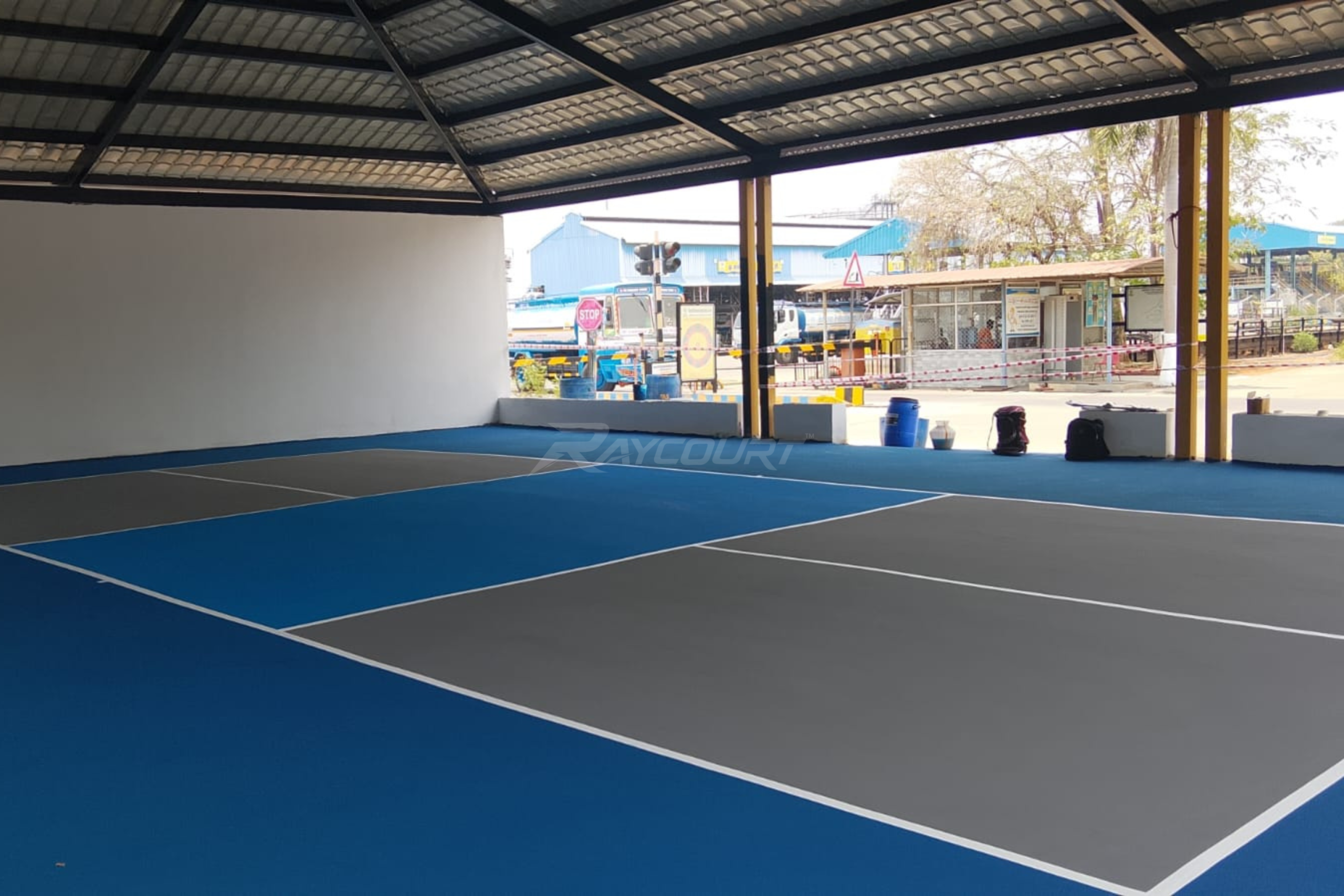
Inside a Synthetic Acrylic Indoor Pickleball Court System
Understanding the layers helps you talk with contractors and compare proposals. Although systems vary, most acrylic indoor pickleball court surfaces follow a similar structure.
The Base
Everything begins with the base. Common indoor bases include concrete slabs and, in some cases, existing sport floors that meet the manufacturer’s requirements. The base must stay flat, dry, sound, and clean. Any flaw in the base will show up in the finished surface. For this reason, base preparation deserves as much attention as the flooring material itself.
Primer and Leveling Layers
Next, contractors typically apply primer and leveling coats. Primer helps the following layers bond firmly. Leveling material fills small dips and smooths the surface. Together, these layers create a uniform foundation for the cushioning and color coats.
The Cushion Layer
Cushioning sits at the heart of a comfortable indoor system. Cushion layers contain resilient materials that absorb impact. They reduce stress on joints and give the court a pleasant feel. Facilities can often tune the level of cushioning to fit their players. For example, a wellness center may want more cushion than a competitive club.
Acrylic Texture and Color Coats
Then come the acrylic coats. Texture coats build the fine grip that controls traction. Color coats add the visible finish and protect the layers below. Multiple thin coats produce a more even surface than a single thick coat. Moreover, they help the color stay rich and consistent.
Line Paint
Finally, contractors mark the lines with specialized acrylic line paint. Sharp, precise lines define the court and reflect your chosen colors. Line paint also lets you mark several sports on one floor, using different colors for clarity.
The Layers at a Glance
| Layer | Primary Job | Player Benefit |
|---|---|---|
| Prepared base | Provides a flat, stable foundation | Consistent play across the court |
| Primer and leveling | Improves bond and smoothness | Even bounce and lasting adhesion |
| Cushion layer | Absorbs impact | Reduced joint stress and fatigue |
| Texture coats | Build controlled grip | Safe, confident movement |
| Color coats | Add color and protection | Clear visibility and appealing looks |
| Line paint | Marks court boundaries | Clear, accurate line calls |
💡 Expert Tip: Ask your contractor to follow the manufacturer’s application guidelines closely. Proper layer thickness, curing time, and conditions all affect final performance.
Quick Answers: Mini-Blogs on Common Indoor Pickleball Court Questions
The next few sections tackle popular questions in a short format. Use them to jump straight to the answer you need.
Can You Play Pickleball on a Basketball Court Floor?
Yes, you can play pickleball on a basketball court floor, and many gyms do exactly that. Most players enjoy the sport on hardwood. However, a multi-sport floor has trade-offs. Existing lines can create visual clutter, and taped temporary lines tend to peel and shift. In addition, gym floors can feel slippery under some conditions.
If pickleball becomes a regular activity, consider a surface with permanent, clearly colored pickleball lines. A synthetic acrylic system gives you that option, and it separates the pickleball courts visually from other markings.
Can You Convert a Tennis Court Into an Indoor Pickleball Court?
Yes, you can convert an indoor tennis court into pickleball courts. A tennis court provides ample space, and it often fits several pickleball courts. The existing surface may already suit acrylic coatings, depending on its condition.
Before conversion, inspect the surface for cracks, low spots, and loose areas. Then plan the layout, choose a color scheme, and repair any damage. Your contractor can advise you on surface preparation. Raycourt can help you understand which acrylic materials suit your existing base.
Does an Indoor Pickleball Court Need Cushioning?
Not every court requires cushioning, but most players benefit from it. Cushioning reduces impact on hips, knees, and ankles. It also reduces fatigue during long sessions. Because pickleball attracts many players who value joint comfort, cushioned systems often become the preferred choice.
That said, too much cushioning can feel soft and slow. The best systems strike a balance between comfort and responsiveness.
Is a Seamless Surface Better Than Tiles or Sheets?
Seamless surfaces offer several advantages. They remove joints that can catch a shoe or trap dirt. They also deliver consistent bounce across the whole court. In contrast, tiles and sheets always include seams, and seams can shift or wear.
Nevertheless, tiles and sheets still serve certain needs, such as temporary layouts. Match the choice to the purpose of your space.
Ready to build a court that performs for years to come?
Connect with Raycourt for sports flooring systems built for your project.
Preparing the Base: Concrete, Wood, and Existing Surfaces
A great flooring material cannot fix a poor base. Every strong indoor pickleball court starts with careful evaluation of what lies beneath.
Concrete Slabs
Concrete is the most common base for indoor acrylic courts. A good slab is flat, dense, and free of major cracks. New slabs need time to cure and dry before contractors apply coatings. Trapped moisture can weaken bonds and cause blisters. Therefore, testing the slab for moisture is a smart early step.
Contractors also check for contaminants such as oils, curing compounds, and sealers. These substances can prevent proper adhesion. Professional cleaning and surface preparation remove them.
Flatness and Drainage of Water Sources
Flatness matters indoors just as much as it does outdoors. A low spot changes the bounce, and it can create a tripping hazard. Contractors measure flatness and correct problem areas with leveling materials.
Even though indoor courts avoid rain, they still face water risks. Leaks, spills, cleaning water, and humidity can all affect the base. Consequently, you should address any moisture source before you install a court.
Existing Sport Floors
Sometimes a facility already has a sport floor and wants to add pickleball. In that case, evaluate the existing surface carefully. Check its condition, its compatibility with acrylic materials, and its stability. A contractor and the material manufacturer can guide you.
Base Evaluation Checklist
Use this list when you review your base:
- Flatness: Does the surface have dips, humps, or slopes?
- Cracks: Do cracks show movement or widening?
- Moisture: Does moisture testing show acceptable results?
- Cleanliness: Do oils, sealers, or residues cover the surface?
- Stability: Does the base feel solid, or does it flex?
- Age and condition: Does the surface show wear that needs repair?
💡 Expert Tip: Invest time in base evaluation. Most flooring problems trace back to the base, not the surface coatings.
Performance Factors That Define a Great Indoor Pickleball Court
Different players describe a good court in different words. Still, they all respond to the same core performance factors. Let us examine each one.
Ball Bounce and Ball Speed
Ball bounce tells players how the court will behave. A true bounce rises predictably and evenly. Ball speed describes how quickly the ball travels after it hits the surface. Acrylic manufacturers adjust texture and coating to influence speed. A medium speed suits most pickleball players, because it supports both power and control.
Traction and Slide
Traction keeps players safe, but slide protects joints. The perfect surface offers a small amount of controlled slide. Players can stop, pivot, and change direction without twisting a knee. Texture in the color coat controls this behavior. Fine texture typically produces a smoother slide, while coarser texture increases grip.
Shock Absorption
Shock absorption reduces the force that travels through a player’s body. Higher shock absorption helps joints and delays fatigue. Cushioning layers provide this benefit. Meanwhile, rigid bases such as bare concrete provide almost none. For this reason, cushioned acrylic systems attract many facility planners.
Surface Consistency
Consistency means the court plays the same way everywhere. A consistent surface builds trust and rewards skill. Moreover, it supports fair competition. Seamless acrylic construction helps deliver this result.
Durability
Indoor courts see heavy use, especially in busy facilities. Durable surfaces resist scuffs, foot traffic, and daily wear. Acrylic systems hold up well indoors, because they avoid weather exposure. Proper maintenance extends their life further.
Performance Traits Summary
| Performance Factor | Why It Matters | What to Look For |
|---|---|---|
| Ball bounce | Predictable rallies | Uniform, seamless surface |
| Ball speed | Control versus power | Medium speed for most players |
| Traction | Safety and stability | Controlled grip with slight slide |
| Shock absorption | Joint comfort | Cushion layers that suit your players |
| Consistency | Fair play | Even texture across the court |
| Durability | Long-term performance | Quality materials and proper care |
Recognized Standards and Testing
Sports flooring organizations often reference testing standards to measure performance. For example, ASTM International publishes standards that cover athletic performance of sports surfaces. You can explore these resources at ASTM International. When you compare materials, ask manufacturers how their products relate to recognized standards and testing methods.
Ready to build a court that performs for years to come?
Connect with Raycourt for sports flooring systems built for your project.
Lighting, Walls, and Acoustics for an Indoor Pickleball Court
Flooring dominates the conversation, but the room around the floor matters too. A great surface performs best inside a well-planned space.
Lighting
Good lighting helps players track a small, fast ball. Aim for even, glare-free illumination across the entire court. Shadows and bright spots hurt visibility. Likewise, direct light that bounces off a glossy floor causes eye strain.
For best results, follow these principles:
- Distribute light evenly across all courts.
- Avoid placing fixtures directly above the centerline in ways that create glare.
- Control natural light from windows and skylights.
- Choose a low-gloss floor finish to reduce reflections.
- Coordinate lighting with your court color scheme.
Consult a lighting professional for detailed recommendations. Lighting requirements vary with facility size and level of play.
Wall Color and Background
Wall color affects how well players see the ball. Dark, matte walls or backdrops make a yellow or optic ball stand out. In contrast, busy or bright backgrounds create distraction. Therefore, choose neutral, non-reflective wall colors around the courts.
Acoustics and Noise
Pickleball produces a distinctive popping sound when the paddle strikes the ball. Indoors, that sound bounces off hard surfaces and multiplies. Consequently, noise becomes a top concern for indoor facilities. Loud rooms tire players, reduce conversation, and irritate neighbors.
You can reduce noise through several strategies:
- Acoustic wall panels absorb reflected sound.
- Ceiling treatments reduce echo in tall spaces.
- Cushioned floor systems reduce footfall noise slightly.
- Softer paddles and balls produce less sharp sound.
- Thoughtful court placement keeps loud activity away from quiet areas.
Flooring alone will not solve every noise problem. However, a cushioned acrylic surface contributes to a calmer, more comfortable space when you combine it with other treatments.
Temperature and Ventilation
Comfortable air keeps players happy. Good ventilation reduces heat and humidity, which also protects the floor and the building. Stable indoor conditions help the flooring perform consistently over time.
💡 Expert Tip: Treat acoustics as part of your original plan, not an afterthought. Adding sound control later usually takes more effort.
Colors, Lines, and Branding on an Indoor Pickleball Court
Color does far more than make a court look attractive. It guides the eye, supports safety, and shapes the entire atmosphere of a facility.
Choosing Court Colors
Most pickleball courts use two contrasting colors: one for the court and one for the surrounding area. This contrast helps players see the boundaries clearly. Many facilities also color the kitchen differently to highlight the non-volley zone.
Popular color combinations include:
- Blue court with green surround for a classic look
- Green court with red or dark green surround for strong contrast
- Gray or neutral tones for a modern, understated style
- Custom brand colors for clubs and corporate facilities
Select colors that contrast well with the ball. Yellow and optic-colored balls show clearly against blue and green. Meanwhile, very light floors can make the ball harder to see.
Line Color and Visibility
White lines remain the most common choice, and they read well on darker colors. Some facilities choose yellow or another shade to distinguish pickleball lines from other sports. When your floor serves several sports, line color coordination prevents confusion. Assign one color to each sport, and keep the scheme consistent.
Branding and Custom Designs
Acrylic surfaces accept logos, borders, and decorative elements. A club can add its name at center court. A school can display its mascot. Moreover, custom designs strengthen the identity of a facility and make it memorable.
Color and Heat Considerations Indoors
Outdoor courts must consider heat absorption from dark colors. Indoor courts face fewer concerns. Even so, color choice still influences the feel of the room. Lighter floors make a room feel larger and brighter, while darker floors feel more dramatic. Choose the mood that fits your facility.
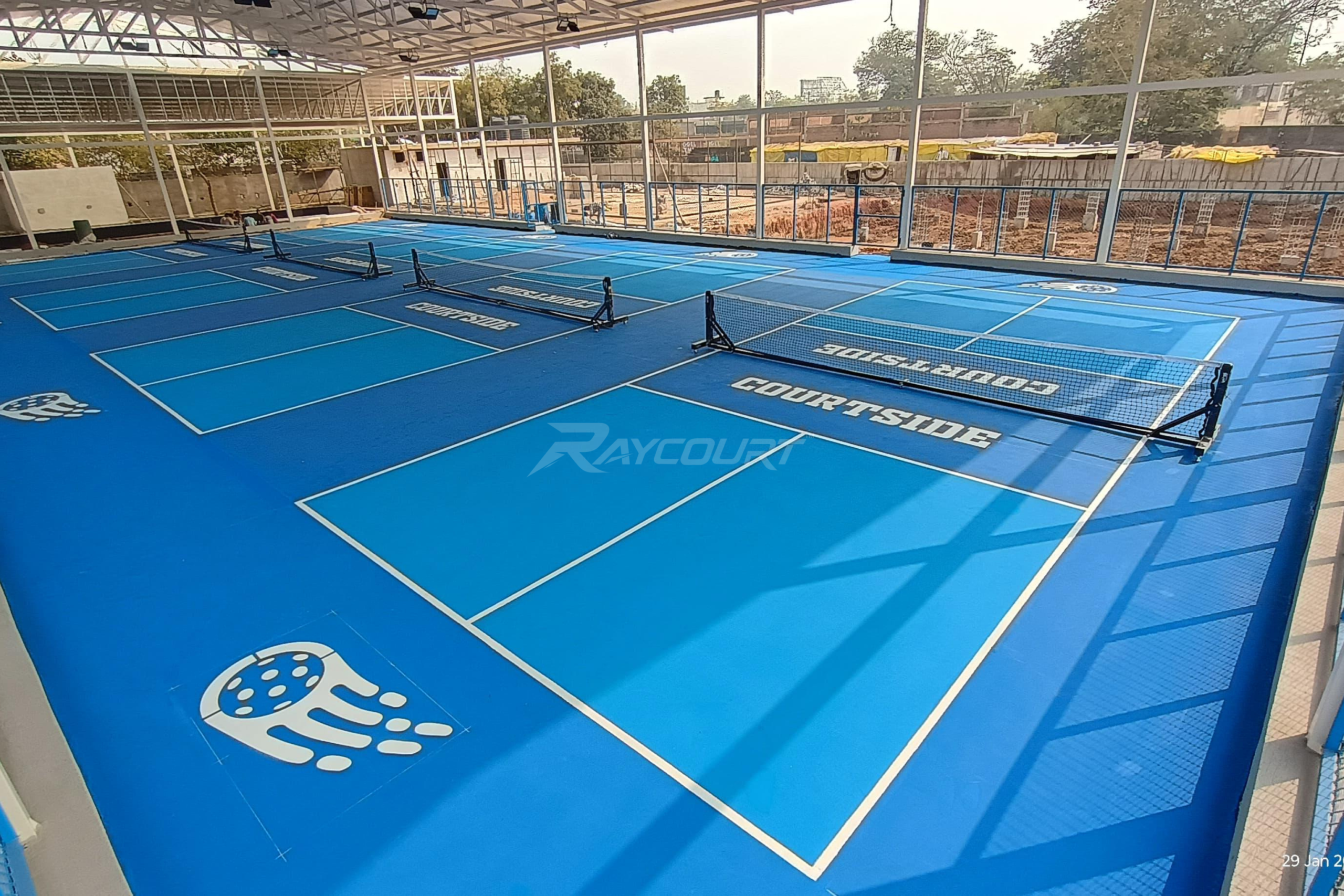
Multi-Use Facilities: Sharing an Indoor Pickleball Court With Other Sports
Many facilities cannot dedicate a space solely to pickleball. Instead, they share the floor with basketball, volleyball, badminton, or fitness programs. Sharing works well when you plan carefully.
Line Layers and Color Coding
The biggest challenge in a shared space is line confusion. Too many lines in the same color overwhelm players. For that reason, planners assign distinct colors to each sport. They also position pickleball lines to avoid unnecessary overlap with other markings.
Temporary Versus Permanent Lines
Temporary tape and portable nets serve short-term needs. However, they can peel, shift, and wear out quickly. Permanent acrylic line paint lasts far longer and looks cleaner. If pickleball has become a lasting part of your program, permanent lines usually make more sense.
Net Systems
Portable net systems let you convert a gym in minutes. Permanent net posts suit dedicated courts. Pick the system that fits your schedule and staffing. In addition, store portable equipment safely to protect the flooring.
Protecting the Floor in Busy Schedules
Shared facilities experience varied use. Heavy equipment, bleachers, and event setups can damage a surface. Therefore, use protective measures such as floor covers and equipment pads. Plan traffic paths so heavy loads avoid the courts.
💡 Expert Tip: Write a simple floor-use policy for staff and renters. Clear rules about shoes, equipment, and events protect your investment and keep the court in top shape.
Maintaining Your Indoor Pickleball Court Surface
Even the best flooring material needs care. Fortunately, acrylic surfaces ask for simple, routine attention. Regular maintenance keeps the court looking great and playing well.
Daily and Weekly Care
Start with basic cleaning. Dust and grit act like sandpaper under shoes, so removal protects the texture and finish. Follow these habits:
- Sweep or dust-mop the surface daily to remove loose dirt.
- Damp-mop weekly with a neutral cleaner that suits acrylic surfaces.
- Wipe up spills immediately to prevent slips and stains.
- Check the surface for debris before every session.
Avoid harsh solvents and abrasive tools. They can dull the finish and damage the coatings. Always follow the manufacturer’s cleaning recommendations.
Shoe Rules
Footwear has a large effect on floor life. Require clean, non-marking court shoes for all players. Street shoes carry dirt, stones, and oils onto the court. Non-marking soles protect the color and keep the surface tidy.
Inspecting the Surface
Regular inspection catches small problems early. Walk the court and look for:
- Worn areas in high-traffic zones
- Fading or dull spots on the color coat
- Chips or cracks in the surface
- Faded or damaged lines
- Loose edges near walls and doors
Address minor issues quickly. Small repairs prevent larger problems later.
Recoating and Refreshing
Over time, heavy use wears down any surface. Acrylic courts allow recoating to restore color, texture, and lines. The right timing depends on traffic, facility conditions, and the level of play. A qualified contractor can evaluate your court and recommend the best approach.
Maintenance Schedule Overview
| Task | Frequency | Purpose |
|---|---|---|
| Dust-mop or sweep | Daily | Remove abrasive dirt |
| Damp-mop with neutral cleaner | Weekly | Keep the surface clean |
| Spill cleanup | Immediately | Prevent slips and stains |
| Visual inspection | Weekly | Catch early wear |
| Line and surface review | Seasonally | Plan touch-ups |
| Recoating evaluation | As traffic requires | Restore performance and appearance |
💡 Expert Tip: Keep a simple maintenance log. Notes about repairs, cleaning, and inspections help you track patterns and plan ahead.
Planning Your Indoor Pickleball Court Flooring Project
A successful project starts with a clear plan. The following steps help you move from idea to finished court with fewer surprises.
Step-by-Step Planning Guide
- Define your goals. Decide who will play, how often, and at what level.
- Measure your space. Confirm dimensions, ceiling height, and available run-off room.
- Evaluate the base. Inspect the slab or existing floor for flatness, cracks, and moisture.
- Choose your performance targets. Balance traction, cushioning, and ball speed.
- Select colors and lines. Pick colors that contrast well with the ball and match your brand.
- Plan acoustics and lighting. Coordinate these with the flooring so the room works as a whole.
- Review material options with Raycourt. Discuss surface systems that fit your needs.
- Hire a qualified contractor. Choose a professional who understands acrylic sport surfaces.
- Prepare a maintenance plan. Decide who will clean, inspect, and repair the court.
Questions to Ask Before You Commit
Ask these questions to guide your decision:
- Does the material suit our players’ age and skill level?
- How does the surface handle traction and slide?
- What cushioning options can we choose?
- How well does the surface hold color under indoor lighting?
- Which cleaning products does the manufacturer recommend?
- How does the system handle future recoating?
Common Mistakes to Avoid
Facility owners sometimes stumble in predictable ways. Avoid these mistakes:
- Ignoring the base. A weak base undermines any surface.
- Choosing a glossy finish. Glare hurts visibility.
- Overlooking acoustics. Noise problems grow quickly in indoor spaces.
- Skipping run-off space. Tight courts frustrate players and raise safety risks.
- Mixing too many line colors. Confusion slows down play.
- Neglecting maintenance. Small issues become large problems without attention.
Working With Raycourt on Your Indoor Pickleball Court
Raycourt manufactures synthetic acrylic sports court flooring material with sport-specific performance in mind. We build our materials to deliver consistent bounce, reliable traction, and vibrant color. Our team understands how players use the surface, and we shape our products around those needs.
We focus on material manufacturing, so we do not install courts. Instead, you hire a qualified contractor to handle the installation. We support that process by helping you understand which materials suit your project. We can discuss surface systems, color options, and performance goals with you and your contractor.
Here is how we usually help:
- Material guidance for indoor pickleball court surfaces
- Product information on acrylic coatings, cushion layers, and line paint
- Color and finish direction to match your design vision
- Technical answers for your contractor and project team
Reach out early in your planning. Early conversations help you avoid costly misunderstandings about material compatibility and performance.
Frequently Asked Questions
The best flooring is a cushioned synthetic acrylic surface on a flat, stable base. It delivers consistent bounce, controlled traction, and joint-friendly comfort. Hardwood and vinyl work in multi-sport spaces, but acrylic suits dedicated courts best.
No, Raycourt does not install courts. We manufacture synthetic acrylic sports court flooring material, and qualified contractors handle installation. We then help you and your contractor choose the right materials.
The right amount depends on your players. Older adults and beginners often prefer more cushioning for joint comfort. Competitive players usually prefer a firmer, more responsive feel. Too much cushioning slows movement, so aim for balance.
Yes, you often can. First, inspect the surface for cracks and low spots. Next, confirm that it accepts acrylic coatings. Then choose a line color that stands out from the existing markings.
Final Thoughts: Build a Better Indoor Pickleball Court From the Ground Up
A great indoor pickleball court begins with the right flooring material. The surface controls bounce, traction, comfort, and safety, so it shapes every rally. Synthetic acrylic systems deliver the balance that pickleball demands. They offer consistent play, joint-friendly cushioning, vibrant color, and long-lasting durability.
Of course, flooring works best as part of a complete plan. Start with a sound base, and confirm your dimensions. Then consider lighting, acoustics, colors, and maintenance. Finally, partner with a qualified contractor who understands acrylic sport surfaces.
Raycourt stands ready to support your indoor pickleball court project with high-quality synthetic acrylic sports court flooring material. Contact our team to discuss your goals, explore your options, and choose the surface that keeps your players coming back.
Ready to build a court that performs for years to come?
Connect with Raycourt for sports flooring systems built for your project.