
Introduction
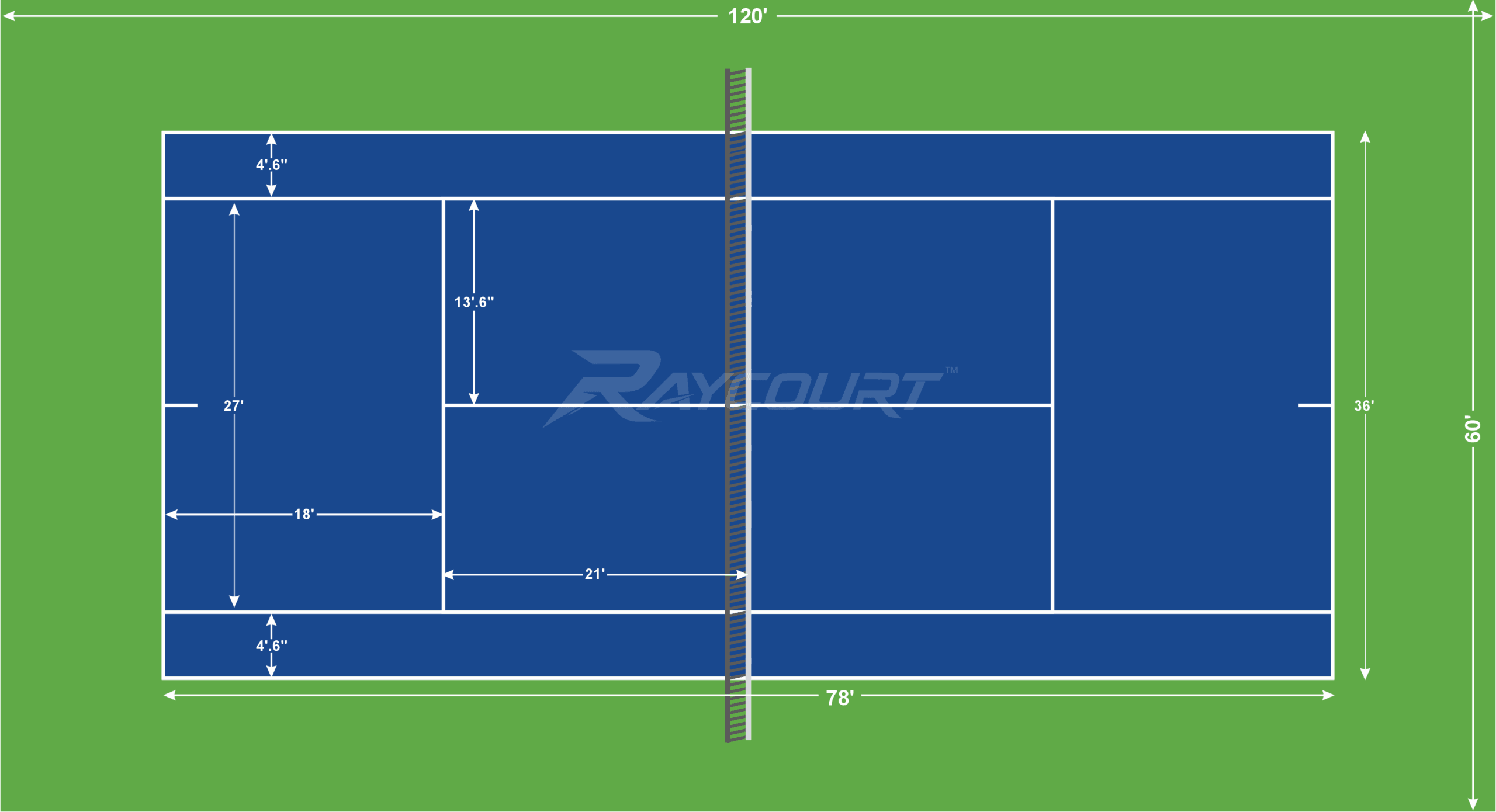
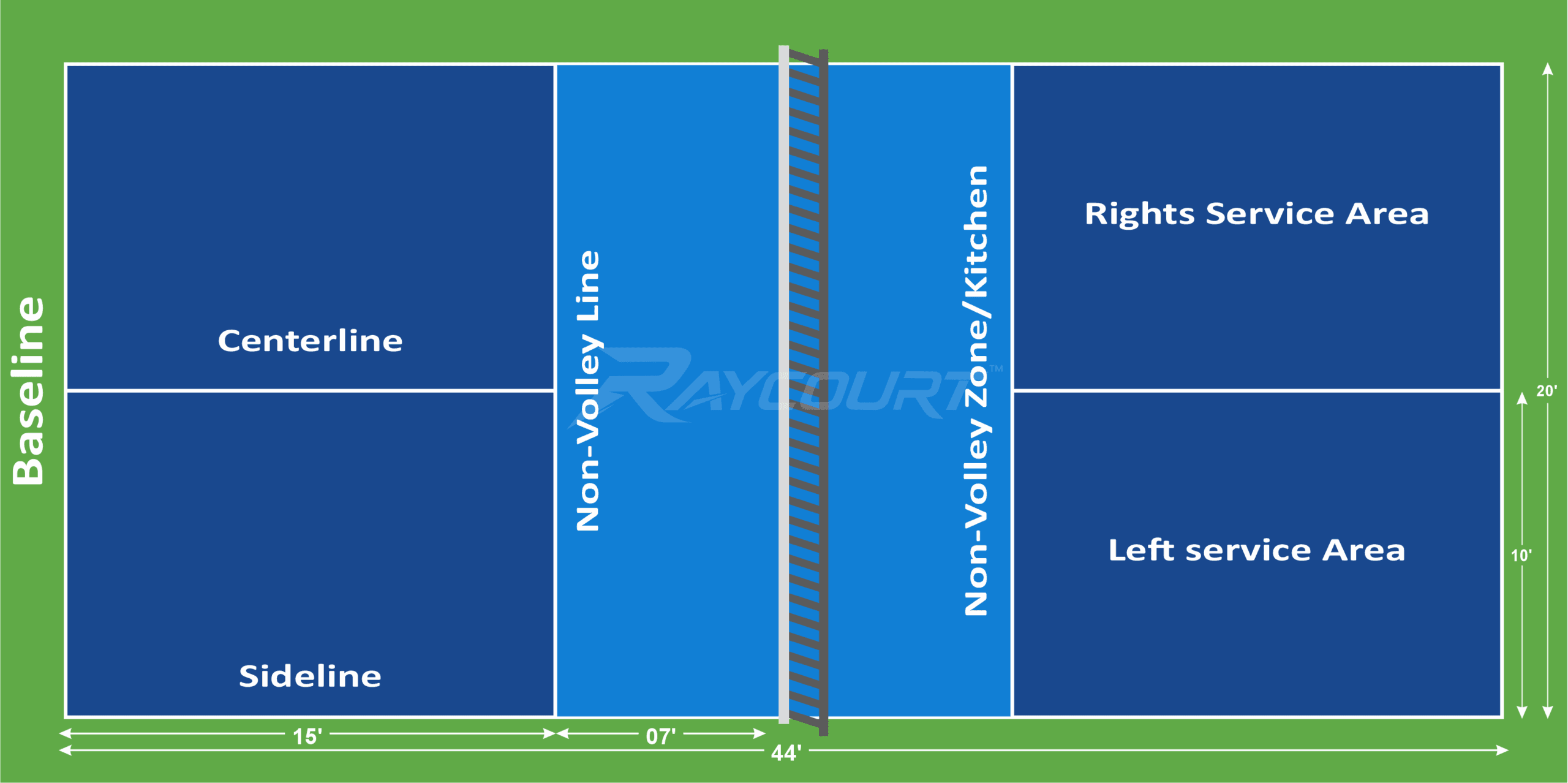
Tennis courts and pickleball courts are not the same. They share a similar look, but key differences set them apart. Court size ranks as the biggest difference between the two. A regulation tennis court stretches 78 feet in length. A pickleball court measures only 44 feet long. Net height also changes between the two sports. Tennis nets stand 3 feet high at the center. Pickleball nets sit slightly lower, at 34 inches in the center. Surface texture can differ too, depending on how a facility uses the space.
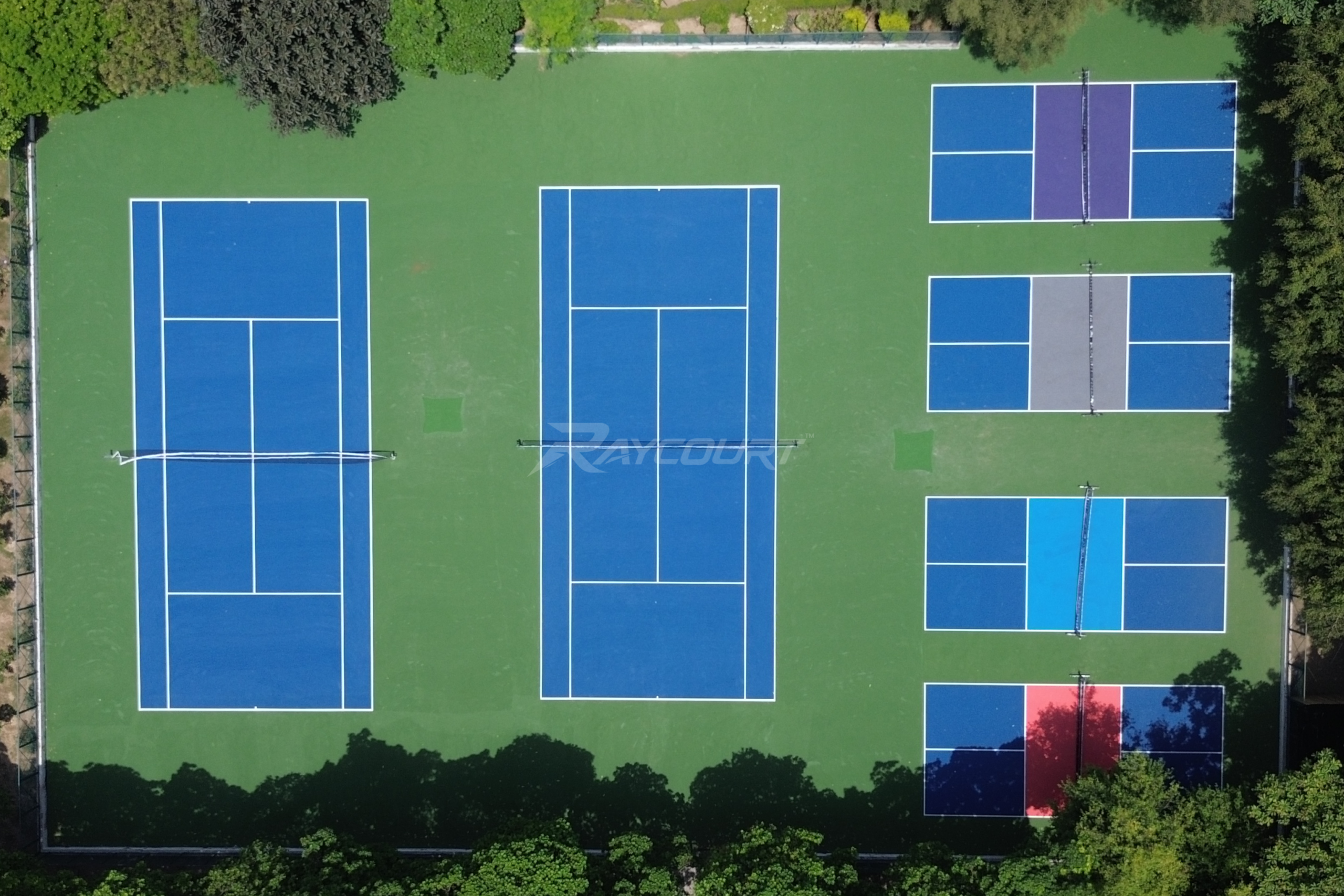
Many facility owners now combine tennis courts and pickleball courts on shared surfaces. This trend grows because pickleball participation keeps rising across the country. As a result, tennis facilities often add pickleball lines to existing courts. This approach maximizes available space without building an entirely new court from scratch.
This article explores every angle of tennis courts and pickleball courts. You will find clear comparisons of dimensions, materials, and maintenance needs. Additionally, you will learn how acrylic coating systems support both sports equally well. Raycourt manufactures the synthetic acrylic flooring material that contractors apply to these surfaces. We focus entirely on producing high-quality coatings, not on installation work.
Understanding tennis courts and pickleball courts helps you make better planning decisions. Whether you manage a club or design a facility, this guide helps. It answers your questions clearly and directly, without unnecessary technical jargon.
Understanding Tennis Courts and Pickleball Courts: The Basics
Tennis courts and pickleball courts both use rectangular playing areas. However, the similarities mostly end there. Pickleball actually originated on a modified badminton court, not a tennis court. Despite this history, many facilities now place pickleball lines directly on tennis courts. This overlap creates some confusion for players and facility managers alike.
What Makes Tennis Courts and Pickleball Courts Different
Size stands as the most obvious difference between these two sports. A full tennis court needs roughly 2,808 square feet of total space. A single pickleball court needs only about 880 square feet. This gap means facilities can fit several pickleball courts inside one tennis court. Net height also separates the two sports clearly. Tennis nets rise higher than pickleball nets at every point. Additionally, the two sports use different balls and paddles, which affects bounce and wear patterns.
Surface texture matters just as much as size. Tennis players rely on consistent ball bounce across the entire court. Pickleball players need a slightly different surface texture for optimal control. Manufacturers formulate acrylic coatings with these specific needs in mind. Raycourt develops coating systems that balance grip, texture, and ball response for both sports.
Dimension Comparison Table
The table below highlights the core differences between tennis courts and pickleball courts.
| Feature | Tennis Court | Pickleball Court |
|---|---|---|
| Court Length | 78 feet | 44 feet |
| Doubles Width | 36 feet | 20 feet |
| Singles Width | 27 feet | 20 feet |
| Net Height (Center) | 3 feet | 34 inches |
| Net Height (Posts/Sides) | 3.5 feet | 36 inches |
| Total Playing Area | Approx. 2,808 sq ft | Approx. 880 sq ft |
These numbers show why one tennis court often fits multiple pickleball courts. Facility planners reference this comparison constantly during renovation projects.
Net Height and Line Markings
Net height creates one of the clearest distinctions between the sports. A tennis net measures 3 feet at the center and 3.5 feet at the posts. A pickleball net measures 34 inches at the center and 36 inches at the sides. This small difference matters enormously during actual gameplay. Line markings also differ significantly between tennis courts and pickleball courts. Tennis courts use baselines, service lines, and doubles alleys. Pickleball courts add a non-volley zone, often called the kitchen. Contractors typically paint these lines directly onto the acrylic surface after coating application. Bright, contrasting colors help players see lines clearly during fast rallies.
Surface Material Differences Between Tennis Courts and Pickleball Courts
Surface material plays a defining role in how tennis courts and pickleball courts perform. Both sports typically use synthetic acrylic systems over asphalt or concrete. However, manufacturers adjust texture and thickness based on each sport’s demands. Raycourt formulates separate acrylic blends to match these different performance needs.
Acrylic Surfacing Systems Explained
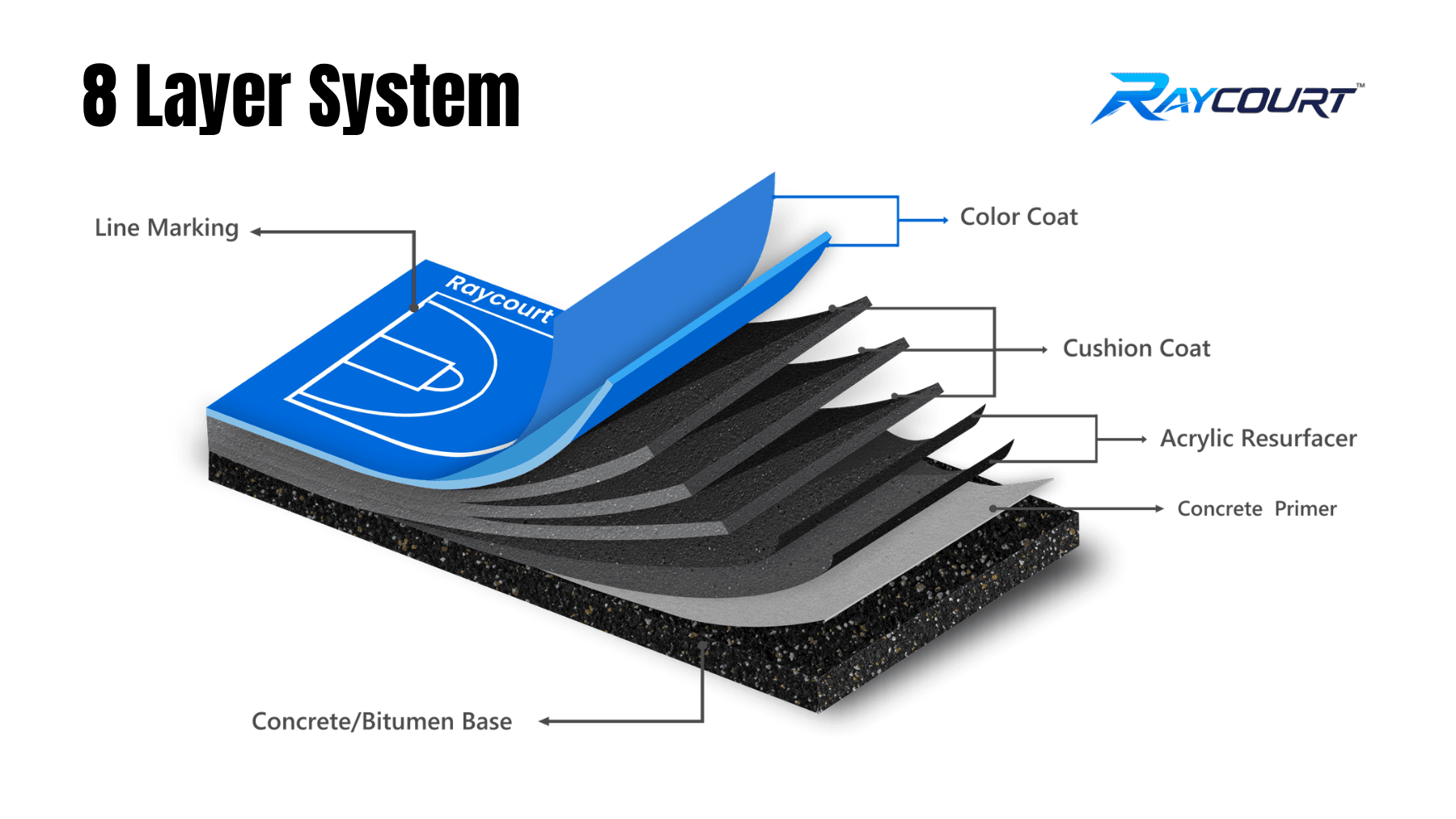
Acrylic surfacing systems consist of multiple layers applied over a solid base. Each layer serves a specific purpose within the overall system. A filler coat smooths out small imperfections in the base surface. A cushion layer, when included, absorbs impact and reduces player fatigue. Color coats add the final playing surface and its distinctive shade. Line paint completes the system with precise, durable markings.
Tennis courts and pickleball courts both benefit from this layered approach. However, pickleball surfaces sometimes use a slightly different texture ratio. This adjustment helps control ball speed, since pickleballs behave differently than tennis balls. A surface that suits tennis courts and pickleball courts alike requires careful formulation.
Texture, Speed, and Ball Response
Texture directly affects how fast a ball moves across the court. Tennis courts often use medium-textured surfaces to balance speed and control. Pickleball courts frequently use a slightly smoother finish for predictable bounce. This difference matters because pickleball rallies happen at closer range than tennis rallies.
Expert Tip: Always match acrylic texture to the sport’s playing style. A surface too rough slows down pickleball rallies unnecessarily. A surface too smooth reduces control on a tennis court.
Manufacturers test surface friction using standardized methods before releasing new coating formulas. This testing ensures the material performs consistently across different climates and court orientations. Raycourt conducts this testing throughout every stage of product development.
Color Considerations
Color choice affects visibility, heat absorption, and overall court aesthetics. Darker colors absorb more heat and can raise surface temperature significantly. Lighter colors reflect sunlight and keep the surface cooler during play. Many facilities choose contrasting colors for the two playing zones. For instance, a facility might color the pickleball area differently from the surrounding tennis court. This contrast helps players quickly identify which lines apply to their game. Raycourt offers a range of UV-stable pigments that resist fading over time. Consistent color retention keeps tennis courts and pickleball courts looking professional for years.
The Growing Popularity of Pickleball and What It Means for Tennis Facilities
Pickleball ranks among the fastest-growing sports in recent years. This rapid growth affects how tennis facilities plan their future court space. Many clubs now see steady demand from both tennis players and pickleball players.
Rising Demand at Recreation Centers
Recreation centers report increasing requests for pickleball court access. Some facilities struggle to keep up with demand using only dedicated courts. As a result, many centers add pickleball lines to existing tennis courts instead. This flexible approach helps facilities respond quickly to shifting player interest. Tennis courts and pickleball courts increasingly coexist within the same recreational spaces.
Balancing Both Sports at One Facility
Facility managers now balance scheduling between tennis courts and pickleball courts carefully. Peak hours for each sport sometimes overlap, creating scheduling challenges. Clear signage and posted schedules help players understand court availability. Some facilities designate specific days or hours for each sport exclusively. Others allow flexible, first-come-first-served access across combined courts. This balance requires ongoing communication between facility staff and club members.
Planning for Future Growth
Facility owners planning new construction should consider both sports from the start. Building flexibility into court design helps facilities adapt as player interest shifts. Raycourt’s acrylic systems support both tennis courts and pickleball courts equally well. This flexibility protects a facility’s investment against changing sport popularity trends. Thoughtful planning today helps facilities avoid renovations several years down the road.
Why Many Facilities Combine Tennis Courts and Pickleball Lines
Pickleball participation has grown rapidly over recent years. As a result, many facilities now add pickleball lines to existing tennis courts. This combination lets one surface serve two different player communities. Understanding how tennis courts and pickleball courts share space helps owners plan smarter renovations.
Multi-Use Court Markings
A single tennis court can typically fit two to four pickleball courts. Contractors paint pickleball lines in a contrasting color to avoid confusion. Common combinations include blue pickleball lines on a green tennis court, or the reverse. Some facilities use dashed lines for one sport and solid lines for the other. This visual separation helps players quickly identify the correct boundaries. Clear, well-planned line marking reduces disputes and keeps games moving smoothly.
Benefits of Dual-Line Courts
Combining tennis courts and pickleball courts offers several practical advantages:
- Space efficiency: Facilities serve more players without expanding their footprint.
- Broader appeal: Clubs attract both tennis players and pickleball enthusiasts.
- Flexible scheduling: Managers can rotate court usage based on demand.
- Community growth: New players often try pickleball because the lines already exist.
These benefits explain why so many recreation centers pursue this approach today. Additionally, shared courts often see higher overall usage rates throughout the week.
Challenges to Consider
Dual-use courts also create some challenges worth planning around. Net height differs between the two sports, so portable nets often become necessary. Facilities must store and swap nets between tennis and pickleball sessions. Line confusion can still occur, especially with new players unfamiliar with the layout. Surface wear may also increase slightly due to higher overall traffic. Despite these challenges, most facility managers find the trade-off worthwhile. Careful planning and quality acrylic coatings help minimize these issues significantly. Raycourt’s durable surfacing material withstands the increased traffic that dual-use courts experience.
Quick Answers: Tennis Courts and Pickleball Courts
Can you play pickleball on a regular tennis court?
Yes, you can play pickleball on a tennis court with temporary lines. Many facilities add portable nets and painted or taped boundaries for this purpose. This setup works well for casual play or shared-use scheduling.
Do tennis courts and pickleball courts need different sub-bases?
Generally, no. Both sports work well on similar concrete or asphalt sub-bases. The acrylic coating system on top handles most surface-specific needs.
Why do pickleball courts feel smaller than tennis courts?
Pickleball courts measure just 44 feet by 20 feet. That equals roughly one-fourth the size of a full tennis court. This compact size supports pickleball’s fast-paced, close-range gameplay style.
Converting a Tennis Court Into a Pickleball Court: What to Know
Many facility owners consider converting a tennis court into pickleball space. This trend continues as pickleball demand grows faster than new court construction. Understanding the conversion process helps owners avoid mistakes and wasted effort.
Assessing the Existing Surface
Before any conversion begins, contractors should assess the existing tennis court surface. An older acrylic coating may show cracks, fading, or uneven texture. These issues need repair before contractors add new pickleball lines. A fresh coating layer often makes sense during a full conversion project. This approach gives both tennis courts and pickleball courts a clean, consistent playing surface. Raycourt’s resurfacing products help restore aging courts before line application begins.
Planning the Layout
Facility owners must decide between shared-use and dedicated-use conversions. Shared-use courts keep existing tennis lines and simply add pickleball markings. Dedicated-use courts remove tennis lines entirely and focus only on pickleball play. Most full-size tennis courts fit two dedicated pickleball courts side by side. Planners should also consider fencing, court orientation, and player sightlines during layout decisions. Sun position matters significantly, since players should never face direct glare during serves.
Line Marking Strategy
Line marking strategy affects how easily players read the court. Facilities typically choose one of three approaches for combined courts:
- Contrasting colors: Paint pickleball lines in a color that stands apart from tennis lines.
- Different line styles: Use dashed lines for one sport and solid lines for the other.
- Separate playing zones: Dedicate specific court sections entirely to one sport.
Each approach carries advantages depending on how often players use each sport. Facilities with heavy pickleball demand often choose dedicated zones for clarity. Facilities with occasional pickleball interest often prefer simple, added lines instead.
Working With Qualified Contractors
Conversion projects work best when facility owners hire experienced court contractors. These professionals understand how to prepare surfaces, apply coatings, and mark lines accurately. Raycourt does not perform installation work directly. Instead, we supply the acrylic materials that contractors use throughout the conversion process. Choosing a contractor familiar with both tennis courts and pickleball courts helps avoid layout errors. A knowledgeable contractor also understands regional climate factors that affect coating performance. This combination of quality material and skilled application produces a lasting, professional result.
Structural and Base Requirements for Tennis Courts and Pickleball Courts
A quality playing surface starts long before contractors apply any acrylic coating. Tennis courts and pickleball courts both need a stable, well-prepared base. Without proper preparation, even premium coating materials fail prematurely. Raycourt always recommends working with experienced contractors who understand base requirements thoroughly.
Sub-Base Considerations
Most tennis courts and pickleball courts sit on asphalt or concrete sub-bases. Asphalt offers flexibility and efficient installation across large areas. Concrete provides exceptional durability and resists cracking better in many climates. Either material works well when contractors install it correctly. The sub-base must cure fully before contractors apply any acrylic layers. Rushing this step often leads to premature surface failure. Additionally, the sub-base needs a slight slope for proper water drainage.
Drainage Requirements
Standing water damages both tennis courts and pickleball courts over time. Contractors typically build in a slope of about one inch per ten feet. This slight grade allows rainwater to run off the playing surface naturally. Poor drainage can cause puddling, algae growth, and eventual surface deterioration. Facilities in high-rainfall regions should pay extra attention to this detail. Proper drainage planning protects the investment in quality acrylic surfacing for decades.
Surface Leveling
Ball bounce consistency depends heavily on a level playing surface. Even small dips or high spots can affect gameplay noticeably. Contractors use specialized tools to measure surface flatness before coating application. A properly leveled base ensures uniform ball response across the entire court. This step matters equally for tennis courts and pickleball courts, since both sports demand predictable bounce. Raycourt’s filler and leveling products help contractors correct minor imperfections before the final color coats go down.
Acrylic Coating Systems: What Makes a Quality Surface
Acrylic coating systems form the foundation of modern tennis courts and pickleball courts. These systems combine durability, consistent texture, and long-lasting color. Raycourt manufactures each layer of this system with precision and consistency. Understanding these layers helps facility owners make informed material decisions.
Layers of an Acrylic System
A complete acrylic coating system typically includes several distinct layers:
- Crack filler: Seals small cracks in the sub-base before further coating.
- Patch binder: Repairs larger imperfections and strengthens weak areas.
- Acrylic resurfacer: Creates a smooth, even base layer across the court.
- Cushion system (optional): Adds shock absorption for player comfort.
- Color coating: Provides the final playing surface texture and color.
- Line paint: Marks boundaries, service areas, and non-volley zones.
Each layer bonds to the one beneath it, creating a durable, unified surface. Skipping steps or rushing application often shortens the surface’s overall lifespan. Contractors follow manufacturer guidelines closely to achieve the best results.
Cushioned vs. Standard Systems
Some facilities choose cushioned acrylic systems for tennis courts and pickleball courts alike. Cushioned systems reduce joint impact and lower player fatigue over long sessions. This option works especially well for facilities serving recreational or senior players. Standard, non-cushioned systems offer a firmer, faster playing surface instead. Competitive players sometimes prefer this firmer response for consistent ball speed. Raycourt manufactures both cushioned and standard acrylic systems to fit different needs.
Expert Tip: Consider your player demographic before choosing a cushioned system. Recreational and senior players often benefit most from cushioned surfaces.
How Thickness Affects Performance
Coating thickness influences durability, feel, and overall court performance significantly. Thicker acrylic systems generally last longer under heavy foot traffic. However, extremely thick coatings can sometimes feel less responsive underfoot. Manufacturers balance thickness with texture to achieve the right playing feel. Raycourt recommends specific thickness ranges based on expected court usage levels. Facilities with high player volume often benefit from slightly thicker coating systems. This balance helps tennis courts and pickleball courts hold up well over time.
UV Stability and Color Retention
Outdoor tennis courts and pickleball courts face constant sun exposure throughout the year. UV rays can fade color and weaken acrylic material over time. Raycourt formulates coatings with UV-resistant pigments that resist premature fading. This formulation helps courts maintain their appearance for many years of active use. Color retention also supports player safety, since faded lines become harder to see. Facilities that invest in high-quality, UV-stable coatings reduce the need for frequent recoating. This durability ultimately supports both performance and appearance over the surface’s lifespan.
Player Experience: What Athletes Notice Most
Player experience depends heavily on surface quality, regardless of the sport played. Tennis courts and pickleball courts must each deliver a predictable, comfortable feel underfoot.
Traction and Footing
Players rely on consistent traction to move confidently around the court. Too little traction increases slip risk during quick direction changes. Too much traction can strain joints during repeated stops and pivots. Raycourt balances traction levels carefully across every acrylic formulation we produce. This balance supports safe, confident movement on both tennis courts and pickleball courts.
Ball Response and Consistency
Consistent ball response helps players anticipate bounce and plan their shots accurately. Uneven surfaces or inconsistent texture disrupt this predictability significantly. Quality acrylic coatings maintain uniform texture across the entire playing surface. This consistency benefits recreational players and competitive athletes alike.
Comfort During Extended Play
Extended play sessions can strain joints, especially on harder surfaces. Cushioned acrylic systems reduce this strain during long matches or practice sessions. Facilities serving recreational or senior players often prioritize this comfort factor. Raycourt’s cushioned systems help extend playing comfort for tennis courts and pickleball courts alike.
Court Orientation and Site Planning
Court orientation affects both player safety and long-term surface performance. Facility planners should consider sun position, wind exposure, and surrounding landscape before construction begins.
Sun Position and Glare
Direct sun glare during serves creates a genuine safety hazard for players. Most guidelines recommend orienting courts along a north-south axis when possible. This orientation reduces the chance of players facing direct sun during peak hours. Facilities at different latitudes should adjust this guidance based on local sun angles. Careful orientation planning benefits both tennis courts and pickleball courts equally.
Wind and Surrounding Landscape
Wind exposure can affect ball flight, especially during pickleball’s lighter, quicker shots. Facilities near open fields or coastlines should consider windbreaks where practical. Nearby trees can drop leaves and debris onto the court surface regularly. Planners should balance shade benefits against ongoing maintenance needs from falling debris. Thoughtful landscape planning reduces long-term maintenance demands for facility staff.
Fencing and Perimeter Design
Proper fencing keeps balls contained and protects nearby pedestrians or vehicles. Fence height typically increases behind baselines, where balls travel with greater force. Facilities combining tennis courts and pickleball courts should plan fencing for both sports’ needs. This planning works best during the initial design phase, before construction begins. Raycourt’s role focuses on surfacing material, but coordinated planning benefits every project stage.
Ready to build a court that performs for years to come?
Connect with Raycourt for sports flooring systems built for your project.
Maintenance Practices for Tennis Courts and Pickleball Courts
Proper maintenance extends the life of tennis courts and pickleball courts significantly. Acrylic surfaces perform best when facility staff follow a consistent care routine. Neglecting maintenance often leads to premature cracking, fading, and surface deterioration.
Routine Cleaning
Debris and dirt accumulate on outdoor courts quickly, especially near trees. Facility staff should sweep or blow debris off the surface weekly. Standing water and organic buildup can encourage algae and moss growth. Pressure washing, done carefully, removes stubborn grime without damaging the acrylic coating. Staff should avoid harsh chemicals that can strip color or weaken the surface. Regular cleaning keeps both tennis courts and pickleball courts safe and visually appealing.
Crack Monitoring and Repair
Small cracks can appear on any outdoor surface over time. Facility managers should inspect courts regularly for early signs of cracking. Catching cracks early prevents water infiltration and further sub-base damage. Contractors can patch small cracks quickly using appropriate acrylic filler products. Ignoring small cracks often allows them to grow into larger structural problems. Consistent inspection schedules protect the long-term investment in quality court surfacing.
Resurfacing Cycles
Even well-maintained acrylic surfaces eventually need fresh coating layers. Sun exposure, foot traffic, and weather gradually wear down the color coat. Facility owners should plan periodic resurfacing to maintain optimal playing conditions. This process typically involves cleaning, crack repair, and fresh acrylic color application. Resurfacing restores both the appearance and performance of tennis courts and pickleball courts alike. Raycourt supplies the resurfacing materials that contractors use during these renovation projects. Planning ahead for resurfacing helps facilities avoid unexpected court closures. A proactive maintenance schedule ultimately saves time and preserves court quality for years.
Quick Answers: Maintenance and Longevity
How often should facilities resurface tennis courts and pickleball courts?
Most facilities resurface acrylic courts every few years, depending on climate and usage. Heavy traffic and intense sun exposure shorten this timeline somewhat. Regular inspections help facility managers plan resurfacing before problems worsen.
Can facility staff maintain courts without professional help?
Yes, routine cleaning and debris removal require no special expertise. However, crack repair and resurfacing usually need trained contractors. Raycourt recommends professional application for all coating and repair work.
Climate and Regional Considerations for Tennis Courts and Pickleball Courts
Climate plays a major role in how tennis courts and pickleball courts perform over time. Temperature swings, rainfall, and sun intensity all affect acrylic coating longevity. Facility owners in different regions should consider these factors during planning.
Hot and Sunny Climates
Intense sun exposure accelerates color fading and material breakdown over time. Facilities in hot regions benefit from UV-resistant acrylic formulations specifically. Darker colors absorb more heat, which can make surfaces uncomfortably warm underfoot. Many warm-climate facilities choose lighter color palettes for both tennis courts and pickleball courts. This choice keeps surface temperatures more comfortable during peak playing hours. Raycourt formulates heat-reflective coating options for facilities in consistently sunny regions.
Cold and Freeze-Thaw Climates
Freeze-thaw cycles create unique challenges for outdoor court surfaces. Water seeps into small cracks, then expands as temperatures drop below freezing. This expansion widens cracks and can eventually damage the sub-base structure. Facilities in colder regions should prioritize thorough crack sealing before winter arrives. Flexible acrylic formulations help surfaces withstand these seasonal temperature changes better. Regular inspection after winter months helps catch new damage early.
Humid and Rainy Climates
High humidity and frequent rainfall create additional maintenance considerations. Standing water encourages algae growth, which makes surfaces slippery and unsafe. Proper drainage design becomes even more critical in these regions. Facilities should also monitor courts for mold or mildew buildup near shaded areas. Raycourt’s acrylic systems resist moisture absorption better than many alternative surfacing materials. This resistance helps protect both tennis courts and pickleball courts in wet climates.
Choosing Regionally Appropriate Materials
Facility owners should discuss regional climate factors with their material supplier early. Raycourt provides guidance on formulation choices based on regional weather patterns. This guidance helps contractors select coatings that perform reliably in local conditions. Matching material choice to climate ultimately extends the life of any court surface. Whether building tennis courts, pickleball courts, or combined facilities, climate planning matters greatly.
Choosing the Right Flooring Material for Your Project
Selecting quality flooring material matters just as much as good court design. Tennis courts and pickleball courts both depend on well-formulated acrylic systems. Facility owners and contractors should evaluate manufacturers carefully before starting any project.
What to Look for in an Acrylic Manufacturer
Several factors separate reliable manufacturers from lower-quality suppliers:
- Consistent formulation: Quality manufacturers maintain strict quality control across every batch.
- UV and weather resistance: Materials should withstand sun, rain, and temperature swings.
- Technical support: Manufacturers should guide contractors through proper application methods.
- Product range: A strong manufacturer offers options for cushioned and standard systems alike.
- Industry knowledge: Manufacturers should understand both tennis courts and pickleball courts specifically.
Raycourt meets each of these criteria through careful formulation and ongoing product development. We focus exclusively on manufacturing, letting experienced contractors handle installation work.
Why Manufacturer Expertise Matters
A manufacturer’s expertise directly affects how a finished court performs and looks. Poorly formulated acrylic can crack, fade, or peel much sooner than expected. Experienced manufacturers understand how climate, sub-base type, and sport affect material choice. This knowledge helps contractors select the right products for each unique project. Raycourt works closely with contractors to recommend appropriate systems for tennis courts and pickleball courts alike. Additionally, we provide technical guidance throughout the specification and planning process. This support helps the finished surface meet both performance and durability expectations. Ultimately, the right material choice protects a facility’s investment for many years.
Working With Raycourt
Raycourt partners with contractors and facility builders across many projects each year. We manufacture the acrylic materials, and our partners handle installation and on-site expertise. This division of labor lets each party focus on what they do best. Facility owners benefit from this partnership through consistent, well-formulated coating products. Raycourt’s technical team remains available to answer formulation and application questions. This support helps ensure tennis courts and pickleball courts perform as expected from day one.
Ready to build a court that performs for years to come?
Connect with Raycourt for sports flooring systems built for your project.
Standards and Certifications Relevant to Tennis Courts and Pickleball Courts
Sports court construction follows established standards designed for safety and consistency. These standards guide dimensions, net specifications, and surface requirements for both sports. Facility owners benefit from understanding these guidelines before starting any project.
Governing Bodies and Their Role
The International Tennis Federation sets official rules and dimensions for tennis courts worldwide. Meanwhile, USA Pickleball publishes detailed specifications for pickleball court construction and layout. For official specifications, review USA Pickleball’s court construction resources directly. This resource covers dimensions, net specifications, and surface recommendations in detail.
Following these standards helps courts meet expectations for competitive and recreational play alike. Facilities that build or convert courts should reference these guidelines throughout planning. Contractors also rely on these standards when laying out lines and net positions.
Why Standards Matter for Surface Material
Surface material must support the dimensional and safety standards set by governing bodies. A quality acrylic coating provides consistent traction across the entire regulation surface. This consistency matters for both tennis courts and pickleball courts during competitive play. Raycourt formulates products that support compliant, high-performing surfaces for facility builders. While Raycourt does not certify courts directly, our materials help contractors meet recognized standards. Understanding these guidelines helps facility owners avoid redesign problems later. Ultimately, standards exist to protect player safety and ensure fair, consistent gameplay everywhere.
Common Mistakes to Avoid When Building or Converting Courts
Facility owners sometimes make avoidable mistakes when planning tennis courts and pickleball courts. Learning about these common errors helps protect your project from unnecessary setbacks.
Skipping Proper Base Preparation
Some projects rush through base preparation to save time. This shortcut almost always causes problems later, including cracking and uneven surfaces. A stable, properly cured base always deserves adequate time and attention. Contractors who skip this step often need significant rework within just a few years. Facility owners should insist on proper base preparation before any coating work begins.
Choosing the Wrong Surface Texture
Applying tennis-style texture to a dedicated pickleball court can affect gameplay negatively. Similarly, an overly smooth surface may not suit competitive tennis play well. Facility owners should discuss intended use with their material supplier before ordering coatings. This conversation ensures the final surface matches how players will actually use the court.
Ignoring Drainage Planning
Poor drainage ranks among the most common construction mistakes facilities encounter. Standing water shortens surface lifespan and creates safety hazards for players. Facilities should always confirm proper slope and drainage design before construction begins. This step protects the investment in quality acrylic coating for years to come.
Overlooking Line Marking Clarity
Confusing or poorly placed lines frustrate players and can lead to disputes. Facilities combining tennis courts and pickleball courts should plan line contrast carefully. Testing line visibility under different lighting conditions helps avoid this common oversight. Clear communication with contractors about desired line colors prevents unnecessary do-overs.
Delaying Maintenance
Some facilities wait too long before addressing small cracks or fading color. This delay often turns minor repairs into major resurfacing projects. Regular inspection schedules catch problems while they remain small and manageable. Raycourt recommends proactive maintenance over reactive repairs for every facility we support. Avoiding these common mistakes helps tennis courts and pickleball courts perform well for many years.
Frequently Asked Questions
No, they differ significantly in size. A tennis court measures 78 feet long, while a pickleball court measures only 44 feet long.
Yes, a single tennis court typically fits two to four pickleball courts. Facilities often add painted lines to create this dual-use setup.
Both sports commonly use synthetic acrylic coating systems over asphalt or concrete. However, manufacturers sometimes adjust texture slightly to suit each sport’s needs.
Yes, pickleball nets sit lower than tennis nets at every point. Many facilities use portable, adjustable nets that fit each sport’s height requirement.
Resurfacing needs vary based on climate, traffic, and sun exposure levels. Regular inspections help facility managers plan timely resurfacing before problems develop.
Final Thoughts on Tennis Courts and Pickleball Courts
Tennis courts and pickleball courts share some visual similarities but differ in many practical ways. Court size, net height, and even surface texture separate these two sports clearly. Despite these differences, many facilities successfully combine both games on shared surfaces. This approach reflects pickleball’s rapid growth alongside tennis’s long-standing popularity.
Quality acrylic coating systems make this combination possible. The right material supports consistent ball response, durable color, and long-term performance. Raycourt manufactures the synthetic acrylic flooring material that helps bring these courts to life. While we do not handle installation, our products support contractors throughout every project stage.
Whether you manage a single tennis court or plan a multi-sport facility, understanding these differences matters. Proper base preparation, quality coating layers, and regular maintenance all protect your investment. Following recognized standards from governing bodies like USA Pickleball further supports safe, consistent gameplay.
Tennis courts and pickleball courts will likely continue sharing space as pickleball’s popularity grows. Facility owners who understand both sports’ requirements can plan smarter, more flexible spaces. With the right acrylic flooring material and careful planning, courts serve players well for many years to come.
Raycourt remains ready to support contractors and facility builders with reliable, high-performing acrylic products. Our focus on quality manufacturing helps ensure every court, whether for tennis, pickleball, or both, performs at its best.
Ready to build a court that performs for years to come?
Connect with Raycourt for sports flooring systems built for your project.