
What Does Acrylic Paint Do for a Sports Court?
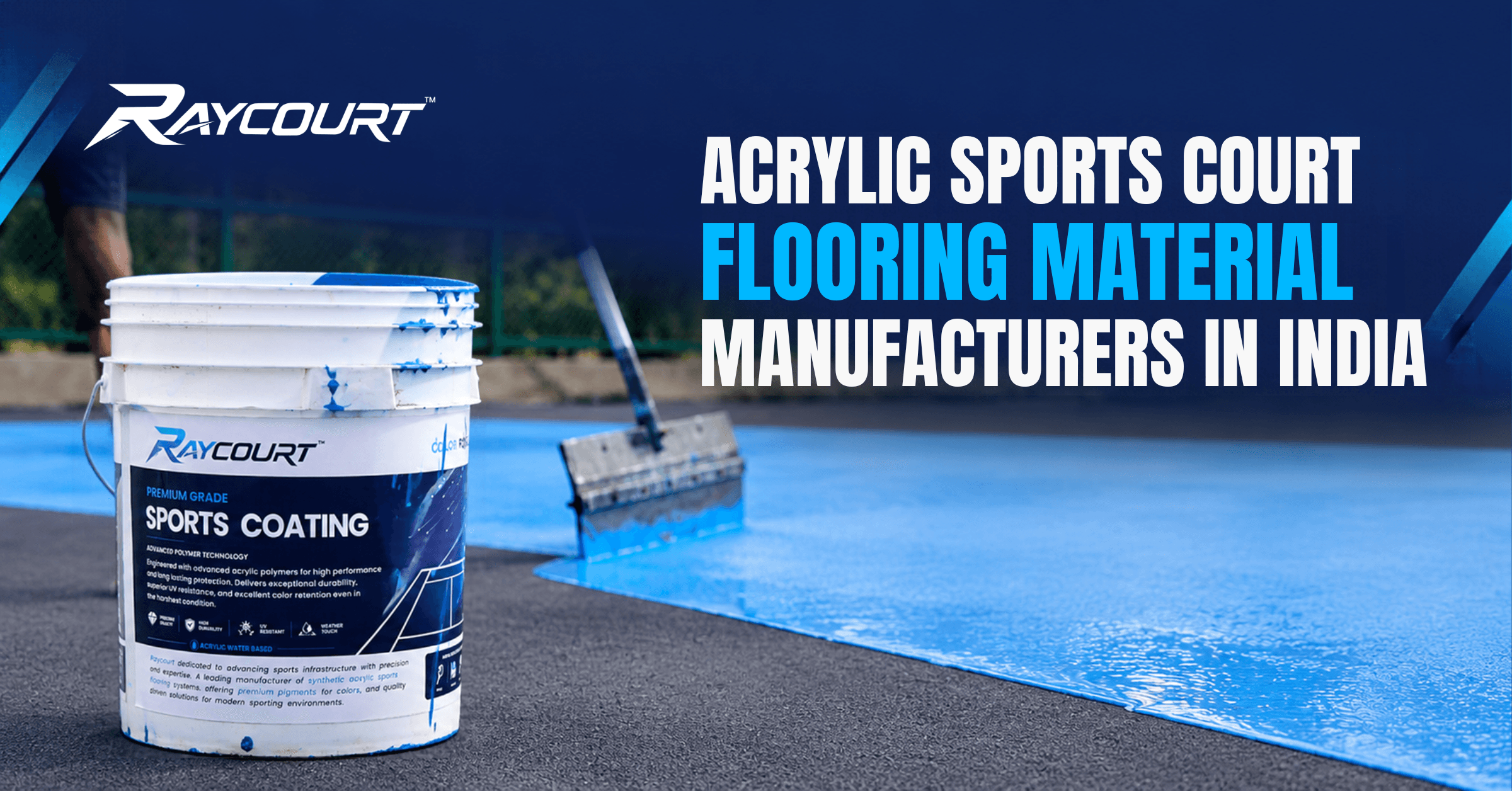
Acrylic paint forms the top layer of most modern outdoor sports courts. It combines acrylic resin, pigment, and fine aggregate into a protective coating. This coating creates a consistent playing texture across the surface. Builders apply it over asphalt or concrete in multiple layers to build color, texture, and durability. The result is a surface that resists weather damage, holds its color, and gives players reliable footing. Unlike ordinary paint, acrylic court coating also plays a functional role. It controls ball bounce, manages surface friction, and helps regulate court temperature through pigment selection. This guide breaks down exactly how acrylic paint works and why manufacturers formulate it this way. It also explains how facility owners can choose the right system for their court.
Court owners often assume acrylic paint works the same way as regular house paint, just in a different color. That assumption leads to confusion about maintenance schedules, texture options, and why some courts age far better than others. Acrylic paint actually functions as an engineered coating system, not a single cosmetic layer. It combines chemistry, aggregate size, and application technique to deliver a surface that stands up to years of athletic use. The sections below walk through each part of that system in detail, from raw ingredients to long-term maintenance planning.
What Is Acrylic Paint in Sports Court Construction?
Acrylic paint for sports courts differs significantly from the acrylic paint used on walls or furniture. Manufacturers engineer it specifically to withstand constant foot traffic, UV exposure, and temperature swings. The base ingredient is an acrylic polymer emulsion. This binder holds pigment and aggregate together once it cures. This binder gives the coating flexibility, so it can expand and contract with the substrate instead of cracking.
Court-grade acrylic paint also includes fine silica sand or similar aggregate. This addition builds surface texture, which improves traction for players making quick lateral movements. Manufacturers adjust the aggregate size and ratio depending on the sport and the desired surface speed. A faster court, like many tennis surfaces, uses less texture. A slower, grippier surface for basketball or pickleball often uses more.
The Role of Acrylic Resin Coatings
The acrylic resin in court paint does more than bind pigment to the surface. It creates a semi-flexible membrane that absorbs minor substrate movement without splitting. Asphalt and concrete both expand and contract with temperature changes, and a rigid coating would crack under that stress. Acrylic resin flexes instead, which extends the life of the entire surface system.
This resin also determines how well the coating resists UV rays, moisture, and chemical exposure from cleaning products. Higher-quality acrylic emulsions maintain their flexibility and color for many years under direct sun exposure. Lower-grade formulations tend to become brittle and chalky much faster, so material quality matters enormously in long-term court performance.
Acrylic Paint vs Traditional Paint
Facility owners sometimes ask why courts need specialized acrylic paint instead of standard exterior paint. The differences matter more than most people expect.
| Feature | Sports Court Acrylic Paint | Traditional Exterior Paint |
|---|---|---|
| Flexibility | Expands and contracts with substrate | Rigid, prone to cracking under stress |
| Traction | Textured with silica aggregate | Smooth, offers little grip |
| UV Resistance | Formulated for prolonged sun exposure | Fades and chalks faster outdoors |
| Foot Traffic Durability | Built for constant athletic movement | Not designed for repeated impact |
| Line Marking Compatibility | Layered system with dedicated line paint | Requires separate specialized products |
| Ball Response | Tuned for consistent bounce and speed | No consideration for ball behavior |
Standard paint simply cannot withstand the mechanical stress that a sports surface experiences every day. Acrylic court paint solves that problem through purpose-built chemistry and engineered aggregate content. Manufacturers design the resin base specifically for outdoor athletic use. Facility owners who understand this distinction make better long-term decisions during planning. They know exactly what performance to expect from their surface investment.
Ready to build a court that performs for years to come?
Connect with Raycourt for sports flooring systems built for your project.
How Acrylic Paint Works in a Sports Court System
A finished sports court surface is never just one coat of paint. It is a layered system, and each layer serves a specific function. Understanding this system helps facility owners see why quality material at every stage matters so much.
The Layered Application Process
Court builders typically apply acrylic coatings in this sequence:
- Surface patching and leveling – Crews fill cracks and low spots in the asphalt or concrete surface first.
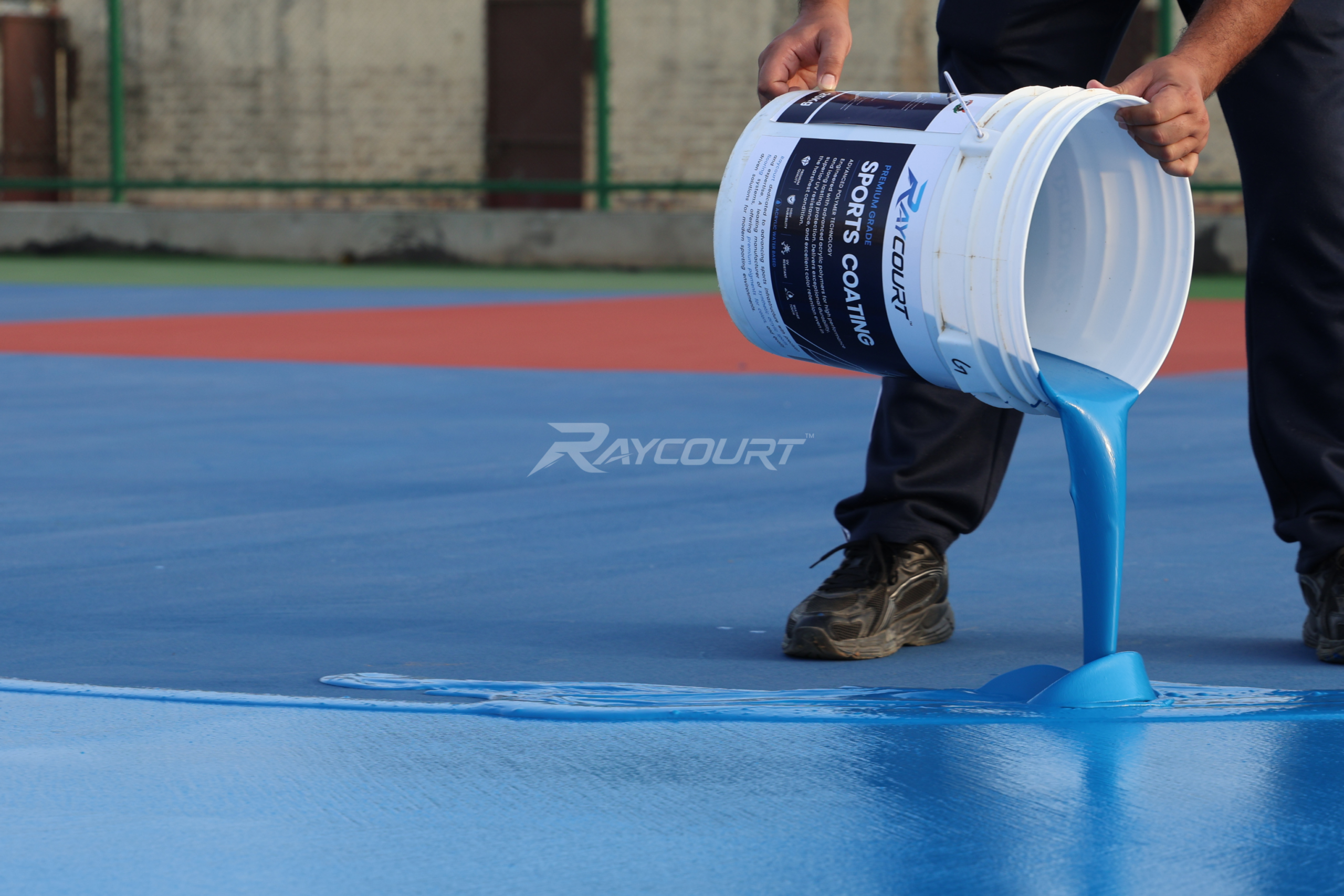
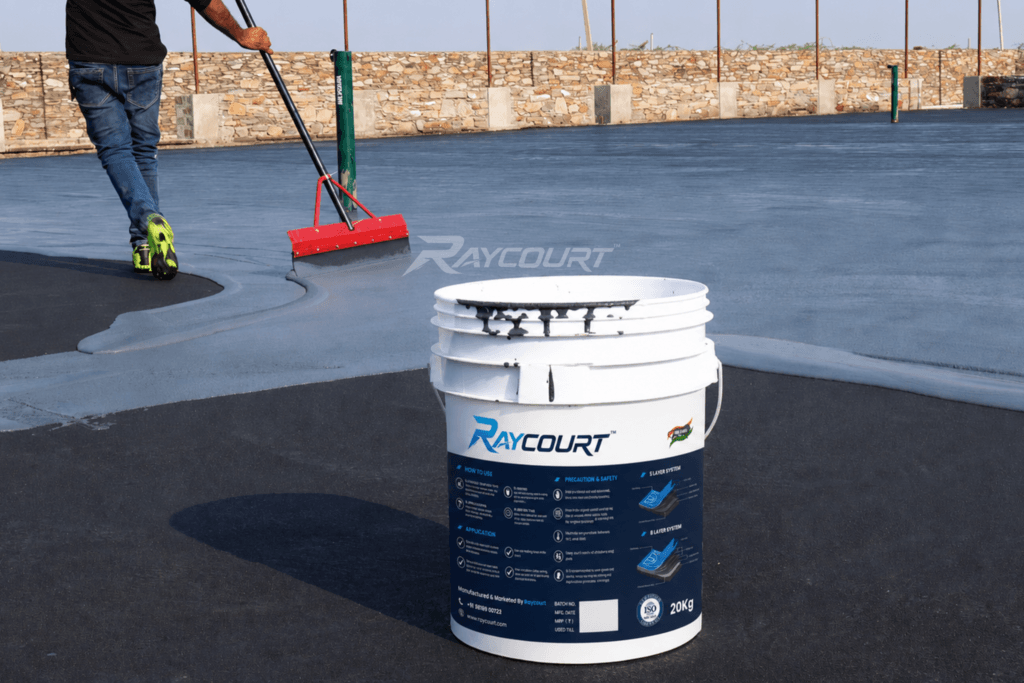
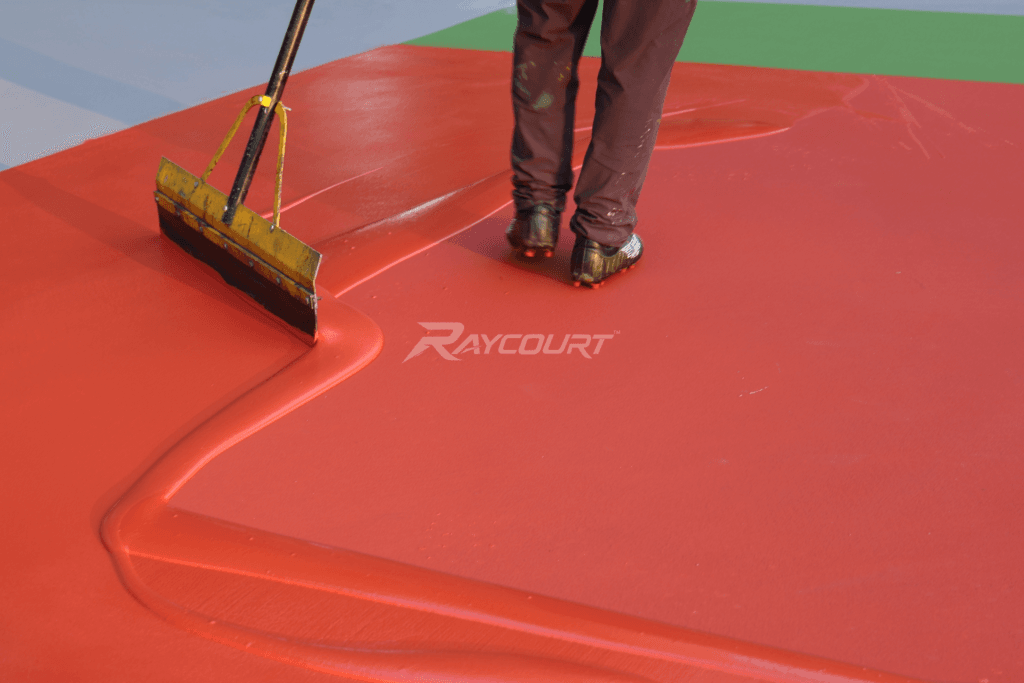
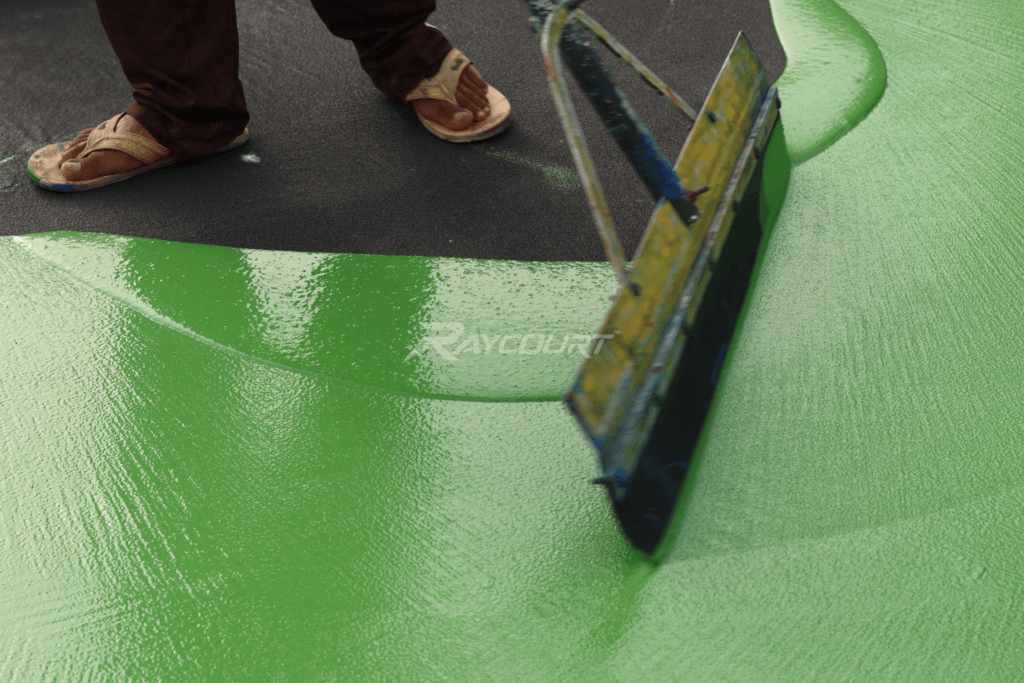
- Acrylic resurfacer coat – A base layer of textured acrylic resurfacer smooths minor imperfections and creates a uniform substrate.
- Cushion layer (optional) – Some systems add a cushioned acrylic layer for extra shock absorption, especially in multi-purpose facilities.
- Color coats – Builders apply two or more coats of pigmented acrylic paint for even, consistent color.
- Line marking – Crews paint game lines using contrasting acrylic line paint once the color coats fully cure.
Each layer needs to dry before the next one goes on. Skipping steps or rushing dry times weakens the entire system, even if the top coat looks fine at first glance.
Key Ingredients in Acrylic Court Paint
Every batch of court-grade acrylic paint contains several core components, and each one affects final performance:
- Acrylic polymer emulsion – the binding agent that holds the coating together and gives it flexibility
- Silica sand or aggregate – creates surface texture and controls traction levels
- Pigments – deliver consistent, UV-stable color across the court
- Defoaming and leveling additives – help the coating spread evenly during application
- Biocides and UV stabilizers – protect against mold growth and sun degradation
Manufacturers balance these ingredients carefully. Too much aggregate creates an overly abrasive surface. Too little binder produces a coating that chalks and wears prematurely. This balance is exactly why sourcing paint from an experienced manufacturer matters so much for long-term court quality. Consistent raw material sourcing and precise mixing ratios separate reliable manufacturers from suppliers who cut corners on formulation quality. That difference shows up clearly in court performance after a few seasons of play.
Expert Tip: Always confirm that your acrylic paint supplier tests each batch for viscosity, drying time, and color consistency. Batch-to-batch variation can create visible seams and uneven texture across a finished court.
Benefits of Acrylic Paint for Sports Surfaces
Acrylic paint delivers a long list of practical benefits. Understanding them helps explain why it remains the dominant surfacing choice for outdoor courts worldwide.
Durability and Weather Resistance
Acrylic coatings resist rain, humidity, and repeated temperature cycling far better than uncoated asphalt or concrete. The flexible resin base allows the surface to move slightly with the substrate instead of cracking. This flexibility becomes especially important in regions with hot summers and cold winters. The base material expands and contracts throughout the year.
Quality acrylic paint also sheds water efficiently when applied over a properly sloped surface. Standing water damages court surfaces over time. Proper drainage combined with a well-formulated coating significantly extends the life of the entire installation.
UV Stability and Color Retention
Outdoor courts sit under direct sunlight for thousands of hours every year. Lower-quality coatings fade, chalk, or discolor within a short period under this exposure. Premium acrylic paint formulations include UV stabilizers that slow this degradation considerably, keeping colors vibrant and consistent for far longer.
Color retention affects more than appearance. Faded, patchy court surfaces can make line markings harder to see, which creates a safety concern during fast-paced play. Consistent color also helps players judge depth and positioning accurately during games.
Slip Resistance and Player Safety
Textured acrylic coatings give players reliable traction, even when courts are slightly damp. The silica aggregate mixed into the paint creates a controlled surface texture. This texture reduces slipping without becoming overly abrasive on skin or shoes. Manufacturers calibrate this texture differently depending on the sport, since tennis, basketball, and pickleball all demand slightly different traction profiles.
Safety extends beyond traction. Consistent surface texture across the whole court prevents unpredictable footing. This lowers the risk of ankle injuries during quick directional changes. This consistency depends heavily on careful manufacturing and even application.
Low Maintenance
Well-installed acrylic court paint requires relatively simple upkeep. Routine sweeping, occasional washing, and prompt attention to minor cracks keep a court performing well for years. Compared to alternative surfacing materials, acrylic systems generally demand far less specialized maintenance equipment or expertise.
Types of Acrylic Court Paint Systems
Not every court needs the same acrylic paint system. Manufacturers produce several distinct system types, each suited to different budgets, climates, and performance goals.
Cushioned Acrylic Systems
Cushioned systems add a layer of rubber granules mixed with acrylic binder beneath the color coats. This layer absorbs impact and reduces strain on players’ joints during extended play. Facilities that host recreational leagues or younger athletes often favor cushioned systems because they lower fatigue during longer sessions.
Textured (Sand-Filled) Acrylic Systems
Sand-filled systems use standard acrylic resurfacer mixed with graded silica sand to build texture directly into the coating. This approach delivers excellent traction and durability at a straightforward application process. It remains the most common system for tennis, basketball, and multi-purpose courts around the world.
Color Coat-Only Systems
Some renovation projects only need fresh color coats over an existing, structurally sound acrylic base. In these cases, builders skip the resurfacing and cushion layers entirely and apply pigmented color coats directly. This approach refreshes appearance and adds a protective layer without altering the court’s existing feel.
| System Type | Best For | Key Characteristic |
|---|---|---|
| Cushioned Acrylic | Recreational courts, joint-sensitive players | Shock absorption |
| Textured Sand-Filled | Tennis, basketball, multi-purpose courts | Balanced traction and speed |
| Color Coat-Only | Renovation of sound existing surfaces | Fast refresh, minimal buildup |
How Manufacturers Test Acrylic Paint Quality
Reputable manufacturers run each acrylic paint formulation through a series of quality checks before it ever reaches a job site. Viscosity testing confirms the material spreads evenly and builds consistent thickness across the surface. Adhesion testing measures how well the coating bonds to asphalt or concrete under stress.
Accelerated weathering tests expose sample panels to intense UV light and moisture cycles. These cycles simulate years of outdoor exposure in a much shorter window. This process helps manufacturers predict how a formulation will hold its color and flexibility over time. Facility owners rarely see this testing directly, but it drives the consistency they experience on the finished court.
Color batch testing matters just as much. Manufacturers compare each new batch against a reference standard to catch pigment variation before it ships. Without this step, a single court could end up with visibly different shades between one application and the next.
Ready to build a court that performs for years to come?
Connect with Raycourt for sports flooring systems built for your project.
Acrylic Paint Applications Across Sport Types
Different sports place different demands on a court surface, and manufacturers adjust acrylic paint formulations accordingly.
Tennis Courts
Tennis courts typically favor a faster surface with moderate texture. Builders often apply acrylic paint with finer aggregate to keep ball speed consistent and predictable. Color choices also matter for tennis, since players need to track the ball clearly against the background surface.
Basketball Courts
Basketball demands a grippier surface than tennis because players make frequent sharp cuts and pivots. Acrylic systems for basketball often include slightly coarser texture to maximize traction during fast lateral movement.
Multi-Purpose Courts
Many facilities need a single surface that supports tennis, basketball, and pickleball at different times. Manufacturers formulate balanced acrylic systems for these spaces. They aim for texture and speed that work reasonably well across multiple sports, rather than optimizing for just one.
Pickleball Courts
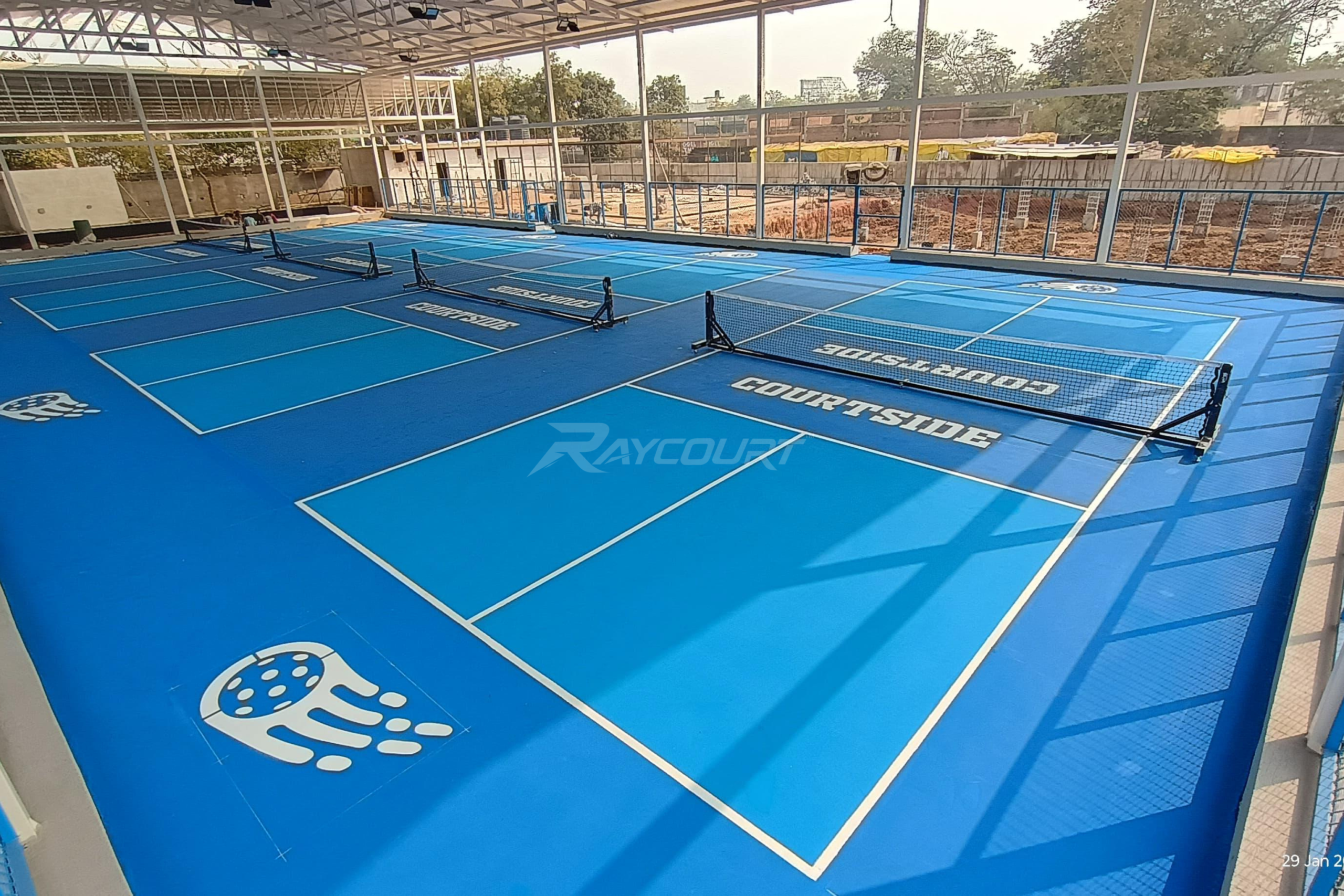
Pickleball has grown rapidly, and dedicated acrylic systems now account for its specific bounce and traction requirements. The sport uses a smaller court and a different ball type than tennis. Surface speed calibration differs slightly, though the underlying acrylic technology stays the same.
The table below summarizes how texture and speed priorities shift across common court types.
| Sport | Typical Texture Level | Surface Speed Priority |
|---|---|---|
| Tennis | Fine to medium | Fast, consistent ball response |
| Basketball | Medium to coarse | Maximum traction for quick cuts |
| Pickleball | Medium | Controlled bounce, moderate speed |
| Multi-Purpose | Medium (balanced) | Reasonable performance across sports |
Common Questions About Acrylic Court Paint Performance
Does acrylic paint change how fast a ball moves on the court? Yes, surface texture directly affects ball speed. More texture slows the ball down, while a smoother finish increases speed. Manufacturers adjust aggregate ratios to hit specific speed targets for each sport.
Can acrylic paint handle heavy rainfall regions? Acrylic paint itself resists water well once fully cured, but proper substrate slope and drainage remain essential. Without adequate drainage, standing water can undermine even the best coating over time.
Does color affect court temperature? Yes, darker pigments absorb more heat than lighter ones. Some facilities in hot climates choose lighter color palettes specifically to reduce surface temperature during peak sun hours.
Can crews apply acrylic paint over an existing acrylic surface? In most cases, yes, as long as the existing coating remains stable and well-bonded. Crews still need to clean the surface thoroughly and check for delamination before adding new coats on top.
Acrylic Paint Color Systems and Court Branding
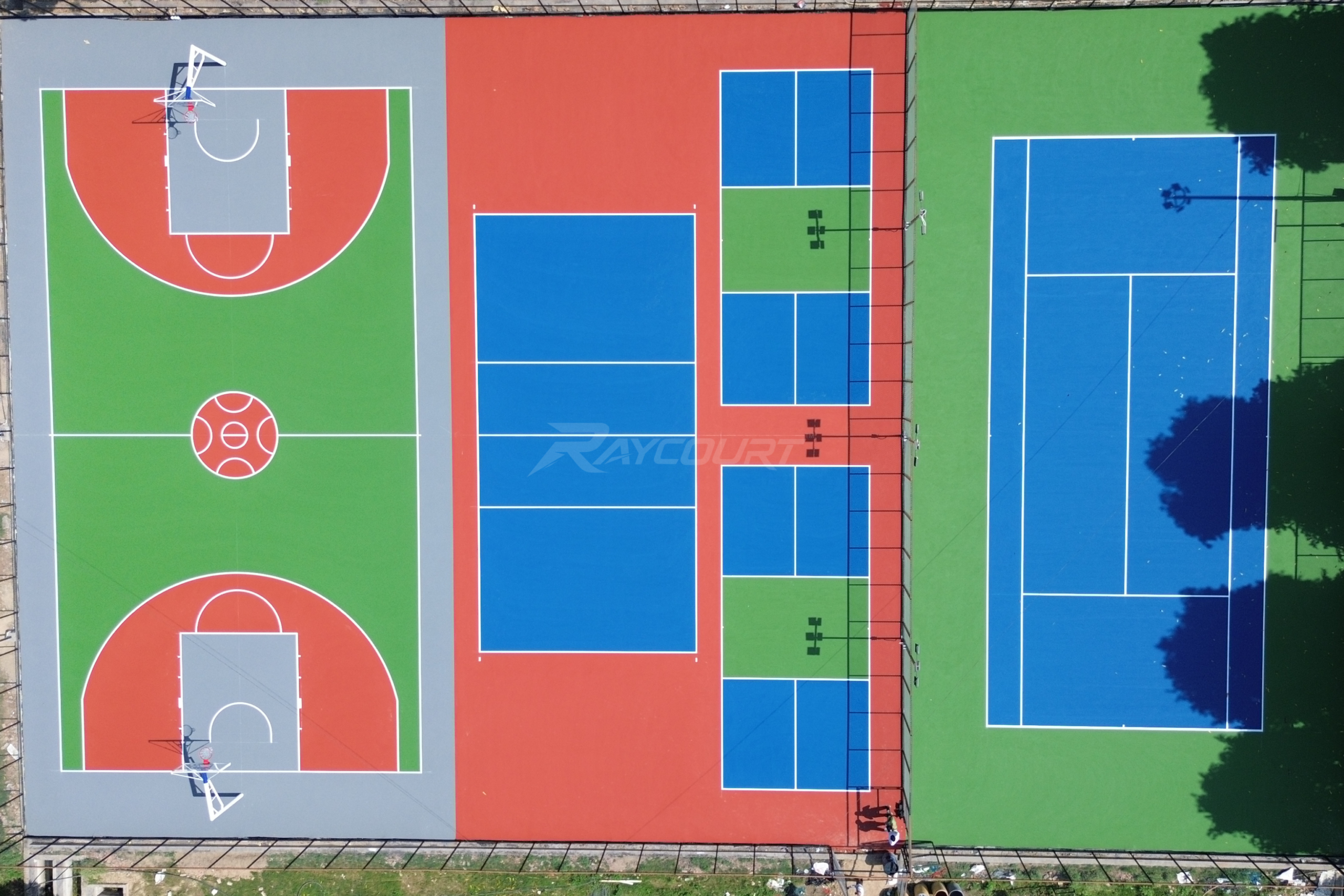
Color plays a bigger functional role in sports court design than most people realize. Beyond aesthetics, color choice affects visibility, heat absorption, and how clearly players distinguish the playing area from the surrounding apron. Most acrylic systems use a two-tone approach. One color covers the in-bounds playing area, while a contrasting shade defines the perimeter.
Manufacturers typically offer a standardized color palette to keep sourcing simple and consistent across projects. Popular combinations include blue and green, or red and green. Various neutral tones also suit facilities that want a more understated look. Many sports organizations also publish color guidance for competitive venues. Consistent visual standards help players and officials across different facilities.
Custom color matching is possible with many acrylic paint manufacturers. It typically requires minimum order volumes and longer lead times than standard palette options. Facility owners planning a branded look, such as matching school or club colors, should discuss custom formulation options early. Raising this after construction begins limits available options.
Line marking paint deserves special attention within the broader color system. High-contrast line colors, most commonly white or bright yellow, need strong opacity. This keeps them clearly visible against the base court color throughout the coating’s lifespan.
Environmental Factors That Affect Acrylic Paint Performance
Climate plays a major role in how long an acrylic court coating lasts and how it performs day to day. Manufacturers formulate different products for different environmental challenges, and understanding these factors helps facility owners set realistic expectations.
Humidity and Coastal Climates
Coastal facilities face a unique combination of challenges, including salt air, high humidity, and frequent moisture exposure. Salt can accelerate wear on certain coating types, so manufacturers often recommend formulations with enhanced moisture resistance for these locations. High humidity also slows drying time during application. This affects installation scheduling more than it affects the finished product’s long-term durability.
Mold and mildew growth becomes more likely in consistently humid, shaded areas. Acrylic paint formulated with biocide additives helps resist this growth. Regular cleaning still remains essential in these climates, regardless of coating quality.
Altitude and Temperature Extremes
Facilities at higher altitudes experience more intense UV exposure due to thinner atmosphere. This accelerates color fading if the coating lacks adequate UV stabilizers. These locations also often see wider daily temperature swings, placing extra stress on the coating’s flexibility.
Regions with harsh winters present a different challenge entirely. Freeze-thaw cycles cause water trapped in small cracks to expand and contract repeatedly, which can widen those cracks over time. Proper substrate preparation and a flexible, well-bonded acrylic system reduce this risk considerably. Facilities in extreme climates should still expect more frequent maintenance checks.
How to Choose the Right Acrylic Paint System
Selecting an acrylic paint system involves more than picking a color. Facility owners and builders need to weigh several factors together to land on the right specification.
Climate Considerations
Regions with intense sun exposure benefit from formulations with strong UV stabilizers to slow fading and chalking. Areas with heavy rainfall or freeze-thaw cycles need flexible resin systems that resist cracking under repeated moisture and temperature stress. Matching the formulation to local climate conditions extends the useful life of the court considerably.
Surface Compatibility
Acrylic paint performs differently over asphalt compared to concrete. Asphalt offers natural flexibility, which pairs well with standard acrylic systems. Concrete requires more careful attention to control joints and curing time before coating. It moves differently than asphalt under temperature changes. Builders always need to confirm substrate compatibility before selecting a specific acrylic system.
Sport-Specific Requirements
Facilities hosting competitive tennis need different texture and speed characteristics than recreational multi-purpose courts. Reviewing expected usage patterns, player skill levels, and primary sport helps narrow down the right acrylic formulation from the start.
Long-Term Usage Planning
Facility owners should also think beyond opening day when selecting an acrylic paint system. A court that hosts daily league play needs a more robust texture and coat count. Courts used occasionally for casual recreation need less. Anticipated player volume, tournament hosting plans, and expected renovation cycles all factor into a sound material specification. Discussing these usage patterns with the manufacturer and installing contractor helps avoid mismatched expectations. Raise these points early in the planning process.
Expert Tip: Request technical data sheets from your acrylic paint manufacturer before specifying a system. These sheets detail texture grade, recommended coat counts, and expected performance characteristics for your specific application.
Application Best Practices for Acrylic Court Coatings
While Raycourt manufactures the acrylic paint material itself, the application process falls to qualified court builders and installation contractors. Even the best material underperforms if crews apply it incorrectly. Understanding proper technique helps facility owners evaluate their contractors effectively.
Surface Preparation
Surface preparation determines how well acrylic paint adheres and performs over time. Crews need to clean the substrate thoroughly, removing dirt, oil, and loose debris before any coating goes down. They also need to repair cracks and low spots, since acrylic paint cannot fix underlying structural issues on its own.
Concrete surfaces typically need a longer curing period before coating begins. Applying acrylic paint over concrete that hasn’t fully cured can trap moisture and cause adhesion failures later.
Weather Conditions for Application
Temperature and humidity both affect how acrylic paint cures. Most manufacturers recommend application within a specific temperature range, generally avoiding extreme heat or cold. Applying coating too close to rainfall risks washout before the material sets properly.
Crews should also avoid applying acrylic paint during high humidity. Slow drying times can lead to uneven texture and color inconsistency across the court.
Curing and Drying Times
Each coat needs adequate time to dry before crews apply the next layer. Rushing this process traps moisture between layers, which weakens adhesion and can cause peeling or bubbling down the line. Manufacturers typically specify minimum dry times between coats. Following these guidelines closely protects the long-term integrity of the finished surface.
Common Mistakes That Shorten the Life of Acrylic Court Coatings
Even high-quality acrylic paint underperforms when projects skip important steps. Recognizing these common mistakes helps facility owners ask the right questions during construction or renovation.
- Skipping proper surface preparation. Crews sometimes rush cleaning and crack repair to save time. This step directly affects how well the coating bonds to the substrate.
- Applying coats too thick. Thicker is not always better. Overly thick coats dry unevenly and become prone to cracking and peeling.
- Ignoring drainage requirements. A court without proper slope traps water against the surface, which accelerates coating breakdown regardless of material quality.
- Choosing the wrong texture for the sport. A texture grade suited for basketball may feel too rough for competitive tennis, affecting both play quality and player comfort.
- Not following manufacturer cure times. Rushing between coats traps moisture and weakens adhesion, even when the finished surface looks acceptable at first glance.
- Using low-quality or expired material. Acrylic paint has a shelf life, and using aged or improperly stored material can compromise adhesion and color consistency.
Avoiding these mistakes starts with sourcing material from a manufacturer that provides clear technical guidance alongside its products. Raycourt supplies detailed application recommendations with every acrylic paint system to help builders avoid these pitfalls.
Acrylic Paint Layer Thickness and Coverage
Coverage rate and layer thickness both influence how an acrylic court system performs over time. Manufacturers specify a recommended spread rate for each product, measured in coverage area per unit of material. Applying material too thin leaves the surface vulnerable to premature wear. Thin coats offer less protection against foot traffic and UV exposure.
Applying material too thick creates a different set of problems. Excess thickness extends drying time significantly and increases the risk of cracking as the coating cures unevenly. It can also alter surface texture in ways that affect ball bounce and player traction. This moves the finished court away from its intended performance specification.
Builders typically apply the resurfacer coat at a heavier rate to smooth substrate imperfections. They then apply thinner, more controlled color coats on top. This layering approach balances leveling performance with precise texture and color control. Manufacturers publish exact coverage recommendations on technical data sheets. Following these specifications closely helps the finished court match its intended performance profile.
Humidity, temperature, and substrate porosity all affect how much material a given surface actually absorbs. Porous, older asphalt often requires additional resurfacer coverage compared to newer, denser substrates. Builders should always account for substrate condition when estimating material needs for a project. Standard coverage figures alone rarely tell the full story.
Ready to build a court that performs for years to come?
Connect with Raycourt for sports flooring systems built for your project.
Maintenance and Longevity of Acrylic Painted Courts
Proper maintenance significantly extends the life of any acrylic court surface. Facility owners who follow a consistent care routine avoid many of the common problems that shorten a court’s usable lifespan.
Routine Cleaning
Regular sweeping removes dirt, leaves, and debris that can trap moisture against the surface. Periodic washing with mild cleaning solutions helps prevent mold and algae growth, particularly in shaded or humid areas. Avoiding harsh chemicals protects the acrylic coating from unnecessary degradation.
Recoating Cycles
Most acrylic court surfaces benefit from a fresh color coat every several years. The exact timing depends on climate, usage intensity, and original material quality. Regular recoating protects the underlying resurfacer layer and keeps traction levels consistent for players.
Signs You Need a Fresh Coat
Facility managers should watch for these indicators that a court needs attention:
- Visible fading or chalking on the surface
- Smooth, worn patches with reduced texture
- Hairline cracks appearing across the color coat
- Line markings becoming difficult to see clearly
- Water pooling in specific areas after rainfall
Addressing these signs early prevents small issues from developing into costly structural problems.
When to Consider Full Resurfacing
Fresh color coats solve most cosmetic and minor performance issues, but some situations call for a complete resurfacing project instead. Widespread cracking, extensive delamination, or repeated drainage problems usually signal a deeper issue. The underlying resurfacer layer, not just the color coat, needs replacement. Facility managers should consult with their court builder to assess the right approach. A color refresh or a full system rebuild may suit their specific situation. Waiting too long to address structural signs typically increases the scope of work required later.
Sustainability and Innovation in Acrylic Paint Manufacturing
Modern acrylic paint manufacturing continues to evolve toward more sustainable, lower-impact formulations. Manufacturers increasingly focus on reducing volatile organic compounds while maintaining the durability and performance that sports courts demand.
Eco-Friendly Formulations
Water-based acrylic emulsions already produce far lower emissions than older solvent-based coatings. Ongoing research into bio-based binders and reduced-VOC additives continues. This pushes the category toward more environmentally responsible manufacturing without sacrificing court performance.
Innovation in Acrylic Paint Technology
Formulation research keeps advancing beyond basic durability improvements. Manufacturers now experiment with cool-surface pigment technology, which reflects more infrared light and helps reduce surface temperature on hot days. This innovation particularly benefits facilities in warmer climates, where surface heat can affect player comfort during peak sun hours.
Improved additive packages also help acrylic paint resist algae and mold growth more effectively in humid environments. This reduces how often courts need deep cleaning to look fresh. Synthetic court sports like pickleball continue growing in popularity. Manufacturers now refine texture profiles specifically for these newer sports, rather than relying solely on tennis or basketball specifications.
Raycourt’s Commitment to Quality Materials
Raycourt formulates every acrylic paint batch with consistent, tested manufacturing processes. We focus on producing materials that perform reliably across diverse climates and sport applications. Our team continually reviews formulation performance data to refine texture, color stability, and durability across our full acrylic product range.
Why Facility Owners Choose Raycourt Acrylic Paint Systems
Raycourt supplies acrylic court paint systems built for consistent, long-term performance. We manufacture every product with repeatable quality control. Builders can specify our systems with confidence across projects of any scale. Facility owners, architects, and court builders choose Raycourt for several clear reasons:
- Consistent formulation quality across every production batch
- Wide product range covering cushioned, textured, and color coat-only systems
- Technical support for builders specifying the right system for their project
- Reliable supply for projects of varying scale
- Ongoing formulation research focused on durability and color retention
As a dedicated manufacturer, Raycourt concentrates entirely on producing high-performance acrylic paint material. We leave installation to qualified court builders and contractors. This allows us to focus our full expertise on formulation quality and consistency.
For technical specifications and construction standards, the American Sports Builders Association maintains detailed guidelines. These guidelines cover acrylic court surfacing, substrate preparation, and application practices across multiple sports.
Frequently Asked Questions
Acrylic paint typically performs well for several years before needing a fresh color coat. Climate, usage intensity, and material quality all affect this timeline.
Builders can apply acrylic paint over existing asphalt, but the surface needs proper crack repair and cleaning first. Skipping preparation shortens the life of the new coating.
Acrylic paint flexes with outdoor substrates through temperature changes, making it ideal for exterior courts. Epoxy coatings are more rigid and typically suit indoor applications instead.
Yes, acrylic paint systems work on both surfaces, though preparation requirements differ slightly. Concrete needs extra attention to curing time and control joints before coating.
Most systems use two or more color coats over a resurfacer base layer. Exact counts vary by system type and manufacturer specification.
Conclusion
Acrylic paint remains the backbone of modern outdoor sports court construction. Understanding how it works helps facility owners make smarter decisions. From the acrylic resin binder to the silica aggregate that builds texture, every ingredient plays a role. Each one affects performance, safety, and durability. Choosing the right system means weighing climate, substrate type, and sport-specific requirements together. Acrylic paint works as a functional system, not just a cosmetic finish.
Raycourt manufactures acrylic paint systems engineered for consistent, long-term court performance across diverse applications. Our formulations support builders and facility owners who need dependable, high-quality material for tennis, basketball, pickleball, and multi-purpose courts alike. Working with an experienced manufacturer gives every project a stronger foundation for lasting performance on the court.
Whether you are planning a new build or refreshing an aging surface, material choice matters. The right acrylic paint system shapes how that court plays and how long it lasts. Partnering with a manufacturer that prioritizes formulation quality, technical support, and consistent supply helps every project start on solid ground. Raycourt remains ready to support architects, builders, and facility owners with the material expertise their next court project deserves.