
Introduction: Pickleball vs Tennis at a Glance
Pickleball vs Tennis: which sport wins on court design, and why? Pickleball and tennis look similar at first glance. However, the two sports differ in nearly every way that matters for court construction. Pickleball uses a smaller court, a solid paddle, and a plastic ball with holes. Tennis relies on a larger court, a strung racket, and a felt-covered ball. These differences change how players move. They also change how hard players hit, and how a court surface needs to perform.
For anyone planning a sports facility, the pickleball vs tennis comparison goes beyond gameplay alone. Court size affects land use and layout planning. Ball type affects surface texture requirements. Player movement patterns affect cushioning and traction needs. Get these factors wrong, and a court surface wears unevenly. It may even fail to support proper play over time.
This guide breaks down pickleball vs tennis across every dimension that matters. We cover rules, equipment, physical demands, and scoring systems. Most importantly, we explain flooring requirements in detail. Along the way, we show how acrylic surface systems support each sport’s unique demands. Whether you develop sports facilities or manage a club, this article offers clear, practical answers. The same holds true if you simply want to compare the two games. Every answer stays grounded in real material science. Let’s start with the basics.
Understanding Pickleball and Tennis: A Quick Overview
Before comparing courts and surfaces, it helps to understand what makes each sport distinct. Both games share a net and a rectangular court. Yet their equipment, pace, and strategy diverge sharply from one another.
What Is Pickleball?
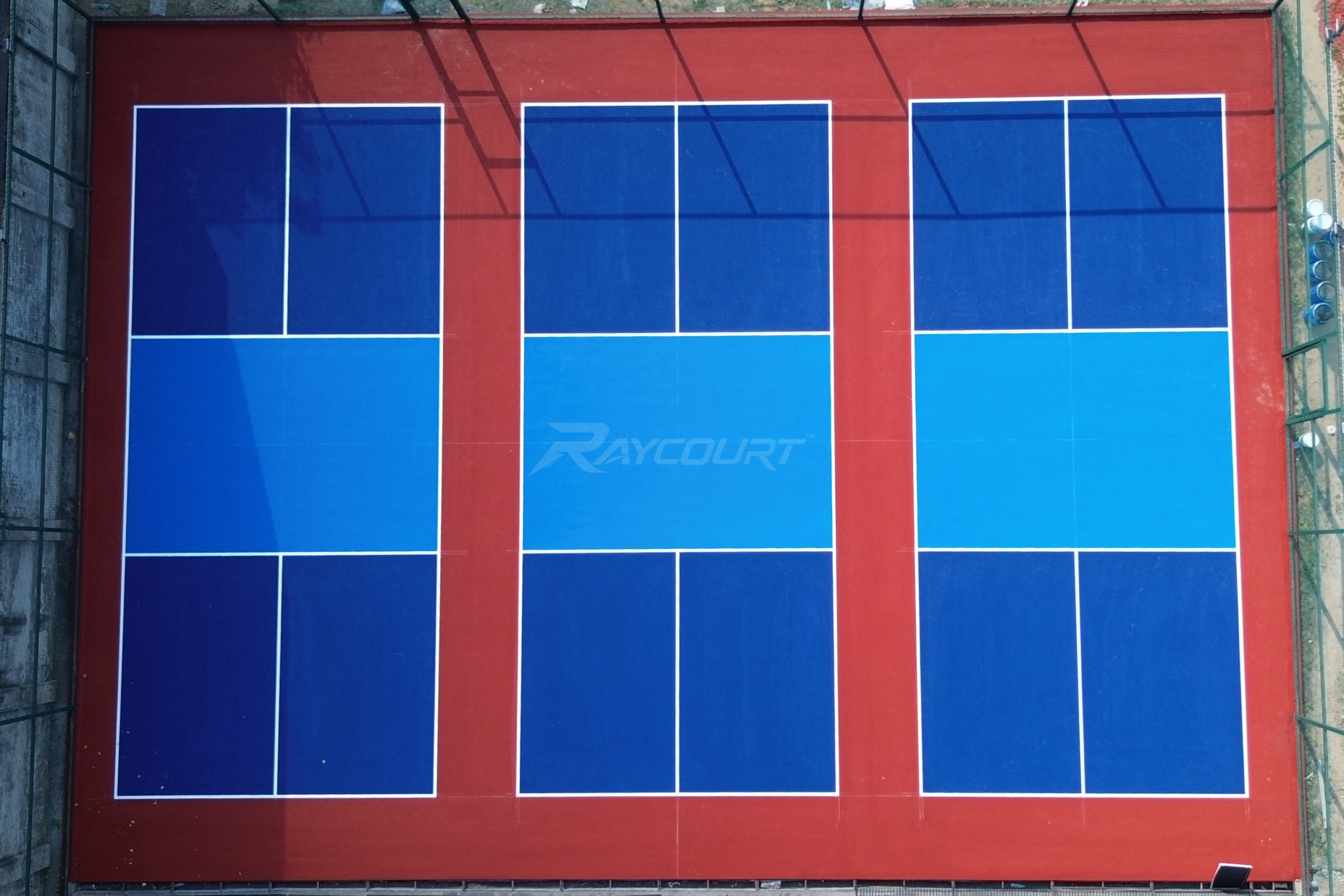
Pickleball combines elements of tennis, badminton, and table tennis into one fast-paced game. Players use solid paddles, typically made from wood or composite materials. They strike a perforated plastic ball over a low net. The sport originated in the United States during the 1960s. Since then, it has grown into one of the fastest-growing sports worldwide.
A pickleball court measures far smaller than a tennis court. This compact size makes the game accessible to players across many ages and fitness levels. Matches often move quickly, with short rallies and frequent volleys near the net. This proximity to the net shapes much of pickleball’s unique strategy. Combined with the sport’s non-volley zone rule, often called “the kitchen,” it rewards touch over power.
Because pickleball rewards quick reflexes over raw power, players of different ages can compete on relatively even footing. This accessibility factor drives much of the sport’s rapid rise. The format also encourages doubles play, which adds a strong social element. Together, these traits explain why pickleball now fills community centres, parks, and dedicated facilities across the country.
What Is Tennis?
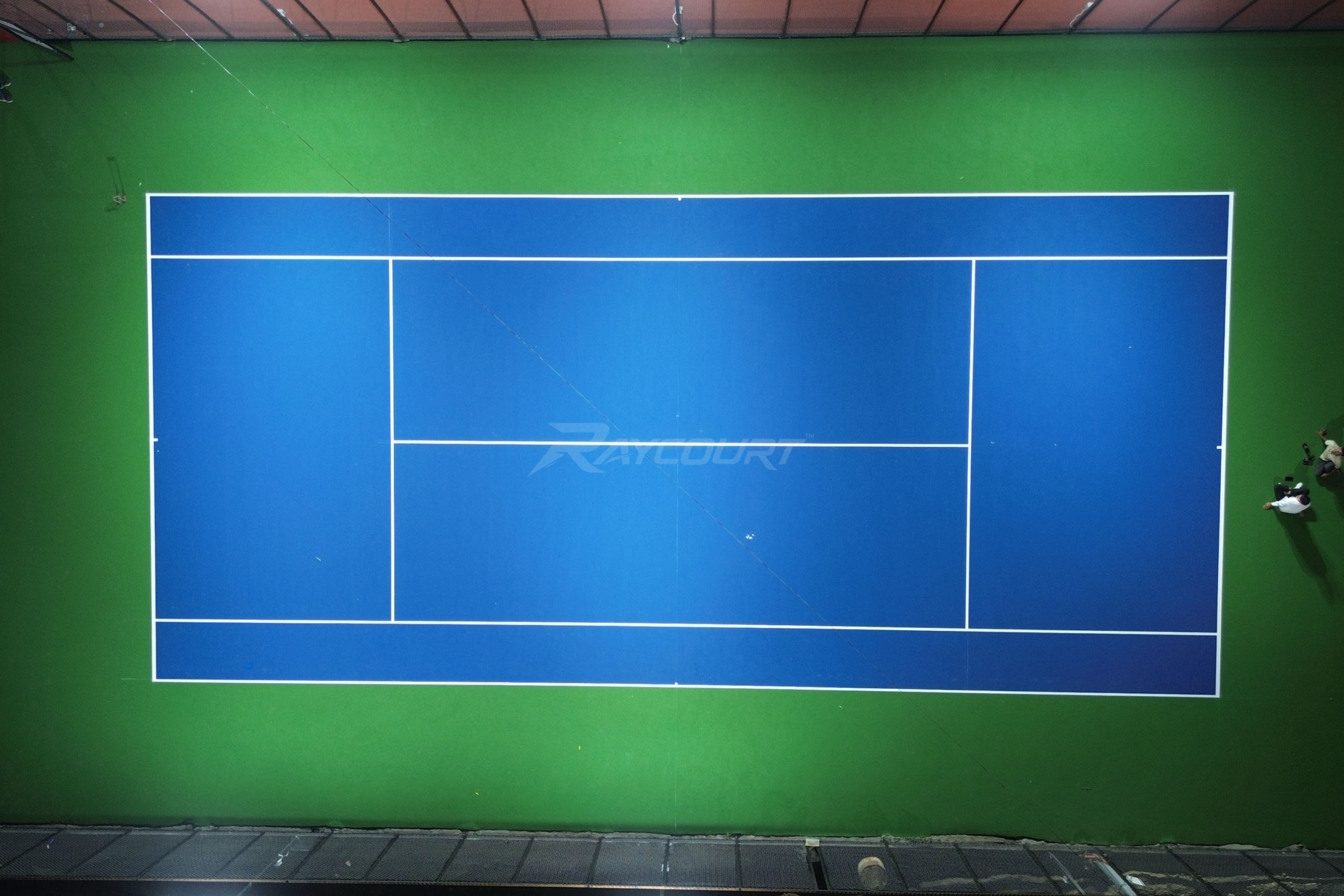
Tennis is a long-established racket sport played on a considerably larger court than pickleball. Players use strung rackets to strike a felt-covered ball over a taller net. Matches often extend across multiple sets, sometimes lasting hours. The sport demands significant stamina, agility, and precise technique from every competitor.
Tennis courts vary by surface type, including clay, grass, and hard courts. Each surface type changes ball speed and bounce in distinct ways. Players cover considerable ground during a match. They sprint laterally and adjust quickly to shots that travel at high speed. Powerful serves, deep groundstrokes, and strategic net play define competitive tennis at every level.
Unlike pickleball’s compact dimensions, tennis courts require considerably more space. As a result, tennis projects demand a larger surface investment overall. This scale influences everything from construction planning to the acrylic coating systems that protect the final playing surface.
Why This Comparison Matters for Facility Planning
Understanding pickleball vs tennis is not just an academic exercise. Facility owners increasingly need to serve both communities under one roof, or on one plot of land. Consequently, planners must weigh court size, surface type, and player demand together. A clear grasp of both sports helps avoid disruptive redesigns later. It also helps facilities attract a wider range of members from the very start.
Membership diversity matters more than many planners initially expect. Younger players often gravitate toward tennis for its competitive tradition and structured coaching pathways. Older or newer players frequently prefer pickleball for its social format and gentler learning curve. A facility that serves both groups well tends to build a more resilient, loyal membership base over time.
Pickleball vs Tennis: Key Differences at a Glance
The table below summarises the core differences between the two sports. Facility planners often reference these figures first. After all, these numbers shape every downstream decision about layout, fencing, and surfacing.
| Feature | Pickleball | Tennis |
|---|---|---|
| Court size (playing lines) | 20 ft x 44 ft | 27 ft x 78 ft (singles), 36 ft x 78 ft (doubles) |
| Net height | 36 in at posts, 34 in at centre | 42 in at posts, 36 in at centre |
| Ball type | Perforated plastic ball | Felt-covered rubber ball |
| Equipment | Solid paddle | Strung racket |
| Non-volley zone | 7 ft from net on each side | Not applicable |
| Typical rally pace | Fast, close to the net | Longer, with varied pace |
| Surface footprint | Compact | Considerably larger |
Beyond these numbers, pickleball and tennis diverge in how players move around the court. Pickleball favours short, sharp lateral steps near the net. Tennis rewards long sprints, deep lunges, and explosive changes of direction across a wider area. Consequently, each sport places different stress on a court’s surface layer. Each sport also benefits from a slightly different acrylic formulation, as later sections explain.
Ready to build a court that performs for years to come?
Connect with Raycourt for sports flooring systems built for your project.
Court Size and Dimensions: Pickleball vs Tennis
Court dimensions sit at the heart of the pickleball vs tennis comparison. They determine how much land a facility needs. They also determine how many courts fit on a given site, and how much acrylic coating a project requires.
Pickleball Court Dimensions
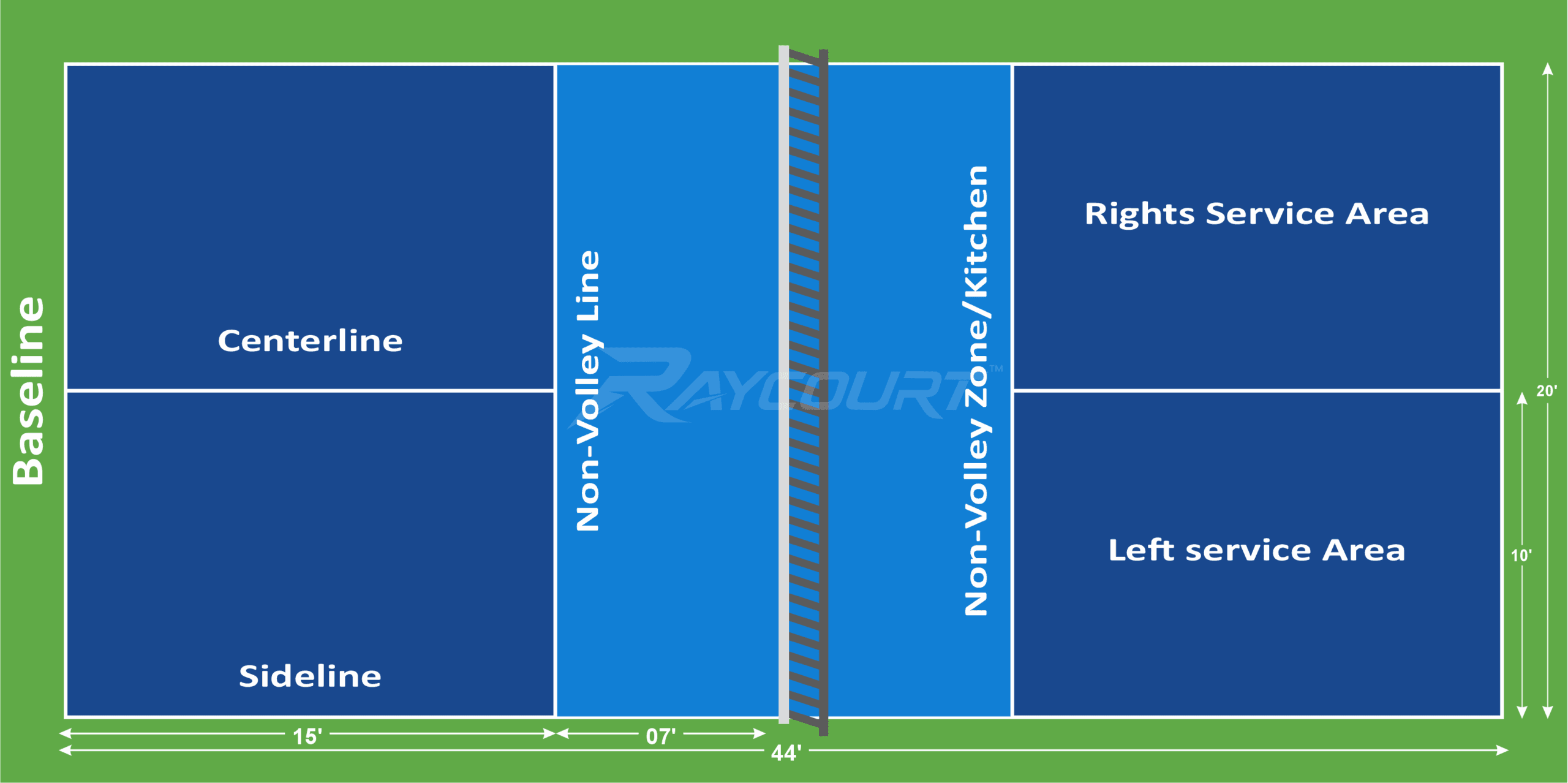
A regulation pickleball court measures 20 feet wide by 44 feet long. This size applies to both singles and doubles play equally. USA Pickleball recommends a minimum total playing surface of 30 feet by 60 feet. This figure includes run-off space around the boundary lines. For new construction and tournament venues, a 34-foot by 64-foot surface offers more comfortable margins.
The court includes a 7-foot non-volley zone on each side of the net. It also includes service areas that measure 10 feet wide by 15 feet deep. Lines typically measure 2 inches wide. They must contrast clearly against the surface colour for visibility during fast play.
Tennis Court Dimensions
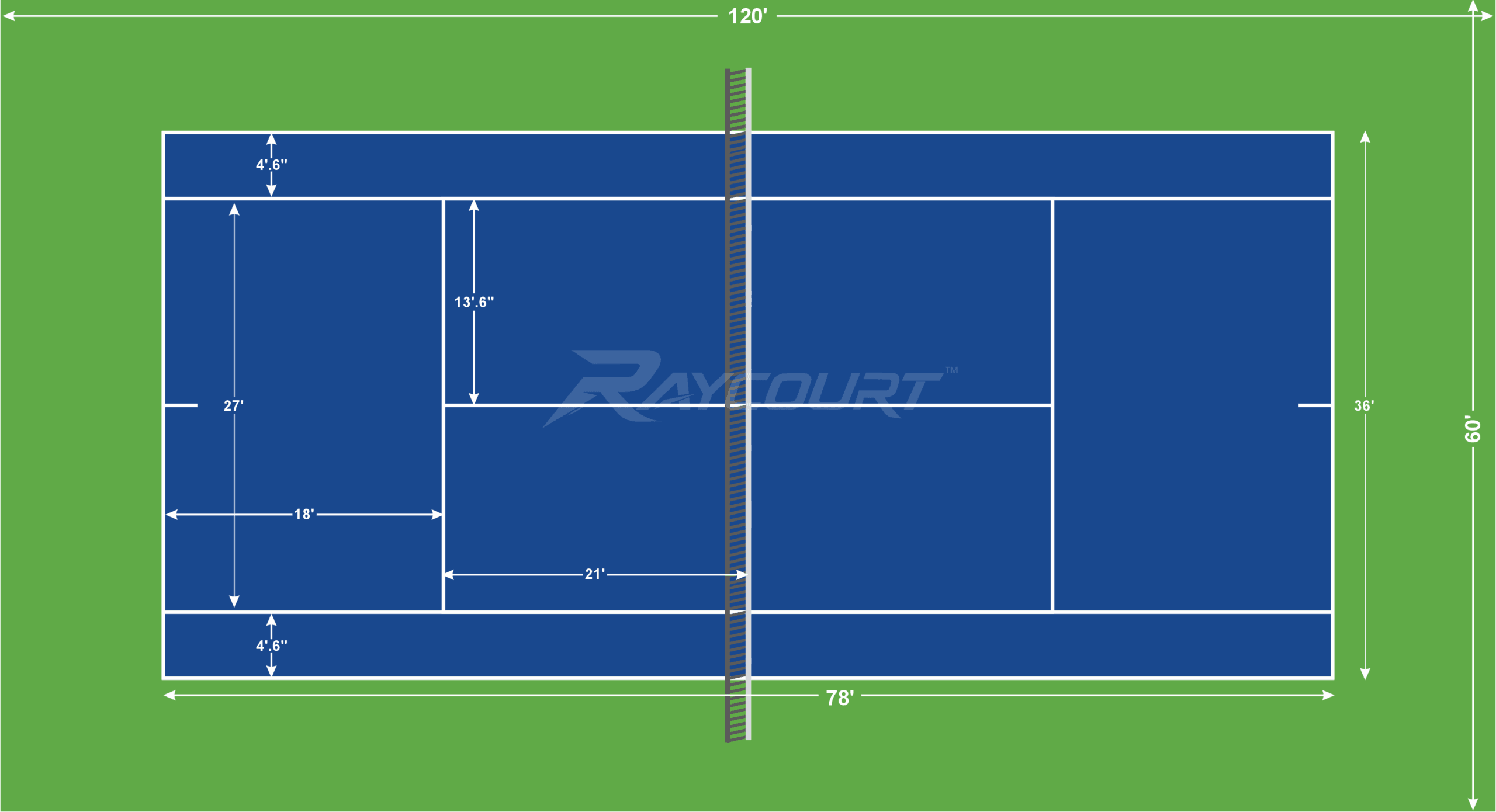
A standard tennis court measures 78 feet long. Singles courts measure 27 feet wide, while doubles courts extend to 36 feet wide. Including surrounding run-off space, most facilities allocate at least 60 feet by 120 feet per court. This margin allows safe player movement, plus space for umpires or coaches along the sidelines.
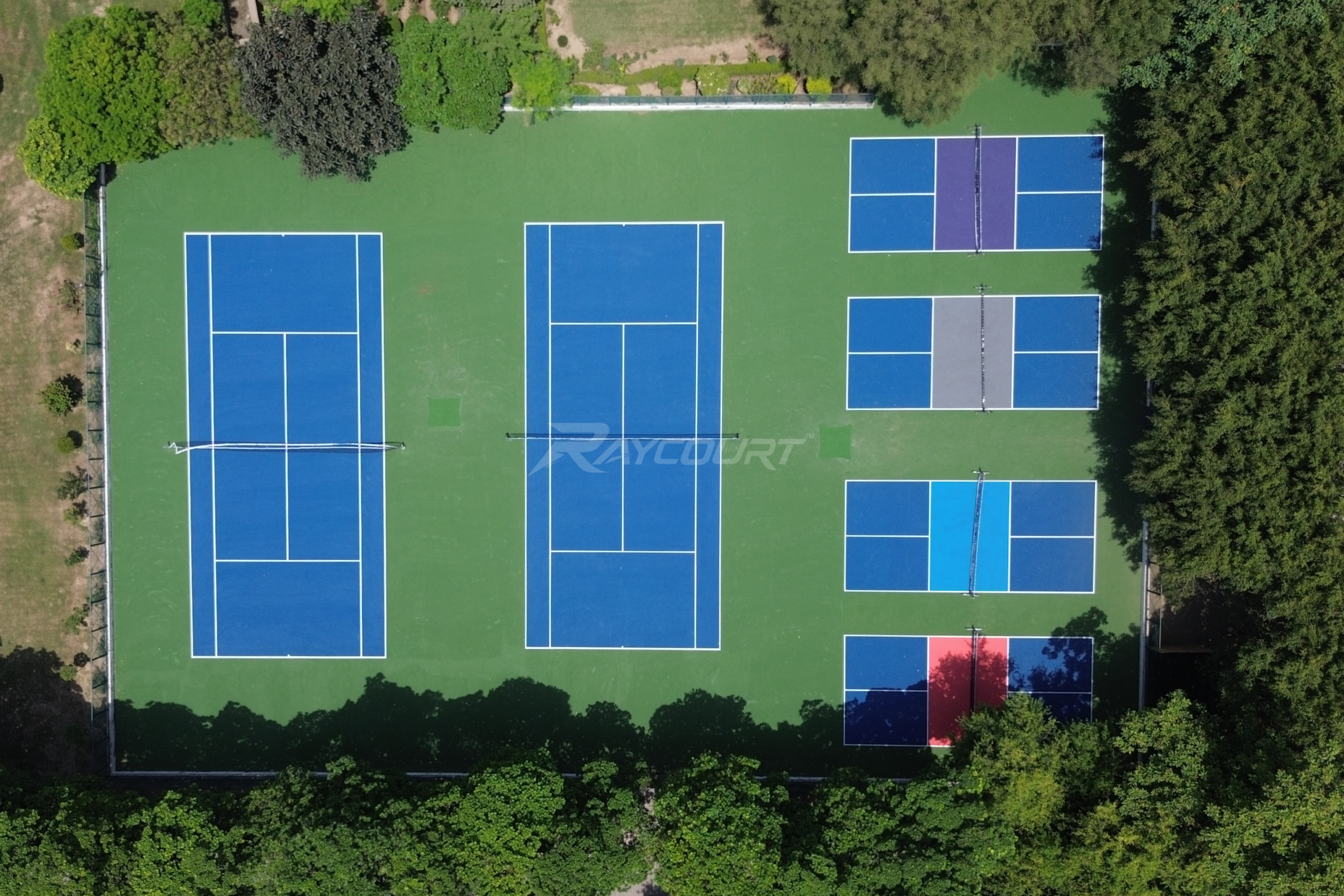
This larger footprint carries an interesting implication. A single tennis court can often accommodate up to four pickleball courts within the same boundary. This fact explains why many facilities now convert underused tennis courts into multi-court pickleball venues.
Space Requirements for Multiple Courts
Facilities rarely build just one court. When planning multiple courts, land efficiency becomes a central concern. Pickleball’s compact footprint allows planners to fit more courts into a smaller plot. Tennis, by contrast, needs generous space between courts for safety and sightlines. Planners should map total available land early, then decide how many courts of each type will fit comfortably.
Why Court Size Matters for Flooring Design
Court size directly shapes flooring decisions in several ways. First, larger courts require more acrylic coating material. This scale demands careful planning around batch consistency and colour matching. Second, larger courts demand more precise slope and drainage planning. Even small elevation changes become more noticeable across greater distances.
Third, line marking complexity increases with court size. This complexity grows further on multi-use courts that combine pickleball and tennis lines in different colours. Facility planners should factor these considerations into surface specification from the earliest design stage. Treating flooring as an afterthought often leads to major corrections later.
Expert Tip: Map out drainage slopes before finalising line layouts on any multi-court facility. Correct slope planning prevents water pooling, which can otherwise compromise acrylic coating longevity over time.
Equipment Deep Dive: Paddles, Rackets, and Balls
Equipment differences drive much of the pickleball vs tennis comparison. Understanding these differences also helps explain why each sport feels so distinct to new players.
Paddles vs Rackets
A pickleball paddle features a solid hitting surface, usually made from wood, composite, or carbon fibre. It has no strings, which limits how much spin a player can generate compared with tennis. A tennis racket, by contrast, uses a strung frame that flexes on contact. This flex helps generate topspin, slice, and greater overall power.
Because paddles are shorter and lighter than rackets, pickleball demands less arm swing. Players rely more on wrist control and precise angles. Tennis players, meanwhile, generate power through a longer swing path and full-body rotation.
Balls: Plastic vs Felt
A pickleball is a hollow plastic ball with evenly spaced holes. These holes reduce wind resistance and slow the ball’s flight through the air. A tennis ball, on the other hand, uses a rubber core wrapped in felt. This felt covering grips the strings during contact, which helps generate spin.
These material differences directly affect how each ball interacts with a court surface. A pickleball’s lighter weight and lower bounce height make surface texture and levelness especially important. A tennis ball’s heavier weight and higher bounce demand a surface that maintains consistent speed across an entire match.
Net Height Differences
Net height marks another clear distinction between the sports. A pickleball net stands 36 inches at the posts and dips to 34 inches at the centre. A tennis net stands taller, at 42 inches at the posts and 36 inches at the centre. This height difference changes shot trajectories near the net. It also influences how players approach volleys and drop shots in each sport.
Scoring Systems: Pickleball vs Tennis
Scoring adds another layer to the pickleball vs tennis comparison. Both systems reward consistency, yet they differ considerably in structure.
Pickleball traditionally awards points only to the serving side, with games typically played to 11 points. Many recreational and tournament formats now use rally scoring instead, where either side can score on any rally. This format speeds up matches and makes outcomes easier to predict.
Tennis uses a more layered scoring structure. Players win points within games, games within sets, and sets within a full match. This structure rewards sustained focus, since a single lapse can decide an entire game. Consequently, tennis matches can vary enormously in length, while pickleball games tend to finish more predictably.
Flooring Requirements: Pickleball vs Tennis Courts
Flooring performance sits at the centre of the pickleball vs tennis comparison for facility owners. Both sports use acrylic-coated hard courts. However, each sport places distinct demands on the surface itself.
Acrylic Surface Systems for Pickleball Courts
Pickleball’s fast net exchanges and frequent direction changes call for a specific balance. The surface needs enough grip without sacrificing overall speed. Players need enough traction to stop and pivot quickly near the kitchen line. At the same time, the surface should never feel sluggish during longer baseline rallies.
Texture and Grip for Pickleball
Manufacturers typically formulate pickleball surfaces with a medium-fine texture profile. This texture supports quick footwork without causing excessive shoe wear. It also reduces the risk of skin abrasion during occasional falls near the net. A well-textured acrylic coating also helps control ball bounce consistency. This consistency matters greatly, given pickleball’s lower net and frequent dinks near the kitchen line.
Cushioning Needs for Pickleball
Pickleball players spend considerable time near the net making short, sharp movements. Cushioned acrylic systems help reduce joint stress during these repeated stops. Raycourt’s cushioned acrylic layers absorb impact during quick pivots and direction changes. This cushioning supports player comfort across long sessions and repeated weekly play.
Acrylic Surface Systems for Tennis Courts
Tennis courts need to support sustained sprinting, sliding, and explosive changes of direction. Players cover a much larger area than in pickleball. The surface must maintain consistent ball bounce across the full court. At the same time, it must withstand higher-impact footwork over many years of use.
Texture and Grip for Tennis
Tennis surfaces typically use a coarser texture than pickleball courts. This texture supports higher-speed lateral movement and sudden stops during long rallies. It also influences ball speed after the bounce, a factor coaches consider carefully when advising players on strategy.
Cushioning Needs for Tennis
Tennis involves extended rallies and repeated sprinting across the entire court. As a result, cushioning plays a critical role in reducing long-term joint strain. Multi-layer acrylic systems distribute impact forces more evenly across the foot. This engineering supports players during extended training sessions and long tournament days.
Shock Absorption and Player Safety
Shock absorption matters for both sports, though movement patterns differ considerably. Pickleball players experience frequent short bursts and sudden stops near the net. Tennis players cover longer distances at higher speeds across the baseline. In both cases, a well-engineered acrylic system cushions impact effectively. This cushioning reduces stress on ankles, knees, and hips over time.
Raycourt formulates its acrylic systems with layered cushioning technology. This technology spreads impact across the coating, rather than concentrating force at a single point. The approach supports safer play across both sports, regardless of a player’s age or skill level.
Surface Texture and Ball Bounce Consistency
Ball bounce consistency directly affects gameplay quality in both sports. A pickleball’s plastic construction and lower bounce height mean small surface irregularities become noticeable quickly. Tennis balls respond differently to texture variation, particularly regarding spin and speed after the bounce.
Consistent acrylic application supports reliable ball bounce across an entire court. Careful substrate preparation matters just as much as the coating itself. Quality control during application also plays a major role in long-term performance. Facility owners should always work with an experienced surfacing team and a trusted material manufacturer to achieve these results.
Substrate Preparation for Pickleball and Tennis Courts
Acrylic coatings perform only as well as the substrate underneath them. A cracked or uneven base will eventually show through, no matter how many coating layers a team applies. Contractors should always confirm proper compaction, grading, and curing before any acrylic system goes down.
For both pickleball and tennis, correct slope matters just as much as flatness. A gentle, even slope directs water away from the playing surface efficiently. Without this slope, water can pool near the net or baseline, which weakens the coating over time. Facility owners should insist on thorough substrate inspection before their surfacing team begins any acrylic application.
Gameplay and Skill Differences
Beyond court dimensions and surface engineering, pickleball and tennis differ substantially in how the games unfold. Understanding these differences helps explain why each sport places unique demands on flooring.
Pace of Play
Pickleball rallies tend to unfold quickly, especially once both players reach the non-volley zone. Points often end within a few shots. The compact court limits how far players need to travel between shots. Tennis, on the other hand, frequently produces longer rallies. This is especially true on clay or slower hard courts, where players construct points methodically before attacking.
Equipment and Technique
A pickleball paddle offers a smaller, solid hitting surface compared with a tennis racket. This difference changes how players generate power and spin entirely. Tennis players rely heavily on racket head speed and string tension. They use these tools to produce topspin and pace on nearly every shot. Pickleball players, instead, use wrist action and paddle angle to control placement.
Learning Curve for New Players
Many players find pickleball easier to learn initially. Its smaller court and simpler scoring system both help beginners quickly. Tennis demands more technical refinement before players can sustain consistent rallies. This accessibility difference partly explains why pickleball participation has grown so rapidly. Casual and older players, in particular, gravitate toward the sport’s gentler learning curve.
Strategy and Shot Selection
Strategy differs meaningfully between the two sports as well. Pickleball rewards patience at the net, with soft “dink” shots that draw errors from opponents. Tennis rewards aggressive baseline play, combined with well-placed serves and approach shots. Both sports reward smart shot selection, yet the specific skills needed rarely overlap completely. A skilled pickleball player reads angles and anticipates soft shots near the kitchen line. A skilled tennis player, instead, reads an opponent’s swing and anticipates pace from deeper in the court. These distinct skill sets explain why crossover players often need time to adjust between the two games.
The Growing Popularity of Pickleball vs Tennis
Participation trends matter for anyone planning new sports facilities. Pickleball has expanded rapidly across parks, clubs, and community centres in recent years. Its low barrier to entry attracts new players of nearly every age group. Tennis, meanwhile, maintains a deep, established base of dedicated players and long-standing clubs worldwide.
Many facilities now respond to this shift by adding pickleball courts alongside existing tennis courts. Others convert underused tennis courts into multiple pickleball courts entirely. Either approach requires careful surface planning, since court usage patterns directly affect coating wear over time. Facilities that plan ahead for both sports tend to serve their communities more effectively.
This growth trend shows no clear sign of slowing down soon. Community demand for pickleball courts often outpaces available supply in many regions. Meanwhile, tennis retains steady demand among competitive players and long-time club members. Facility planners who track both trends closely can make smarter, better-informed investment decisions about court mix and surface specification.
Ready to build a court that performs for years to come?
Connect with Raycourt for sports flooring systems built for your project.
Physical Demands and Fitness Benefits: A Closer Look
Both sports deliver genuine cardiovascular and strength benefits. However, the physical demands differ meaningfully between the two games. Pickleball’s shorter court reduces overall running distance during a match. Tennis, with its larger court, typically demands more sustained aerobic effort. No one should call either sport easy, since both require sharp reflexes and constant attention.
Is pickleball easier on the body than tennis? Generally, yes. Pickleball’s smaller court reduces the sprinting distance required during a match. This factor lowers overall impact on knees and hips over time. However, pickleball still demands quick reflexes and repeated lateral movement. It remains a genuine workout rather than a passive activity.
Which sport burns more calories? Tennis typically burns more calories per hour than pickleball. Its larger court and longer rallies require sustained sprinting and recovery. That said, pickleball’s faster pace between points still delivers a strong cardiovascular workout. This is especially true during competitive doubles play.
Can pickleball help tennis players improve? Many coaches believe pickleball sharpens hand-eye coordination and net play skills. These skills often transfer well to tennis over time. Because pickleball emphasises placement and touch over raw power, tennis players benefit from cross-training. Many find that pickleball improves their volleys and reaction time noticeably.
Building Multi-Sport Courts: Flexible Facilities for Pickleball and Tennis
Given the smaller footprint of pickleball courts, many facilities now build multi-purpose courts. These courts support both sports on the same surface area. This approach maximises land use while giving players more scheduling flexibility throughout the week.
Line Marking Considerations for Dual-Purpose Courts
Combining pickleball and tennis lines on one court requires careful planning. Facility owners typically use two distinct line colours to avoid confusion during play. Common combinations include yellow for tennis lines and blue for pickleball lines. Colour choices should always maximise contrast against the base coat, regardless of the exact scheme chosen.
Color Coding and Visual Clarity
Clear visual separation between line sets reduces player confusion. This clarity especially helps newer players still learning either sport. Raycourt recommends testing colour combinations under both natural and artificial lighting. Lighting conditions can significantly affect line visibility, particularly during evening play under floodlights.
Surface Compatibility for Shared Courts
Pickleball and tennis both use acrylic-coated hard courts, so the base surface generally supports both sports. Facility planners should still consider texture and cushioning trade-offs carefully. A surface optimised purely for tennis may feel slightly different for pickleball players, and the reverse holds true as well.
Expert Tip: For shared courts, choose a mid-range texture profile. This choice balances tennis-level grip with pickleball-friendly speed. It typically satisfies both player groups without significantly compromising performance for either sport.
Choosing the Right Surface for Your Court
Selecting the correct acrylic system depends on several factors. These include primary sport usage, local climate, and expected player volume across the week.
Do pickleball and tennis courts need different acrylic layers? Not necessarily. Both sports typically use similar multi-layer acrylic systems. These include a cushioned base layer and a textured top coat. However, manufacturers can adjust texture density and cushioning thickness slightly. This adjustment favours one sport’s specific movement patterns over the other, when needed.
How does climate affect surface choice for pickleball vs tennis? Climate significantly influences coating formulation for both sports. Facilities in hot, sun-intensive regions benefit from UV-resistant acrylic coatings. These coatings resist fading and surface degradation over many seasons. Meanwhile, facilities in cooler or wetter climates should prioritise strong water drainage. Crack-resistant formulations also matter greatly in these regions.
What surface texture works best for beginners? Beginners in both sports generally benefit from a moderate texture profile. This profile offers reliable grip without feeling overly abrasive on skin. Extremely coarse surfaces can increase injury risk during falls. Overly smooth surfaces, meanwhile, reduce control during quick direction changes near the net or baseline.
Ready to build a court that performs for years to come?
Connect with Raycourt for sports flooring systems built for your project.
Environmental and Climate Considerations for Court Surfaces
Weather conditions influence acrylic surface performance considerably over a court’s lifetime. Intense sun exposure can fade colours and degrade coating flexibility without proper UV protection. Heavy rainfall demands strong drainage planning to prevent water pooling on the surface. Cold climates, meanwhile, require formulations that resist cracking during repeated freeze-thaw cycles.
Facility planners should discuss regional weather patterns with their surfacing partner early in the design process. This conversation helps determine the right acrylic formulation for pickleball, tennis, or shared-use courts alike. Raycourt formulates coatings for a wide range of climates, from humid coastal regions to dry, sun-intensive inland areas.
Indoor vs Outdoor Considerations for Pickleball and Tennis Courts
Court location changes several surface decisions for both sports. Indoor and outdoor environments expose acrylic coatings to very different conditions. Facility planners should weigh these differences carefully before finalising a surface specification.
Indoor Pickleball and Tennis Surfaces
Indoor courts avoid direct UV exposure, rain, and temperature swings almost entirely. This stable environment reduces the need for heavy-duty weatherproofing in the coating formulation. However, indoor surfaces still need strong grip control, since players wear different footwear indoors than outdoors. Lighting also plays a bigger role indoors, so facility owners should choose colours that reduce glare under artificial lighting.
Indoor pickleball courts benefit especially from consistent temperature control. Consistent temperatures help acrylic coatings maintain steady texture and bounce characteristics year-round. Indoor tennis facilities, meanwhile, often prioritise a slightly softer surface. This softness helps reduce joint strain during frequent, repeated play sessions across a long season.
Outdoor Pickleball and Tennis Surfaces
Outdoor courts face constant exposure to sun, rain, and temperature change. As a result, outdoor acrylic systems need strong UV resistance to prevent colour fading and surface degradation. They also need robust drainage design to handle sudden rainfall without pooling. Freeze-thaw resistance becomes essential in colder climates, since trapped moisture can crack a coating over time.
Both pickleball and tennis benefit from proper court orientation outdoors. Builders should align courts north to south wherever possible. This orientation reduces the chance that players stare directly into the sun during peak playing hours. A durable, weather-resistant acrylic system adds further protection on top of correct orientation. Together, these choices protect both players and the surface investment for years to come.
Maintenance Considerations for Pickleball and Tennis Courts
Regular maintenance keeps both pickleball and tennis courts performing well across many seasons. Both surfaces share similar acrylic coating systems. However, their maintenance schedules can differ slightly based on usage intensity and local climate.
Routine cleaning removes debris, dirt, and organic growth from the surface. Left unaddressed, this build-up can degrade surface texture over time. Facility owners should also inspect courts regularly for cracks. These typically form due to substrate movement or ongoing weather exposure. Addressing small cracks early prevents larger, more disruptive repairs later on.
UV-resistant top coats help both court types resist colour fading. They also reduce surface degradation from prolonged sun exposure throughout the year. Additionally, periodic resurfacing restores texture consistency and ball bounce performance. Coatings naturally wear from repeated play, so this step matters over time. Facility managers should always follow their surface manufacturer’s recommended maintenance schedule. Doing so preserves performance and safety over the long term.
Expert Tip: Schedule a professional surface inspection at least once a year. Aim for a date just before your region’s peak playing season begins. Early detection of minor surface issues prevents major structural problems later.
Pickleball vs Tennis: Which Sport Should You Choose?
Ultimately, the choice between pickleball and tennis depends on personal preference and physical goals. Available facilities also play a major role in this decision. Pickleball offers a faster learning curve and lower physical impact. It also brings a highly social, doubles-friendly format that suits many age groups. Tennis offers a deeper competitive tradition and greater physical intensity. It also provides a wider variety of surface types to master over a lifetime.
For facility planners, the decision often comes down to available space and community demand. Long-term flexibility matters just as much as current demand. Many successful facilities now offer both sports side by side. Acrylic surfaces engineered for each game’s unique demands make this dual approach possible. This strategy maximises community access while making efficient use of available land.
Whichever sport your facility prioritises, surface quality remains the foundation of a safe experience. According to the USA Pickleball court construction guidelines, proper court orientation supports long-term court performance. The same holds true for drainage and surface preparation. These same principles apply equally well to tennis court construction and planning.
Ready to build a court that performs for years to come?
Connect with Raycourt for sports flooring systems built for your project.
A Note on Court Colour and Player Experience
Colour choice affects more than aesthetics on a pickleball or tennis court. Darker base colours can absorb more heat under direct sun, which raises surface temperature during peak hours. Lighter colours, by contrast, tend to stay cooler and reduce glare for players. Contrast between the base colour and line colour also affects how quickly players track a fast-moving ball.
Raycourt works with facility planners to select colour combinations suited to local climate and lighting conditions. This process considers player comfort alongside long-term coating performance. Getting colour right, alongside texture and cushioning, rounds out a complete surface specification for either sport. Facility owners rarely regret investing extra thought into these details early. Correcting colour or texture choices after installation demands far more time and effort than planning properly from the start.
Frequently Asked Questions
Yes, many facilities mark temporary pickleball lines on existing tennis courts. A single tennis court can typically fit up to four pickleball courts. Dedicated pickleball courts still offer better line clarity and net height.
Texture and cushioning balance mark the main difference. Pickleball surfaces favour a finer texture for quick net play. Tennis surfaces use a coarser texture for sustained sprinting.
Yes, many facilities add pickleball lines and adjust net height on existing tennis courts. Acrylic-coated hard courts generally support both sports without major structural changes.
Most new players find pickleball easier to learn. Its smaller court and simpler scoring help beginners quickly. Tennis demands more technical development before players sustain longer rallies.
A standard tennis court can typically fit four pickleball courts using minimum-size layouts. Facilities that prefer more run-off space often fit three courts instead.
Building Your Ideal Court Starts With the Right Surface
Pickleball and tennis each bring distinct energy, strategy, and physical demands to the court. Yet both sports share one essential requirement. They need a durable, well-engineered acrylic surface that supports safe, consistent play. Raycourt manufactures acrylic sports flooring systems designed to meet the specific demands of both sports. Our formulations address texture, cushioning, UV resistance, and long-term durability together. Facility planners can rely on this combination to serve pickleball players, tennis players, or both communities under one roof.
Ready to build a court that performs for years to come? Connect with Raycourt for sports flooring systems built for your project.
Ready to build a court that performs for years to come?
Connect with Raycourt for sports flooring systems built for your project.