
Introduction: What Tennis Court Resurfacing Really Involves
Tennis court resurfacing renews the playing surface of an existing court without rebuilding its base. In simple terms, a crew repairs cracks and low spots first. Then, it applies fresh acrylic resurfacer, colour coats and playing lines over the sound base. As a result, the court regains its grip, colour, bounce consistency and safe footing.
Most outdoor acrylic courts need this renewal every few years. However, the exact timing depends on usage, climate, drainage and the quality of the previous coating. Therefore, owners should judge the surface by its condition, not by the calendar alone.
So, when should you act? Act when the colour fades, the texture turns smooth, or cracks and puddles appear. Moreover, act before small defects reach the base, because early work protects the whole structure.
This guide explains the complete picture in plain language. First, it defines resurfacing and separates it from repair and reconstruction. Next, it covers warning signs, material layers, the step-by-step process and pace choices. Finally, it shares care advice, quick answers and detailed FAQs.
One point deserves clarity from the start. Raycourt manufactures the acrylic materials that make resurfacing possible. We do not install courts. Instead, trained applicators and contractors use our systems on site. Consequently, this article focuses on materials, methods and decisions, so you can brief your contractor with confidence.
What Is Tennis Court Resurfacing?
Tennis court resurfacing is the process of restoring the top layers of a hard court. Specifically, it deals with everything above the asphalt or concrete base. The base stays in place, while the coating system receives a full renewal.
A typical acrylic system contains several thin layers. Each layer performs a distinct job, and together they create the playing surface. Over time, sunlight, rain, foot traffic and ball impact wear these layers down. Consequently, the court loses texture, colour and uniform bounce.
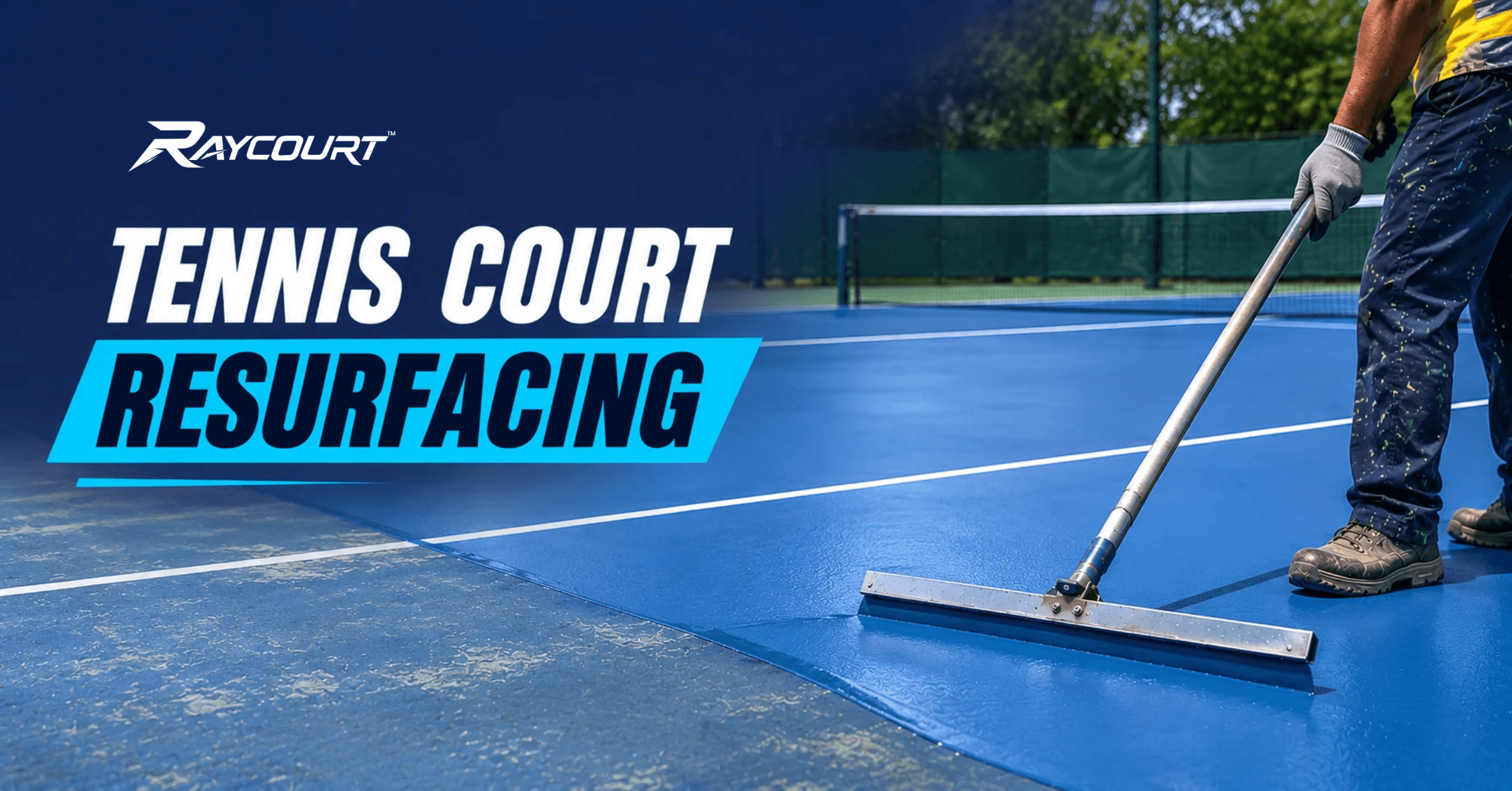
Resurfacing reverses that decline. A contractor cleans the court, repairs defects, levels low areas and rebuilds the coating layers. In addition, the crew repaints the lines to regulation dimensions. The court then plays like a new surface, even though the base remains original.
Tennis Court Resurfacing vs Repair vs Reconstruction
Owners often confuse these three terms. However, each one describes a different depth of work. The table below shows the difference clearly.
| Aspect | Spot Repair | Tennis Court Resurfacing | Reconstruction |
|---|---|---|---|
| Scope | Isolated cracks or patches | Entire playing surface | Base and surface together |
| Base condition | Sound base | Sound base with surface defects | Failed or unstable base |
| Layers involved | Local filler and touch-up coats | Repairs, resurfacer, colour coats and lines | New base plus full coating system |
| Visual result | Visible patches may remain | Uniform colour and texture | Completely new court |
| Best suited for | Minor, recent damage | Worn, faded or slippery surfaces | Structural failure or severe drainage faults |
How to Read This Comparison
Spot repair solves a small problem quickly, but it rarely restores uniform play. Resurfacing, on the other hand, treats the whole court as one system. Therefore, it delivers even colour, texture and pace from baseline to baseline.
Reconstruction becomes necessary only when the base itself fails. For example, wide structural cracks, heaving or sinking sections point to deeper trouble. In such cases, new coatings alone cannot hold for long. Accordingly, a qualified contractor should inspect the base before anyone chooses a path.
Expert Tip: Ask your contractor to assess the base before discussing colours. A sound base makes tennis court resurfacing worthwhile, whereas a failing base needs deeper correction first.
Why Resurfacing Matters for Players and Owners
A tennis court serves players first. Hence, surface quality directly shapes safety, comfort and enjoyment. A worn court grips poorly, and players slip during quick changes of direction. Similarly, cracks and uneven patches cause unpredictable bounces and awkward footwork.
Owners also gain clear benefits. Firstly, timely resurfacing protects the base from water entry. Secondly, a fresh surface improves the look of the whole facility. Thirdly, consistent play keeps members, students and guests satisfied. In short, resurfacing safeguards both the game and the asset.
Key Benefits of Timely Tennis Court Resurfacing
Timely action multiplies the value of resurfacing. Conversely, delay allows small defects to grow into structural problems. The main benefits fall into four groups.
Safer Movement
Fresh texture restores dependable grip in dry conditions. Players can sprint, stop and pivot with confidence. In addition, level surfaces remove trip hazards around cracks and patches. Coaches especially value this safety during junior sessions.
True and Consistent Bounce
Tennis rewards anticipation. A uniform surface lets players predict height and speed after every bounce. Therefore, practice becomes more productive, and matches feel fairer. Even recreational players notice the improvement immediately.
Longer Court Life
The coating system works as a protective skin. It keeps water and sunlight away from the base. Consequently, a well-timed resurfacing cycle postpones major structural work. Each renewal also gives the contractor a chance to correct emerging defects.
Stronger Facility Appeal
First impressions matter at any sports facility. Bright colours and sharp lines signal care and professionalism. As a result, members stay engaged and new players feel welcome. Schools and academies also gain a venue worthy of tournaments.
What Happens When Owners Wait Too Long?
Postponing resurfacing rarely saves effort. Initially, hairline cracks widen and let more water through. Then, moisture loosens the coating around each crack. Eventually, peeling spreads and low spots deepen. At that point, preparation work grows much heavier. In severe cases, the base itself suffers and reconstruction becomes the only option. Hence, early resurfacing remains the wiser path.
Ready to build a court that performs for years to come?
Connect with Raycourt for sports flooring systems built for your project.
Signs Your Court Needs Tennis Court Resurfacing
Courts rarely fail overnight. Instead, they send early signals that careful owners can spot. The following signs deserve close attention during routine inspections.
Fading and Chalking Colour
Strong sunlight slowly breaks down pigments and binders in any coating. As a result, the colour looks dull and uneven. Sometimes, a powdery residue appears when you rub the surface. This chalking shows that the top coat has weathered heavily. Consequently, the remaining layers now face the weather with less protection.
Loss of Texture and Grip
Acrylic colour coats contain graded silica sand that creates texture. This texture controls foot grip and ball speed. However, years of play polish the sand smooth, especially near baselines and service lines. Players then notice slipping and faster, lower bounces. Therefore, uneven texture across zones signals that resurfacing time has arrived.
Cracks Across the Surface
Cracks come in several forms. Hairline cracks stay shallow and often sit within the coating. In contrast, structural cracks run deeper and follow joints or base movement. Both types allow water to enter. Subsequently, the water weakens the layers below and widens the crack. Early treatment during resurfacing stops this cycle.
Puddles and Low Spots
Installers call standing puddles birdbaths. These shallow depressions hold water long after rain stops. As a result, each shower delays play for longer, and the coating stays wet for hours. Furthermore, constant moisture encourages staining, algae and peeling. A proper resurfacing job levels these areas with patching compounds.
Peeling, Blistering and Stains
Peeling and blisters usually point to trapped moisture or poor bonding. Meanwhile, dark stains often come from algae, mould or leaf debris. These problems spoil appearance and reduce grip. More importantly, they reveal that the surface system no longer protects itself.
Worn or Blurred Lines
Faded lines cause disputes and spoil the playing experience. Although line repainting alone can help, worn lines usually accompany worn colour coats. Hence, treat fading lines as one more prompt for a full assessment.
Matching Each Sign to a Response
Each visible sign points towards a likely cause. In turn, each cause calls for a specific response during resurfacing. The table below connects the three.
| Visible Sign | Likely Cause | Typical Resurfacing Response |
|---|---|---|
| Faded colour | UV exposure and weathering | New colour coats |
| Slippery zones | Polished texture | Resurfacer and textured colour coats |
| Hairline cracks | Coating ageing or minor movement | Crack filler and full recoating |
| Standing water | Depressions or poor slope | Levelling with patch binder mix |
| Peeling patches | Moisture or weak bonding | Removal, repair and recoating |
| Dark stains | Algae, mould or debris | Deep cleaning and treatment |
A Quick Inspection Checklist
Use this simple checklist every few months:
- Walk the court after rain and mark every puddle.
- Check baselines for smooth, shiny or slippery zones.
- Trace cracks and note any that grow wider.
- Rub the colour and look for powdery residue.
- Inspect edges and fence lines for peeling or weeds.
- Compare bounce in different zones with a few test balls.
Expert Tip: Photograph the same spots at every inspection. Dated pictures reveal how fast defects grow, and that record helps your contractor plan the right repairs.
Why Tennis Court Surfaces Wear Out
Understanding the causes helps owners plan better. Moreover, it helps them choose materials that resist local conditions.
Sunlight and Heat
Ultraviolet rays attack binders and pigments day after day. In hot regions, the surface also expands and contracts with temperature swings. Consequently, coatings lose flexibility and colour over the seasons. UV-stable acrylic formulations slow this process considerably.
Water and Drainage
Water causes more damage than any other factor. Poor slope, blocked drains and birdbaths keep moisture on the court. In addition, water that enters cracks softens the layers beneath. During monsoon months, this effect grows stronger. Therefore, good drainage remains the best protection for any resurfaced court.
Play, Footwear and Equipment
Heavy coaching schedules concentrate wear in predictable zones. For instance, baselines and service boxes take the most footwork. Likewise, unsuitable footwear, dragged benches and ball machines scuff the surface. Simple court rules reduce this avoidable damage.
Base Movement and Earlier Workmanship
Bases move slightly as soil settles and temperatures change. Such movement reflects upwards as cracks. Furthermore, earlier shortcuts often show up years later. Thin coats, poor cleaning or rushed curing all shorten surface life. For this reason, quality materials and careful application matter equally.
The Acrylic System Behind Tennis Court Resurfacing
Every successful resurfacing project depends on a well-matched system of layers. Each product bonds to the one below it. Therefore, using compatible materials from a single manufacturer reduces risk. The table below summarises the main layers.
| Layer | Main Purpose | What It Contributes |
|---|---|---|
| Crack filler | Seals cracks | Blocks water entry and smooths the surface |
| Patch binder mix | Levels low spots | Removes birdbaths and corrects minor unevenness |
| Acrylic resurfacer | Prepares the base | Fills voids and creates a uniform foundation |
| Cushion coats (optional) | Adds resilience | Softens impact and improves comfort |
| Colour coats | Forms the playing surface | Delivers colour, texture, grip and pace |
| Line primer and line paint | Marks the court | Gives crisp, durable and clearly visible lines |
Crack Fillers and Patching Compounds
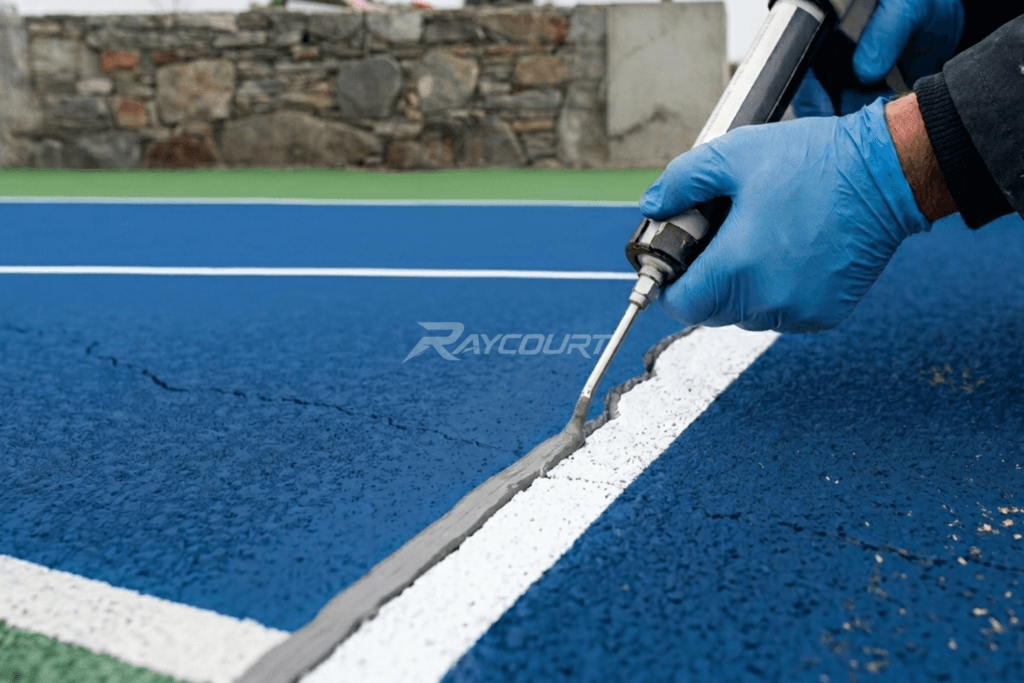
Repair products come first because coatings cannot hide defects. Acrylic crack fillers flex slightly, so they cope with small movements. Meanwhile, patch binders combine with sand and cement to create a strong levelling mix. Applicators trowel this mix into depressions and feather the edges. As a result, later coats spread evenly.
Acrylic Resurfacer
The acrylic resurfacer acts as the foundation coat. It contains acrylic binder and blends with silica sand on site. This mixture fills small voids in asphalt or concrete. In addition, it hides minor repair marks and builds a consistent texture. Consequently, colour coats bond better and cover more uniformly.
Cushion Coats
Cushion layers remain optional, yet many owners value them. These coats contain rubber granules that absorb part of each impact. Hence, players feel less strain in knees, ankles and backs. Academies with long training hours often prefer cushioned systems. Similarly, clubs with older members appreciate the gentler feel.
Colour Coats
Colour coats create the surface that players actually see and touch. They combine pure acrylic binder, pigments and graded sand. The sand grade and quantity control grip and ball speed. Moreover, quality pigments resist fading under strong sun. Applicators usually finish with multiple thin coats for even coverage.
Line Primer and Line Paint
Lines demand precision. First, a clear line primer seals the edges of the masking tape. This step stops the paint from bleeding underneath. Then, a textured line paint goes on top. The texture matters because smooth lines turn slippery when damp.
Why System Compatibility Matters
Mixing products from different sources invites trouble. For example, binders may differ in chemistry, and layers may bond weakly. In contrast, a complete system from one manufacturer works as a tested set. Raycourt designs each layer to perform with the next. Accordingly, contractors get predictable mixing, coverage and curing behaviour.
Why Water-Based Acrylic Suits Sports Courts
Modern sports coatings use water-based acrylic technology. These coatings carry little odour and clean up easily with water. Furthermore, they breathe slightly, which helps moisture vapour escape from the base. They also retain flexibility through seasonal temperature changes. Consequently, water-based acrylic remains a preferred choice for outdoor hard courts.
Expert Tip: Always request the technical data sheet for every layer. It states mixing ratios, sand grades, coverage and curing guidance for that specific product.
The Tennis Court Resurfacing Process, Step by Step
A resurfacing project follows a logical order. Each stage prepares the court for the next one. Although contractors perform the work, owners benefit from knowing the sequence. The numbered overview below shows the journey at a glance.
- Inspect the court and plan the repairs.
- Clean the entire surface thoroughly.
- Repair cracks and damaged areas.
- Level birdbaths and low spots.
- Apply the acrylic resurfacer.
- Add cushion coats, if the design includes them.
- Apply the colour coats.
- Mark and paint the playing lines.
- Cure the surface before play resumes.
Preparing the Site Before the Crew Arrives
Owners can smooth the project with a little preparation. Firstly, remove nets, benches, ball machines and windscreens if the contractor requests it. Secondly, trim overhanging branches that drop leaves onto the court. Thirdly, arrange a clean water supply and secure storage for materials. Also, inform members or residents about the closure dates. Finally, switch off sprinklers that could wet the court during work. These small actions help the crew start on time and work without interruption.
Step 1: Inspection and Planning
Good projects begin with a careful survey. The contractor checks cracks, slope, drainage and coating adhesion. Additionally, the contractor floods the court to locate birdbaths. Chalk marks around each puddle guide later patching. At this stage, owners should also confirm colours, pace preference and cushion options.
Step 2: Deep Cleaning
Coatings bond only to clean surfaces. Therefore, the crew removes dirt, leaves, algae and loose paint. Pressure washing handles most of this work. Stubborn mould may need a suitable cleaning solution and firm scrubbing. Afterwards, the court must dry completely before repairs begin.
Step 3: Crack Repair
Next, the crew cleans each crack and removes loose material. Applicators then fill the cracks with acrylic crack filler. Wider cracks may need a sand-filled patch mix in layers. Once the filler cures, the crew scrapes or sands the repair flush. Consequently, the repair line does not show through later coats.
Step 4: Levelling Low Spots
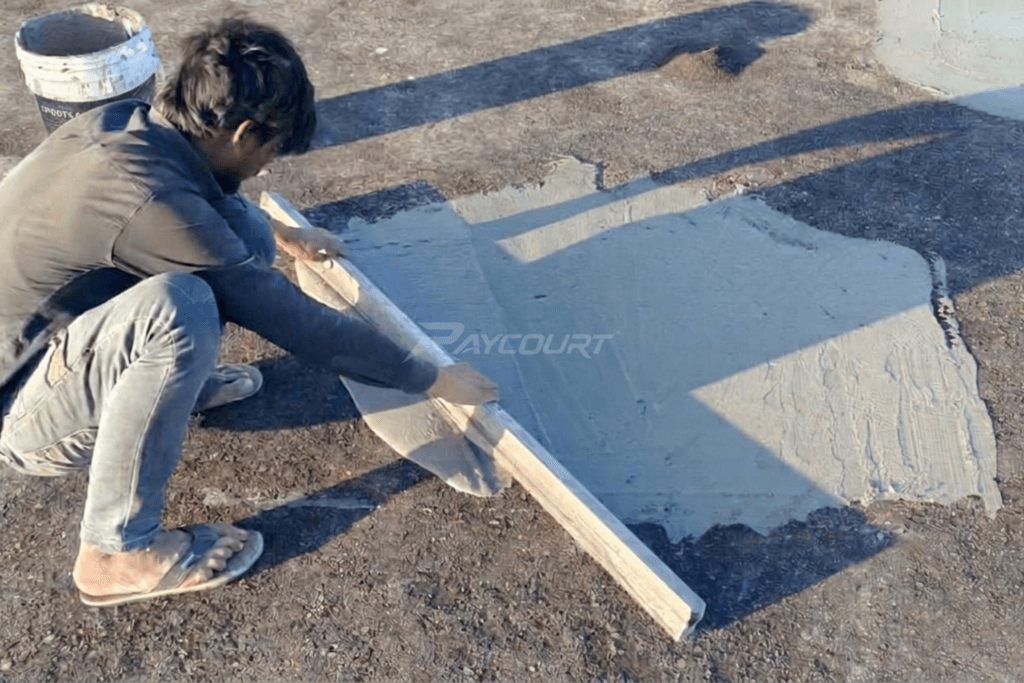
Birdbaths need a dedicated fix. The applicator primes the marked area and trowels in the patch binder mix. A straight edge helps to check the level across the depression. After curing, the edges receive light sanding for a smooth transition. This step directly improves drainage and drying time.
Step 5: Acrylic Resurfacer Application
Now the foundation coat goes down. The crew mixes the resurfacer with silica sand and water as the data sheet directs. Then, applicators spread it with a wide rubber squeegee in even passes. Depending on surface roughness, the court may need more than one coat. Each coat must dry before the next one follows.
Step 6: Cushion Layers
Cushioned systems add several rubber-filled coats at this point. Coarser granule layers usually go first, and finer layers follow. This sequence builds resilience and then smooths the texture. Importantly, each layer needs full drying time. Rushing here traps moisture and weakens the system.
Step 7: Colour Coats
The colour stage transforms the court visually. Applicators mix the colour concentrate with sand and water in the specified ratio. They then squeegee the coating in parallel passes across the court. A second coat usually runs at right angles to the first. As a result, the texture stays uniform and squeegee marks disappear.
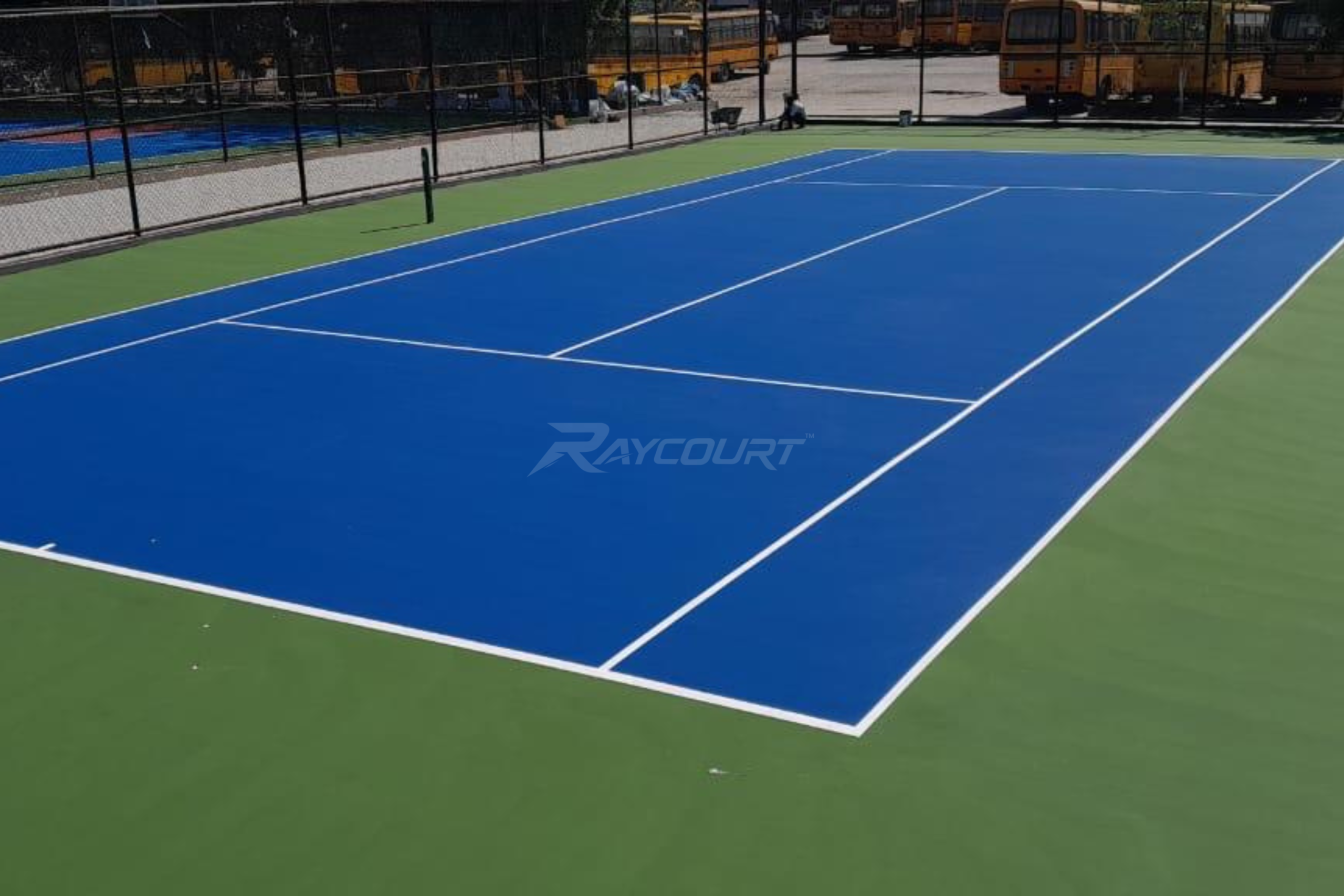
Many owners choose a two-tone layout. For instance, one colour fills the playing area, and another surrounds it. This contrast improves ball visibility and gives the court a professional look.
Step 8: Line Marking
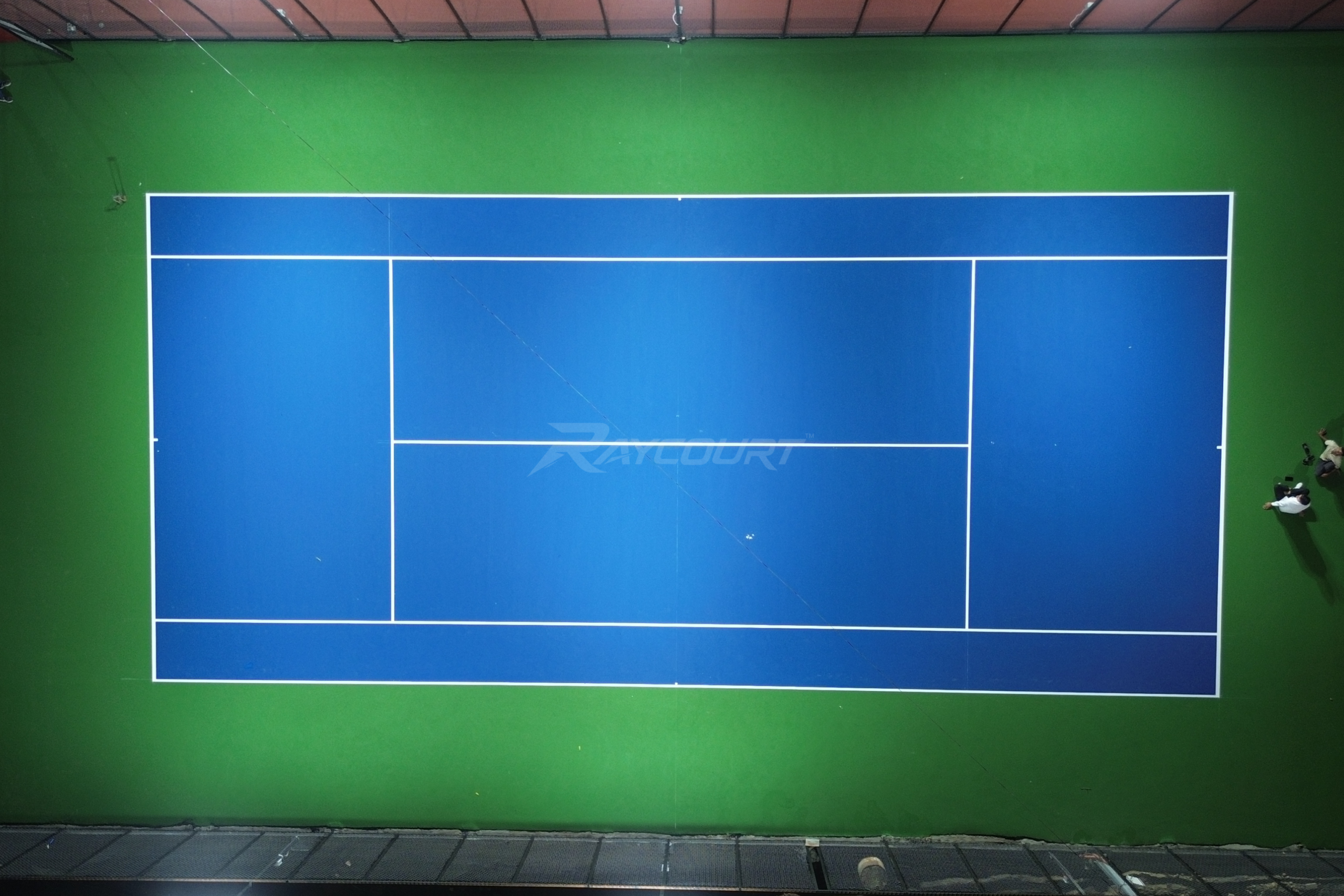
Accurate lines complete the playing surface. The crew measures and snaps the layout first. A doubles court measures 23.77 metres long and 10.97 metres wide. The singles width measures 8.23 metres. After taping, the applicator brushes on line primer and then textured line paint. Finally, the crew removes the tape carefully to reveal sharp edges.
Step 9: Curing and Handover
Fresh acrylic needs time to cure fully. During this period, the court should stay free of play, furniture and vehicles. Curing time varies with temperature, humidity and airflow. Therefore, follow the manufacturer’s guidance and the contractor’s advice before the first match. Patience at this stage protects all the work beneath.
Expert Tip: Walk the court with your contractor before handover. Check drainage with water, examine line edges, and confirm uniform colour from several angles.
Ready to build a court that performs for years to come?
Connect with Raycourt for sports flooring systems built for your project.
Choosing Pace, Cushioning and Colour During Tennis Court Resurfacing
Resurfacing offers more than restoration. In fact, it lets owners reset how the court plays and looks. Three decisions shape the outcome: pace, cushioning and colour.
Understanding Court Pace
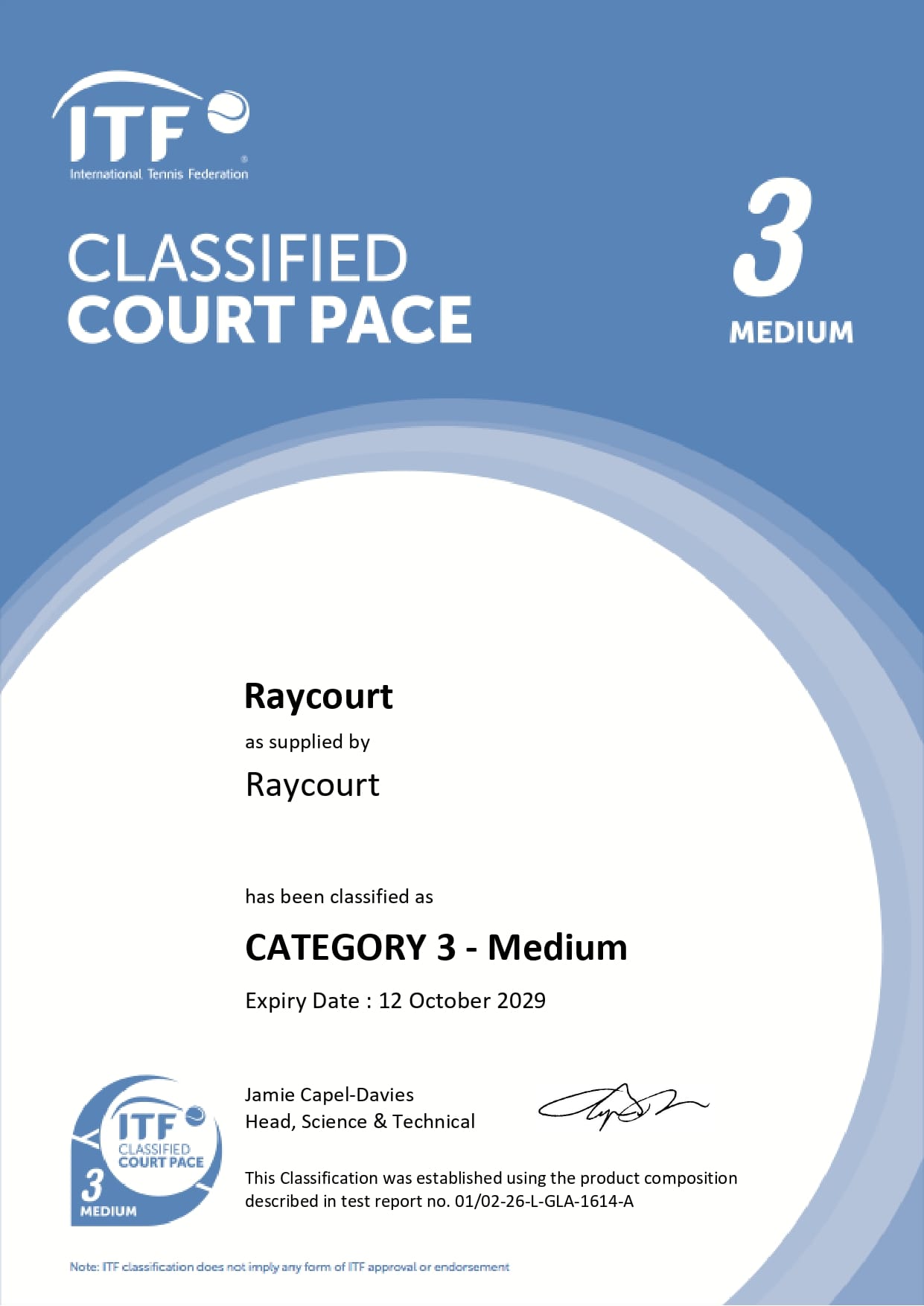
Court pace describes how the surface affects ball speed after the bounce. The International Tennis Federation (ITF) classifies surface products into five pace categories. You can explore the ITF Court Pace Classification Programme on the official ITF website. This classification rests purely on a product’s Court Pace Rating. Hence, it gives buyers an objective reference for speed.
| ITF Category | Pace Description | Typical Playing Feel |
|---|---|---|
| Category 1 | Slow | Longer rallies and more reaction time |
| Category 2 | Medium-slow | Controlled play with steady rhythm |
| Category 3 | Medium | Balanced play for all styles |
| Category 4 | Medium-fast | Quicker points and sharper exchanges |
| Category 5 | Fast | Rewards serving and attacking play |
How Sand Controls Pace
In acrylic systems, sand largely determines pace. Coarser or more sand increases friction, so the ball slows down. Conversely, finer or less sand produces a quicker surface. Therefore, the applicator must follow the specified sand grade and ratio exactly. Small changes on site can shift the playing character noticeably.
Matching Pace to Users
Different users need different speeds. Beginners and juniors usually benefit from slower courts, because they gain reaction time. Meanwhile, competitive players often prefer medium or medium-fast surfaces. Clubs with mixed membership commonly choose a medium pace. Thus, discuss the main user group with your contractor before finalising the system.
Deciding on Cushioning
Standard acrylic systems sit directly on the resurfacer. Cushioned systems, by contrast, include resilient rubber layers beneath the colour. The table below compares both options on performance factors.
| Factor | Standard Acrylic System | Cushioned Acrylic System |
|---|---|---|
| Underfoot feel | Firm | Softer and more forgiving |
| Impact on joints | Higher | Lower |
| Number of layers | Fewer | More |
| Application time | Shorter | Longer |
| Ideal users | Recreational and general play | Academies, older players and intensive training |
Both systems deliver consistent bounce and reliable grip. However, cushioning adds comfort during long sessions. Consequently, facilities with heavy daily use often select it.
Selecting Colours
Colour choice affects visibility, heat and identity. Firstly, strong contrast between ball and surface helps players track shots. Blue and green playing areas remain popular for this reason. Secondly, lighter shades tend to absorb less heat than darker ones. Thirdly, colours can reflect the identity of a club or school.
Beyond appearance, pigment quality matters greatly. UV-resistant pigments hold their shade through harsh summers. Hence, ask about fade resistance when you compare materials.
Expert Tip: View colour samples outdoors at midday and in the evening. Sunlight changes how shades appear, and floodlights change them again.
Weather, Timing and Curing for Tennis Court Resurfacing
Acrylic coatings rely on water evaporation to cure. Therefore, weather strongly influences every stage. Good planning around conditions prevents many common failures.
Choosing the Right Season
Dry, mild weather suits resurfacing best. In much of India, the months after the monsoon offer stable conditions. Likewise, the dry winter and early summer periods usually work well. In contrast, monsoon weeks bring rain, humidity and uncertain drying. Hence, schedule the project well ahead of the rainy season.
Temperature and Surface Heat
Coatings behave differently as temperatures change. Cold conditions slow curing and may prevent proper film formation. On the other hand, extreme surface heat dries the coating too quickly. Rapid drying causes streaks, poor levelling and weak bonding. For this reason, crews often work in the morning and late afternoon during summer.
Rain, Dew and Humidity
Rain on a fresh coat can wash material away or leave marks. Similarly, heavy dew settles on uncured layers overnight. High humidity also extends drying time between coats. Accordingly, contractors check forecasts closely and stop early when clouds build. Each coat needs enough dry hours before evening moisture arrives.
Wind and Dust
Strong wind creates its own problems. It dries edges faster than the centre and carries dust onto wet coatings. Leaves and debris then stick in the finish. Windbreak screens on fences reduce this risk. Additionally, the crew should clean the court again before every coat.
Weather Checklist Before Each Coat
- Confirm a dry forecast for the working day.
- Check that the surface feels completely dry.
- Avoid the hottest hours on summer days.
- Watch for evening dew in cooler months.
- Remove dust and leaves before mixing material.
Expert Tip: Never judge readiness by touch alone. A coat may feel dry on top while moisture remains below, so respect the full recoat interval.
How Long Until Play Resumes?
Owners naturally want a firm date. However, curing depends on coat thickness, shade, airflow and weather. Courts in open, sunny, breezy sites cure faster than shaded ones. Generally, contractors recommend waiting several days after the final coat. Furthermore, heavy items such as umpire chairs should return last. A little patience ensures the surface reaches full hardness.
Common Mistakes to Avoid in Tennis Court Resurfacing
Most resurfacing failures trace back to a few repeated errors. Fortunately, awareness helps owners prevent them.
Skipping Surface Preparation
Preparation takes time, and some crews rush it. However, coatings applied over dirt, algae or loose paint soon peel. Likewise, unfilled cracks reappear within months. Therefore, insist on thorough cleaning and repair before any coating begins.
Ignoring Drainage Problems
Fresh colour cannot fix standing water. If birdbaths remain, moisture will attack the new surface quickly. Similarly, blocked perimeter drains push water back onto the court. Hence, treat levelling and drainage as essential parts of the job.
Incorrect Mixing on Site
Acrylic products need accurate dilution and sand loading. Too much water weakens the film and dulls the colour. Conversely, too little water makes spreading difficult and leaves ridges. Wrong sand grades also change pace and grip. For that reason, crews should measure every batch carefully.
Applying Coats Too Thickly
Thick coats seem efficient, yet they cure poorly. The top skins over while the layer beneath stays soft. Eventually, the coating may crack or blister. Multiple thin coats always outperform one heavy coat.
Rushing Between Coats
Each layer must dry before the next arrives. Otherwise, trapped moisture weakens adhesion throughout the system. Although deadlines create pressure, proper intervals protect the result.
Using Unsuitable Materials
Not every paint suits a tennis court. General-purpose paints lack the binder strength, texture and UV stability that courts demand. As a result, they wear quickly and turn slippery. Purpose-made sports acrylic systems solve these problems by design.
Ready to build a court that performs for years to come?
Connect with Raycourt for sports flooring systems built for your project.
Choosing Materials and Partners for Tennis Court Resurfacing
Two choices largely determine the outcome. The first involves the material system, and the second involves the applicator.
What to Look for in a Material System
Evaluate materials against clear performance criteria:
- Pure acrylic binders for strong adhesion and flexibility.
- UV-stable pigments for lasting colour.
- Consistent sand compatibility for predictable texture and pace.
- ITF Classification as an objective reference for pace.
- Complete system availability, from crack filler to line paint.
- Clear technical data sheets and responsive manufacturer support.
- Reliable supply, so the project never stalls midway.
What to Look for in a Contractor
A skilled applicator turns good material into a good court. Therefore, ask about training, equipment and experience with acrylic systems. Additionally, request a written scope that lists every step. A transparent contractor explains repairs, coat numbers and curing plans openly.
Questions to Ask Before Work Begins
A short conversation prevents many misunderstandings. Raise these questions with your contractor early:
- Which repairs does the court need before coating?
- How will the crew find and level birdbaths?
- Which acrylic system will the crew apply, and in how many coats?
- Which sand grade will set the pace?
- How will weather affect the schedule?
- How long should the court rest before play?
- Which maintenance routine do you recommend afterwards?
Clear answers show that the contractor understands the system. Moreover, a written scope keeps everyone aligned.
How Raycourt Supports Resurfacing Projects
Raycourt focuses entirely on manufacturing sports court flooring materials. Our range covers the full acrylic system for hard courts. Moreover, our products carry ITF Classification for court pace. We share technical guidance with contractors, so they can apply each layer correctly. Our team also coordinates dispatch, so materials reach project sites on schedule.
Because we do not install courts, our advice stays centred on material performance. Consequently, owners and contractors receive clear, product-focused support at every stage.
Expert Tip: Bring the manufacturer into the conversation early. Material guidance at the planning stage prevents avoidable rework later.
Tennis Court Resurfacing for Different Facilities
Every facility uses its courts differently. Therefore, resurfacing priorities shift from one setting to another.
Tennis Academies
Academies run long coaching blocks every day. Baselines and service boxes consequently wear faster than other zones. Cushioned systems help young athletes train longer with less strain. Additionally, a medium pace supports all-round skill development. Academy managers should also plan resurfacing around tournament and admission calendars.
Schools and Colleges
Institutions need durable, low-maintenance surfaces. Students of varied ability share the same courts. Hence, dependable grip and clear lines take priority. Many campuses also add markings for other sports to maximise use. Holiday periods offer a convenient window for the work.
Clubs and Sports Complexes
Clubs serve members who expect consistent quality. Accordingly, colour, comfort and pace all influence satisfaction. Clubs with several courts can resurface them in phases. This approach keeps some courts open while others cure.
Residential Communities and Hotels
Courts in housing societies and hotels see casual, mixed use. Here, appearance and safety matter most. Bright, fade-resistant colours lift the look of the whole property. Furthermore, simple maintenance routines suit facilities without dedicated ground staff.
Caring for Your Court After Tennis Court Resurfacing
A resurfaced court rewards regular care. Simple habits extend its life and keep play consistent. Moreover, they delay the next resurfacing cycle.
Routine Cleaning
Dirt acts like sandpaper under shoes. Therefore, sweep or blow the court regularly to remove grit and leaves. Rinse the surface with clean water from time to time. For stubborn marks, use a mild detergent and a soft brush. Avoid harsh chemicals and stiff wire brushes, because they damage the coating.
Managing Water and Organic Growth
Standing water remains the main enemy. After rain, push puddles off with a soft squeegee or roller. Also, keep drains and channels clear throughout the year. In shaded, damp corners, algae and moss may appear. Treat these early with a suitable cleaner before they spread.
Sensible Court Rules
Clear rules prevent accidental damage. Consider displaying the following guidelines at the gate:
- Wear non-marking tennis shoes only.
- Keep food, gum and sugary drinks off the court.
- Lift benches and chairs instead of dragging them.
- Place pads under heavy equipment legs.
- Keep bicycles, skates and vehicles away.
- Report damage to the facility manager promptly.
Seasonal Care Calendar
Care needs change through the year. Therefore, a simple seasonal plan keeps the court ahead of the weather.
| Season | Key Care Tasks |
|---|---|
| Before monsoon | Clear drains, trim nearby trees and seal small cracks |
| During monsoon | Remove puddles, watch for algae and limit debris |
| After monsoon | Wash the court, inspect for damage and treat stains |
| Summer | Sweep often, check for fading and monitor texture |
Periodic Professional Inspection
Even well-kept courts benefit from expert eyes. Ask a qualified contractor to inspect the surface periodically. Early crack sealing and touch-ups stop minor issues from growing. Furthermore, an inspection record helps you plan the next resurfacing at the right moment.
Expert Tip: Deal with small cracks as soon as they appear. Prompt sealing keeps water out and preserves the layers beneath.
Quick Answers on Tennis Court Resurfacing
This section answers focused questions in short, scannable form.
Can You Resurface Over an Old Acrylic Coating?
Yes, in most cases. Sound, well-bonded acrylic provides a suitable base for new coats. However, the crew must first remove loose, peeling or flaking material. Thorough cleaning and repair then follow. If large areas have lost adhesion, the contractor may recommend removing more of the old coating.
Does Resurfacing Work on Both Asphalt and Concrete?
Yes, acrylic systems suit both base types. Nevertheless, each base needs specific preparation. Concrete often requires surface profiling and a suitable primer for strong bonding. Asphalt needs a stable, well-compacted surface. Therefore, tell your material supplier which base you have.
Is Repainting the Same as Resurfacing?
No, although people often use the terms loosely. Repainting simply adds new colour over the existing surface. Resurfacing, however, includes cleaning, crack repair, levelling and a resurfacer coat before colour. Therefore, repainting suits only courts with sound texture and no defects. Most ageing courts need the complete resurfacing sequence.
Will Resurfacing Fix Structural Cracks Permanently?
Not always. Crack fillers seal and smooth cracks effectively. Yet base movement can reopen structural cracks over time. Specialised crack repair membranes can extend the result. Even so, honest contractors explain that moving cracks may return.
Can a Tennis Court Double as a Multi-Sport Court?
Certainly. During resurfacing, the applicator can add lines for other sports in contrasting colours. Pickleball lines remain a popular addition on tennis courts. However, too many lines create visual clutter. Hence, limit extra markings to the sports you truly play.
How Does Resurfacing Affect Ball Bounce?
A uniform coating restores consistent bounce across the court. Patching removes dips that deaden or deflect the ball. Meanwhile, fresh texture standardises friction in every zone. Consequently, players read the ball more reliably after resurfacing.
Should You Replace Net Posts and Fixtures at the Same Time?
Often, yes. Resurfacing provides convenient access to posts, sleeves and centre anchors. Loose or corroded fittings disturb the new coating if someone replaces them later. Hence, complete such work before the colour coats go down. Similarly, repair fencing and drains ahead of the coating stage.
Is Indoor Court Resurfacing Different?
The layer sequence stays the same indoors. However, indoor courts face little sun or rain, so they wear more slowly. Ventilation becomes the key factor, because coatings need airflow to cure. Accordingly, crews use fans and open doors to move air.
Frequently Asked Questions
Most outdoor acrylic courts need resurfacing every few years. However, usage, climate, drainage and maintenance all influence the timing. Therefore, inspect the surface regularly and act when grip, colour or drainage declines.
The duration depends on court condition, system type and weather. For example, extensive cracks, cushion layers or rain add time. Your contractor can estimate a realistic schedule after inspecting the court.
Resurfacing uses a complete acrylic system. It typically includes crack filler, patch binder, acrylic resurfacer, colour coats, line primer and line paint. Importantly, all layers should come from one compatible range.
No. Raycourt manufactures synthetic acrylic sports court flooring materials and does not install them. Instead, independent contractors and trained applicators carry out the site work.
Players should wait until the coating cures fully. Generally, contractors advise a waiting period of several days after the final coat. However, always follow the guidance from your contractor and the material data sheet.
Conclusion: Plan Tennis Court Resurfacing Before Problems Grow
Tennis court resurfacing restores far more than colour. It renews grip, bounce, drainage and safety across the entire playing area. Furthermore, it shields the base from water and extends the life of the court.
The best results come from three things working together. Firstly, a sound base gives the coatings a stable home. Secondly, a compatible acrylic system delivers lasting performance. Thirdly, a skilled applicator follows each step with care. When these elements align, the court serves players reliably for years.
Owners play an important role too. Regular inspections reveal problems early, and timely action keeps repairs manageable. Likewise, sensible maintenance protects the fresh surface season after season.
Raycourt supports this journey as a dedicated manufacturer of synthetic acrylic sports court flooring materials. Our ITF Classified systems give contractors dependable products for every layer. Ultimately, quality materials and correct application together create courts that players love.
Ready to build a court that performs for years to come?
Connect with Raycourt for sports flooring systems built for your project.