
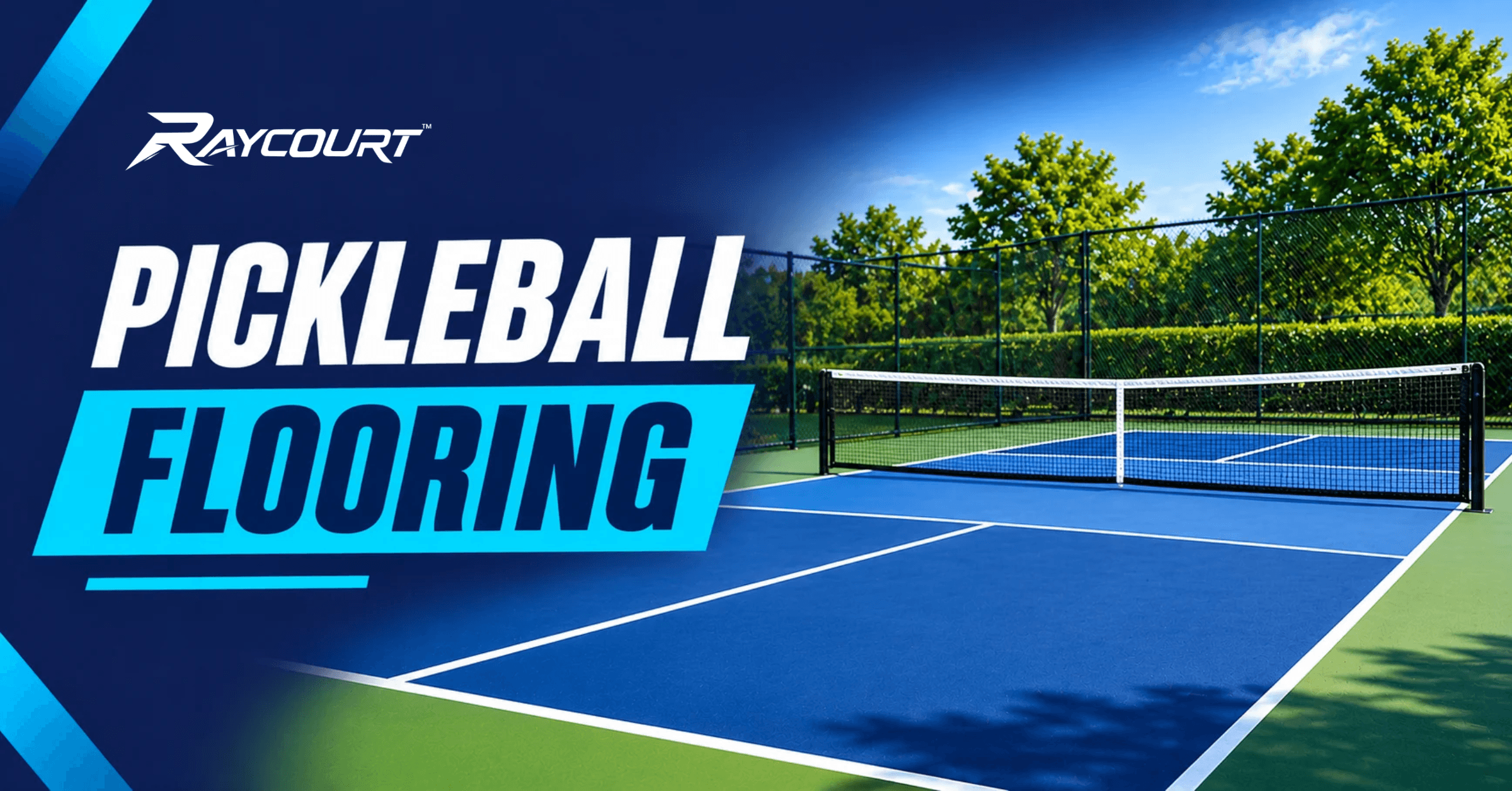
The best pickleball flooring for most venues is a cushioned synthetic acrylic system over a sound concrete or asphalt base. This surface offers consistent ball bounce, dependable traction and comfort underfoot. Moreover, it resists sun, rain and heavy foot traffic far better than bare concrete or temporary tiles. So, if you want one clear answer, a quality acrylic system remains the industry benchmark.
However, every court project carries its own demands. A rooftop club in Mumbai faces different challenges than a school court in Ahmedabad. Similarly, a competitive academy needs a different feel than a residential society court. Therefore, the right choice depends on your climate, your players and how often the court sees play.
In this guide, we explain everything you need to know about pickleball flooring. First, we cover what the term actually means and why the surface matters so much. Next, we compare the main flooring types side by side. After that, we break down each layer of an acrylic system and the performance factors behind it.
Finally, we look at indoor and outdoor needs, Indian weather conditions, court markings and maintenance. Along the way, you will find expert tips, quick answers and detailed FAQs. By the end, you will know exactly what to ask for when you specify your next pickleball court.
Understanding Pickleball Flooring
Before you compare products, it helps to understand what pickleball flooring really includes. Many people picture only the coloured top coat. In reality, the playing surface works as a complete system of layers. Each layer plays a specific role in how the court looks, feels and lasts.
What Pickleball Flooring Actually Means
Pickleball flooring refers to the finished playing surface of a pickleball court. It sits on top of a structural base, usually concrete or asphalt. For outdoor and most indoor courts, it consists of several coatings that bond together into one seamless finish.
A typical system includes a primer, one or more resurfacer coats, optional cushion layers, textured colour coats and line paint. Together, these layers create a smooth, even, textured plane. Moreover, they protect the base below from water, UV rays and abrasion.
In contrast, some temporary courts use modular plastic tiles or roll-out mats. These products suit events and short-term setups. Nevertheless, they rarely match the feel and longevity of a bonded acrylic surface. Indoor sports halls sometimes use hardwood or polyurethane floors as well. These floors serve many sports at once, so pickleball becomes one use among several.
Ultimately, the best flooring choice balances three priorities. Players need a safe, predictable surface. Owners need durability and easy upkeep. Meanwhile, coaches and clubs want a court that feels the same every day.
Why the Surface Shapes Every Rally
Pickleball relies on control, placement and quick reactions. Players dink softly at the kitchen line, then switch to fast drives within seconds. Consequently, the surface directly affects how the ball behaves on every shot.
A surface with too little texture makes the ball skid and speeds up play unpredictably. On the other hand, a surface with too much texture grabs the ball and slows rallies. Likewise, uneven spots or soft patches create dead spots where the ball bounces low. These flaws frustrate players and disrupt fair competition.
Footwork matters just as much. Pickleball involves short sprints, lateral shuffles and sudden stops. A surface with balanced traction lets players move confidently without slipping or sticking. Furthermore, a cushioned surface reduces the impact on knees, ankles and the lower back.
This point matters even more because pickleball attracts players of every age. Many regular players are older adults or beginners returning to sport. For them, joint comfort and slip resistance directly affect safety and enjoyment. Therefore, the flooring decision shapes not only performance but also who keeps playing.
Expert Tip: Always judge a pickleball surface by how it plays, not just how it looks. Ask your material supplier about texture, pace and cushioning before you finalise colours.
Types of Pickleball Flooring
Several surface types can host pickleball. However, each one suits a different setting and level of play. Below, we explain the main options and where each one makes sense.
Hard Court Synthetic Acrylic Flooring
Synthetic acrylic flooring remains the most popular choice for outdoor pickleball courts worldwide. It combines water-based acrylic resins with silica sand and pigments. Installers apply these coatings in thin layers over concrete or asphalt.
The result feels firm, fast and highly consistent. Moreover, the textured top coat provides excellent grip for quick lateral movement. Acrylic systems also resist UV fading and weathering well. Consequently, they hold their colour and playing character for years with basic care.
Another major advantage lies in flexibility. Owners can choose from a wide range of colours and texture levels. As a result, clubs can match their branding or create clear visual contrast for players.
Cushioned Acrylic Flooring
Cushioned acrylic flooring builds on the standard acrylic system. It adds several layers of rubber-filled acrylic between the base and the colour coats. These rubber granules give the surface a slight give underfoot.
This added cushioning absorbs part of the impact from each step and landing. Therefore, players feel less fatigue during long sessions. In addition, the softer layer slightly dampens noise, which helps courts near homes. Many premium clubs and academies now prefer cushioned systems for exactly these reasons.
The number of cushion layers controls the comfort level. More layers mean more shock absorption, while fewer layers keep the surface firmer and faster.
Modular Interlocking Tiles
Modular tiles snap together over an existing flat surface. They suit temporary courts, events and spaces where permanent coatings do not fit. Additionally, they drain quickly because of their perforated design.
However, tiles produce a different ball bounce and a hollow sound. Their joints can also shift over time. For these reasons, serious players often prefer bonded acrylic surfaces.
Hardwood and Polyurethane Indoor Floors
Many indoor halls already have hardwood or polyurethane (PU) floors. These surfaces serve basketball, badminton and volleyball as well. Pickleball works on them with temporary nets and taped lines.
Nevertheless, these floors can feel slippery with pickleball balls and footwear. Hardwood also needs careful protection from moisture. So, dedicated pickleball venues usually choose acrylic systems instead.
Bare Concrete and Asphalt
Some community courts use bare concrete or asphalt without any coating. This option offers a playable surface in the short term. However, it lacks texture control, cushioning and UV protection. It also cracks and wears faster, and it feels harsh on joints. Therefore, we always recommend a proper coating system over any bare base.
Pickleball Flooring Comparison at a Glance
The table below compares the main pickleball flooring types on playing performance.
| Flooring Type | Best Setting | Ball Bounce | Comfort | Weather Resistance | Ideal For |
|---|---|---|---|---|---|
| Synthetic acrylic | Outdoor and indoor | Very consistent | Firm | Excellent | Clubs, schools, public courts |
| Cushioned acrylic | Outdoor and indoor | Very consistent | High | Excellent | Academies, premium clubs, seniors |
| Modular tiles | Temporary setups | Moderate | Moderate | Good | Events, short-term courts |
| Hardwood or PU | Indoor multi-sport | Good | Moderate to high | Indoor only | Shared sports halls |
| Bare concrete or asphalt | Basic outdoor | Variable | Low | Poor | Casual or interim play |
As the table shows, acrylic systems lead on consistency and weather resistance. Meanwhile, cushioned acrylic adds the comfort that many players now expect.
Ready to build a court that performs for years to come?
Connect with Raycourt for sports flooring systems built for your project.
Inside an Acrylic Pickleball Flooring System
A quality acrylic court does not come from a single coat of paint. Instead, it relies on several engineered layers that work together. Each layer builds on the one beneath it. Therefore, a weakness at any stage affects the whole court.
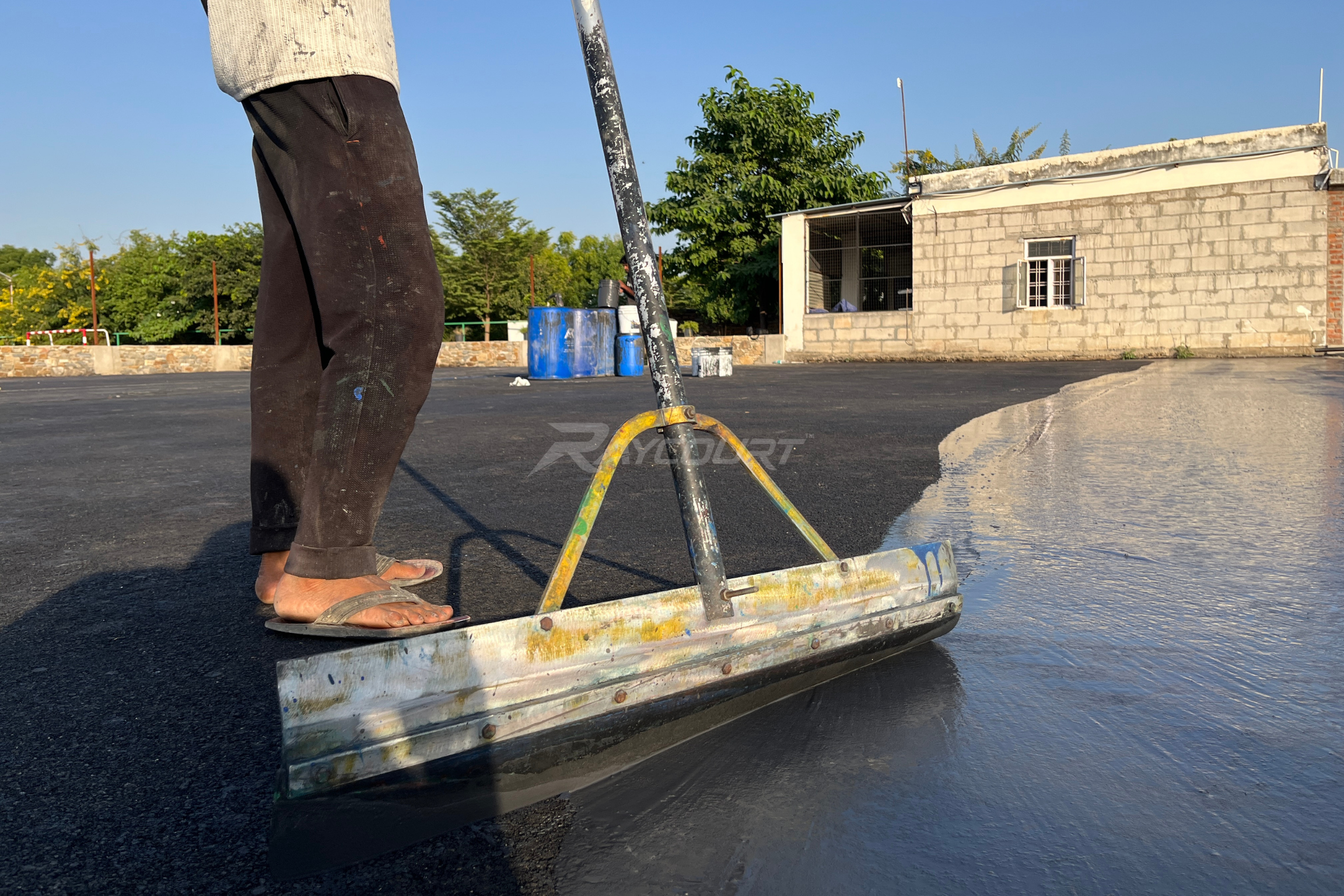
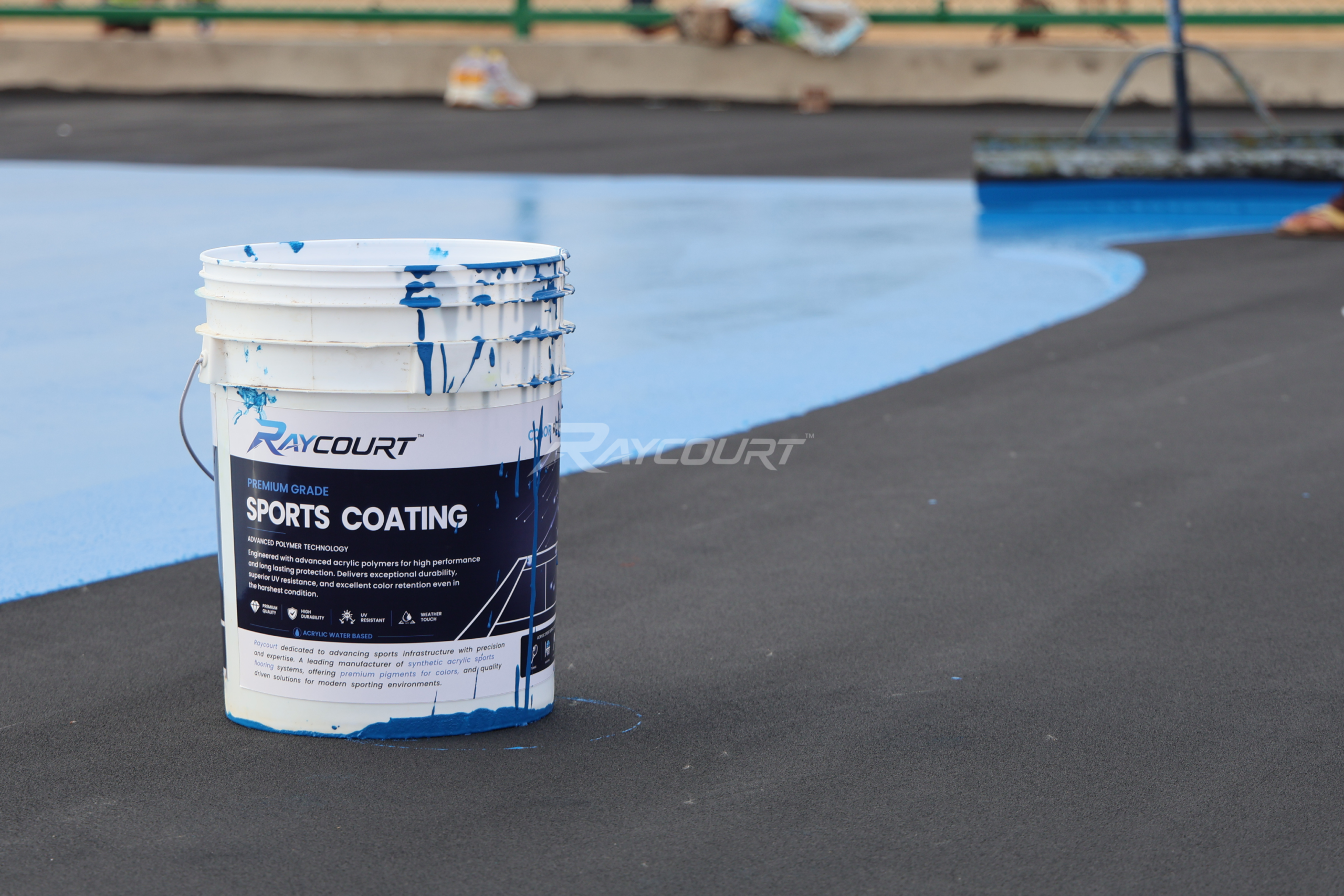
Raycourt manufactures the coating materials for every stage of this system. Your appointed installation contractor then applies them on site. This clear division keeps material quality and site workmanship in expert hands.
Layer by Layer: How the System Builds Up
The sequence below shows a typical cushioned acrylic pickleball flooring system, from the base upwards.
- Prepared base: A cured, level concrete or asphalt slab with correct slopes for drainage.
- Primer: A bonding coat that helps the acrylic layers grip the base firmly.
- Crack filler and patch binder: Materials that fill joints, cracks and low spots before coating.
- Acrylic resurfacer: A sand-filled coat that smooths the base and evens out its texture.
- Cushion layers: Rubber-filled acrylic coats that add comfort and shock absorption.
- Textured colour coats: Pigmented acrylic layers that set the court’s pace, grip and appearance.
- Line paint: A durable, sharp-edged paint for boundary, centre and kitchen lines.
For a non-cushioned court, the contractor simply skips the cushion layers. Everything else follows the same logic.
Why the Base Matters So Much
Even the best coating cannot hide a poor foundation. Cracks, birdbaths and uneven slopes will eventually show through the surface. So, base quality determines how long the court performs well.
For concrete, the slab needs enough curing time before coating begins. It also needs proper reinforcement and controlled joints. For asphalt, the mix and compaction must suit sports use. In both cases, a gentle slope lets rainwater run off instead of pooling.
Expert Tip: Ask your contractor to flood-test the base before coating. Any water that stays in place after drying time points to a low spot that needs correcting.
The Role of Primers and Resurfacers
The primer acts as the handshake between the base and the coating. Without it, the acrylic layers may lift or peel over time. Consequently, the right primer for concrete or asphalt makes a real difference.
Next, the acrylic resurfacer fills tiny pores and surface irregularities. It creates a uniform, slightly textured canvas for later coats. Moreover, it improves the bond and helps colour coats spread evenly. Most courts need two resurfacer coats for the best result.
Cushion Layers Explained
Cushion layers contain rubber granules within an acrylic binder. Installers apply them in successive coats, letting each one dry fully. Each added layer increases comfort and reduces impact forces on players’ joints.
Importantly, cushioning does not make the ball bounce poorly. The top colour coats still provide a firm, even playing face. As a result, players enjoy comfort without losing control.
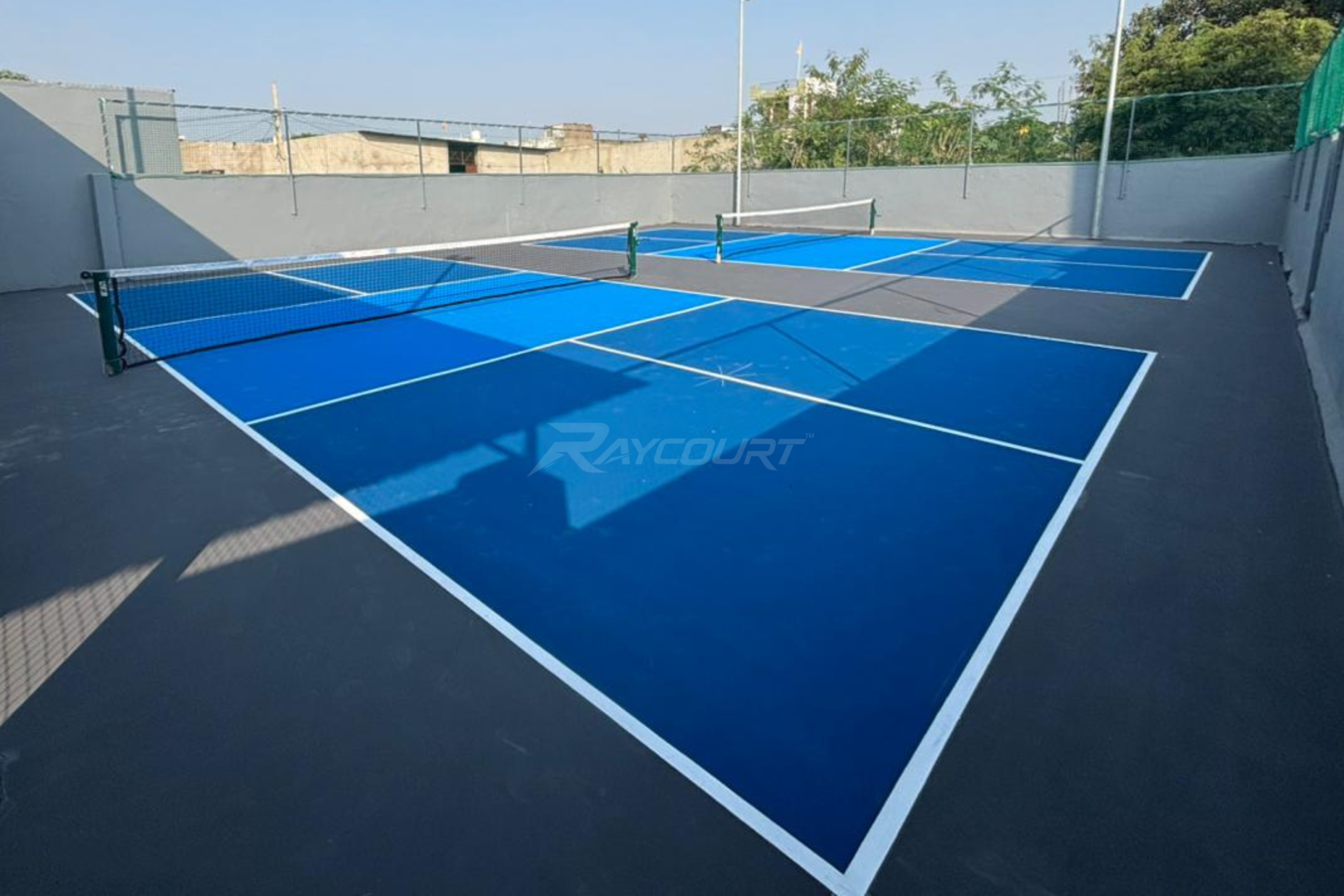
Textured Colour Coats and Line Paint
The colour coats carry the most visible and most important job. They contain graded silica sand that sets the surface texture. More sand produces a slower, grippier court. Less sand produces a faster, smoother court.
Finally, line paint marks the court boundaries. Good line paint matches the texture of the surrounding surface. This prevents slippery lines that catch players out during quick movements.
Key Performance Factors in Pickleball Flooring
Once you understand the layers, the next question becomes simple. How should the finished court actually perform? Five factors decide the answer. Below, we explain each one and why it matters.
Court Pace and Surface Speed
Court pace describes how quickly the ball travels after it bounces. It depends mainly on surface texture and the friction between ball and court. A smoother surface lets the ball skid and keep its speed. A rougher surface grips the ball and slows it down.
For pickleball, most players prefer a medium pace. This setting rewards both soft dinks and aggressive drives. Too fast, and rallies end quickly with little strategy. Too slow, and powerful shots lose their punch.
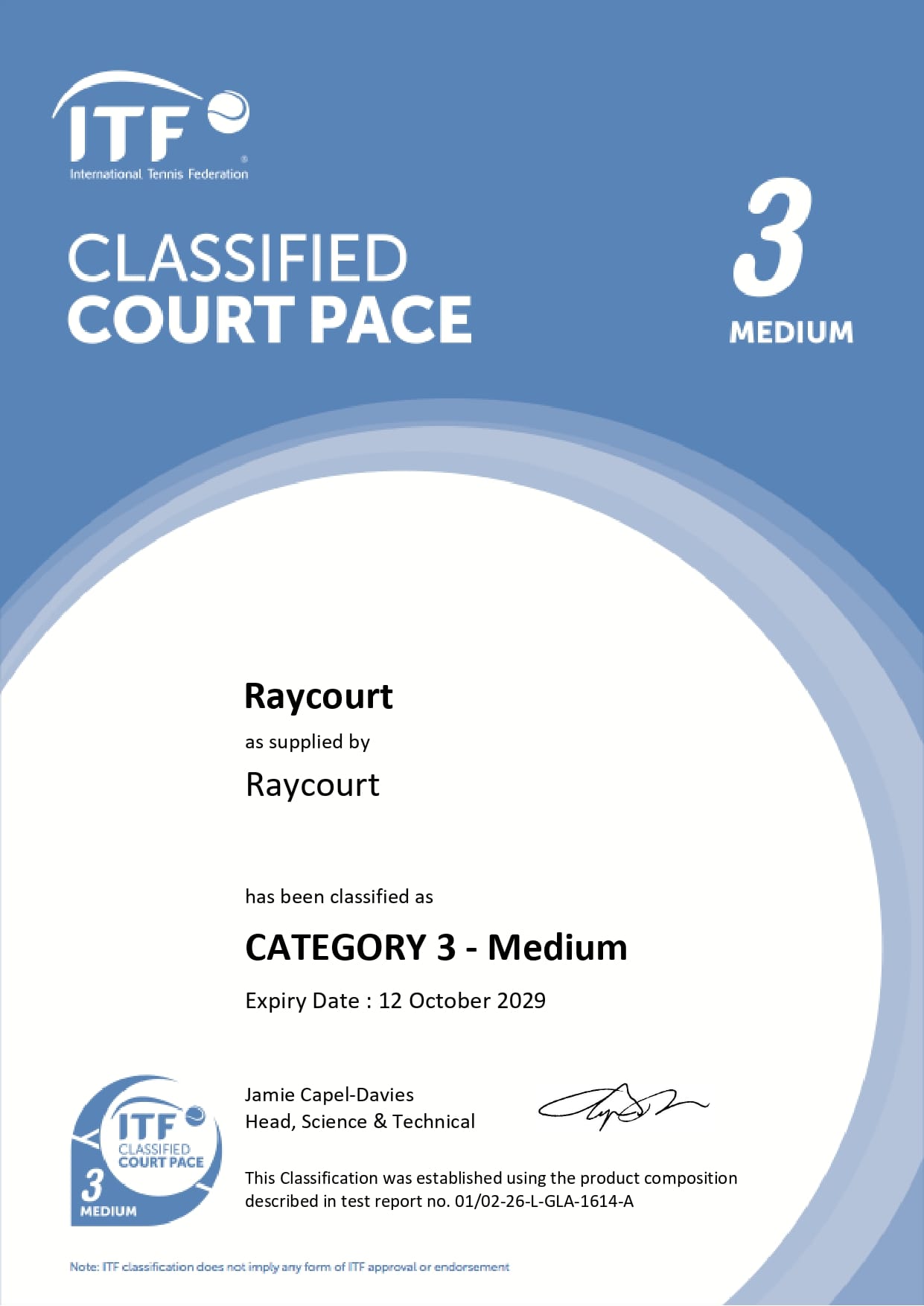
Raycourt’s ITF Classified status reflects how seriously we treat surface pace. Although the ITF classification comes from tennis, the same science applies to pickleball surfaces. In short, it shows that our materials meet a recognised international benchmark for pace testing.
Traction and Slip Resistance
Traction means the grip between a player’s shoe and the court. Pickleball involves constant lateral shuffles and quick stops near the kitchen line. Therefore, players need confident grip without feeling stuck.
Too little traction leads to slips, especially in humid conditions or light moisture. On the other hand, too much traction can strain ankles and knees. A well-balanced textured acrylic finish sits comfortably between these extremes.
Importantly, traction should stay consistent across the whole court. Lines, borders and playing areas should all feel the same underfoot. That consistency builds player trust and reduces injury risk.
Ball Bounce Consistency
Players expect the ball to bounce the same way everywhere on the court. Bounce consistency depends on a flat base and evenly applied coatings. Any soft patch, bubble or low spot creates a dead area.
Pickleball balls are light and plastic, so they react strongly to surface flaws. Even small inconsistencies can change the bounce height noticeably. That is why careful base preparation and even coating thickness matter so much.
Shock Absorption and Player Comfort
Every step, lunge and landing sends force through a player’s body. Hard surfaces return most of that force to the joints. In contrast, cushioned surfaces absorb part of it.
Shock absorption brings real benefits for regular players. They feel less soreness after long sessions. Moreover, they can play more often without joint discomfort. For academies and clubs with older members, this comfort can make a huge difference.
Many venues now treat cushioning as standard rather than optional. That trend reflects how pickleball attracts players across every age group.
UV Stability and Colour Retention
Outdoor courts face intense sunlight for much of the year. Poor-quality coatings fade, chalk and lose their texture under UV exposure. As a result, the court looks tired and plays inconsistently.
High-quality acrylic coatings use UV-stable pigments and binders. These resist fading and keep the surface texture intact for longer. Consequently, the court stays attractive and playable through many seasons.
Here is a quick summary of the five performance factors:
- Court pace: Controls ball speed after the bounce; medium pace suits most pickleball play.
- Traction: Balances grip and freedom of movement for safe footwork.
- Bounce consistency: Keeps every part of the court playing the same way.
- Shock absorption: Reduces joint strain and fatigue for regular players.
- UV stability: Preserves colour and texture under strong sunlight.
Expert Tip: When you compare pickleball flooring materials, request technical data for each factor above. A reliable manufacturer will share clear product specifications without hesitation.
Indoor vs Outdoor Pickleball Flooring
Pickleball thrives both indoors and outdoors. However, each setting places different demands on the flooring. Understanding these differences helps you specify the right system from the start.
Outdoor Pickleball Flooring Needs
Outdoor courts face sun, rain, dust and wide temperature swings. So, the surface must resist UV damage, shed water quickly and hold its texture. Synthetic acrylic systems handle these challenges especially well.
Drainage becomes critical outdoors. The base needs a correct slope so water runs off the playing area. Moreover, the acrylic surface must remain breathable enough to avoid blistering from trapped moisture.
Outdoor courts also benefit from lighter colours that reflect heat. Lighter surfaces stay cooler underfoot during hot afternoons. That makes play more comfortable during summer months.
Indoor Pickleball Flooring Needs
Indoor courts escape harsh weather but face other challenges. Lighting, ball visibility and noise all matter more indoors. In addition, indoor courts often share space with other sports.
Acrylic systems work very well on indoor concrete slabs. They provide the same pace and bounce as outdoor courts. Consequently, players can move between indoor and outdoor venues without adjusting their game.
Cushioned acrylic proves especially popular indoors. It softens footfall noise in enclosed halls. Furthermore, it adds comfort for the long, back-to-back sessions common at indoor clubs.
Indoor and Outdoor Comparison
| Factor | Outdoor Courts | Indoor Courts |
|---|---|---|
| Main challenge | UV, rain, heat and dust | Noise, lighting and shared use |
| Drainage | Essential slope and runoff | Minimal requirement |
| Recommended system | UV-stable acrylic, cushioned or standard | Cushioned acrylic for comfort and acoustics |
| Colour choice | Lighter tones to reduce heat | High-contrast tones for visibility |
| Maintenance focus | Debris, algae and standing water | Dust and shoe marks |
Pickleball Flooring for Indian Climate Conditions
India presents some of the toughest conditions for any outdoor sports surface. Courts must endure extreme heat, heavy monsoons and fine dust. Therefore, pickleball flooring here needs more resilience than in milder climates.
Handling Extreme Summer Heat
Summer surface temperatures can climb sharply across Gujarat, Rajasthan and Maharashtra. Poor coatings soften, fade or crack under this heat. Quality acrylic binders, however, remain stable and flexible.
Lighter colour choices also help manage heat. A light blue or light green court absorbs less heat than dark tones. As a result, players stay more comfortable during warm evening sessions.
Coping With Monsoon Rains
Monsoon rains test drainage and coating adhesion at the same time. Water must leave the court quickly to prevent damage and algae growth. So, correct base slopes and a well-bonded system become essential.
Acrylic surfaces dry quickly once the rain stops. Consequently, play can resume sooner than on many other surfaces. Regular cleaning after the monsoon also keeps the texture free of silt and moss.
Managing Dust and Abrasion
Dust and fine grit act like sandpaper on a court surface. Over time, they wear down texture and dull colours. Regular sweeping and gentle washing slow this wear considerably.
Raycourt formulates its materials with Indian conditions firmly in mind. Our coatings aim to hold their texture, colour and bond through heat, rain and dust. Moreover, our warehouse network supports timely material supply for projects across western and central India.
Expert Tip: Plan coating work for a dry, moderate-weather window. Applying acrylic layers in extreme heat or during monsoon showers can affect curing and adhesion.
Court Dimensions, Lines and Colour Choices
Great flooring needs accurate markings to deliver a proper game. So, it helps to know the official court layout before planning colours and lines.
Standard Pickleball Court Dimensions
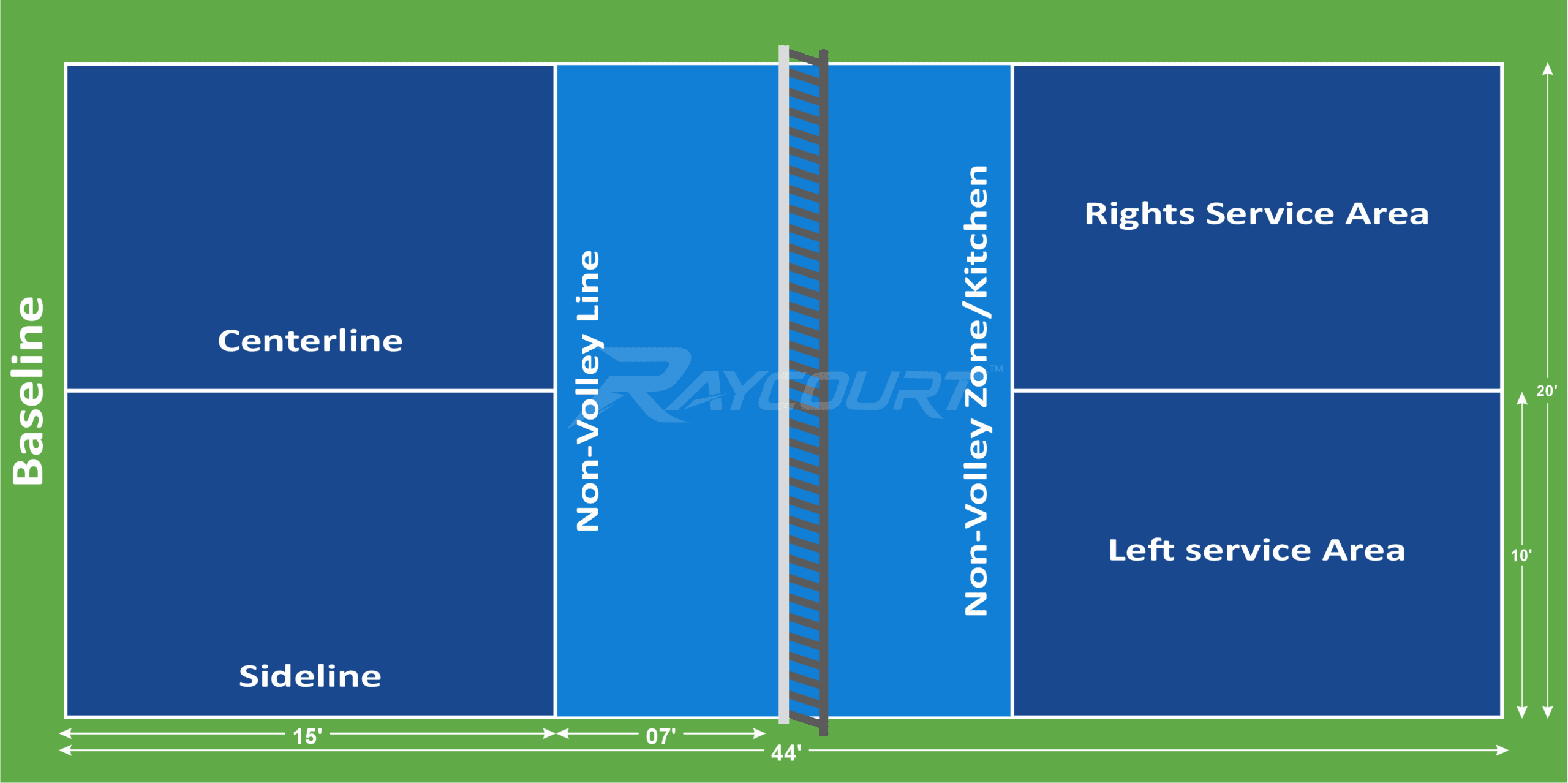
USA Pickleball governs the sport in the United States. According to its rules, a standard court measures 20 feet by 44 feet. This size applies to both singles and doubles. The table below summarises the key measurements.
| Court Element | Measurement |
|---|---|
| Court width | 20 ft (6.10 m) |
| Court length | 44 ft (13.41 m) |
| Non-volley zone (kitchen) depth | 7 ft (2.13 m) from the net on each side |
| Net height at sidelines | 36 in (91.4 cm) |
| Net height at centre | 34 in (86.4 cm) |
| Line width | 2 in (5.08 cm) |
Beyond the lines, the full playing area needs extra run-off space. Most planners allow generous room around the court for safe movement. Therefore, always confirm the total surface area with your contractor before ordering materials.
Choosing Colours for Your Court
Colour affects visibility, heat and the overall look of your venue. Most pickleball courts use two contrasting tones. One colour fills the playing area, while another fills the surrounds.
Popular pairings include blue inside with green outside, or two shades of blue. Additionally, some clubs highlight the kitchen zone in a third colour. This makes the non-volley zone instantly clear to players and referees.
Here are some practical guidelines for colour selection:
- Choose colours that contrast clearly with the ball, usually yellow or orange.
- Use lighter tones outdoors to reduce surface heat.
- Pick strong contrast between court lines and the playing area.
- Match club branding through border colours rather than the playing area.
Marking Lines That Last
Line paint must stay sharp, bright and grip-friendly. Low-quality paint peels, fades or turns slippery when wet. Consequently, it pays to use line paint that suits acrylic sports surfaces.
Shared courts often carry lines for more than one sport. In that case, pickleball lines usually take a different colour from tennis or badminton lines. This simple step prevents confusion during play.
Ready to build a court that performs for years to come?
Connect with Raycourt for sports flooring systems built for your project.
Converting Existing Courts to Pickleball Flooring
Not every pickleball project starts from bare ground. Many venues convert tennis, basketball or badminton courts instead. This approach makes smart use of existing space and infrastructure.
Tennis Court Conversions
A single tennis court can usually fit up to four pickleball courts. Alternatively, many clubs simply add pickleball lines over existing tennis lines. In both cases, the acrylic surface already suits pickleball well.
However, an ageing tennis surface may need resurfacing first. Cracks, faded colour and worn texture all affect pickleball play. So, a fresh resurfacer and colour coat often gives the converted court a new lease of life.
Multi-Sport and Shared Courts
Schools, housing societies and sports complexes often prefer multi-sport courts. A single acrylic surface can host pickleball, basketball, badminton and volleyball. Different line colours keep each sport’s layout clear.
Moreover, acrylic systems allow designers to balance the needs of every sport. A medium pace and textured finish suit most racquet and ball games. As a result, owners get maximum use from the same space.
Expert Tip: On shared courts, map out every sport’s lines on paper before coating begins. This planning avoids overlapping lines that confuse players later.
Pickleball Flooring for Different Venues
Every venue type brings its own priorities. So, the ideal flooring specification shifts slightly from one project to another. Below, we outline what matters most for common venue types.
Residential Societies and Private Homes
Residential courts see frequent casual play from families and neighbours. Players range from children to retirees. Therefore, comfort and safety usually top the priority list.
A cushioned acrylic system suits these courts especially well. It reduces joint strain and softens noise for nearby homes. Moreover, light, attractive colours help the court blend into landscaped surroundings.
Schools and Colleges
Schools need surfaces that handle heavy daily use from many students. Durability and easy upkeep matter most here. In addition, multi-sport line layouts help schools use one court for several games.
A standard acrylic system often meets these needs well. Where the brief allows, cushioning adds welcome comfort for physical education classes. Clear, contrasting lines also help young players learn court boundaries quickly.
Academies and Competitive Clubs
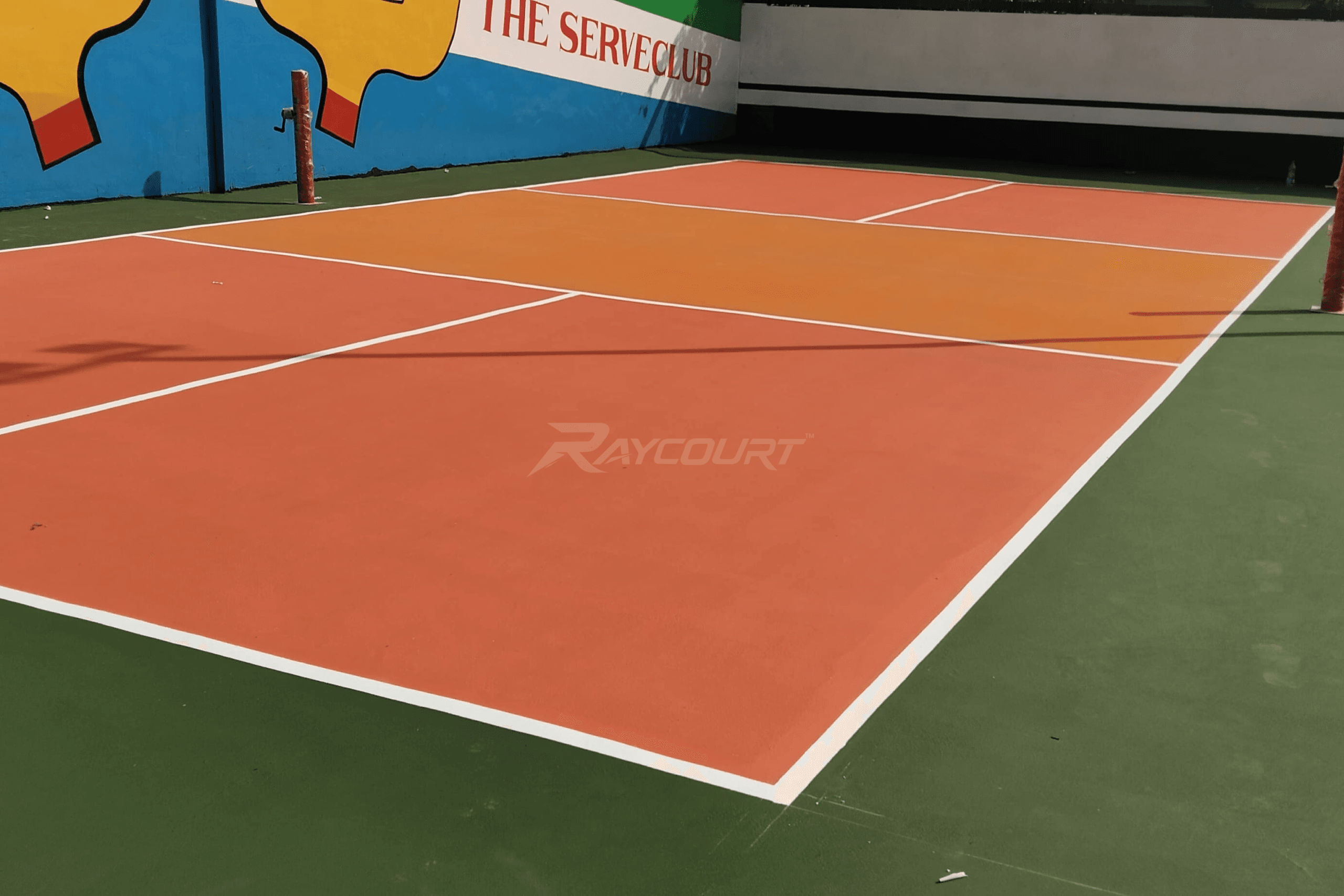
Academies and clubs focus on consistent pace and true bounce. Coaches need every court to play identically for fair training and matches. Consequently, precise texture control becomes essential.
These venues usually choose cushioned acrylic for long training sessions. They also tend to favour high-contrast colour schemes for better ball tracking. Regular maintenance schedules keep performance steady across busy seasons.
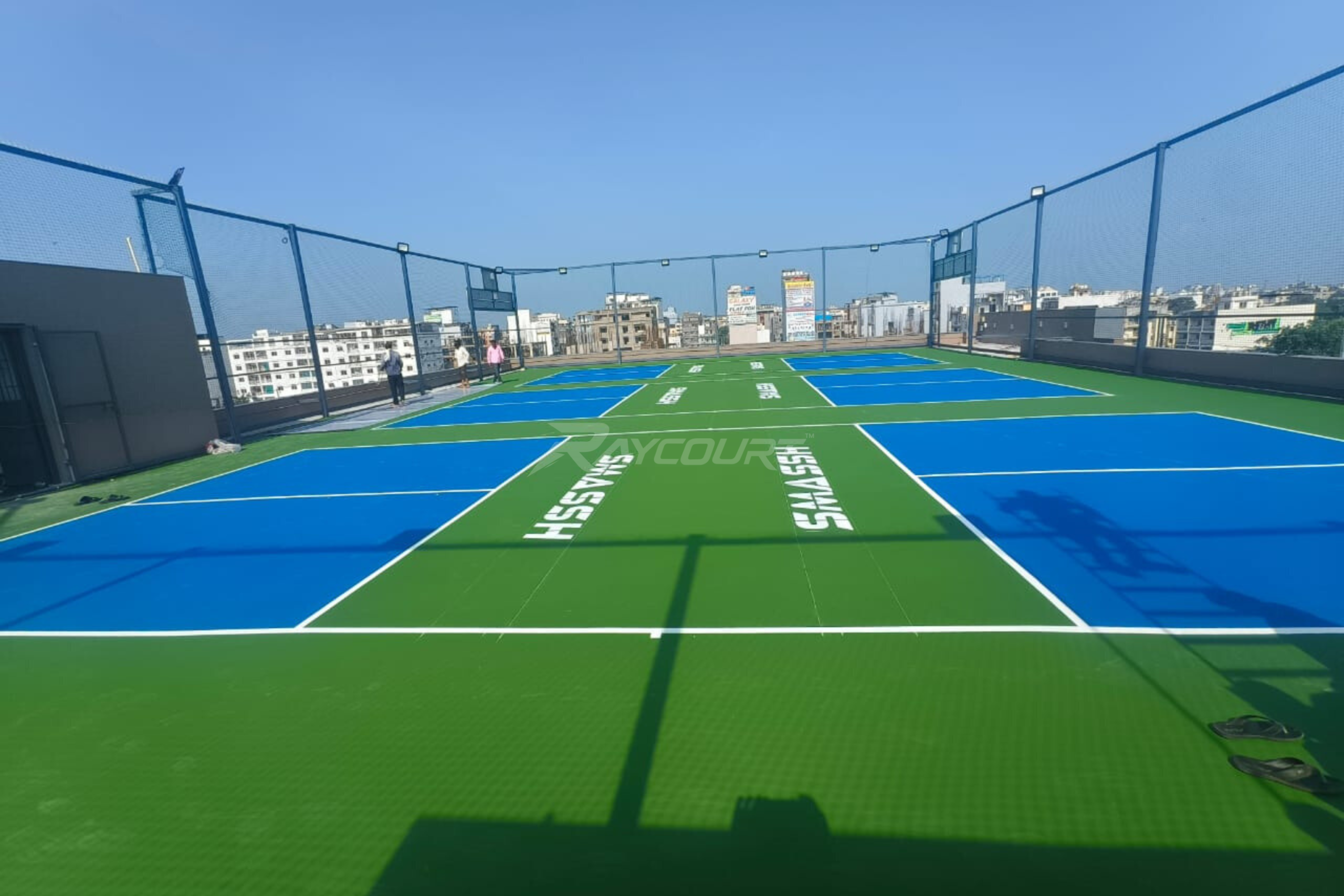
Rooftop and Commercial Courts
Rooftop courts in cities face strong sun and limited drainage options. They also sit above occupied spaces, so noise control matters. As a result, careful waterproofing and cushioning both play important roles.
Commercial sports complexes, meanwhile, value fast turnaround and dependable supply. They often build several courts at once. Therefore, a single compatible system across every court keeps performance uniform.
How to Choose the Right Pickleball Flooring Material
With so many options available, a clear selection process helps. The checklist below guides owners, architects and contractors toward the right material choice.
- Define your players: Consider age groups, skill levels and how often people will play.
- Confirm the setting: Decide whether the court sits indoors, outdoors or on a rooftop.
- Assess your climate: Account for heat, rainfall and dust in your location.
- Choose the comfort level: Decide between standard acrylic and cushioned acrylic.
- Set the pace: Agree on the preferred surface speed with coaches or club members.
- Check the base: Make sure your contractor can deliver a sound, well-sloped slab.
- Review technical data: Ask for product specifications, test credentials and application guidance.
- Plan colours and lines: Select contrasting tones and durable line paint.
- Confirm supply timelines: Make sure materials can reach your site when the contractor needs them.
Each step narrows the options and reduces unwelcome surprises later. Moreover, it gives your contractor a clear brief from the very start.
Questions to Ask Your Flooring Material Manufacturer
Before you commit, a short conversation with the manufacturer can reveal a great deal. Consider asking the following questions:
- Which system do you recommend for my climate and usage level?
- How many cushion layers suit my players and venue?
- Which colour combinations perform best outdoors in strong sunlight?
- What recognised certifications or classifications do your materials hold?
- Do you provide application guidelines for my contractor?
A confident, knowledgeable manufacturer will answer these questions clearly. If answers feel vague, consider that a warning sign.
Ready to build a court that performs for years to come?
Connect with Raycourt for sports flooring systems built for your project.
Why Raycourt for Pickleball Flooring Materials
Raycourt focuses on one thing above all else: manufacturing high-performance sports court flooring materials. We do not install courts ourselves. Instead, we supply contractors, builders and facility owners with dependable acrylic systems.
Manufacturing Expertise You Can Trust
Our team brings years of experience in acrylic sports surface technology. We develop primers, resurfacers, cushion coats, colour coats and line paints as one compatible system. Consequently, every layer bonds and performs exactly as intended.
Raycourt also holds ITF Classified status. This recognition reflects our commitment to consistent, internationally benchmarked surface performance. For pickleball venues, it offers extra confidence in pace and playability.
Reliable Supply Across India
Timely material delivery keeps court projects on schedule. Our new warehouse in Vadodara strengthens our supply network across western India. We offer same-day delivery to Ahmedabad and Vadodara.
Furthermore, orders reach Surat, Rajkot and Indore within a day. Projects in Mumbai, Pune, Nagpur, Nashik and Udaipur receive materials within two to three days. This reliable logistics network helps contractors plan with confidence.
Support for Contractors and Owners
We work closely with installation partners and facility owners alike. Our team helps with system selection, colour planning and technical guidance. As a result, every project starts with the right material specification.
Maintaining Your Pickleball Flooring
Good maintenance protects your court’s performance and appearance. Fortunately, acrylic pickleball flooring needs only simple, regular care. The routine below keeps most courts in excellent shape.
Routine Care Checklist
- Sweep or blow off debris regularly to prevent abrasion.
- Wash the surface with clean water and a soft brush when dirt builds up.
- Clear standing water quickly after rain to prevent stains and algae.
- Remove leaves and organic matter before they leave marks.
- Use proper non-marking footwear to protect the textured finish.
- Keep heavy objects off the court, including furniture, vehicles and sharp equipment.
Periodic Inspections and Recoating
Beyond routine care, schedule regular inspections of the whole surface. Look for hairline cracks, faded patches or worn lines. Early repairs prevent small issues from spreading.
Over time, every outdoor court needs a fresh colour coat. Recoating restores texture, colour and pace without rebuilding the full system. So, a well-maintained base and cushion layer can serve through several recoating cycles.
Expert Tip: Keep a simple maintenance log for your court. Recording cleaning dates, repairs and recoats helps you spot patterns and plan ahead.
Common Pickleball Flooring Mistakes to Avoid
Even well-planned projects can stumble on avoidable errors. Watch out for these common mistakes:
- Skipping base preparation: Coating over cracks or low spots only hides problems temporarily.
- Choosing the wrong texture: A surface that plays too fast or too slow frustrates players.
- Mixing incompatible products: Layers from different systems may not bond properly.
- Ignoring drainage: Standing water damages coatings and encourages algae.
- Rushing curing times: Coating too soon after rain or base work weakens adhesion.
- Neglecting maintenance: Dirt and debris steadily wear down texture and colour.
Avoiding these mistakes protects both performance and long-term value. Above all, it keeps players safe and satisfied.
Ready to build a court that performs for years to come?
Connect with Raycourt for sports flooring systems built for your project.
Quick Answers: Pickleball Flooring Explained
The short sections below answer some of the most common questions we hear. Each one gives you a fast, practical answer.
Is Cushioned Pickleball Flooring Worth It?
For most clubs, academies and residential courts, yes. Cushioned acrylic reduces impact on knees, hips and the lower back. Consequently, players can enjoy longer sessions with less fatigue. It also lowers footfall noise, which helps courts near homes. If your players include older adults or regular daily users, cushioning adds clear value.
Can You Play Pickleball on a Basketball Court Surface?
Yes, you can. An acrylic basketball court already offers a hard, textured surface that suits pickleball. You simply need pickleball lines and a portable or permanent net. However, the court pace may feel slightly different from a dedicated pickleball surface. A fresh colour coat can fine-tune the texture for both sports.
Is Acrylic Better Than Modular Tiles for Pickleball?
For permanent courts, acrylic usually wins. A bonded acrylic surface delivers a true, consistent bounce with no hollow sound. It also avoids the shifting joints that tiles can develop over time. Tiles still make sense for temporary events or quick setups. However, venues that host regular play gain far more from a permanent acrylic system. In short, choose tiles for flexibility and acrylic for long-term performance.
What Makes a Pickleball Surface Safe?
A safe surface combines balanced traction, even bounce and good drainage. It should never feel slippery or sticky underfoot. In addition, it should stay free of cracks, bubbles and loose material. Cushioning adds an extra layer of protection for joints. Regular cleaning keeps these safety features working season after season.
Frequently Asked Questions
A cushioned or standard synthetic acrylic system over a sound concrete or asphalt base works best. It delivers consistent bounce, reliable grip and strong weather resistance. Moreover, it suits both indoor and outdoor courts.
Yes, an existing acrylic tennis court often makes an excellent base. Contractors usually repair cracks and apply fresh resurfacer and colour coats. They then add pickleball lines in a contrasting colour.
Sun, rain and dust all affect outdoor surfaces over time. UV-stable acrylic coatings resist fading and keep their texture longer. Good drainage and regular cleaning further protect the court.
Most courts pair two contrasting tones, such as blue and green. Lighter shades help reduce surface heat outdoors. The colours should also contrast clearly with the yellow or orange ball.
The answer depends on usage, climate and maintenance quality. Busy outdoor courts need recoating sooner than lightly used indoor courts. Regular inspections help you decide the right time.
Yes, acrylic systems work very well on indoor concrete slabs. They offer the same pace and bounce as outdoor courts. Cushioned versions also reduce footfall noise inside enclosed halls.
Conclusion: Build Your Pickleball Court on the Right Foundation
The right pickleball flooring shapes every rally, every step and every season of play. For most venues, a cushioned or standard synthetic acrylic system offers the best balance. It combines consistent pace, dependable traction, joint comfort and strong weather resistance.
However, great results depend on more than the top coat. A sound base, compatible materials and skilled application all play a part. Moreover, simple maintenance keeps the court performing for years.
As a trusted manufacturer, Raycourt supplies complete acrylic flooring systems that suit Indian conditions. We support contractors and owners with dependable materials, technical guidance and fast delivery.
Ready to build a court that performs for years to come?
Connect with Raycourt for sports flooring systems built for your project.