
What Does Pickleball Court Construction Really Involve?
Pickleball court construction involves five core stages: site planning, base preparation, surface coating, line marking and net installation. Get each stage right, and you create a court that plays true for years. Skip a step, however, and cracks, puddles and uneven bounce soon follow.
In simple terms, a durable outdoor court needs a stable sub-base and a smooth concrete or asphalt slab. It also needs a multi-layer acrylic surface. The acrylic system gives the court its colour, grip, ball speed and weather resistance. Meanwhile, the lines, net and fencing turn a flat slab into a regulation playing space.
This guide walks you through every stage of pickleball court construction in clear, practical detail. You will learn the official dimensions, the right base options and the full acrylic layer sequence. You will also discover common mistakes, maintenance habits and the questions owners ask most often.
As a manufacturer, Raycourt supplies the acrylic surfacing materials that sit at the heart of a quality court. We do not install courts ourselves. Instead, we support architects, contractors and facility owners with high-performance coating systems and technical guidance. So, whether you plan a backyard court or a multi-court complex, this guide will help you make informed decisions.
Why Pickleball Court Construction Needs a Careful Plan
Pickleball looks simple at first glance. However, the game demands a surface that delivers consistent bounce, dependable grip and clear visibility. Players move quickly, stop suddenly and change direction constantly near the net. Therefore, every layer of the court affects comfort, safety and the quality of play.
A rushed project often looks fine on day one. Within a season or two, though, problems start to appear. Water collects in low spots, hairline cracks spread and the colour fades unevenly. Fixing these issues later takes far more effort than planning for them at the start.
Good pickleball court construction begins with clear goals. Ask yourself who will use the court and how often. Consider whether you want a recreational backyard court, a club facility or a tournament venue. Also think about the local climate, the existing ground and any future plans for lighting or shade.
Once you answer these questions, the right specifications become much easier to choose. Moreover, a clear brief helps your contractor and your material supplier work together smoothly.
Who Should Take Part in the Project?
A successful court usually brings together several specialists. Each one plays a distinct role in the final result.
- Facility owner or developer: sets the goals, usage level and timeline.
- Architect or consultant: prepares layouts, drainage plans and specifications.
- Civil contractor: handles excavation, sub-base work and the concrete or asphalt slab.
- Surfacing contractor: applies the acrylic system, lines and finishing details.
- Material manufacturer: supplies tested surfacing products and technical data, which is where Raycourt comes in.
When these parties communicate early, the project avoids rework and delays. In addition, everyone understands the standards the finished court must meet.
Planning Your Pickleball Court: Site, Size and Orientation
Planning forms the foundation of every successful pickleball court construction project. Before anyone breaks ground, you need to confirm the site, the court size and the direction the court will face. These early decisions shape drainage, player comfort and long-term durability.
Official Pickleball Court Dimensions
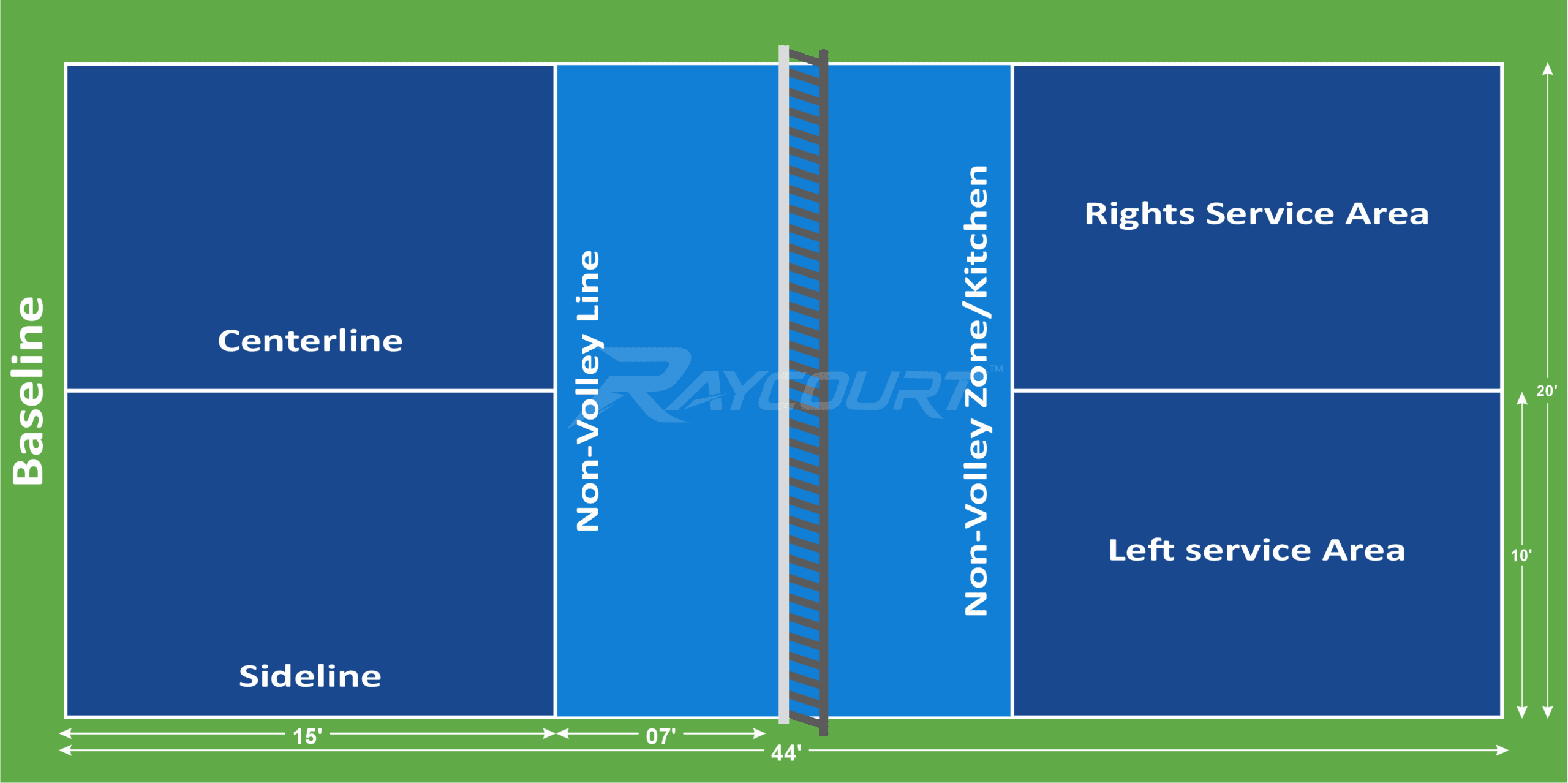
A regulation pickleball court measures 20 feet wide by 44 feet long. This size applies to both singles and doubles play. However, the playing lines represent only part of the space you need. Players also require run-off room behind the baselines and beside the sidelines.
USA Pickleball, the governing body that sets the sport’s rules, publishes recommended total playing areas. You can review the full specifications in the USA Pickleball official rulebook. Many national bodies, including those in India, follow these same standards.
| Court Element | Recommended Measurement |
|---|---|
| Playing court (lines included) | 20 ft × 44 ft (6.10 m × 13.41 m) |
| Minimum total playing area | 30 ft × 60 ft (9.14 m × 18.29 m) |
| Preferred area for new construction | 34 ft × 64 ft (10.36 m × 19.51 m) |
| Wheelchair play area | 44 ft × 74 ft (13.41 m × 22.56 m) |
| Non-volley zone (kitchen) | 7 ft from the net on each side |
| Line width | 2 in (5 cm) |
| Net height | 36 in at sidelines, 34 in at centre |
Expert Tip: Plan for the larger 34 ft × 64 ft footprint whenever your site allows it. Extra run-off space improves safety and supports competitive play.
Choosing the Right Site
The ideal site sits on firm, stable ground with natural drainage away from the court. Avoid low-lying areas where rainwater tends to collect. Similarly, steer clear of locations under large trees, because roots, leaves and sap can damage the surface over time.
Next, check the soil conditions. Expansive clay soils swell when wet and shrink when dry. This movement can crack even a well-built slab. Therefore, many contractors recommend a soil test before they finalise the design. A geotechnical report tells you whether the sub-base needs extra depth or stabilisation.
Access matters too. Construction vehicles, concrete trucks and material deliveries all need a clear route to the site. Plan this route early to protect existing landscaping and underground utilities.
Getting the Orientation Right
Orientation affects player comfort more than most owners realise. Ideally, an outdoor court should run north to south. This layout keeps the low morning and evening sun out of players’ eyes. Consequently, players at both ends enjoy fair conditions throughout the day.
If site limits prevent a perfect north–south alignment, aim for an angle close to north. Additionally, consider the prevailing winds. Windscreens on the fencing can help on exposed sites.
Planning Drainage and Slope
Water ranks as the biggest enemy of any outdoor court. Standing water weakens the base, stains the surface and creates slip hazards. For this reason, every outdoor pickleball court needs a gentle, consistent slope.
Most builders design a slope of about 1%, or roughly 1 inch every 10 feet. The slope should run in a single plane: side to side, end to end or corner to corner. Side-to-side slopes work especially well because neither team plays uphill. Never crown the court from the centre outwards like a road, since a crown creates an uneven playing surface.
Beyond the court itself, plan perimeter drains, swales or channels that carry water away. Furthermore, keep the surrounding ground lower than the court edge. This simple step stops runoff from flowing onto the playing area.
Expert Tip: Ask your contractor to flood-test the slab before coating. Any low spot that holds water deeper than a coin’s thickness needs patching first.
Ready to build a court that performs for years to come?
Connect with Raycourt for sports flooring systems built for your project.
Climate Considerations for Pickleball Court Construction in India
Climate shapes almost every decision in outdoor pickleball court construction. India’s conditions vary widely, yet most regions share three challenges: intense heat, heavy monsoon rain and airborne dust. Smart planning addresses all three from the start.
Heat and UV Exposure
Strong sunlight breaks down weak pigments and binders over time. As a result, low-grade coatings fade, chalk and lose texture within a few seasons. Quality acrylic systems use UV-stable pigments and durable resins that resist this damage.
Surface temperature also affects players. Darker colours absorb more heat and can feel uncomfortable at midday. Lighter shades reflect more sunlight and stay cooler underfoot. Therefore, many outdoor facilities choose medium or lighter tones for the main playing area.
Monsoon Rains
The monsoon tests drainage like nothing else. Heavy downpours can overwhelm poorly sloped courts within minutes. Consequently, accurate slope, perimeter drains and raised court edges become essential in rain-prone regions.
Rain also affects scheduling. Surfacing crews cannot apply acrylic coats on wet slabs or when rain threatens. Hence, most contractors plan coating work for the drier months whenever possible.
Dust and Pollution
Dust settles on courts constantly in many Indian cities. Over time, it dulls the colour and reduces grip. Fortunately, a textured acrylic surface releases dirt easily during routine cleaning. Additionally, windscreens on the fencing help reduce the amount of dust that reaches the playing area.
Expert Tip: Match your colour choice and maintenance plan to your local climate. A court in coastal Gujarat faces different stresses from one in Punjab or Rajasthan.
Building the Base: The Hidden Heart of Pickleball Court Construction
Players never see the base, yet it determines how long a court lasts. A weak base leads to cracks, settlement and uneven bounce, no matter how good the coating looks. Therefore, smart owners give this stage their full attention.
Most outdoor courts use either reinforced or post-tensioned concrete or hot-mix asphalt. Both options work well with acrylic surfacing systems. However, each one behaves differently over time and suits different site conditions.
Preparing the Sub-Base
Every slab sits on a sub-base, and its quality matters enormously. First, the contractor removes topsoil, roots and organic matter. Next, they compact the native soil to provide a firm, even platform.
After that, the crew spreads and compacts layers of crushed stone aggregate. This granular layer spreads loads, improves drainage and limits soil movement. Typically, crews compact the aggregate in thin lifts and test density as they go. Laser-guided grading equipment then helps them achieve the precise slope the design requires.
A well-prepared sub-base stays stable through monsoon rains and summer heat. Consequently, it protects the slab and the acrylic surface above it for years.
Concrete Bases for Pickleball Courts
Concrete offers excellent strength, stability and longevity. Many professionals consider it the premium choice for pickleball court construction. A typical concrete court uses a slab at least 4 inches thick, with steel reinforcement or post-tensioning cables.
Post-tensioned concrete deserves special mention. In this method, crews tension steel cables inside the slab after it hardens. The tension squeezes the concrete together and dramatically reduces cracking. As a result, post-tensioned slabs often deliver the smoothest, longest-lasting courts.
Concrete also needs the right finish to accept acrylic coatings. A light broom finish or a fine float finish gives the coating something to grip. Avoid a hard steel-trowel finish, since a glassy surface hinders bonding. Equally important, avoid curing compounds or sealers that leave a film, as they block adhesion.
Asphalt Bases for Pickleball Courts
Hot-mix asphalt remains a popular choice for many outdoor courts. Crews can lay it quickly, and it offers a slightly softer feel underfoot. Typically, contractors place asphalt in two courses: a binder course and a finer surface course.
Asphalt flexes more than concrete. This flexibility helps on some soils, yet it can also lead to cracking over time. Hot climates can soften asphalt too, so mix design and compaction matter greatly. For best results, choose an experienced paving contractor and specify a dense, fine-graded surface course.
Concrete vs Asphalt: A Quick Comparison
| Factor | Concrete | Asphalt |
|---|---|---|
| Strength and stability | Very high | Good |
| Crack resistance | Excellent with post-tensioning | Moderate; cracks may appear over time |
| Feel underfoot | Firm | Slightly softer |
| Curing time before coating | About 28 days | About 14–30 days |
| Heat tolerance | Excellent | Can soften in extreme heat |
| Suitability for acrylic systems | Excellent | Excellent |
| Base lifespan | Very long | Long, with periodic repairs |
Why Curing Time Matters So Much
Patience pays off during curing. Fresh concrete and asphalt both release moisture and oils as they settle. If crews coat them too early, the acrylic layers may blister, peel or discolour.
As a general guide, concrete needs about 28 days before coating. Fresh asphalt usually needs 14 to 30 days, depending on weather and mix. During this period, the slab also reveals any cracks or low spots. Your surfacing contractor can then fix these flaws before coating begins.
Before coating concrete, many contractors also test moisture levels. A simple plastic sheet test can reveal trapped moisture. If condensation forms under the sheet, the slab needs more drying time.
Expert Tip: Treat the curing period as built-in quality control. Use it to inspect the slab, flood-test the slope and mark any repairs.
The Acrylic Surface System: Layer by Layer
The acrylic surface transforms a grey slab into a true pickleball court. It provides colour, texture, ball response and weather protection. Moreover, a quality acrylic system resists UV rays, heavy foot traffic and temperature swings.
A complete system never comes from a single coat of paint. Instead, it builds up through several specialised layers. Each layer performs a distinct job, and together they create a seamless playing surface.
Step-by-Step Acrylic Layer Sequence
Here is the typical order a surfacing contractor follows:
- Surface cleaning and preparation: The crew removes dust, oil, debris and loose particles. Pressure washing and acid etching for concrete often form part of this step.
- Crack repair and patching: Specialist fillers and patch binders level low spots and seal cracks.
- Primer application, where needed: A primer improves adhesion on new concrete and smooth surfaces.
- Acrylic resurfacer: One or two coats fill pores and create a smooth, uniform base.
- Cushion layers, if chosen: Rubber-filled acrylic coats add shock absorption and comfort.
- Colour coats: Two or more textured coats provide colour, grip and UV resistance.
- Line marking: Line primer and line paint create crisp, durable court lines.
Each layer must dry fully before the next one goes down. Weather, humidity and temperature all affect drying times. Therefore, experienced crews schedule coating work carefully around local conditions.
Resurfacer: Building a Smooth Foundation
The resurfacer acts as the bridge between the slab and the colour coats. It fills small voids and surface pores in concrete or asphalt. As a result, the finished court looks uniform and plays consistently.
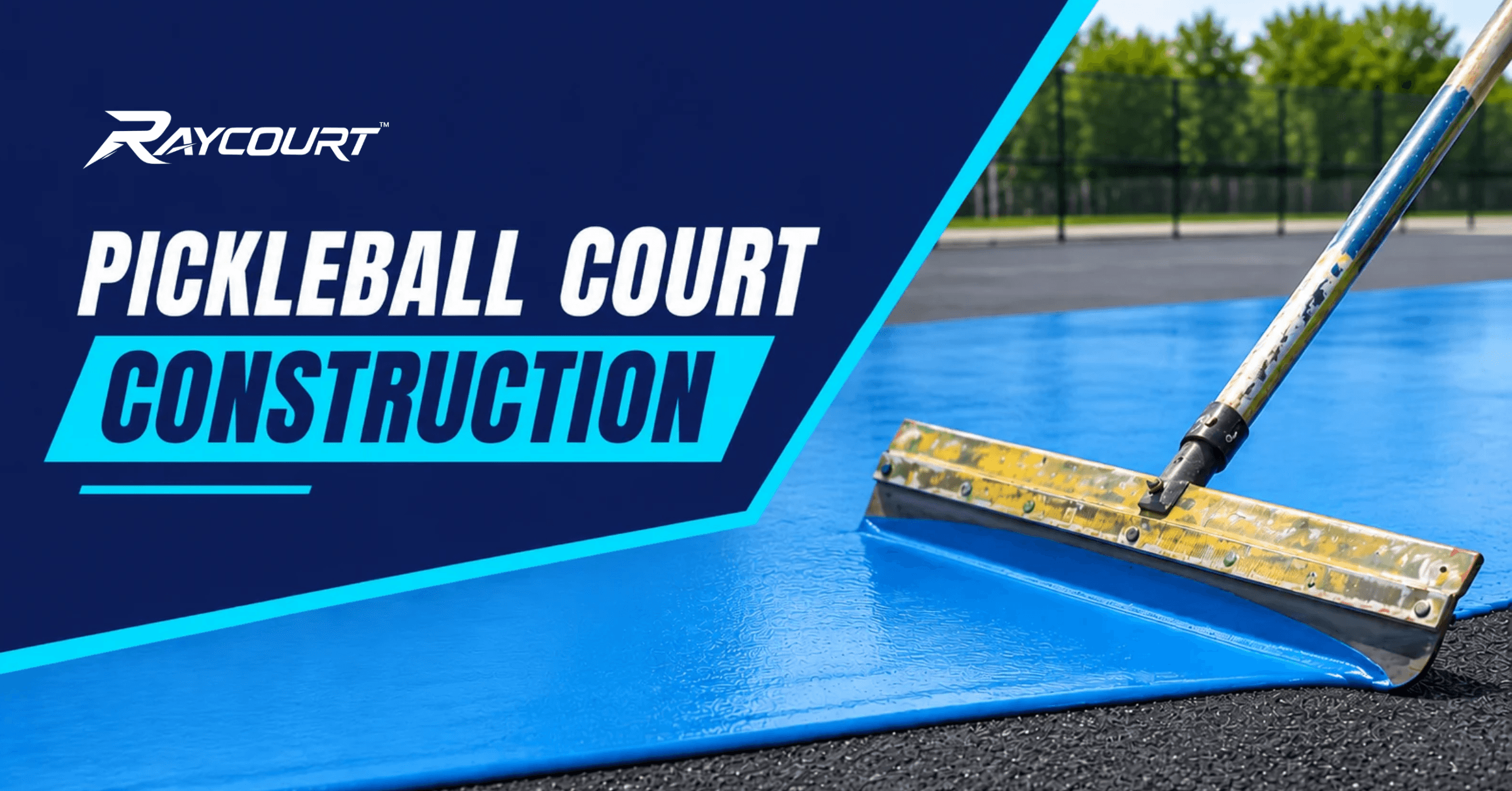
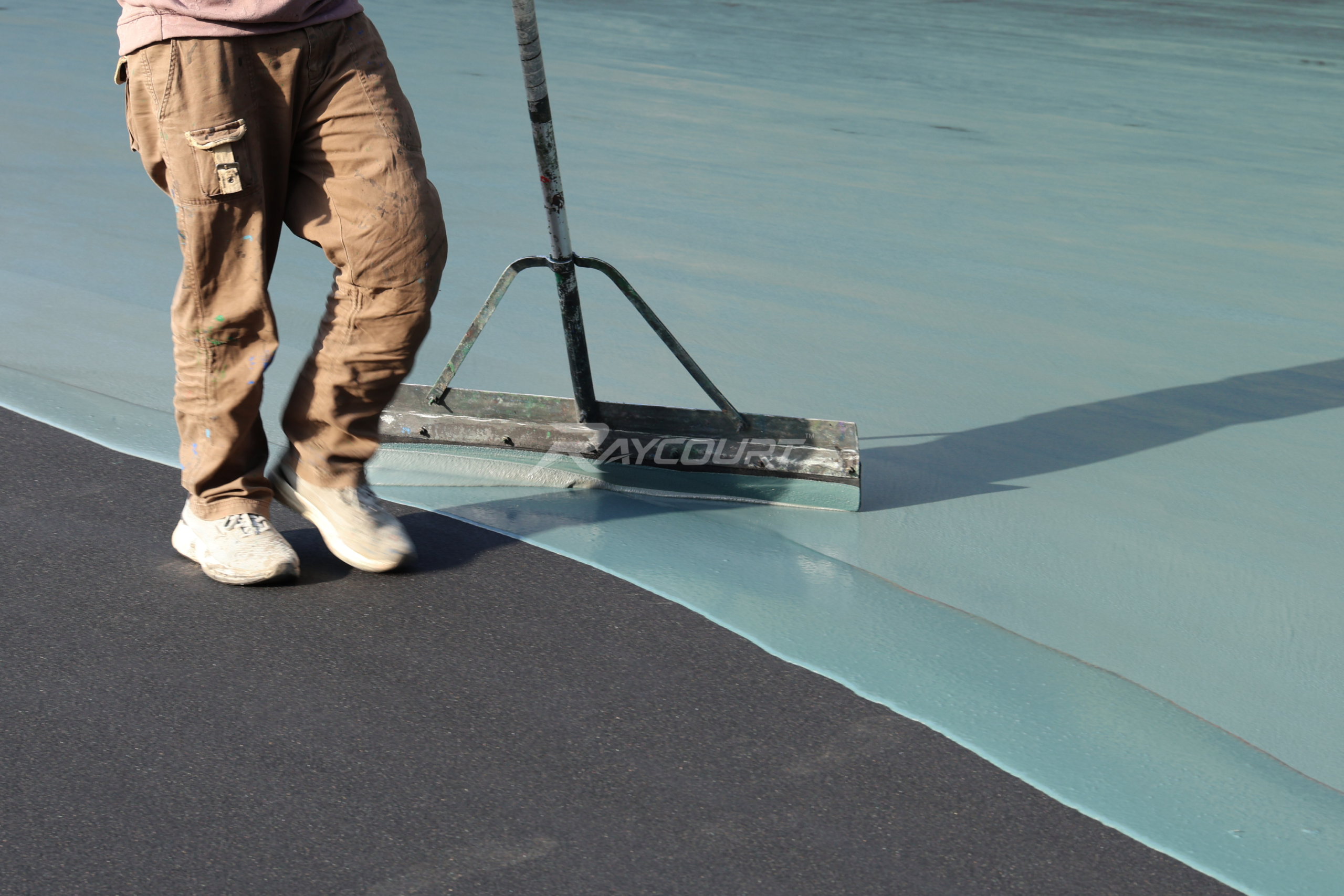
Crews usually spread resurfacer with a squeegee in thin, even passes. They often apply each coat in a different direction for better coverage. Raycourt’s acrylic resurfacer offers strong adhesion and excellent filling properties for both base types.
Cushion Layers: Comfort for Players
Cushion layers add a resilient, rubber-modified layer within the system. They reduce stress on knees, ankles and backs during long sessions. Many clubs and senior-focused facilities choose cushioned systems for this reason.
The number of cushion coats determines how soft the court feels. More coats increase comfort, while fewer coats keep the surface firmer and faster. Your contractor can recommend a build that suits your players.
Colour Coats: Grip, Speed and Visibility
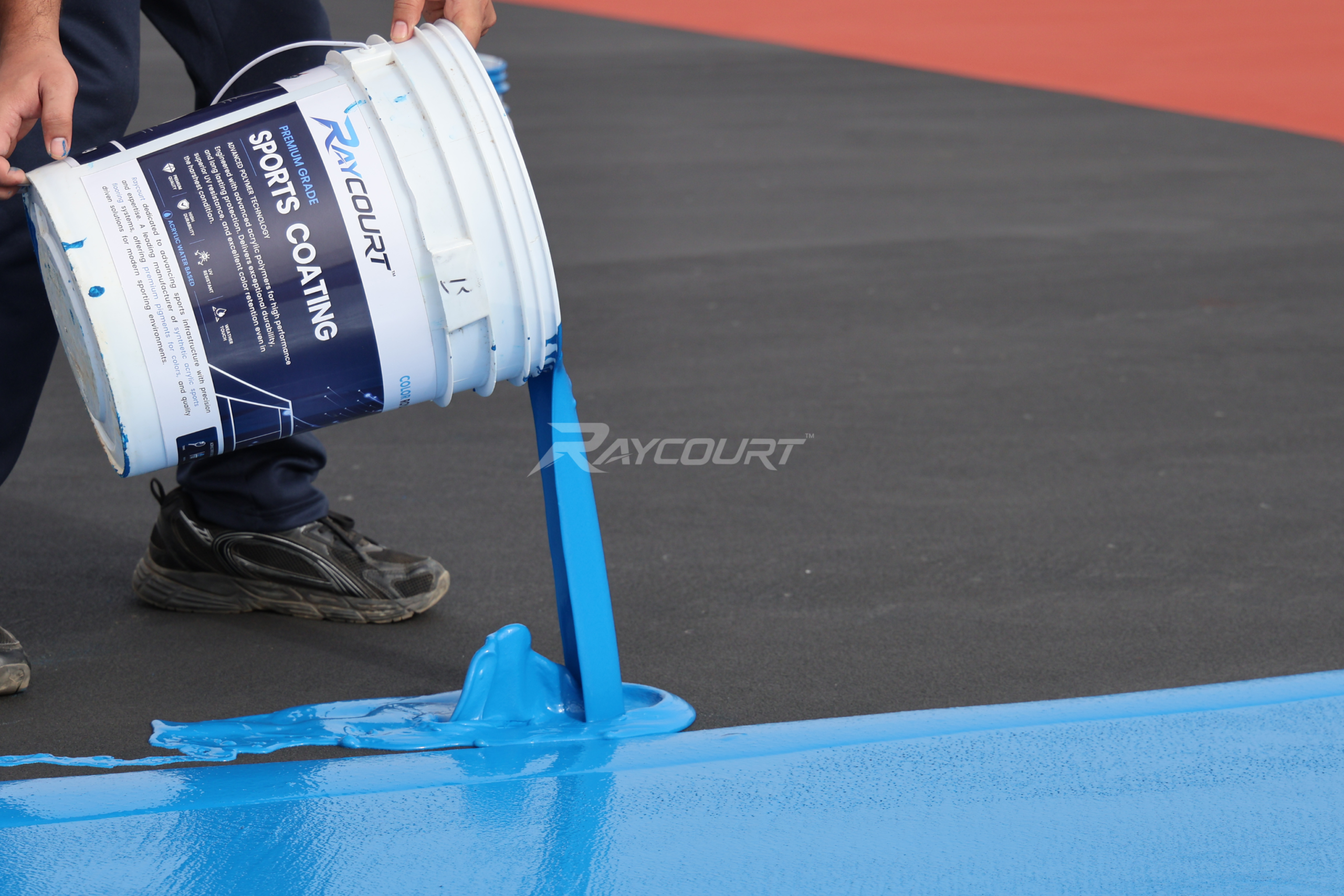
Colour coats deliver the visible finish and much of the court’s performance. These coats contain fine silica sand, which creates texture and controls ball speed. More texture slows the ball down and improves grip.
High-quality colour coats also resist fading, chalking and mildew. Raycourt formulates its acrylic colour coats with UV-stable pigments and strong binders. Consequently, courts keep their vibrant appearance even under strong Indian sunlight.
Expert Tip: Ask for at least two colour coats. A single coat rarely delivers even texture, full colour or lasting wear resistance.
Ideal Weather Conditions for Applying Acrylic Coatings
Even the best materials need the right conditions to perform. Acrylic coatings cure through water evaporation, so temperature and humidity directly affect the result. Ignore the weather, and you risk weak bonding, uneven texture or surface defects.
Most acrylic sports coatings perform best within a moderate temperature window. Surfacing crews generally avoid work when the air or slab feels very cold. Likewise, they avoid peak midday heat, when coatings can dry too fast and leave lap marks.
Here are the conditions experienced contractors look for:
- Dry weather: no rain forecast for at least 24 hours after each coat.
- Moderate temperatures: neither freezing conditions nor extreme midday heat.
- Low to moderate humidity: high humidity slows drying considerably.
- Calm winds: strong wind blows dust onto wet coats and speeds up drying unevenly.
- Clean, dry slab: no dew, standing water or residual moisture.
In hot regions, many crews start early in the morning and pause during the hottest hours. Some even work in the late afternoon or evening. This schedule gives each coat time to level and bond properly.
Expert Tip: Always follow the manufacturer’s technical data sheet for temperature limits and recoat times. Raycourt provides clear application guidance for every product in its system.
Cushioned vs Hard Acrylic Systems
Choosing between a cushioned and a hard acrylic system ranks among the biggest surface decisions in pickleball court construction. Both systems use the same base preparation and colour coats. The difference lies in the rubber-based layers beneath the colour.
| Feature | Hard Acrylic System | Cushioned Acrylic System |
|---|---|---|
| Feel underfoot | Firm and fast | Softer and more forgiving |
| Joint comfort | Standard | Enhanced shock absorption |
| Ball bounce | Very consistent | Consistent, slightly lower energy |
| Best suited for | Community courts, schools, high-traffic sites | Clubs, senior players, premium facilities |
| Layer count | Fewer layers | Additional cushion layers |
| Maintenance needs | Low | Low |
Hard acrylic systems suit public parks, schools and multipurpose sites with heavy use. They offer excellent durability and a crisp, predictable bounce. On the other hand, cushioned systems appeal to clubs, academies and older players. These users value comfort during long rallies and repeated sessions.
Many facilities strike a balance with a moderate cushion build. This approach adds noticeable comfort without slowing play too much. Ultimately, the right choice depends on your players, usage levels and performance goals.
Does Surface Speed Really Matter in Pickleball?
Yes, surface speed shapes how the game feels. Pickleball relies on soft dinks, quick volleys and controlled drives. A surface that plays too fast can rush players and shorten rallies. Conversely, a surface that plays too slow can feel heavy and sticky.
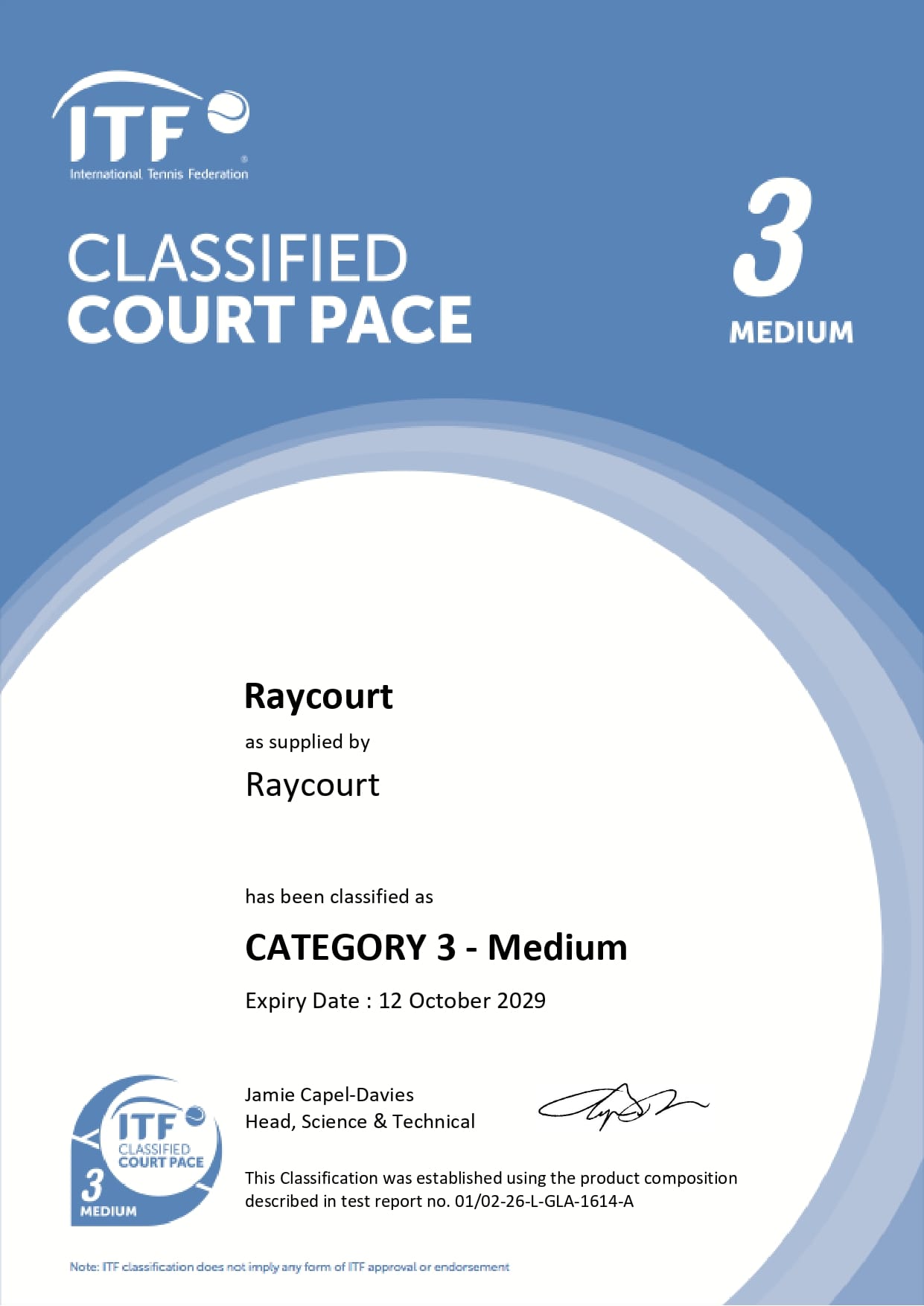
Texture in the colour coats largely controls speed. The amount and grade of silica sand determine how much the ball grips on contact. Raycourt’s surfacing range holds ITF Classification, which reflects independent testing of court pace. That tested consistency gives pickleball builders real confidence in how the surface will play.
Line Marking, Colours and Court Visibility
Clear lines and smart colour choices make a court easier to play and nicer to look at. They also help players judge the ball quickly and accurately.
Marking Lines Accurately
Pickleball lines measure 2 inches wide. Lines count as part of the area they enclose. So, a ball that lands on the baseline or sideline plays in. Accuracy therefore matters for fair play.
Precision begins with layout. Crews snap chalk lines, measure diagonals and confirm square corners before painting. Next, they apply masking tape along each edge. A line primer then goes over the tape edges to stop paint from bleeding underneath. Finally, the crew applies textured line paint and removes the tape before the paint fully sets.
The result delivers sharp, clean lines that stay crisp for years. Sloppy lines, in contrast, look unprofessional and can spark disputes during play.
Choosing Court Colours
Colour affects visibility, heat and style. Most pickleball courts use two contrasting colours: one for the playing area and one for the surrounding run-off zone. Many facilities also give the kitchen a third colour to highlight the non-volley zone.
Different colours offer practical advantages:
- Blue: creates strong contrast with yellow and green balls and looks modern.
- Green: blends with natural surroundings and reduces glare.
- Lighter shades: stay cooler underfoot in hot climates.
- Darker shades: hide minor stains and make white lines stand out sharply.
Raycourt offers a wide palette of acrylic colours for pickleball courts. Therefore, facility owners can match brand colours, club identities or landscape themes with ease.
Shared Courts and Multi-Sport Lines
Many sites add pickleball lines to existing tennis or basketball courts. In these cases, use a different line colour for each sport. This simple step helps players identify the correct lines quickly. Additionally, keep overlapping lines to a minimum to avoid confusion.
Nets, Fencing, Lighting and Amenities
The surface makes the court playable, but the surrounding elements make it complete. Nets, fencing, lighting and amenities all shape safety, comfort and the overall experience.
Net Systems and Post Placement
A pickleball net stands 36 inches high at the sidelines and 34 inches at the centre. Permanent courts usually use post sleeves set in concrete footings. Crews position these posts just outside the sidelines.
Ideally, the civil contractor sets the sleeves before surfacing begins. This sequence protects the finished coating from drilling and patching later. Moreover, a centre strap helps players maintain the correct centre height throughout play.
Fencing and Windscreens
Fencing keeps balls in play and protects nearby areas. Most outdoor courts use chain-link perimeter fencing between 8 and 10 feet tall. Lower divider fencing often works well between adjacent courts.
Windscreens attach to the fencing and reduce wind interference. They also improve ball visibility by creating a darker background. In addition, windscreens offer some privacy and useful space for branding.
Lighting for Evening Play
Good lighting extends playing hours and boosts court usage. LED fixtures now dominate court lighting because they deliver bright, even light with low energy use. Place poles outside the court to avoid obstructions and glare.
Aim for uniform illumination across the whole playing area. Dark patches or harsh glare make it hard to track the ball. Therefore, ask a lighting specialist to prepare a photometric plan early in the project.
Seating, Shade and Access
Small amenities make a big difference to player satisfaction. Consider benches, shade structures, water stations and paddle racks. Also plan level, accessible paths, especially if you expect wheelchair players. These details turn a basic court into a welcoming facility.
Planning a Multi-Court Pickleball Complex
Pickleball’s rapid growth has pushed many clubs and developers towards multi-court facilities. Building several courts together brings clear advantages. However, it also introduces extra planning considerations.
Layout and Court Spacing
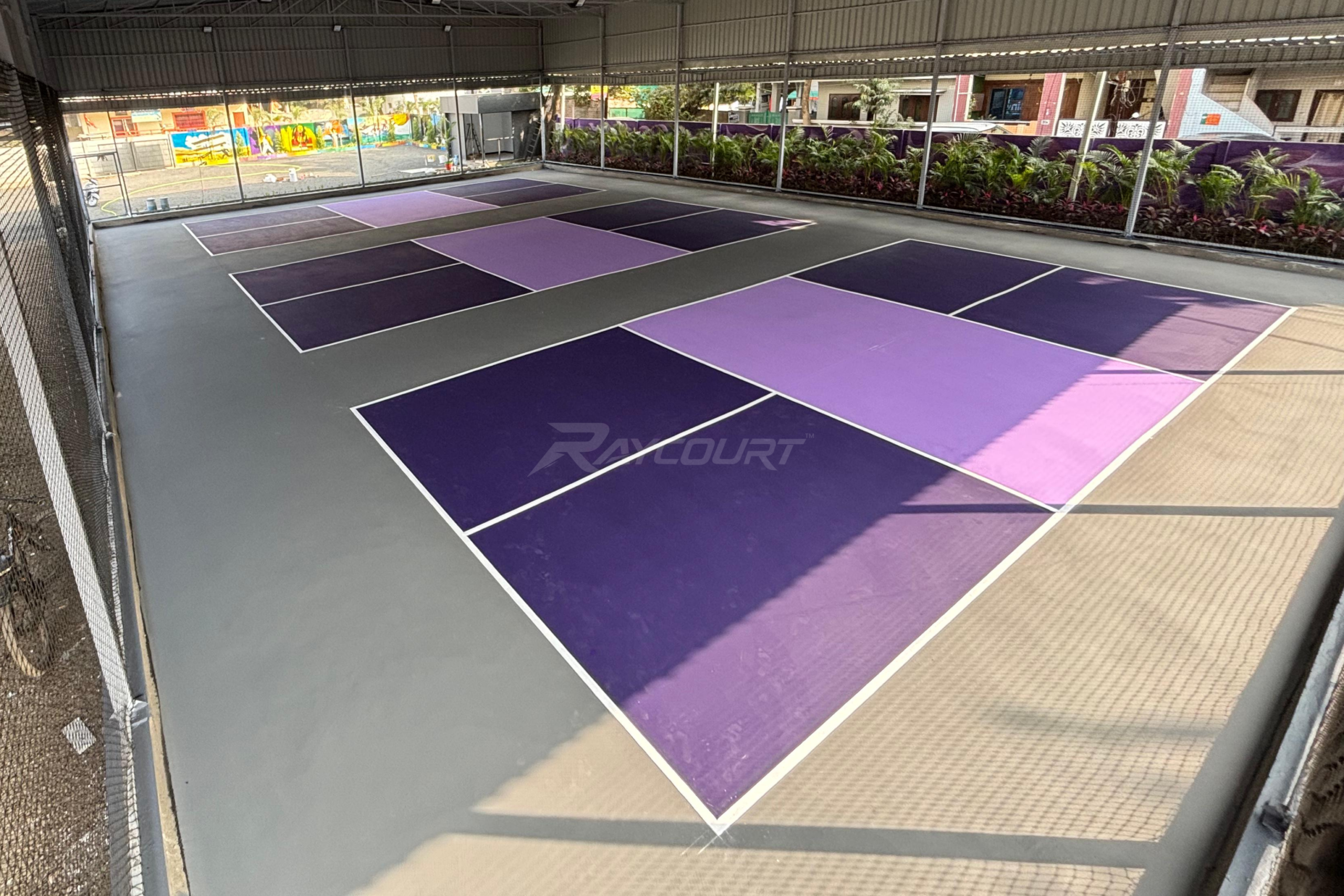
Multi-court layouts usually place courts side by side in rows. Shared sidelines save space, yet each court still needs safe clearance. Many planners allow generous space between adjacent courts to prevent collisions.
Divider fencing or netting between courts stops stray balls from interrupting neighbouring games. Furthermore, consistent orientation across all courts keeps playing conditions fair for every player.
Drainage Across Large Surfaces
A large paved area collects far more water than a single court. Consequently, drainage design becomes even more important. Engineers often slope groups of courts in the same direction towards perimeter channels. This approach keeps water moving off the surface without creating ridges between courts.
Circulation and Spectator Areas
Players need clear routes to reach each court without crossing active play. Gates, walkways and waiting areas should sit at the ends or sides of each court bank. Additionally, spectator seating and shaded rest zones improve the experience during leagues and tournaments.
Expert Tip: Use one matched acrylic system across every court in a complex. Uniform materials deliver identical colour, texture and ball response on each court.
Indoor vs Outdoor Pickleball Court Construction
Indoor and outdoor courts share many principles, yet they differ in important ways. Understanding these differences helps you choose the right materials and methods.
| Factor | Outdoor Court | Indoor Court |
|---|---|---|
| Common base | Concrete or asphalt | Concrete slab or existing hall floor |
| Drainage slope | Required, about 1% | Usually flat |
| Surface exposure | UV, rain, heat and dust | Controlled environment |
| Surface system | Hard or cushioned acrylic | Acrylic, cushioned acrylic or other sports flooring |
| Lighting | Floodlights for evening play | Overhead hall lighting |
| Maintenance focus | Debris, mildew and water | Dust and scuff marks |
Outdoor courts must handle sunlight, rainfall and temperature swings. Hence, UV-resistant colour coats and accurate slope matter most here. Indoor courts, meanwhile, avoid weather exposure but need careful attention to ceiling height, lighting and ventilation.
For indoor projects, a generous ceiling height allows comfortable lobs without interference. Many planners also check for beams, ducts and light fittings above the court. These obstructions can interrupt play if they hang too low.
Acrylic systems work very well indoors on concrete slabs. Cushioned acrylic builds also improve comfort in indoor clubs and academies. Because indoor courts stay dry and shaded, coatings often last even longer.
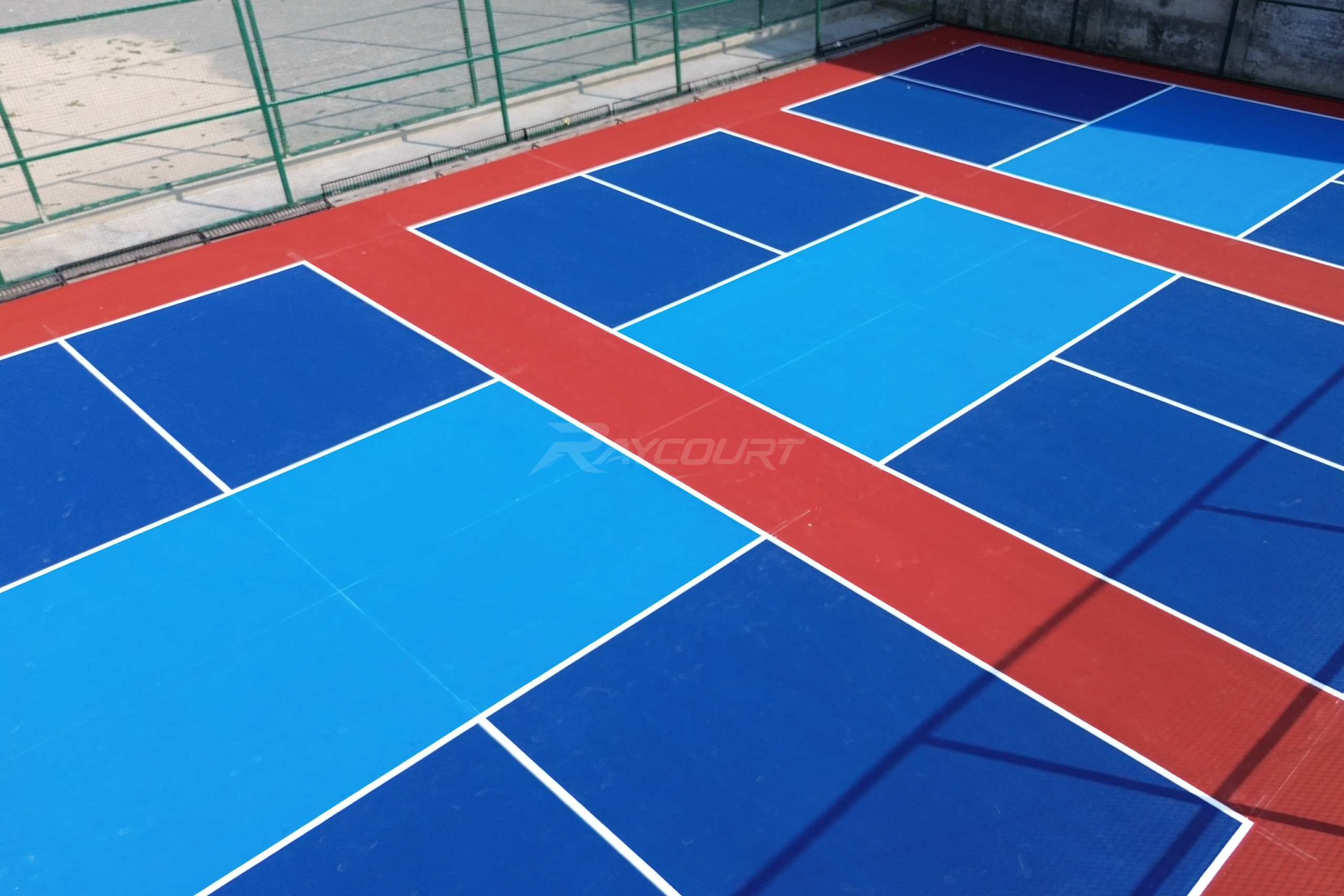
Converting Existing Courts for Pickleball
Not every project starts from bare ground. Many owners convert existing tennis or basketball courts for pickleball. This approach makes smart use of available space and infrastructure.
Can You Fit Pickleball Courts on a Tennis Court?
Yes, and the fit works surprisingly well. A standard tennis court footprint can hold up to four pickleball courts with modest run-off. Alternatively, owners can simply add pickleball lines and keep tennis available. Each approach suits different user needs.
For a full conversion, the contractor removes the tennis net posts and sets new pickleball post sleeves. Portable nets offer a flexible option for shared courts instead.
Assessing the Existing Surface
Before any conversion, inspect the old surface carefully. Look for cracks, low spots, peeling layers and faded colour. Minor issues usually respond well to cleaning, patching and fresh acrylic coats. Major structural cracks, however, may require more extensive repairs or a new overlay.
Next, check the existing slope. Old tennis courts often slope in a single plane, which suits pickleball layouts in many cases. Yet some older courts suffer from settlement and ponding. Your contractor should correct these problems before resurfacing.
Resurfacing for a Fresh Start
Resurfacing gives an old court a new identity. The process usually includes cleaning, crack repair, resurfacer coats, new colour coats and fresh lines. Raycourt’s acrylic resurfacing materials suit these renovation projects well. They bond firmly to properly prepared acrylic surfaces and restore uniform texture and colour.
Safety Considerations in Pickleball Court Construction
Safety should guide every decision from the first drawing to the final line. A safe court protects players, spectators and the facility’s reputation.
Start with the surface itself. Textured acrylic colour coats provide reliable grip in dry conditions and reduce slips. Meanwhile, accurate slope prevents puddles that create hazards after rain.
Next, look at the surroundings. Adequate run-off space gives players room to chase wide shots safely. Fence posts, benches and light poles should sit well outside the playing area. Additionally, padding on nearby posts or walls adds protection in tight indoor spaces.
Finally, consider lighting and access. Even, glare-free lighting helps players track the ball and judge their footing. Level, step-free entrances help older players and wheelchair users reach the court comfortably.
Common Mistakes in Pickleball Court Construction
Even well-meaning projects can go wrong. Fortunately, most mistakes follow predictable patterns. Learn from them, and you can avoid frustrating repairs later.
What Happens If You Skip a Soil Test?
Without a soil test, you build on assumptions. Expansive or poorly compacted soil can move after construction. That movement cracks the slab and breaks the acrylic surface above it. A simple geotechnical check at the start protects the entire project.
Why Does Coating Too Early Cause Problems?
Fresh concrete and asphalt still release moisture and oils. Coating them too soon traps this moisture under the acrylic layers. Consequently, blisters, peeling and discolouration often appear within months. Waiting for full curing remains one of the simplest ways to protect your court.
Is a Flat Court Better Than a Sloped One?
For outdoor courts, the answer is no. A perfectly flat court holds water after every rain. Standing water damages the surface, encourages mildew and makes play unsafe. A gentle, consistent slope keeps water moving off the court.
Can Any Paint Work on a Pickleball Court?
Absolutely not. Ordinary exterior paint lacks the flexibility, texture and UV resistance a court needs. It turns slippery when wet and peels under foot traffic. Purpose-made acrylic sports coatings, such as Raycourt’s systems, contain the right binders, fillers and texture for safe play.
Other Mistakes to Avoid
- Placing the court under trees that drop leaves, sap and fruit.
- Ignoring orientation and forcing players to face the setting sun.
- Choosing a steel-trowel concrete finish that blocks coating adhesion.
- Applying coatings in extreme heat, rain or high humidity.
- Skipping line primer and ending up with fuzzy, bleeding lines.
- Leaving too little run-off space behind the baselines.
Why Material Quality Defines Long-Term Performance
Contractors build the court, yet materials decide how well it performs over time. Even skilled workmanship cannot rescue a poor coating. Low-grade products may fade quickly, crack under heat or lose texture within a few seasons.
Quality acrylic systems, by contrast, deliver consistent results year after year. They hold their colour, keep their grip and flex slightly with temperature changes. Moreover, they shield the base from water and UV damage.
What to Look for in Court Surfacing Materials
When you evaluate surfacing products, consider these key qualities:
- Strong adhesion to concrete, asphalt and existing acrylic surfaces.
- UV stability that resists fading under intense sunlight.
- Controlled texture for reliable grip and ball response.
- Flexibility that helps the surface handle temperature swings.
- Water resistance that protects the base beneath.
- Tested performance backed by recognised classification or standards.
- Technical support from a manufacturer that understands sports surfaces.
How Raycourt Supports Your Pickleball Court Construction
Raycourt manufactures synthetic acrylic sports court flooring materials for pickleball, tennis, basketball and multi-sport courts. We focus entirely on producing high-performance surfacing products. Installation stays with your chosen contractor, while we make sure the materials meet demanding standards.
Our range covers the complete acrylic system. It includes resurfacers, cushion layers, textured colour coats and line paints. Every product works with the others as part of a matched system. Consequently, contractors achieve consistent bonding, texture and colour across each layer.
Raycourt surfacing systems hold ITF Classification, reflecting independent testing of court pace. Additionally, our technical team shares product data, application guidance and coverage advice. This support helps contractors plan accurately and apply materials correctly.
We also keep supply reliable. Our Vadodara warehouse supports same-day delivery to Ahmedabad and Vadodara. Sites in Surat, Rajkot and Indore typically receive materials within a day. Meanwhile, deliveries to Mumbai, Pune, Nagpur, Nashik and Udaipur usually take two to three days.
Ready to build a court that performs for years to come?
Connect with Raycourt for sports flooring systems built for your project.
Caring for Your Court After Construction
Pickleball court construction does not end on the day the lines dry. Regular care keeps the surface safe, attractive and long-lasting. Fortunately, acrylic courts need only simple, consistent maintenance.
Daily and Weekly Habits
Keep the court free of leaves, dirt and debris. Organic matter holds moisture and can stain the surface. A leaf blower or soft broom works well for routine cleaning. Additionally, clear standing water after heavy rain with a squeegee.
Encourage players to wear non-marking court shoes. Also keep sharp objects, metal-legged chairs and wheeled equipment off the surface. Simple court rules prevent most avoidable damage.
Periodic Deep Cleaning
Every few months, give the court a deeper clean. Use a low-pressure washer and a mild, court-safe cleaning solution. This process removes ground-in dirt, mildew and algae. However, avoid high-pressure jets, because they can strip texture from the colour coats.
Maintenance Schedule at a Glance
| Task | Frequency |
|---|---|
| Blow or sweep debris | Daily or as needed |
| Remove standing water | After heavy rain |
| Inspect for cracks and damage | Monthly |
| Check net height and tension | Monthly |
| Deep clean with a mild solution | Every 3–4 months |
| Touch up lines | As needed |
| Apply fresh colour coats | Every 4–8 years, depending on use |
When Does a Court Need Resurfacing?
Watch for fading colour, smooth worn patches and fine cracks. These signs suggest the colour coats have reached the end of their life. Fresh acrylic coats restore texture, colour and protection. Acting early stops water from reaching the base and causing bigger repairs.
Expert Tip: Keep a simple logbook of cleaning, inspections and repairs. A clear record helps you plan resurfacing at the right time.
Frequently Asked Questions
A new outdoor court usually takes several weeks from excavation to final lines. Concrete bases need about 28 days of curing before coating, while asphalt needs roughly 14 to 30 days. The acrylic surfacing itself typically takes a few days, depending on the weather.
Post-tensioned concrete offers the best crack resistance and the longest lifespan. Reinforced concrete and hot-mix asphalt also perform well with proper preparation. Ask a civil engineer to assess your soil and climate before you decide.
The playing lines cover 20 feet by 44 feet. However, you need a minimum total area of 30 feet by 60 feet. For new construction, plan 34 feet by 64 feet if your site allows it. This extra room improves safety and supports competitive play.
Yes, tennis courts convert very well, and one tennis footprint can hold up to four pickleball courts. Alternatively, you can add pickleball lines in a contrasting colour for shared use. Always repair cracks and resurface worn areas first.
Hard acrylic surfaces suit busy public courts and schools. Cushioned acrylic surfaces add comfort for clubs, academies and older players. The right choice depends on your players and how often they play.
Conclusion: Build Your Pickleball Court on the Right Foundation
Successful pickleball court construction depends on getting every layer right. Careful planning sets the size, orientation and drainage. A solid base provides stability for years. Meanwhile, a quality acrylic system delivers grip, colour, comfort and consistent ball response.
Each stage builds on the one before it. Therefore, rushing any step weakens the whole court. Instead, work with experienced contractors, respect curing times and choose proven surfacing materials.
Raycourt supports this process with high-performance acrylic court flooring materials and expert technical guidance. Our products help contractors create courts that look great and perform reliably. So, whether you plan a backyard court or a full pickleball complex, start with materials you can trust.
Ready to build a court that performs for years to come?
Connect with Raycourt for sports flooring systems built for your project.