
What Acrylic Flooring Actually Does
Acrylic flooring solves a simple but critical problem for sports facility owners. How do you create a playing surface that stays consistent, safe, and visually sharp? It must hold up through years of heavy use and unpredictable weather. A well-engineered acrylic flooring system achieves this by combining a flexible acrylic resin base with textured coatings. These coatings control ball bounce, grip, and shock absorption. Facility developers choose acrylic flooring because it adapts to almost any hard court base. It also resists fading under sun exposure. In addition, it gives players a predictable surface for competitive and recreational play alike. Throughout this guide, you’ll find a complete breakdown of how acrylic flooring works. You’ll also learn where it performs best and what separates a well-built system from a mediocre one.
Sports facility planners, architects, and court owners increasingly turn to acrylic flooring. It strikes a balance between performance, appearance, and long-term reliability that few other surfacing options can match. Whether you manage a single backyard court or oversee a multi-court sports complex, this matters. Understanding how acrylic flooring works helps you make smarter decisions about your facility’s playing surface.
What Is Acrylic Flooring?
Acrylic flooring refers to a synthetic, water-based coating system. Manufacturers apply it over a hard, stable base, typically asphalt or concrete. This process creates a durable, textured playing surface for outdoor and indoor sports courts. Unlike natural surfaces such as clay or grass, acrylic flooring relies on engineered materials. These include acrylic resins, silica sand, and pigments. Together, they produce a consistent, weather-resistant playing field that performs the same way match after match.
Manufacturers formulate acrylic flooring to bond tightly with the base layer while remaining flexible enough to accommodate minor structural movement. This flexibility helps the surface resist cracking, even as temperatures fluctuate throughout the year. Acrylic resins cure to form a tough, textured film. As a result, the finished surface offers reliable traction. It doesn’t become abrasive enough to injure players during quick lateral movements or falls.
Core Composition of Acrylic Flooring Systems
A genuine acrylic flooring system consists of several distinct components that work together rather than a single paint-like coating. Manufacturers typically combine:
- Acrylic resin binders that hold the system together and provide flexibility
- Graded silica sand that creates surface texture and controls traction levels
- UV-stable pigments that maintain color consistency under prolonged sun exposure
- Fillers and additives that improve durability, adhesion, and crack resistance
This combination allows Raycourt and other manufacturers to fine-tune texture, color, and performance characteristics for different sports and skill levels. A tennis court, for example, often calls for a different texture profile than a basketball or multi-purpose court. Ball behavior and player movement patterns differ significantly between sports.
How Acrylic Flooring Differs From Other Sports Surfaces
Sports facility owners frequently compare acrylic flooring against alternatives like synthetic turf, rubber flooring, or traditional asphalt-only courts. Acrylic flooring stands apart because it combines a hard, stable playing feel with a textured, engineered top layer. Natural or unfinished surfaces simply cannot replicate this combination. Rubber and cushioned systems prioritize shock absorption. Turf systems focus on ball roll and natural aesthetics. Acrylic flooring, by contrast, prioritizes consistent ball bounce, predictable traction, and long-term color retention. These three qualities matter enormously for competitive play.
Additionally, acrylic flooring accepts a much wider range of customization than most alternatives. Manufacturers can adjust the sand grade, coating thickness, and color scheme. This lets them match a facility’s branding, sport-specific requirements, and regional climate conditions. This flexibility explains why acrylic flooring remains the dominant choice for outdoor hard courts around the world.
The Layered System: How Acrylic Flooring Comes Together
Understanding acrylic flooring means understanding it as a system rather than a single product. Each layer serves a specific purpose, and skipping or under-applying any layer compromises the final surface’s performance and lifespan. While Raycourt manufactures the materials for each stage, licensed installation contractors handle the actual application process on-site.
Base Preparation Layer
Every acrylic flooring system starts with a structurally sound base, usually asphalt or concrete. The base must cure properly and maintain a slight slope for drainage before any acrylic coating goes down. A poorly prepared base undermines even the highest-quality acrylic materials. Because of this, contractors typically inspect for cracks, unevenness, and drainage issues before moving forward.
Acrylic Resurfacer Layer
Once the base passes inspection, installers apply an acrylic resurfacer. This resurfacer fills minor imperfections and creates a uniform canvas for subsequent layers. This resurfacing layer also improves adhesion for everything applied afterward. It also plays a major role in preventing surface cracks from telegraphing through to the finished court.
Cushion Layer (Optional)
Facilities that want extra shock absorption can add a cushioned acrylic layer beneath the color coating. This option often suits player comfort during high-impact sports like basketball. This layer incorporates rubber granules or foam particles blended with acrylic binders. It reduces joint stress for players during extended play sessions.
Color Coating Layer
The color coating layer delivers both the surface’s texture and its visual identity. Manufacturers blend silica sand of specific grain sizes into the acrylic resin. This controls traction and ball response. They then apply multiple coats to build up durability. Facilities can select from a wide range of colors. Many choose contrasting tones for the playing area versus the surrounding buffer zones. This improves visibility during play.
Line Marking Layer
The final stage involves precise line marking using acrylic paint formulated for high traffic and UV exposure. Accurate, crisp lines matter enormously for competitive sports, since referees, players, and automated line-calling systems all depend on clearly defined boundaries.
Expert Tip: Facilities that plan to host multiple sports on the same court should discuss multi-sport line marking options early in the planning process. Layering too many overlapping lines without careful color contrast can confuse players and reduce the court’s visual clarity.
Key Benefits of Acrylic Flooring
Acrylic flooring earns its popularity because it delivers a rare combination of performance, durability, and aesthetic flexibility. The table below summarizes the primary advantages that facility owners consistently report.
| Benefit | Why It Matters |
|---|---|
| Weather resistance | Cured acrylic coatings withstand sun, rain, and temperature swings without rapid degradation |
| Consistent ball bounce | Engineered texture profiles keep bounce predictable across the entire court |
| Slip resistance | Textured surfaces provide reliable traction, even when courts get slightly damp |
| Color retention | UV-stable pigments resist fading, keeping courts looking sharp for years |
| Customizable texture | Manufacturers adjust sand grading to match different sports and skill levels |
| Compatibility | Acrylic systems bond well with both asphalt and concrete bases |
| Low maintenance | Routine cleaning and periodic recoating keep courts performing well |
| Design flexibility | Facilities can choose custom colors, logos, and multi-sport line configurations |
Beyond these core advantages, acrylic flooring also supports sustainable facility planning. Because the material bonds directly to an existing hard base, facilities can often extend the life of aging asphalt or concrete surfaces rather than tearing them out entirely. This approach reduces construction waste and shortens renovation timelines compared to a full surface replacement.
Durability That Withstands Heavy Use
Public parks, schools, and sports clubs subject their courts to relentless daily use. Acrylic flooring holds up remarkably well under this kind of pressure. The multi-layer application process builds thickness and resilience into the surface. This process resists scuffing, gouging, and wear patterns from constant foot traffic, ball impacts, and equipment use. Facilities that maintain their acrylic courts properly can expect many years of reliable service before recoating becomes necessary.
Enhanced Player Safety
Player safety depends heavily on surface consistency, and acrylic flooring delivers exactly that. Manufacturers control the sand grading and texture precisely. As a result, players encounter the same traction levels across the entire court. They don’t deal with unpredictable slick or rough patches. This consistency reduces the risk of slips, falls, and joint strain during quick directional changes. That’s a critical consideration for fast-paced sports like basketball and badminton.
Ready to build a court that performs for years to come?
Connect with Raycourt for sports flooring systems built for your project.
Where Facilities Use Acrylic Flooring
Acrylic flooring serves an impressively wide range of sports and facility types. Its adaptability explains much of its widespread adoption across both public and private venues.
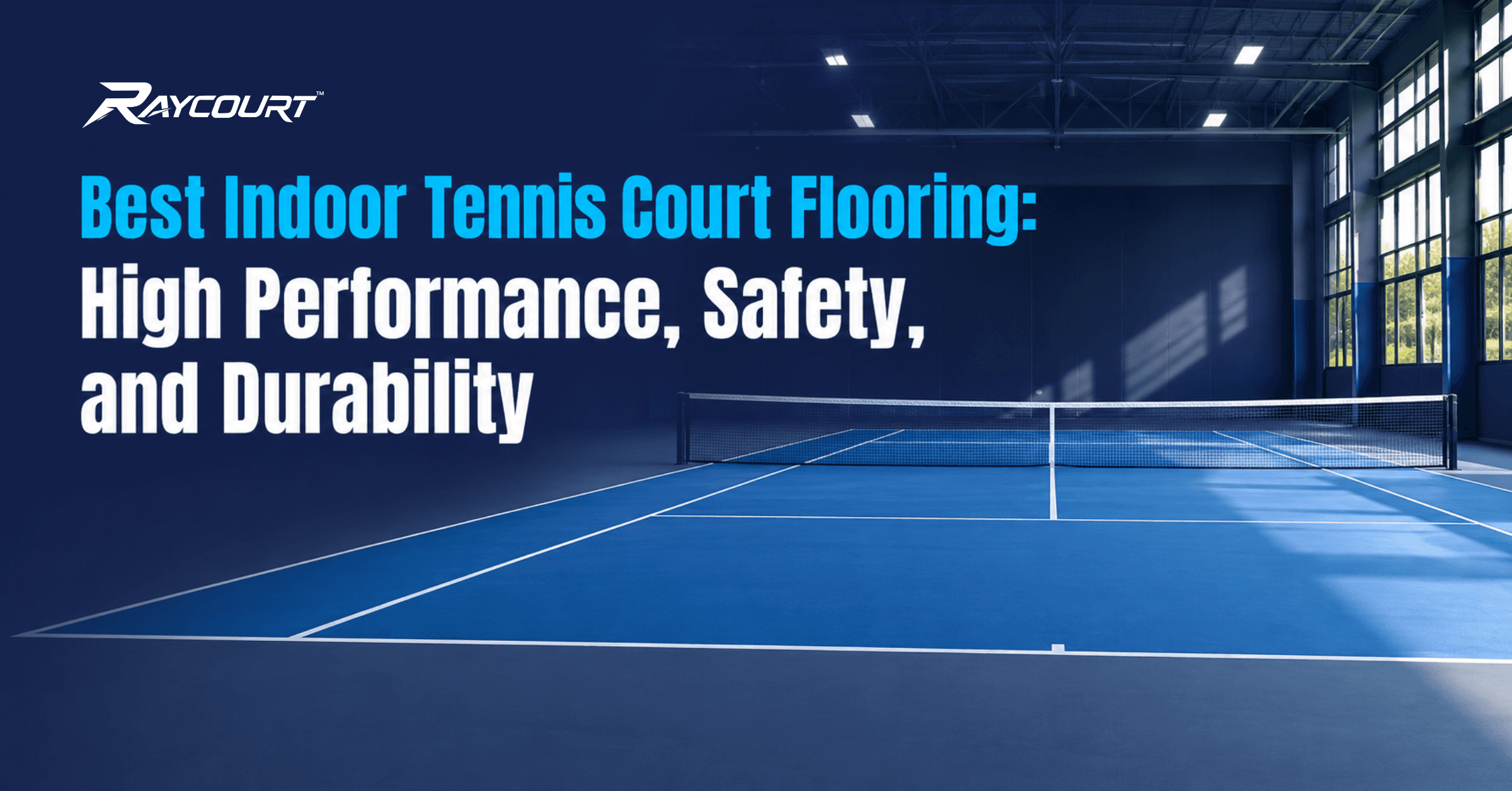
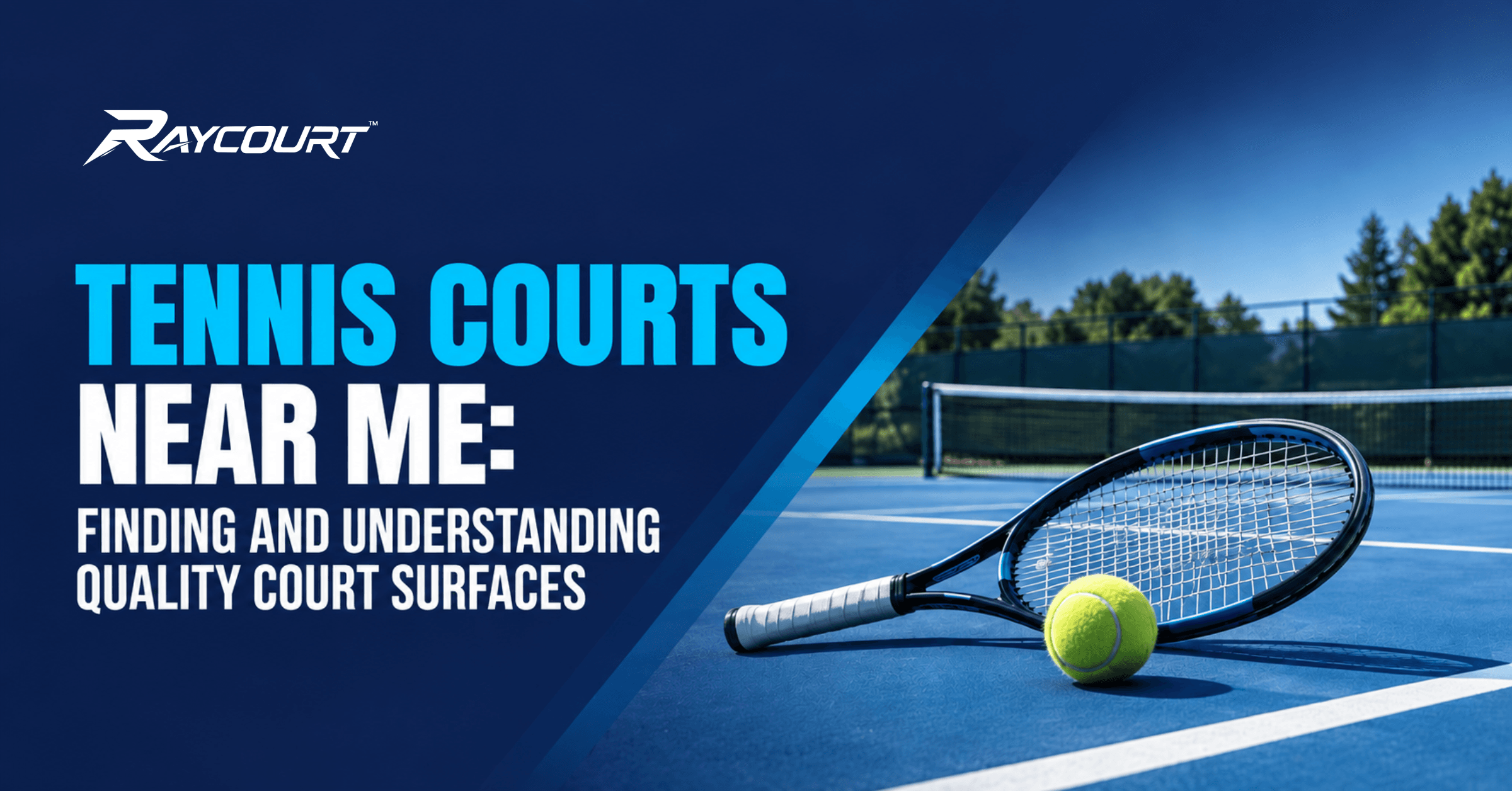
Tennis Courts
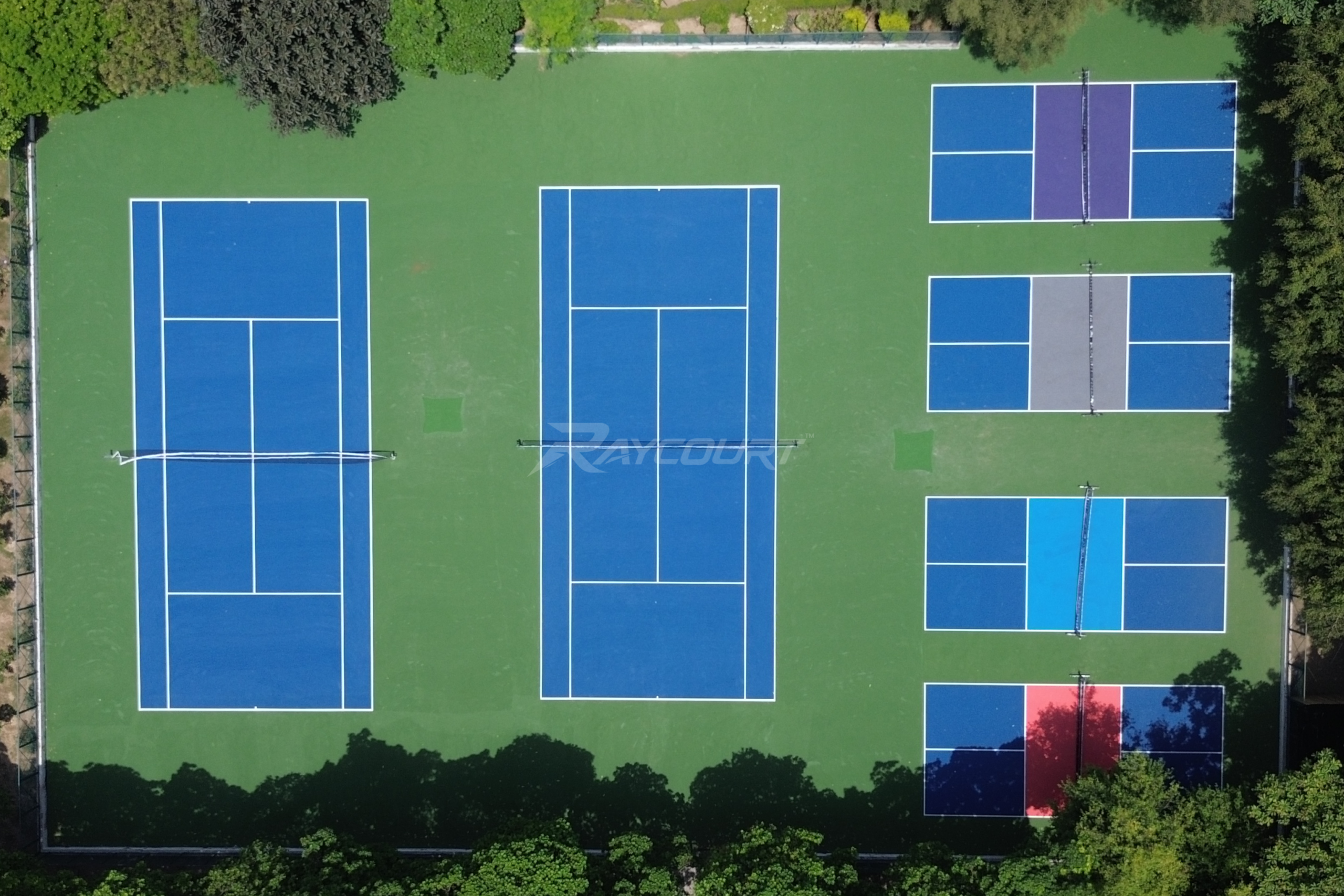
Tennis remains one of the most common applications for acrylic flooring, and for good reason. The sport demands precise, predictable ball bounce, and acrylic systems let manufacturers fine-tune the surface pace to suit different playing styles. Facilities can choose faster surfaces that reward aggressive, serve-and-volley play or slower surfaces that favor extended baseline rallies.
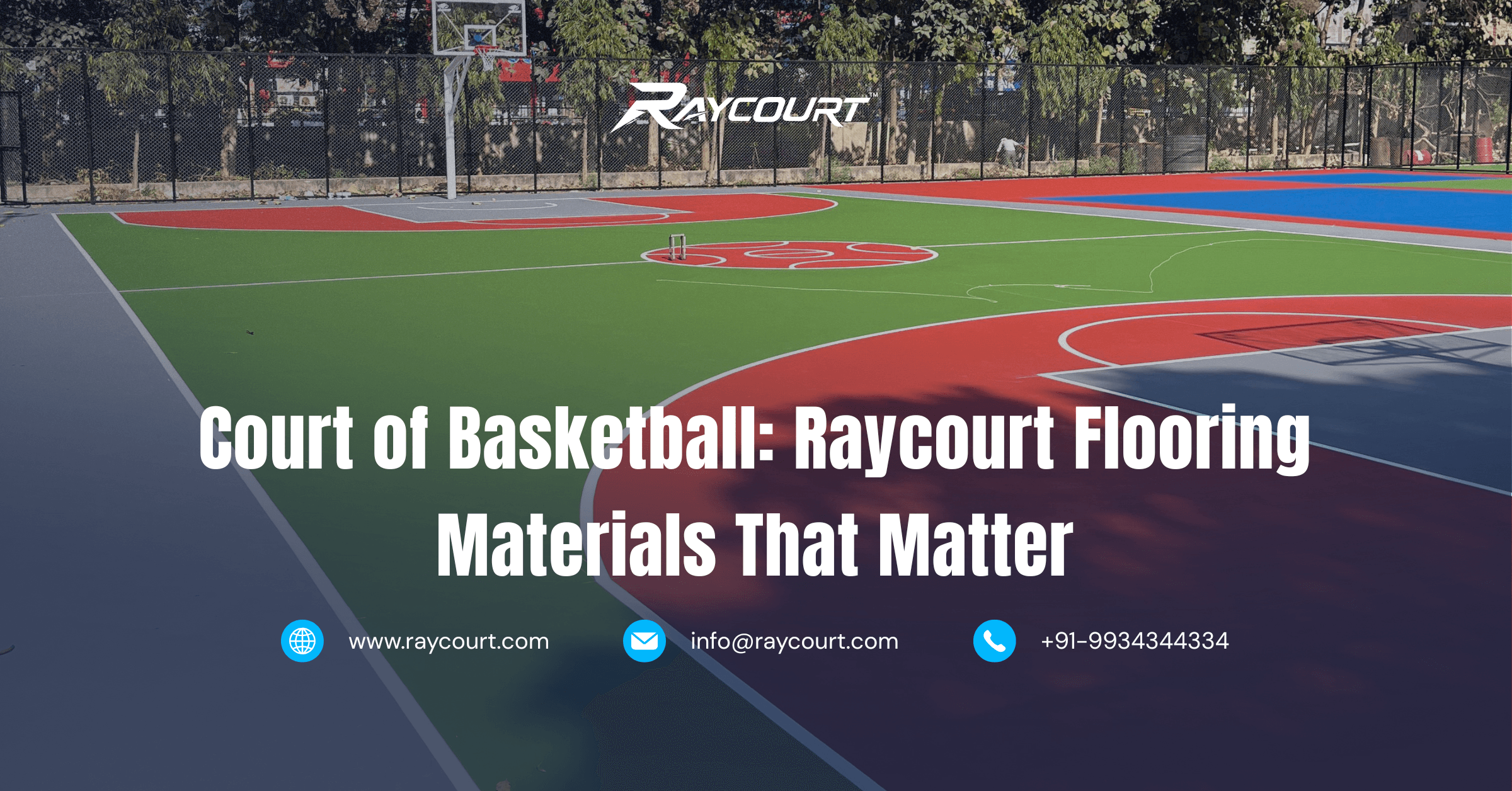
Basketball Courts
Basketball courts benefit enormously from acrylic flooring’s combination of traction and surface consistency. Players need reliable grip during rapid direction changes, jumps, and pivots. A properly textured acrylic surface delivers that grip. It doesn’t become so rough that it damages footwear or skin during falls.
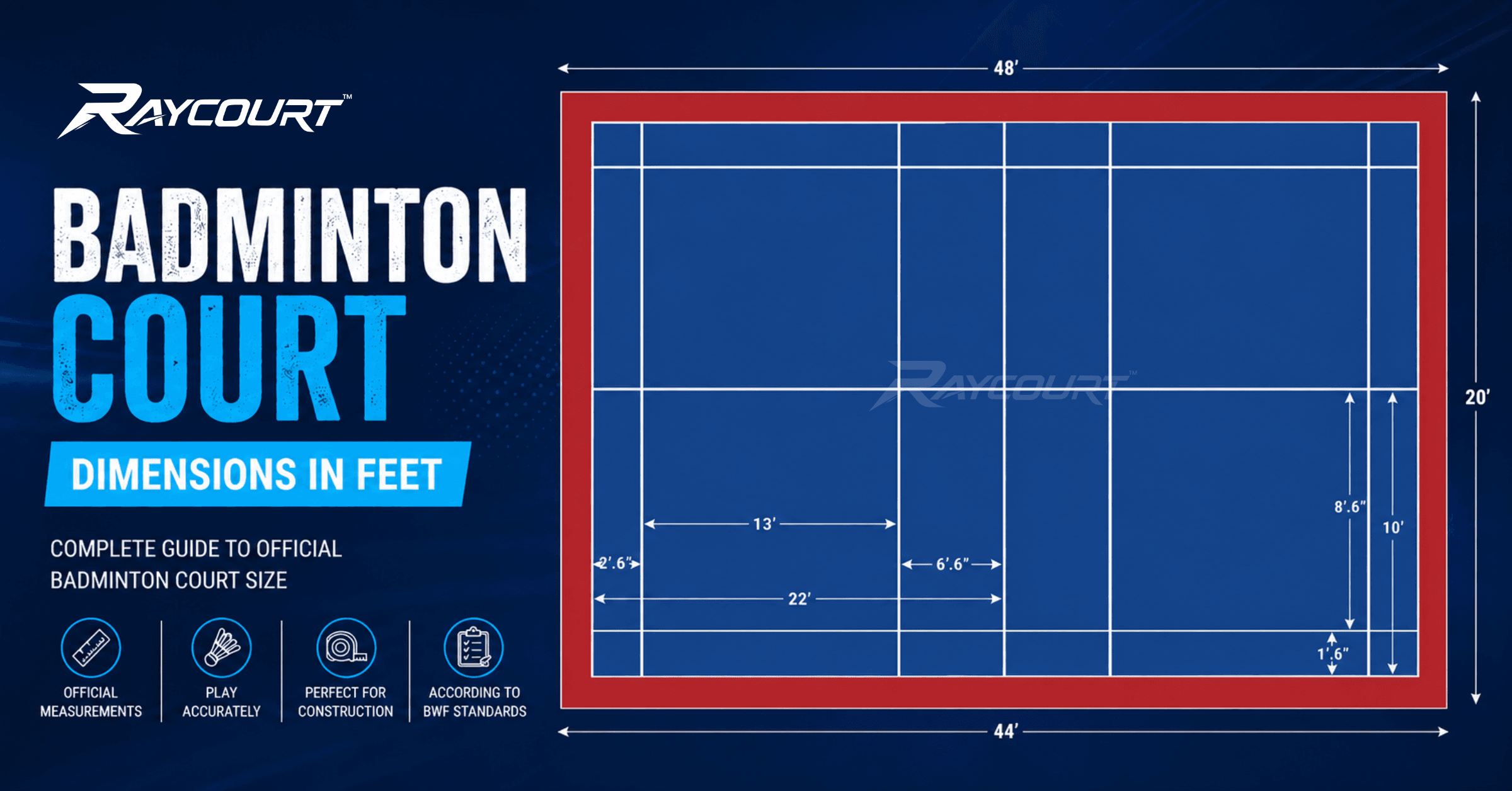
Badminton Courts
Indoor and outdoor badminton courts increasingly rely on acrylic flooring because it provides the fast, responsive surface competitive badminton demands. Badminton involves rapid lateral movement and frequent lunges. Because of this, traction consistency across the entire court becomes especially important for player safety.
Multi-Purpose Courts
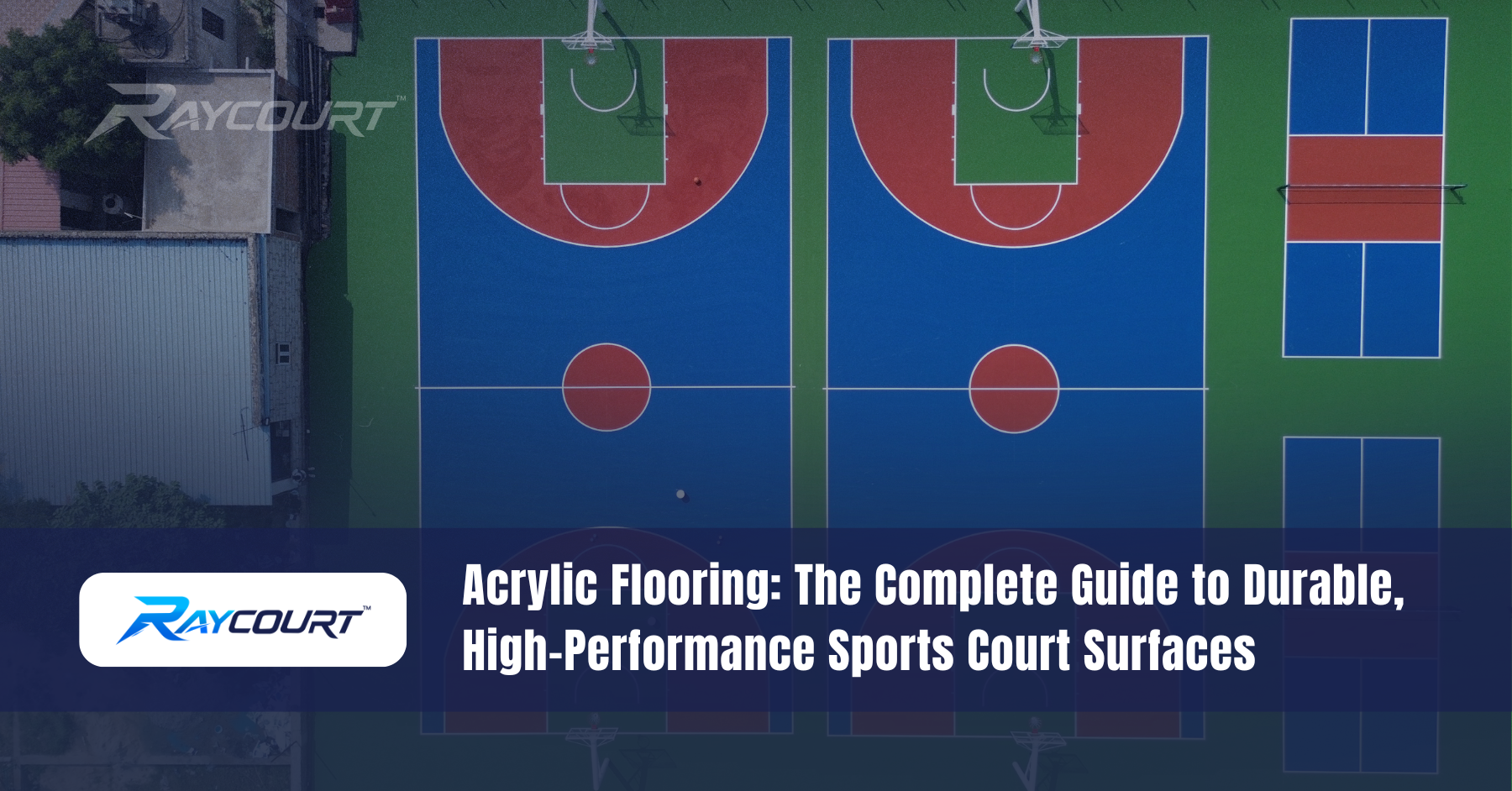
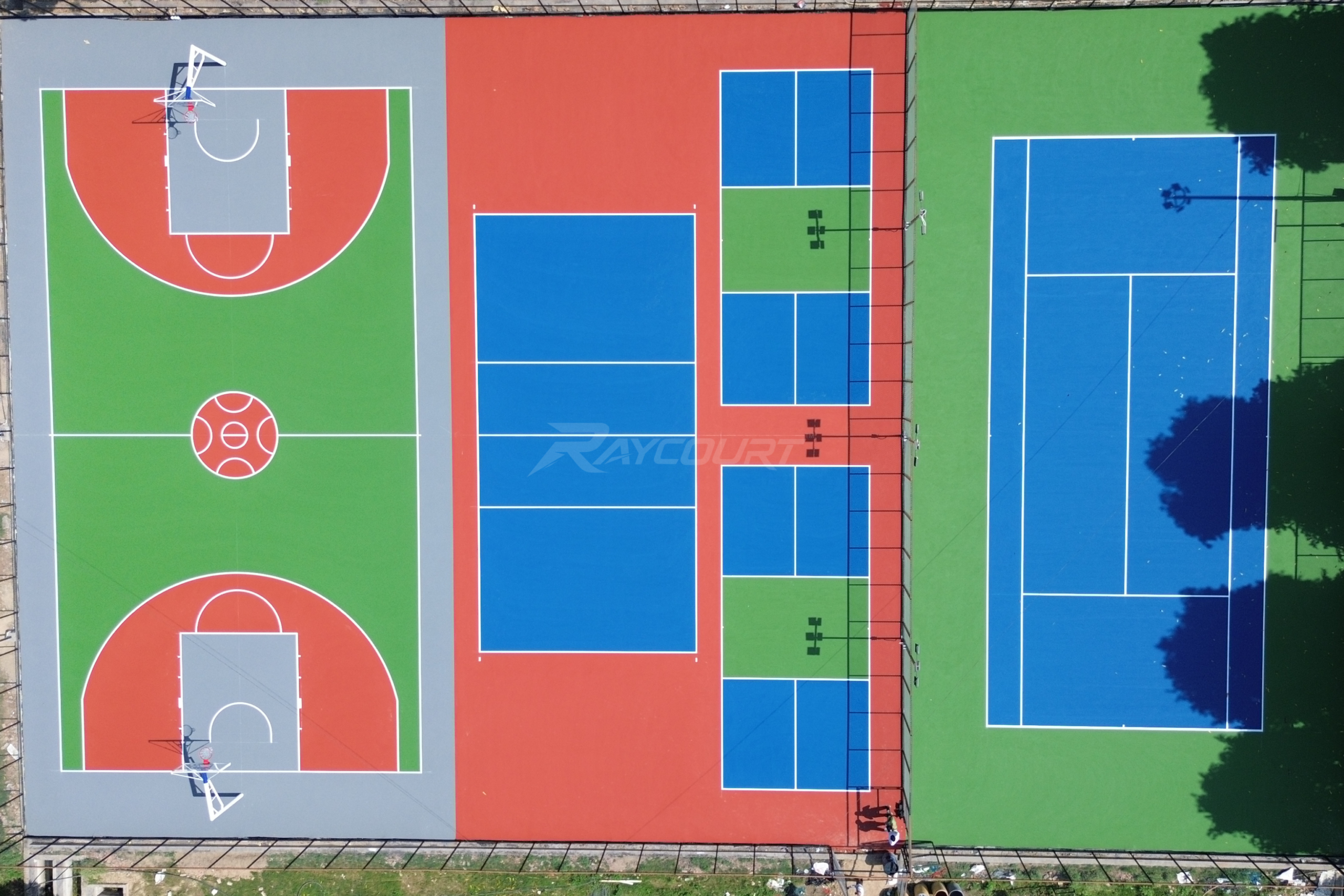
Many schools, community centers, and recreational facilities install multi-purpose courts that accommodate several sports on a single surface. Acrylic flooring handles this versatility well. Manufacturers can layer multiple sets of line markings in contrasting colors. At the same time, they maintain consistent traction and bounce characteristics across all sports.
Pickleball Courts
Pickleball’s explosive growth has driven strong demand for dedicated acrylic flooring systems. Manufacturers tailor these systems to the sport’s unique bounce and speed requirements. Pickleball courts are smaller than tennis courts. Because of this, many facilities convert existing courts or add dedicated pickleball lines to multi-purpose acrylic surfaces.
Acrylic Flooring vs. Other Court Surfaces
Facility planners often weigh acrylic flooring against alternative surfacing options before finalizing their court design. The comparison below highlights how acrylic flooring stacks up against common alternatives.
| Surface Type | Ball Bounce Consistency | Weather Resistance | Maintenance Needs | Customization |
|---|---|---|---|---|
| Acrylic Flooring | High and adjustable | Excellent | Low to moderate | Extensive |
| Synthetic Turf | Moderate, sport-dependent | Good | Moderate | Limited |
| Rubber Flooring | Moderate | Good | Moderate | Moderate |
| Unfinished Asphalt | Low, inconsistent | Fair | High | Minimal |
| Natural Clay | Low, weather-dependent | Poor in rain | Very high | Minimal |
As the table illustrates, acrylic flooring consistently outperforms unfinished asphalt and natural surfaces on the metrics that matter most for organized sports: bounce predictability, weather resilience, and design flexibility. Consequently, most competitive and semi-competitive facilities favor acrylic systems over these alternatives whenever budget and site conditions allow.
Performance Characteristics That Matter
Choosing the right acrylic flooring system requires more than picking a color. Facility owners should evaluate several performance characteristics that directly affect how the court plays and how long it lasts.
Ball Bounce and Pace
Surface pace refers to how quickly a ball loses speed and how high it bounces after contact with the court. Acrylic flooring manufacturers control pace primarily through sand grading and coating thickness. Coarser sand generally slows the ball down and increases bounce height, while finer textures produce a faster, lower-bouncing surface. Facility owners should discuss their desired playing style with their manufacturer or contractor before finalizing texture specifications.
Slip Resistance and Traction
Traction directly impacts player safety, and acrylic flooring achieves reliable grip through its textured sand-and-resin composition. Manufacturers calibrate this texture carefully. If it’s too smooth, the surface becomes dangerously slick when damp. If it’s too rough, it causes excessive wear on footwear. It also increases the risk of skin abrasions during falls. Well-engineered acrylic systems strike a careful balance that keeps players safe across a range of weather conditions.
UV and Weather Resistance
Outdoor courts face constant exposure to sunlight, rain, and temperature swings. Acrylic flooring holds up well against all three. This resilience comes from UV-stable pigments and weather-resistant binders that manufacturers use. This resistance prevents the chalky fading and color degradation that plague lower-quality coatings. It also helps the surface maintain its structural integrity through repeated freeze-thaw cycles in colder climates.
Shock Absorption and Player Comfort
Standard acrylic systems provide a firm playing surface. Cushioned acrylic options incorporate additional shock-absorbing layers for facilities that prioritize player comfort. These cushioned systems reduce impact stress on joints during high-frequency sports like basketball. This makes them a popular choice for schools and community centers that host recreational play throughout the day.
Thermal Comfort and Heat Reflectivity
Surface temperature plays a bigger role in player comfort than many facility planners initially expect. This matters particularly for outdoor courts in warmer climates. Darker acrylic coatings tend to absorb more heat. They can raise surface temperatures noticeably during peak sun hours. Lighter colors, on the other hand, reflect more sunlight and stay cooler underfoot. Manufacturers now offer heat-reflective pigment technology. This technology reduces surface temperature without sacrificing the color depth facilities want for their courts. Facility planners in hot, sun-intensive regions should raise this topic early in the selection process. The right pigment choice can meaningfully improve player comfort. This matters especially during long matches or tournaments held in peak daylight hours.
Noise and Vibration Control
Acrylic flooring also influences the acoustic experience of a court. This matters more for indoor facilities, where sound reflects off walls and ceilings. A textured acrylic surface tends to dampen ball-bounce noise slightly compared to bare concrete or hardwood. This creates a more comfortable environment for players and spectators alike. Cushioned acrylic systems amplify this benefit further, since the additional shock-absorbing layer reduces vibration transfer through the court structure. Facilities that share space with classrooms, offices, or residential areas notice this effect often. They find this acoustic dampening to be a meaningful, if underappreciated, advantage of a well-built acrylic system.
Q: Does acrylic flooring get slippery when wet?
A: A properly textured acrylic surface maintains reasonable traction even when damp, though facilities should still exercise caution during heavy rain. The graded sand texture built into quality acrylic coatings channels water and maintains grip far better than smooth, unfinished surfaces. That said, most facilities pause outdoor play during active rainfall regardless of surface type, both for safety and to protect the coating from excessive water exposure during the curing period after any recent recoating.
Acrylic Flooring and International Standards
Competitive sports surfaces don’t exist in a vacuum — international governing bodies set performance benchmarks that manufacturers and facility owners increasingly reference when selecting materials. In tennis, for example, the International Tennis Federation’s Court Pace Classification Programme evaluates surfaces based on their Court Pace Rating, sorting them into five categories ranging from slow to fast. Acrylic surfaces can fall anywhere along this spectrum depending on their texture and composition, which gives facility owners meaningful flexibility when designing courts for specific playing styles or tournament requirements.
Understanding these classification frameworks helps facility planners communicate more precisely with manufacturers about their performance goals. Rather than describing a desired surface in vague terms, planners can reference established pace categories and texture benchmarks to ensure the finished court meets both player expectations and, where relevant, tournament eligibility requirements.
Types of Acrylic Flooring Systems
Not all acrylic flooring systems serve the same purpose, and manufacturers typically offer several distinct formulations to match different facility needs.
Standard Hard Court Acrylic Systems
Standard systems apply multiple layers of textured acrylic coating directly over a resurfaced asphalt or concrete base. These systems suit the majority of outdoor tennis, basketball, and multi-purpose courts, offering a firm, responsive playing surface with excellent durability.
Cushioned Acrylic Systems
Cushioned systems add a resilient underlayer beneath the standard acrylic coating, reducing impact stress for players during extended play sessions. Schools, recreational centers, and facilities that prioritize player comfort over maximum ball speed often gravitate toward cushioned systems.
Textured Acrylic Systems
Some facilities request heavily textured acrylic systems designed to maximize traction for sports with intense lateral movement, such as badminton or multi-purpose recreational courts. These systems use coarser sand grading to boost grip, though manufacturers must balance this texture carefully to avoid excessive wear on footwear.
Hybrid and Specialty Acrylic Systems
Some facilities need a system that doesn’t fit neatly into a single category, and manufacturers increasingly offer hybrid formulations to meet these needs. A hybrid system might combine a cushioned base layer with a firmer, faster-paced top coating, giving players comfort underfoot without sacrificing the responsive bounce competitive sports demand. Other specialty formulations target specific challenges, such as anti-glare pigments for courts positioned near heavy glass facades or reflective building surfaces, or extra-flexible resin blends for facilities built over less stable soil conditions. Discussing these edge cases directly with a manufacturer helps facility owners avoid forcing a standard system onto a site that would benefit from a more tailored solution.
Maintenance and Longevity of Acrylic Flooring
Acrylic flooring rewards facilities that commit to routine maintenance with many years of reliable performance. Neglecting basic upkeep, on the other hand, accelerates wear and shortens the interval between necessary recoating cycles.
Routine Cleaning
Regular sweeping and rinsing remove dirt, leaves, and debris that can trap moisture against the surface and encourage algae or mildew growth. Facilities in humid climates should pay particular attention to shaded areas of the court, since reduced sun exposure in these zones allows organic growth to take hold more easily.
Seasonal Care
Seasonal changes bring different maintenance priorities. In colder regions, facility managers should clear snow and ice promptly using plastic (not metal) tools to avoid scratching the surface. In hotter climates, periodic rinsing helps prevent dust buildup, which can otherwise reduce traction over time.
Recoating Cycles
Even well-maintained acrylic flooring eventually requires recoating as the top layer wears down from UV exposure and foot traffic. Facility managers should watch for early warning signs such as color fading, surface chalking, or reduced traction, since addressing these issues promptly extends the underlying system’s overall lifespan.
Expert Tip: Schedule a professional surface inspection at the start of each playing season. Catching minor cracks or drainage issues early prevents them from developing into larger, more disruptive repairs later on.
Q: How often should facilities recoat their acrylic courts?
A: Recoating frequency depends heavily on climate, usage intensity, and the quality of the original installation, so facility managers should rely on visual and performance cues rather than a fixed calendar schedule. Signs like fading color, reduced traction, or visible surface wear indicate that a fresh coating cycle is approaching. Regular inspections help facilities plan recoating proactively rather than reactively, which keeps courts safer and more consistent for players throughout their service life.
Sustainability and Acrylic Flooring
Sustainability has become an increasingly important consideration for facility planners, and acrylic flooring offers several advantages in this regard. Because acrylic systems bond directly to existing asphalt or concrete bases, facilities can often refresh an aging court without demolishing and replacing the entire structure. This approach conserves raw materials and reduces the construction waste associated with full surface replacement.
Additionally, water-based acrylic formulations generally involve fewer harsh solvents than some alternative coating systems, which benefits both installation crews and the surrounding environment. Manufacturers continue to refine their formulations to reduce environmental impact further while maintaining the performance characteristics that make acrylic flooring effective for competitive sports.
Facilities that prioritize sustainability should discuss formulation options directly with their material supplier, since specific environmental certifications and material compositions vary between manufacturers and product lines.
Beyond material composition, the longevity of acrylic flooring itself contributes meaningfully to sustainable facility management. A court that performs reliably for many years without major intervention generates far less waste over its lifetime than a surface that requires frequent, disruptive replacement. Facility planners who factor long-term durability into their sustainability calculations often find that acrylic flooring compares favorably against alternatives that look appealing upfront but demand more frequent overhauls down the road.
Choosing the Right Acrylic Flooring for Your Facility
Selecting the ideal acrylic flooring system requires facility owners to weigh several interconnected factors rather than focusing on any single characteristic in isolation. Rushing this decision often leads to a surface that looks appealing on day one but falls short of expectations once regular play begins, so it pays to slow down and evaluate each factor carefully alongside a knowledgeable manufacturer.
Consider the following when evaluating your options:
- Primary sport or sports — Different sports call for different pace and texture profiles, so identify your primary use case before finalizing specifications.
- Climate conditions — Facilities in regions with intense sun, heavy rain, or freeze-thaw cycles should prioritize weather-resistant formulations.
- Player skill level — Competitive facilities may need tighter pace tolerances than recreational courts designed for casual play.
- Existing base condition — The condition of your current asphalt or concrete base affects which resurfacing approach makes the most sense.
- Maintenance capacity — Facilities with limited maintenance staff should discuss low-upkeep formulations with their supplier.
- Multi-sport requirements — Courts serving multiple sports need careful planning around line marking and texture compromises.
Working closely with an experienced material manufacturer helps facility owners navigate these decisions with confidence, since manufacturers can recommend formulations based on the specific combination of climate, usage, and performance goals a facility presents.
Q: Can acrylic flooring go over an existing surface without full demolition?
A: In many cases, yes — acrylic flooring bonds well with existing asphalt or concrete bases, provided the underlying structure remains sound and free of significant cracking or drainage problems. A qualified installation contractor typically inspects the base first to confirm it can support a fresh acrylic system. If the base shows structural damage, contractors may need to complete repairs before applying new acrylic layers, but this approach still tends to be far less disruptive than a complete surface rebuild.
Common Mistakes to Avoid When Selecting Acrylic Flooring
Even experienced facility planners sometimes overlook important details when specifying acrylic flooring, and these oversights often lead to disappointing results or premature wear. Understanding the most common pitfalls helps facility owners approach the selection process with a sharper, more informed perspective.
Underestimating Base Preparation
Many facility owners focus almost entirely on the acrylic coating itself while giving too little attention to the base beneath it. However, even the highest-quality acrylic system cannot compensate for a cracked, uneven, or poorly draining base. Cracks in the underlying asphalt or concrete tend to telegraph through the acrylic layers over time, and drainage problems lead to standing water that accelerates surface wear. Facility owners should insist on a thorough base inspection before approving any resurfacing project, since this step protects the entire investment that follows.
Choosing Texture Without Considering the Primary Sport
Facility owners sometimes select a texture profile based purely on aesthetic preference or generic recommendations rather than the specific sport their court will host most often. A texture ideal for basketball may not suit competitive tennis, and vice versa. Skipping this evaluation often results in a surface that looks great but plays inconsistently for its intended use, frustrating players and coaches who expect performance to match their sport’s specific demands.
Ignoring Climate-Specific Formulation Needs
Facilities in extreme climates sometimes select standard acrylic formulations without discussing regional adjustments with their manufacturer. This oversight can shorten the surface’s effective lifespan considerably, since standard formulations may not offer sufficient UV protection for intense sun exposure or adequate flexibility for severe freeze-thaw cycles. Raising climate considerations early in the conversation with a manufacturer helps ensure the chosen formulation matches the facility’s actual operating conditions.
Delaying Routine Maintenance
Facility managers occasionally treat acrylic flooring as a “install and forget” investment, skipping the routine cleaning and inspection that keeps a court performing well. This approach almost always backfires, since neglected debris, standing water, and minor cracks compound into larger, more disruptive problems over time. Building a simple, consistent maintenance routine from day one protects the court’s performance and extends the interval between major recoating projects.
Expert Tip: Keep a written maintenance log for each court, noting cleaning dates, weather events, and any visible wear. This record helps facility managers spot developing patterns early and gives manufacturers useful context if performance questions ever arise.
Avoiding these four pitfalls doesn’t require specialized expertise — it mostly comes down to asking the right questions early and treating base preparation, texture selection, climate fit, and maintenance planning as equally important parts of the same decision, rather than separate afterthoughts tackled one at a time.
Why Facility Developers Choose Raycourt Acrylic Flooring
Raycourt manufactures its acrylic flooring systems with a strong focus on consistency, durability, and performance across a wide range of sports applications. As a dedicated manufacturer, Raycourt concentrates entirely on formulating high-quality acrylic resins, coatings, and line-marking materials rather than dividing its attention across installation services, which allows the company to focus its expertise on material science and product reliability.
Facility developers, architects, and sports organizations turn to Raycourt because the company backs its products with rigorous formulation standards and a deep understanding of how acrylic systems perform across different climates and sports. Raycourt continually monitors industry developments and evolving performance benchmarks to keep its product lineup aligned with what modern sports facilities need. This commitment to quality manufacturing gives facility owners confidence that their chosen acrylic flooring will perform reliably for years of active use.
Raycourt collaborates with a network of qualified installation contractors who apply its materials on-site, ensuring that facilities receive both premium materials and skilled application. This partnership model lets Raycourt maintain tight quality control over its manufacturing process while relying on experienced local professionals to handle the technical details of on-site installation.
This division of focus benefits facility owners directly. Because Raycourt channels its resources into research, formulation, and quality assurance rather than spreading them across installation crews and material production simultaneously, the company can respond quickly to new performance standards and evolving facility needs. Facility developers who want a manufacturer that treats acrylic flooring as a precise, ongoing discipline — rather than a side offering — consistently find that focus reflected in Raycourt’s product consistency from batch to batch and project to project.
Frequently Asked Questions (FAQs)
Acrylic flooring uses an engineered multi-layer system with resin, graded sand, and UV-stable pigments that control bounce and traction, while regular paint offers only surface color. Paint wears quickly and provides inconsistent traction; acrylic flooring bonds more securely and resists peeling far better.
Yes — this is one of acrylic flooring’s biggest advantages. Manufacturers adjust pigment blends for virtually any color scheme and vary sand grading to produce faster or slower, rougher or smoother surfaces tailored to a facility’s sport and players.
Generally, yes. UV-stable pigments and heat-resistant binders help prevent fading in hot regions, while flexible formulations accommodate freeze-thaw expansion in colder ones. Facilities in extreme climates should still confirm formulation details with their manufacturer.
Acrylic flooring performs well both indoors and outdoors, with minor formulation differences since indoor courts skip UV and weather exposure. Its core benefits — consistent traction, predictable bounce, and durability — hold up equally well in gymnasiums and community centers.
Manufacturers control bounce precisely through sand grading, coating thickness, and layer composition, unlike unfinished asphalt or natural surfaces. This lets facilities choose a faster, lower-bouncing court or a slower, higher-bouncing one, with far more weather-proof consistency than clay or grass.
Final Thoughts on Acrylic Flooring
Acrylic flooring continues to set the standard for outdoor and indoor sports court surfaces because it delivers a rare combination of durability, customization, and performance consistency. From tennis and basketball to badminton and multi-purpose recreational courts, this engineered surfacing system adapts to nearly any sport and climate while maintaining the predictable playing characteristics that competitive and recreational players alike depend on.
Facility owners who invest time in understanding acrylic flooring’s layered composition, performance characteristics, and maintenance requirements position themselves to make smarter, longer-lasting decisions about their sports surfaces. That upfront diligence pays off consistently: fewer surprises during installation, steadier performance across seasons, and a court that continues to serve players well long after the initial excitement of opening day fades. As a dedicated manufacturer, Raycourt remains focused on producing acrylic flooring materials that meet the demanding standards modern sports facilities require, giving developers and facility managers a reliable foundation to build their courts on for years to come.