
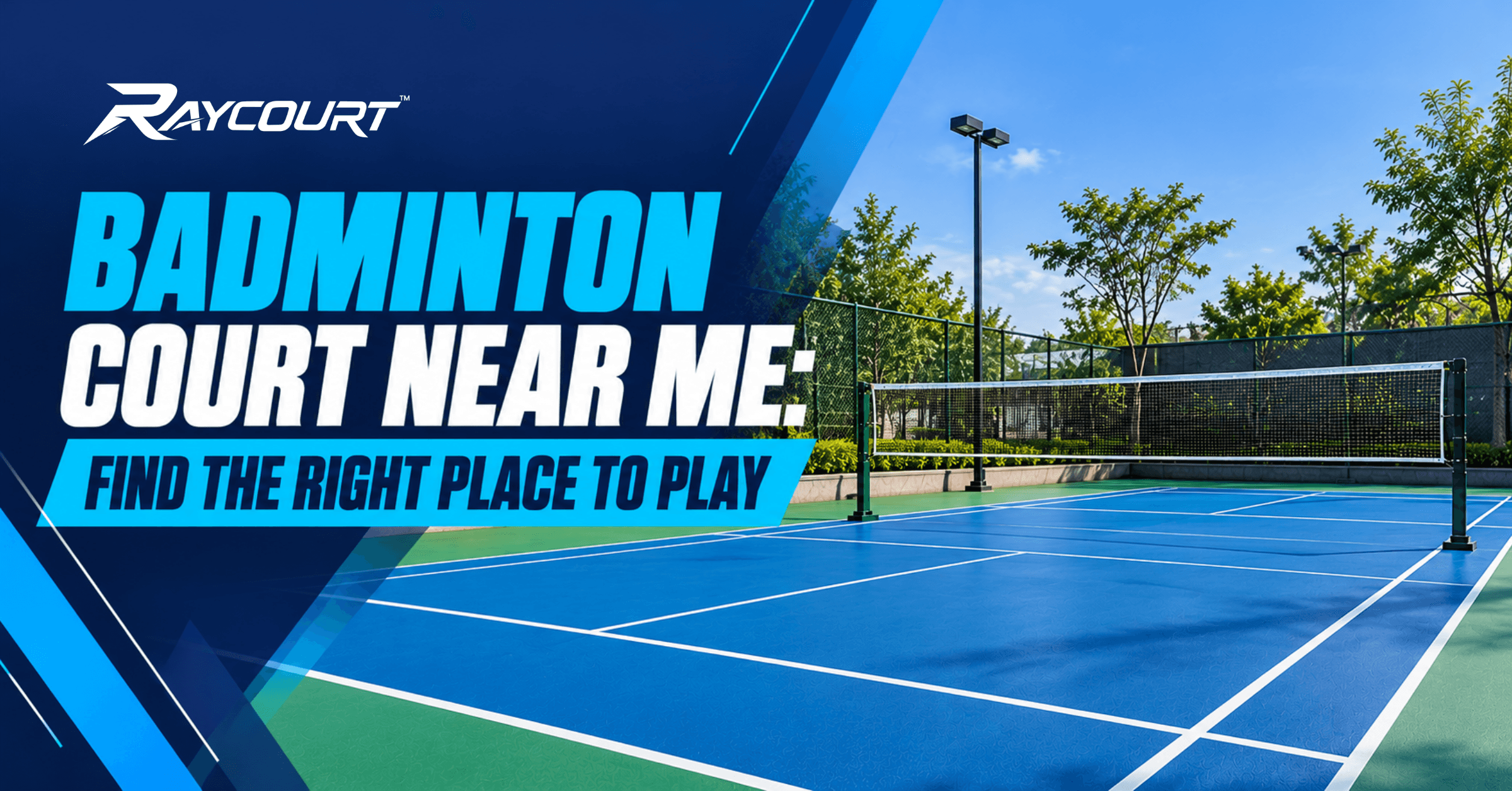
Searching for a badminton court near me can help you discover convenient places to practise, exercise, and enjoy competitive matches. The right court should offer a suitable playing surface, clear markings, comfortable lighting, and enough space for safe movement. Additionally, you should consider the venue’s location, maintenance standards, booking arrangements, and playing environment.
Badminton attracts players of different ages and skill levels. Some people play casually with friends, while others practise regularly at professional academies. Therefore, your choice of court should match your playing goals, preferred schedule, and experience level.
However, location alone should not determine your decision. A nearby court might lack proper lighting, consistent surface conditions, or adequate clearance around the playing area. Consequently, checking these details before booking can improve your overall experience.
The playing surface also deserves careful attention. Indoor wooden sports floors, synthetic sports flooring, and other purpose-designed surfaces offer different characteristics. Each option influences traction, movement, maintenance requirements, and playing comfort.
Raycourt manufactures sports court flooring materials, including synthetic acrylic systems for suitable sports surfaces. We help facility owners understand flooring materials when planning or upgrading their sports facilities. Our role focuses on manufacturing materials rather than providing court installation services.
This guide explains how to find a suitable badminton court near you. It also explores court dimensions, surface selection, maintenance, safety, and facility features. Whether you play occasionally or manage a sports academy, these insights can help you make an informed decision.
How to Find a Badminton Court Near Me
Finding a badminton court nearby starts with understanding your location and playing requirements. Search engines, map applications, sports directories, and local community groups can help identify potential venues.
Start with the phrase “badminton court near me” on your preferred search engine. Review nearby facilities and compare their locations, opening hours, photographs, and available amenities. Then, contact promising venues to confirm their current arrangements.
Online listings provide a useful starting point, but they do not always reflect current conditions. Therefore, verify essential details directly with the facility before planning your visit.
Use Google Maps to Discover Nearby Courts
Google Maps can display badminton venues around your current search area. You can compare distances, directions, business hours, photographs, and customer reviews.
Follow these steps:
- Open Google Maps on your phone or computer.
- Search for badminton court near me.
- Review the facilities that appear around your location.
- Check travel times and available transport options.
- Read recent reviews for information about cleanliness and court conditions.
- Contact the venue to confirm availability and booking requirements.
- Save suitable locations for future visits.
Moreover, review photographs that show the actual playing area. Look for clear court markings, adequate lighting, clean surroundings, and suitable separation between courts.
Explore Local Sports Academies and Indoor Stadiums
Sports academies often provide structured practice opportunities for beginners and experienced players. Some facilities also offer coaching, group sessions, tournaments, and equipment support.
Indoor stadiums may accommodate several courts within one building. These venues can suit players who prefer organised sessions and protection from outdoor weather.
However, each facility follows its own policies. Check whether the venue accepts casual bookings, requires memberships, or prioritises academy students.
Ask Local Players for Recommendations
Local badminton communities can offer practical information that online listings might miss. Players often understand which facilities maintain consistent playing conditions and accommodate different skill levels.
Ask about surface quality, peak-hour congestion, lighting, ventilation, and changing facilities. You can also learn whether a venue supports singles matches, doubles games, coaching, or regular competitions.
Nevertheless, compare recommendations with your own requirements. A popular academy might suit competitive players but offer limited flexibility for casual visitors.
What Makes a Good Badminton Court Near Me?
A good badminton court supports comfortable movement, clear visibility, and predictable playing conditions. Several facility features contribute to that experience.
A Consistent and Suitable Playing Surface
Players constantly accelerate, stop, turn, and reach for the shuttlecock. Therefore, the surface should provide suitable traction and consistent contact underfoot.
Look for an even playing area without loose materials, sharp edges, unexpected changes in level, or visible damage. These conditions can interfere with footwork and increase the risk of slips or trips.
Different sports surfaces serve different purposes. A surface suitable for outdoor recreational activities may not suit every indoor badminton environment.
Expert tip: Ask the facility about its flooring system and maintenance routine. A clean appearance helps, but surface condition and suitability matter more than appearance alone.
Clear Court Markings
Court lines help players judge boundaries, service areas, and rally outcomes. Clearly visible markings reduce confusion during casual games and organised matches.
Standard badminton courts use specific dimensions and line arrangements. The relevant lines differ for singles and doubles play.
Check whether the lines remain visible across the entire court. Faded, inconsistent, or confusing markings can disrupt games.
Adequate Lighting
Badminton requires players to track a small shuttlecock across a wide visual field. Poor lighting can make fast rallies more difficult.
Look for even illumination without distracting glare. Lights should also minimise harsh shadows across the playing area.
Indoor venues should consider fixture placement and ceiling clearance. Outdoor venues need suitable lighting if they allow evening play.
Sufficient Space Around the Court
Players often move beyond the immediate landing point of a shuttlecock. Therefore, surrounding clearance matters for comfort and safety.
Inspect the space behind each baseline and beside the sidelines. Walls, benches, pillars, and other equipment should not create unnecessary hazards.
Facilities with multiple courts should also provide sensible separation. Adequate spacing helps players move without interfering with neighbouring matches.
Cleanliness and General Maintenance
A suitable court requires more than good flooring materials. Regular cleaning and facility maintenance also support a better playing environment.
Check for dust, moisture, debris, damaged equipment, and clutter near the boundaries. Indoor facilities should also maintain suitable ventilation and comfortable conditions.
Ask staff how they handle surface inspections and repairs. Consistent maintenance often provides a better experience than occasional cosmetic improvements.
Indoor or Outdoor Badminton Court Near Me: Which Should You Choose?
Your preferred playing environment can influence which badminton court suits you best. Indoor and outdoor facilities offer different advantages and limitations.
Benefits of Indoor Badminton Courts
Indoor courts provide shelter from rain, direct sunlight, and changing outdoor conditions. This environment can support regular training throughout the year.
Many indoor facilities also provide controlled lighting and defined playing areas. These features help players maintain consistent practice schedules.
Indoor venues may offer additional amenities, including:
- Changing rooms and washrooms.
- Drinking water facilities.
- Spectator seating.
- Coaching areas.
- Equipment rental.
- Dedicated practice sessions.
- Tournament facilities.
However, indoor venues still require suitable ventilation, lighting, ceiling clearance, and regular maintenance.
Benefits of Outdoor Badminton Courts
Outdoor courts can suit recreational players who prefer fresh air and open surroundings. Parks, residential communities, and multipurpose sports areas sometimes provide outdoor badminton facilities.
Outdoor access may also suit informal games with family and friends. However, weather conditions can influence availability and playing comfort.
Wind can alter shuttlecock flight significantly. Rain and surface moisture can also affect traction and visibility.
Therefore, inspect the playing surface before starting a match. Avoid playing when moisture or other conditions create an obvious slipping hazard.
Comparing Indoor and Outdoor Options
| Feature | Indoor court | Outdoor court |
|---|---|---|
| Weather protection | Strong protection | Depends on conditions |
| Lighting | Usually controlled | Depends on daylight or fixtures |
| Wind interference | Generally limited | Can affect shuttle flight |
| Surface exposure | Less direct weather exposure | Greater environmental exposure |
| Playing schedule | Often more predictable | Weather-dependent |
| Maintenance needs | Cleaning and indoor upkeep | Cleaning and weather-related upkeep |
| Typical setting | Stadiums and sports academies | Parks and recreational facilities |
Neither option suits every player or situation. Instead, choose the environment that supports your schedule, playing style, and preferred conditions.
Understanding Badminton Court Dimensions
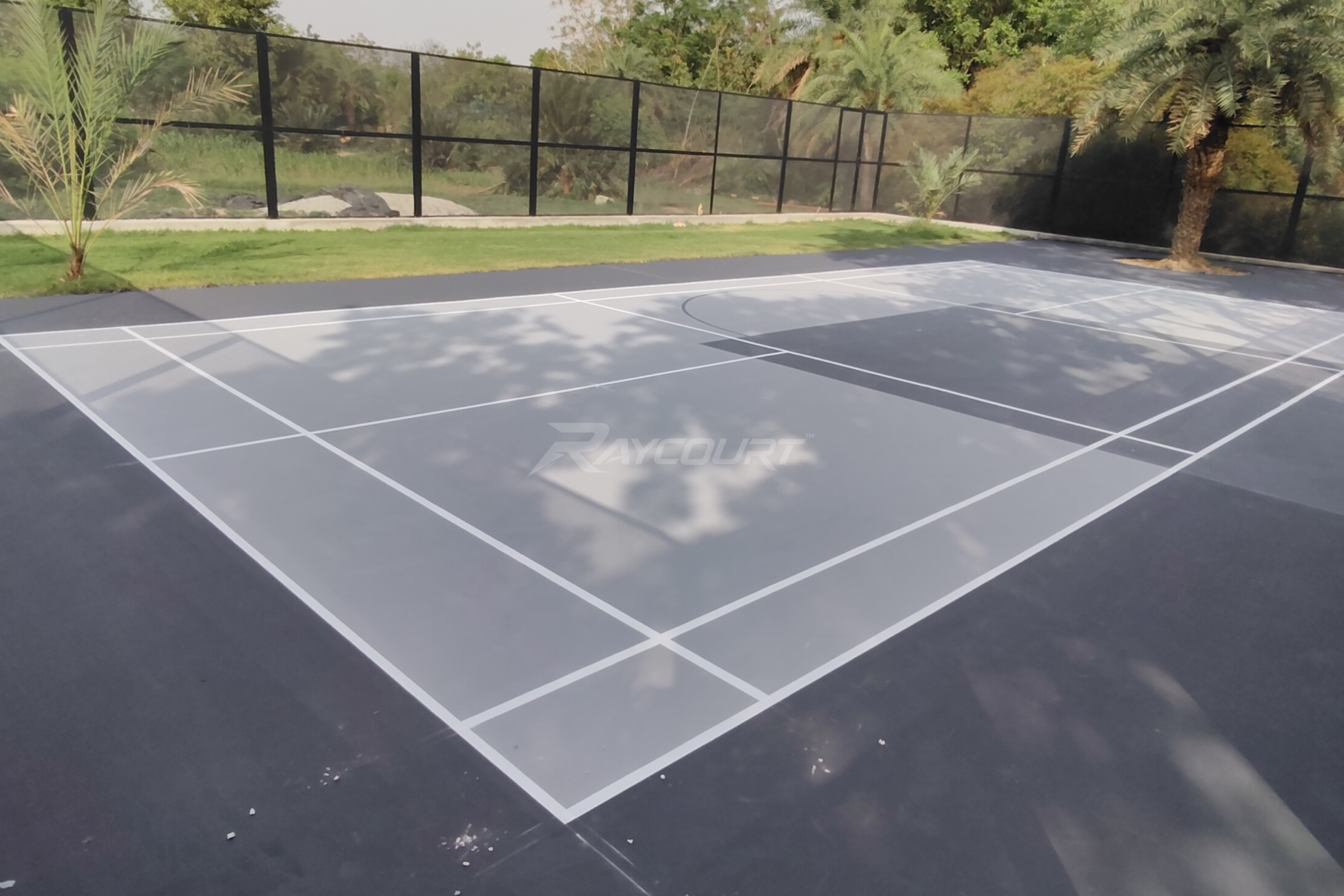
Court dimensions matter when you evaluate a venue or plan a new sports facility. Correct measurements help players practise within familiar boundaries and follow standard rules.
The Badminton World Federation provides the official Laws of Badminton. Its court diagram specifies the standard playing dimensions and line arrangements.
For the current rules, consult the Laws of Badminton.
Standard Badminton Court Measurements
A standard badminton court measures 13.40 metres in length. Its doubles width measures 6.10 metres, while the singles width measures 5.18 metres.
These measurements describe the playing court itself. A complete facility also needs additional space around the court.
| Court specification | Standard measurement |
|---|---|
| Court length | 13.40 metres |
| Doubles court width | 6.10 metres |
| Singles court width | 5.18 metres |
| Standard line width | 40 millimetres |
| Net height at the centre | 1.524 metres |
| Net height at the posts | 1.55 metres |
Always consult the applicable regulations before designing a competition venue. Organisers may also need to consider additional requirements for playing clearance and facilities.
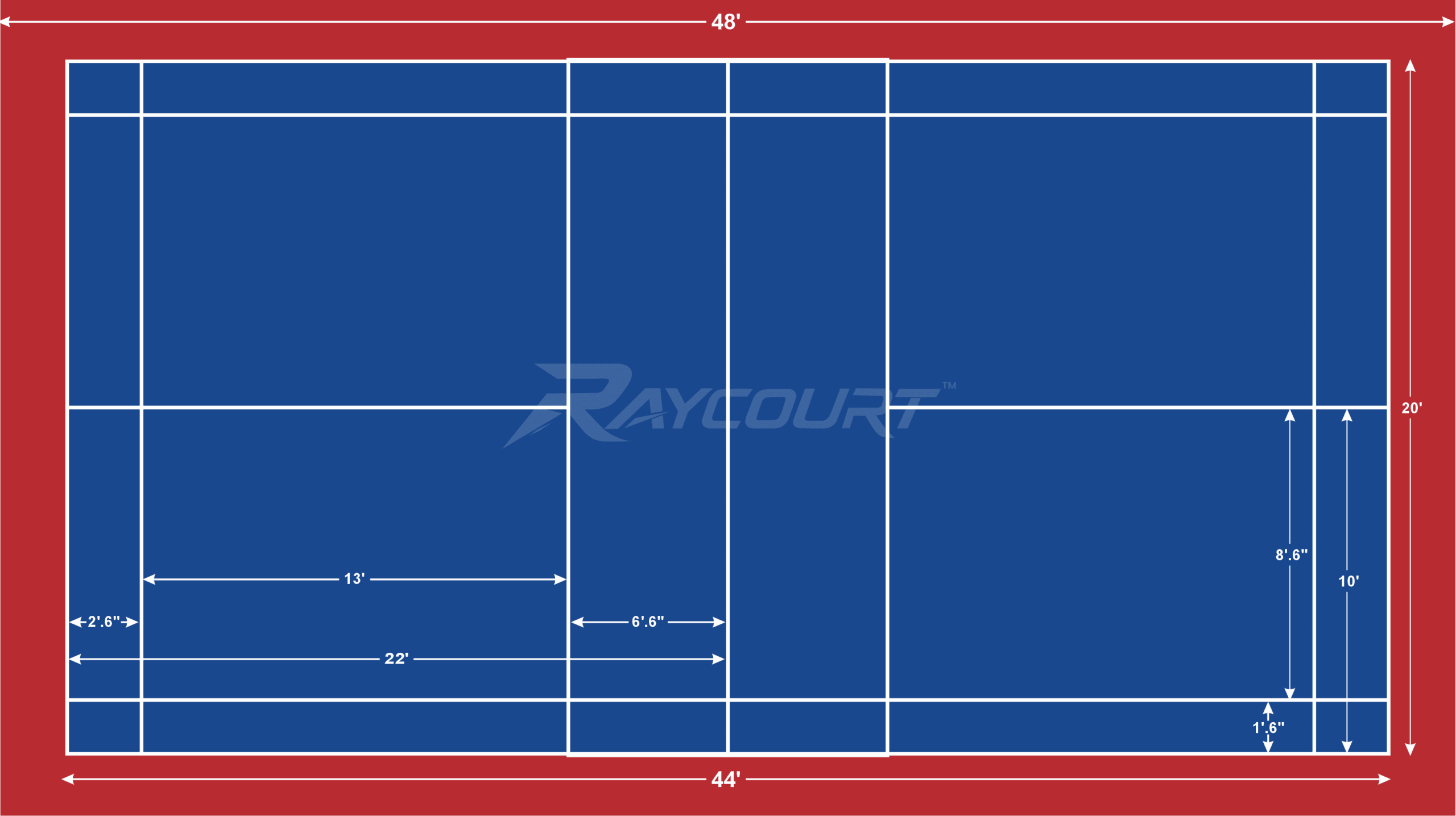
Understanding Singles and Doubles Markings
Singles and doubles use different sidelines during play. The outer sidelines define the wider doubles court, while the inner sidelines define the narrower singles court.
The service lines also help determine whether a serve lands within the correct area. These markings serve specific purposes under badminton rules.
Consequently, accurate line placement matters for both training and competition. Facility managers should verify the layout before applying permanent markings.
Why Surrounding Clearance Matters
The playing rectangle does not represent the entire space a facility needs. Players require room to accelerate, change direction, and reach for difficult shots.
Walls, structural columns, and neighbouring courts can restrict movement. Therefore, facility planners should evaluate the complete playing environment rather than court measurements alone.
Ceiling height also deserves attention in indoor facilities. A low ceiling can interfere with high clears and other overhead shots.
Expert tip: Ask a qualified sports facility designer to review the complete layout before construction or resurfacing decisions. Confirm the applicable requirements with the relevant sporting authority.
Which Playing Surface Should You Expect at a Badminton Court Near Me?
The playing surface influences traction, footwork, comfort, and maintenance. Therefore, understanding common flooring types can help you evaluate nearby facilities.
Badminton venues may use timber sports floors, synthetic sports flooring, vinyl systems, or other purpose-designed surfaces. The right option depends on the venue, intended use, subfloor, and applicable performance requirements.
Wooden Sports Flooring
Timber sports floors appear in many indoor sports halls. Purpose-designed systems can provide suitable playing characteristics when facility managers maintain them correctly.
Their performance depends on the complete floor construction, not simply the visible timber layer. Subfloor design, surface finish, installation quality, and maintenance all matter.
Players should check for loose boards, damaged areas, uneven transitions, or slippery finishes. Facility managers should follow the flooring manufacturer’s cleaning and maintenance instructions.
Synthetic Sports Flooring
Synthetic flooring covers several material types and system designs. Manufacturers develop different products for specific sports and operating environments.
A suitable synthetic system can provide a consistent playing surface when the design matches the intended activity. However, not every synthetic material suits every badminton application.
Facility managers should assess traction, surface consistency, durability, cleaning requirements, and product documentation. They should also confirm compatibility with the existing base.
Vinyl Sports Flooring
Some indoor badminton facilities use sports vinyl flooring systems. These products can support multipurpose sports environments when they match the facility’s requirements.
The system’s construction and supporting base influence its performance. Consequently, buyers should review the manufacturer’s technical information instead of judging the surface by appearance.
Concrete and Other Hard Bases
Concrete often serves as a supporting base in sports facility construction. However, exposed concrete does not automatically provide suitable badminton playing characteristics.
The finished surface needs appropriate traction, evenness, and suitability for the intended use. Facility planners should also address cracks, moisture, drainage, and surface irregularities.
A suitable sports flooring system may require a carefully prepared base. The appropriate design depends on whether the venue serves indoor badminton, outdoor recreation, or another sport.
Can Synthetic Acrylic Flooring Suit a Badminton Court?
Synthetic acrylic flooring plays an important role in several outdoor sports applications. It commonly appears on tennis, basketball, and pickleball courts.
However, synthetic acrylic flooring does not automatically suit every badminton facility. Its suitability depends on the product formulation, complete system design, supporting base, and intended playing conditions.
Raycourt manufactures synthetic acrylic sports flooring materials for suitable sports court applications. We help facility owners understand product selection and technical considerations.
Understanding Acrylic Sports Flooring Systems
Acrylic sports surfaces generally use specialised coatings that form part of a complete surface system. Different products perform different functions within that system.
Depending on the specification, a system may include a primer, resurfacer, texture layer, colour coating, and line-marking materials. Product selection should follow the manufacturer’s documented requirements.
Each layer contributes to the finished surface. Therefore, the complete system matters more than an isolated coating.
Why Product Suitability Matters
A product designed for one sport may not meet another sport’s requirements. Badminton demands fast footwork, rapid changes of direction, and reliable traction.
Consequently, facility owners should confirm whether a particular acrylic system supports the intended badminton application. They should not assume suitability based solely on a product’s general sports flooring label.
Ask the manufacturer for technical specifications, recommended applications, surface characteristics, and substrate requirements. Request clarification whenever the intended use falls outside the published product guidance.
Indoor and Outdoor Considerations
Indoor badminton environments often require flooring designed for their specific playing demands. Some facilities prioritise controlled traction, consistent movement, and sports-specific impact characteristics.
Outdoor environments face additional challenges, including sunlight, rain, temperature changes, and environmental contamination. These factors can influence surface maintenance and long-term performance.
Acrylic materials may suit certain outdoor court applications, but badminton requires careful product evaluation. The facility must consider shuttlecock behaviour, player movement, weather exposure, and the complete court design.
Raycourt’s Role in Flooring Selection
Raycourt focuses on manufacturing sports court flooring materials. We do not provide court installation services.
Facility owners can use our product expertise to understand suitable materials for their intended sports applications. They should coordinate installation and substrate preparation with an appropriately qualified contractor.
Before choosing a system, establish the facility’s playing requirements. Then review product documentation and confirm the manufacturer’s recommendations.
How Court Flooring Influences Badminton Performance
Players often focus on rackets, footwear, and training routines. However, the playing surface also affects how they move around the court.
A suitable surface supports predictable contact underfoot. It also helps players maintain confidence during quick changes in direction.
Traction and Footwork
Badminton involves lunges, lateral steps, jumps, and sudden stops. Players need enough traction to control these movements.
Excessive slipperiness can undermine confidence and increase the risk of falls. Conversely, unsuitable grip can interfere with natural movement.
The ideal characteristics depend on the complete sports flooring system. Footwear, dust, moisture, surface finish, and maintenance also influence traction.
Therefore, assess the actual playing conditions rather than relying on surface appearance alone.
Surface Consistency
Players benefit from consistent conditions across the court. Unexpected changes in texture or level can disrupt footwork.
Inspect the entire playing area for bumps, cracks, loose components, and worn patches. Pay particular attention to transitions between different flooring materials.
Facility managers should investigate surface defects promptly. They should also follow the manufacturer’s recommendations for repairs and routine inspections.
Comfort During Repeated Movement
Badminton sessions can involve repeated jumping, landing, and rapid changes of direction. Suitable sports flooring can contribute to a more comfortable playing environment.
However, comfort depends on more than the top surface. The supporting structure, footwear, player technique, and training intensity also matter.
Players should choose appropriate shoes and build their training gradually. Facility managers should select flooring systems that match the venue’s intended use.
Reliable Conditions During Play
Consistent court conditions help players concentrate on technique and decision-making. Dust, moisture, loose debris, and damaged flooring can create distractions.
Regular cleaning supports reliable playing conditions. Meanwhile, inspections help staff identify developing problems before they disrupt sessions.
Expert tip: Never treat every smooth sports surface as interchangeable. Confirm the flooring system’s intended application before recommending it for badminton.
Ready to build a court that performs for years to come?
Connect with Raycourt for sports flooring systems built for your project.
What to Check Before Booking a Badminton Court Near Me
A short inspection can help you avoid unsuitable venues. Focus on the features that directly affect your playing experience.
Inspect the Playing Area
Check the floor for visible damage, moisture, debris, and uneven patches. Look at the boundaries and surrounding clearance as well.
Notice whether neighbouring courts create interference during rallies. Also check whether benches, bags, or equipment obstruct movement.
If the venue appears unsafe, ask staff about the issue before playing. Choose another facility when the conditions present an obvious hazard.
Check Lighting and Ventilation
Observe whether lighting covers the complete playing area. Excessive glare or deep shadows can make the shuttlecock difficult to track.
Indoor facilities should also provide suitable ventilation. Comfortable airflow can improve the environment during active sessions.
Ask about ventilation arrangements when you plan longer training sessions. Conditions may differ between morning, afternoon, and evening bookings.
Review Equipment and Amenities
Some facilities provide nets, rackets, shuttlecocks, and drinking water. Others expect players to bring their own equipment.
Confirm the available amenities before travelling. You should also check changing rooms, washrooms, parking, and accessibility when those features matter.
Confirm Booking Rules
Contact the facility to understand its booking process. Ask about session lengths, cancellation policies, peak hours, and membership requirements.
Some venues prioritise coaching or scheduled competitions. Others allow more flexible recreational bookings.
Confirm your preferred time before travelling. This simple step can prevent unnecessary delays.
Read Recent Reviews Carefully
Reviews can reveal useful patterns about cleanliness, staff communication, and booking reliability. However, individual experiences may not represent current conditions.
Look for recurring comments rather than relying on one review. Compare those comments with recent photographs and direct information from the venue.
Choosing a Badminton Court Near Me for Beginners
Beginners often benefit from a welcoming and comfortable playing environment. A suitable venue can help them develop basic skills without unnecessary distractions.
Look for Accessible Facilities
Choose a location that you can reach conveniently and visit regularly. A practical journey makes it easier to maintain a training routine.
Consider public transport, parking, walking distance, and available session times. Also check whether the venue welcomes new players.
Consider Coaching Availability
Coaching can help beginners develop grip, footwork, serving, and rally techniques. A qualified coach can also correct mistakes before they become habits.
Ask whether the facility offers individual coaching or group sessions. Confirm the coach’s qualifications and teaching approach.
However, beginners do not always need formal coaching immediately. Casual practice can help them become comfortable with basic movements and rules.
Prioritise Comfortable Playing Conditions
Beginners may struggle when poor lighting, distracting surroundings, or damaged flooring complicate movement. Therefore, choose a venue with clear markings and suitable playing conditions.
Start with manageable sessions and gradually increase their intensity. Wear appropriate badminton shoes and follow the facility’s safety guidance.
Find Opportunities to Practise Regularly
Consistency helps beginners develop timing, coordination, and confidence. A conveniently located court can make regular practice easier.
Some venues organise social games or beginner-friendly sessions. These activities can introduce players to others with similar experience.
Before joining, confirm the session’s format and skill expectations. This helps you choose an appropriate environment.
Finding a Badminton Court Near Me for Advanced Training
Experienced players often have more specific facility requirements. They may prioritise consistent surface conditions, training space, and access to competitive practice.
Look for Sports-Specific Training
Advanced players benefit from structured drills and match practice. Some academies offer sessions that focus on movement, tactical decisions, and shot selection.
Ask about coaching programmes, practice schedules, and competitive opportunities. Confirm that the venue supports your preferred training format.
Evaluate the Complete Court Environment
Experienced players may notice small inconsistencies in surface conditions and lighting. These details can influence confidence during fast rallies.
Check the court’s markings, net setup, clearance, and overall maintenance. Also consider whether neighbouring activities create distractions.
Ask About Tournament Preparation
Players preparing for competitions should practise under suitable conditions. Standard markings and appropriate equipment help them familiarise themselves with match requirements.
Ask whether the facility follows recognised court dimensions. Confirm whether its playing environment supports your specific training objectives.
Build a Practical Training Routine
Select a venue that supports regular attendance and consistent practice. Convenient scheduling can matter as much as specialist amenities.
Consider alternating technical drills, fitness sessions, and match play. Your coach can help determine the appropriate balance.
Finding a Badminton Court Near Me for Children and Families
Families often look for convenient facilities that accommodate different ages and experience levels. A welcoming environment can make badminton an enjoyable shared activity.
Check Safety and Supervision
Inspect the playing area and surrounding walkways. Look for clear boundaries, suitable equipment storage, and unobstructed movement.
Parents should also ask about supervision during coaching sessions. Confirm the facility’s rules for children and accompanying adults.
Look for Age-Appropriate Coaching
Children benefit from instruction that matches their physical development and experience. Coaches can adapt drills to improve coordination and confidence.
Ask whether the academy provides beginner groups or junior programmes. Confirm the session structure and equipment requirements.
Consider Family-Friendly Amenities
Convenient washrooms, seating, and accessible entrances can improve family visits. Parking and transport arrangements may also influence your choice.
Check whether the venue allows parents to observe practice. Some facilities provide dedicated spectator areas.
Make Practice Enjoyable
Children often learn better when activities balance structure and enjoyment. Short drills, simple challenges, and friendly games can encourage participation.
Parents should avoid unnecessary pressure during early sessions. Instead, support gradual progress and celebrate consistent effort.
Finding a Badminton Court Near Me for Residential Communities
Residential societies increasingly value convenient spaces for recreation and exercise. A badminton facility can support social interaction and regular physical activity.
Assess the Available Space
Start by reviewing the proposed location and surrounding environment. Consider access routes, neighbouring homes, lighting, drainage, and noise.
A proper layout should account for court dimensions and player clearance. It should also provide suitable access for maintenance and emergency movement.
Select a Suitable Flooring System
The flooring choice should match the venue’s intended use and environmental conditions. Indoor and outdoor requirements can differ significantly.
Evaluate the base condition, moisture exposure, expected usage, and maintenance arrangements. Then consult the relevant sports flooring manufacturer about suitable materials.
Plan Lighting and Access
Residents may prefer evening games after work or school. Therefore, lighting and convenient access can influence the facility’s usefulness.
Consider security, pedestrian routes, and nearby residential windows. Establish clear operating rules that respect the community.
Establish Maintenance Responsibilities
Assign responsibility for cleaning, inspections, and reporting defects. A simple maintenance schedule can help keep the court usable.
Residents should understand how to report hazards or damage. Facility managers should respond promptly to significant problems.
Ready to build a court that performs for years to come?
Connect with Raycourt for sports flooring systems built for your project.
Finding a Badminton Court Near Me for Schools and Colleges
Educational institutions often use badminton facilities for physical education, recreation, and competitions. Their requirements may differ from those of commercial academies.
Match the Court to Student Needs
Schools should consider student ages, activity levels, and available supervision. The facility should support safe movement and practical lesson planning.
Clear markings help teachers organise drills and explain the rules. Adequate clearance also supports group activities.
Consider Multipurpose Sports Spaces
Some institutions share indoor halls between different sports. In these settings, flooring suitability and scheduling require careful planning.
The selected surface should match the activities that use the space. Facility managers should consult product documentation before combining different sports requirements.
Plan for Regular Use
School facilities may experience frequent sessions throughout the week. Therefore, maintenance access and durability deserve careful consideration.
Establish cleaning procedures and routine inspections. Check the condition of lines, nets, lighting, and surrounding equipment.
Support School Competitions
Institutions that organise competitions should verify court measurements and equipment requirements. They should also check the applicable rules before hosting events.
Consult the relevant sporting authority for official requirements. A qualified facility professional can help assess the overall layout.
Finding a Badminton Court Near Me for Clubs and Sports Academies
Clubs and academies often accommodate different players throughout the day. Their facilities should support regular practice, coaching, and organised matches.
Evaluate Court Availability
Ask how the venue schedules coaching, open play, and competitive sessions. Confirm whether the facility offers advance reservations.
Some academies allocate courts primarily to enrolled students. Others provide access to visiting players.
Understanding these arrangements helps you avoid scheduling conflicts. It also helps you choose a venue that matches your routine.
Assess the Playing Surface
Regular training places repeated demands on court flooring. Consequently, clubs should monitor wear, traction, and surface consistency.
Ask about the flooring system and maintenance history. Facility managers should also follow the manufacturer’s cleaning and inspection guidance.
Consider Player Development
Academies may provide structured coaching, fitness programmes, and match opportunities. These services can support progress beyond casual recreation.
Ask about the training approach and player groups. Confirm whether the programme suits your current skill level.
Review the Wider Facility
Consider equipment storage, spectator areas, washrooms, and ventilation. These features influence the overall experience for players and visitors.
Clubs should also establish clear procedures for reporting damage. Prompt maintenance can help prevent avoidable disruption.
Badminton Court Maintenance: What Players Should Notice
Court maintenance helps preserve a clean and consistent playing environment. Even a well-designed surface needs regular care.
Keep the Playing Surface Clean
Dust, loose debris, and moisture can affect traction. Therefore, facility staff should follow a suitable cleaning routine.
Different flooring systems require different cleaning methods. Always follow the manufacturer’s instructions and avoid unapproved chemicals.
Inspect the Court Regularly
Routine inspections can reveal cracks, loose components, worn coatings, and damaged markings. Staff should also check nets and surrounding equipment.
Record recurring issues and arrange suitable repairs. Follow the flooring manufacturer’s guidance when selecting repair materials.
Address Moisture and Drainage
Moisture can create hazards on many playing surfaces. Outdoor facilities should also consider water accumulation and drainage performance.
Avoid playing on visibly wet surfaces when traction becomes uncertain. Staff should identify the source of recurring moisture and address it appropriately.
Maintain Court Markings
Clear markings support correct play and reduce confusion. Inspect lines for fading, peeling, and inconsistent placement.
Use products that suit the existing flooring system. Follow the manufacturer’s guidance to maintain compatibility between coatings.
Communicate Maintenance Restrictions
Facility staff should explain closures and temporary restrictions clearly. Players need reliable information before arriving for a session.
Use notices, booking updates, or direct communication to share important changes. Clear communication helps visitors plan their activities.
How Sports Flooring Manufacturers Support Better Court Planning
Sports flooring manufacturers help facility owners understand product characteristics and suitable applications. Their technical guidance can inform decisions before material selection.
Product Specifications and Intended Use
Manufacturers develop products for defined applications and operating conditions. Product documentation explains relevant requirements and limitations.
Review the intended sports application before selecting a system. Do not assume that one coating suits every court.
Base Preparation Requirements
The supporting base affects the finished flooring system. Moisture, contamination, unevenness, and structural defects can compromise suitability.
Consult the manufacturer about substrate requirements. Arrange appropriate assessments and preparation through qualified professionals.
Material Compatibility
Different layers within a flooring system must work together. Incompatible products can create adhesion problems or inconsistent performance.
Follow the manufacturer’s recommended system rather than combining products without technical approval. Ask for clarification whenever specifications appear unclear.
Maintenance Guidance
Manufacturers can provide recommendations for cleaning and routine care. Their instructions help facility managers avoid unsuitable maintenance practices.
Keep product documentation accessible to the people responsible for the court. Refer to it whenever staff plan cleaning or repairs.
Raycourt’s Contribution
Raycourt manufactures synthetic acrylic sports flooring materials for suitable court applications. Our product knowledge helps facility owners evaluate materials for their planned sports environments.
We do not provide installation services. Facility owners should appoint qualified professionals for site assessment, preparation, application, and installation work.
This distinction helps establish clear responsibilities throughout the project. Manufacturers supply materials and technical product guidance, while contractors manage the work within their agreed scope.
Common Mistakes When Searching for a Badminton Court Near Me
A quick search can produce several options, but not every listing suits your needs. Avoid these common mistakes when comparing facilities.
Choosing a Venue Based Only on Distance
A nearby venue may lack suitable playing conditions or convenient booking arrangements. Consider the complete experience rather than distance alone.
Compare surface quality, lighting, cleanliness, and court availability. Then balance those features against your travel requirements.
Ignoring Recent Reviews
Older reviews may not reflect current management or maintenance standards. Look for recent feedback and repeated comments about specific issues.
However, treat reviews as guidance rather than guaranteed facts. Confirm important details directly with the venue.
Assuming Every Surface Suits Badminton
Different sports flooring systems offer different characteristics. A surface designed for another sport may not meet badminton’s requirements.
Ask about the flooring system and intended application. Look for reliable product information rather than relying on appearance.
Forgetting to Confirm Availability
Online listings may show operating hours without reflecting current bookings. Popular venues can fill their courts during peak periods.
Contact the facility before travelling. Confirm the booking time, session duration, and entry requirements.
Overlooking Safety and Clearance
A marked rectangle does not guarantee a suitable playing environment. Walls, pillars, clutter, and neighbouring activities can interfere with movement.
Inspect the surrounding area before playing. Choose a different court if obvious hazards remain unresolved.
Expecting the Manufacturer to Install the Court
Sports flooring manufacturers and installation contractors perform different roles. A manufacturer may supply materials without providing installation services.
Confirm each provider’s responsibilities before starting a project. Raycourt manufactures sports court flooring materials rather than offering installation services.
How to Compare Nearby Badminton Courts Effectively
A simple comparison helps you make a more informed decision. Evaluate each venue against the features that matter most to you.
Create a Shortlist
Start with several nearby venues that fit your travel requirements. Remove options that cannot accommodate your preferred schedule.
Then compare their playing environments, amenities, and booking arrangements. A shortlist makes direct comparisons easier.
Use a Consistent Evaluation Checklist
Review each venue using the same criteria. This approach reduces the influence of attractive photographs or isolated reviews.
| Evaluation factor | What to check |
|---|---|
| Location | Travel time and transport access |
| Surface | Condition, consistency, and suitability |
| Markings | Visibility and apparent accuracy |
| Lighting | Even illumination and limited glare |
| Clearance | Space around the court |
| Cleanliness | Dust, debris, and moisture |
| Amenities | Washrooms, seating, and drinking water |
| Availability | Preferred sessions and booking process |
| Training | Coaching or competitive opportunities |
| Maintenance | Cleaning routine and repair procedures |
Not every player needs every amenity. Prioritise the factors that support your intended use.
Visit Before Making a Long-Term Commitment
A short visit can reveal details that photographs cannot show. Observe the floor, lighting, ventilation, and surrounding space.
If possible, attend a trial session before joining a membership programme. Ask staff about scheduling and maintenance expectations.
Reassess Your Choice Over Time
Your needs may change as your skills and routine develop. A casual player may eventually prefer structured coaching or competitive practice.
Review your venue choice periodically. Choose the facility that continues to support your goals.
Planning a New Badminton Court: Important Considerations
Some people search for a badminton court near me because they want to develop a facility. Residential communities, educational institutions, clubs, and sports entrepreneurs may share this goal.
Planning requires more than marking lines on an available floor. The project must address layout, flooring, lighting, ventilation, safety, and maintenance.
Define the Intended Use
First, determine whether the court will support casual play, coaching, or organised competition. Each purpose may create different requirements.
Consider the number of players, operating hours, and surrounding activities. These details help guide the layout and facility specification.
Assess the Site
Review available space, access, drainage, ventilation, and existing structures. Check for moisture, cracks, unevenness, and other potential base problems.
A qualified professional should assess structural and site-related concerns. Do not rely on a visual inspection alone when the project requires technical evaluation.
Confirm the Court Layout
Use the applicable badminton rules to establish the playing rectangle. Then account for surrounding clearance and any relevant venue requirements.
Check the dimensions and marking plan before finalising the design. This reduces the risk of avoidable layout errors.
Select Appropriate Flooring Materials
Choose materials that match the intended playing environment and supporting base. Consider traction, surface consistency, cleaning, durability, and product compatibility.
Ask the manufacturer for technical documentation. Confirm that the proposed system suits badminton rather than assuming general sports suitability.
Coordinate with Qualified Contractors
Manufacturing materials and installing a court involve different responsibilities. A qualified contractor should manage the installation within the agreed project scope.
Coordinate the material specifications with the contractor before work begins. This helps maintain compatibility between the base and the selected flooring system.
Plan Long-Term Maintenance
Establish a maintenance schedule before the facility opens. Include cleaning, inspections, equipment checks, and procedures for reporting defects.
Keep technical documents and product instructions available. Regular maintenance helps the facility manage issues promptly.
Ready to build a court that performs for years to come?
Connect with Raycourt for sports flooring systems built for your project.
How to Choose Flooring Materials for a Sports Facility
Facility owners should assess flooring materials against the actual demands of their sport. This approach helps them avoid selecting products based only on appearance or general marketing claims.
Review the Technical Documentation
Start with the manufacturer’s published product specifications. Check the intended application, substrate requirements, environmental limits, and maintenance instructions.
Look for clear information about the complete system. If documentation does not address badminton, request confirmation before proceeding.
Evaluate Surface Characteristics
Consider the traction, consistency, and suitability required for the intended activity. Also review how the surface responds to expected environmental conditions.
A product’s appearance alone cannot establish its playing characteristics. Request technical clarification whenever a critical performance requirement remains uncertain.
Consider the Supporting Base
The base must suit the selected flooring system. Cracks, contamination, moisture, and unevenness can affect the finished result.
Arrange appropriate site assessments before selecting materials. Follow the manufacturer’s substrate requirements and recommendations.
Confirm the Complete System
Some sports flooring systems contain multiple compatible layers. Each component should follow the manufacturer’s documented specification.
Avoid unapproved substitutions or combinations. Confirm compatibility before purchasing materials for the project.
Establish Clear Responsibilities
Identify who will supply materials, prepare the site, install the system, and inspect the completed work. Written responsibilities help prevent misunderstandings.
Raycourt focuses on sports flooring material manufacturing. Owners should coordinate installation with their appointed contractor.
Finding a Badminton Court Near Me in Different Indian Cities
Search results vary according to your location and local sports infrastructure. Different cities may offer residential courts, private academies, community facilities, and indoor stadiums.
Searching in Delhi and the National Capital Region
Players in Delhi and the surrounding region can search by neighbourhood or nearby landmark. This approach may produce more relevant results than a broad regional search.
Consider travel time, peak-hour traffic, and parking availability. Confirm the facility’s schedule before travelling.
Searching in Mumbai and Other Large Cities
Large urban areas may offer many academies and indoor sports venues. However, travel distance and session availability can still influence convenience.
Compare nearby options using the same evaluation checklist. Prioritise suitable playing conditions and practical scheduling.
Searching in Smaller Cities and Towns
Smaller communities may offer fewer dedicated badminton venues. Schools, clubs, and community sports facilities can provide additional options.
Contact local institutions to understand access arrangements. Some venues may restrict entry to members or enrolled students.
Searching Near Your Workplace or School
A court near your regular destinations can make practice easier. Consider locations near your workplace, school, college, or daily travel route.
Check opening hours and booking requirements carefully. Choose a venue that fits your routine rather than relying solely on map distance.
Verify Every Listing
Search results may contain outdated information or incomplete descriptions. Always confirm current availability and facility details directly.
Ask about the playing surface, court markings, lighting, and booking process. These checks help you make a more informed decision.
Building a Better Badminton Routine Around a Nearby Court
Finding a suitable court is only the first step. A practical routine can help you enjoy badminton and develop your skills consistently.
Choose a Realistic Schedule
Select session times that fit your work, studies, and other responsibilities. Regular attendance matters more than an unrealistic schedule.
Consider travel time and recovery between sessions. Leave enough flexibility for changes in your routine.
Prepare the Right Equipment
Bring a suitable racket, shuttlecocks, and badminton shoes. Check whether the venue provides equipment before travelling.
Wear comfortable sports clothing and carry water. Follow the facility’s rules for equipment and court use.
Warm Up Before Playing
A suitable warm-up prepares you for movement and exercise. Include gentle movement and sport-specific actions that match your fitness level.
Increase intensity gradually rather than starting with maximum effort. Seek qualified guidance if you need an individual exercise plan.
Balance Practice and Recovery
Training can include footwork, serving, rally practice, and match play. Varying activities helps maintain interest and develop different skills.
Allow adequate recovery between demanding sessions. Adjust your routine when fatigue or discomfort affects your movement.
Track Your Progress
Keep simple notes about your practice sessions. Record skills, training goals, and areas that need attention.
A coach can help you interpret progress and adjust drills. Review your routine periodically to keep it relevant.
Ready to build a court that performs for years to come?
Connect with Raycourt for sports flooring systems built for your project.
Questions to Ask Before Joining a Badminton Academy
Joining an academy can provide structure and access to organised practice. Before committing, clarify how the facility operates.
Ask About Coaching and Skill Groups
Find out how coaches group players by age and experience. Ask whether the programme offers beginner, intermediate, and advanced sessions.
Clarify how coaches assess progress. Choose a programme that matches your goals.
Understand Scheduling and Attendance
Ask how the academy manages court bookings and training sessions. Confirm the arrangements for missed sessions or schedule changes.
Some academies offer fixed group timings. Others provide greater flexibility.
Check the Facility’s Playing Conditions
Ask about the surface, lighting, court dimensions, and maintenance routine. Observe a session if the venue permits visits.
Check whether the playing environment supports your intended training. Raise any concerns before enrolling.
Clarify Equipment Requirements
Some academies provide shared equipment for introductory sessions. Others require players to bring their own rackets and shuttlecocks.
Ask about footwear and other facility rules. Arrive prepared for your first session.
Understand Communication and Supervision
Parents should clarify how academies communicate with families. Adults should also understand attendance rules and emergency procedures.
Choose a programme that explains its policies clearly. Good communication supports a smoother training experience.
Expert Tips for Finding the Right Badminton Court Near Me
Small checks can make a meaningful difference when choosing a venue. Use these practical recommendations to narrow your options.
Tip 1: Look Beyond Attractive Photographs
Promotional images may not show current conditions. Review recent photographs and inspect the venue when possible.
Tip 2: Ask About Flooring Maintenance
A suitable surface still requires regular care. Ask how staff clean the court and address visible defects.
Tip 3: Confirm the Playing Format
Check whether the facility supports singles, doubles, coaching, or other preferred activities. Confirm the relevant court markings.
Tip 4: Consider Your Regular Travel Route
A convenient venue can make regular attendance easier. Compare travel times during the hours you expect to play.
Tip 5: Check Peak-Hour Conditions
Some facilities become crowded after work or school. Ask about quieter sessions if you prefer uninterrupted practice.
Tip 6: Wear Appropriate Shoes
Badminton footwear supports lateral movement and court traction. Use shoes suited to the playing surface and facility rules.
Tip 7: Report Surface Problems
Notify staff about moisture, damaged flooring, or other hazards. Avoid continuing play when conditions create an obvious safety concern.
Tip 8: Verify Product Claims for New Courts
Facility owners should request technical documents from flooring manufacturers. Confirm that the proposed system suits the intended sport.
Tip 9: Plan for Long-Term Upkeep
Consider cleaning, inspections, repairs, and equipment replacement during facility planning. Establish responsibilities before regular use begins.
Tip 10: Choose a Venue That Matches Your Goals
Casual players, beginners, and competitive athletes may need different facilities. Prioritise the features that matter most to your playing routine.
Frequently Asked Questions
Search Google Maps for nearby badminton courts. Compare location, flooring, lighting, cleanliness, and availability before booking.
A standard badminton court measures 13.40 metres long. Its width measures 6.10 metres for doubles and 5.18 metres for singles.
Purpose-designed timber and synthetic sports flooring can suit different badminton facilities. Choose a system based on traction, surface consistency, maintenance, and manufacturer recommendations.
Suitability depends on the product specifications and intended application. Consult the manufacturer to confirm whether the complete flooring system meets your badminton court requirements.
Raycourt manufactures sports court flooring materials, including synthetic acrylic systems for suitable applications. Installation services are not provided by Raycourt; facility owners should engage qualified contractors.
Conclusion: Find a Badminton Court Near Me With Confidence
Finding a badminton court near me involves more than choosing the closest venue. The right facility should offer suitable playing conditions, clear markings, adequate lighting, and sufficient surrounding space.
Compare indoor and outdoor options according to your preferences. Check surface condition, cleanliness, booking arrangements, and available amenities before committing.
If you plan a new court, pay particular attention to dimensions, substrate suitability, flooring specifications, and maintenance. Consult the relevant sporting rules and qualified professionals before finalising the design.
Flooring selection deserves careful consideration because different sports require different surface characteristics. Always verify the intended application and compatibility of the complete system.
Raycourt manufactures synthetic acrylic sports flooring materials for suitable sports court applications. Our product expertise helps facility owners understand material selection and technical requirements. We do not provide court installation services.
Whether you play casually, train competitively, or manage a sports facility, informed decisions can improve your experience. Start by evaluating nearby venues and identifying the features that matter most.
Your next step: Search for a badminton court near you, compare the available facilities, and confirm the playing conditions before your first session.
Ready to build a court that performs for years to come?
Connect with Raycourt for sports flooring systems built for your project.