
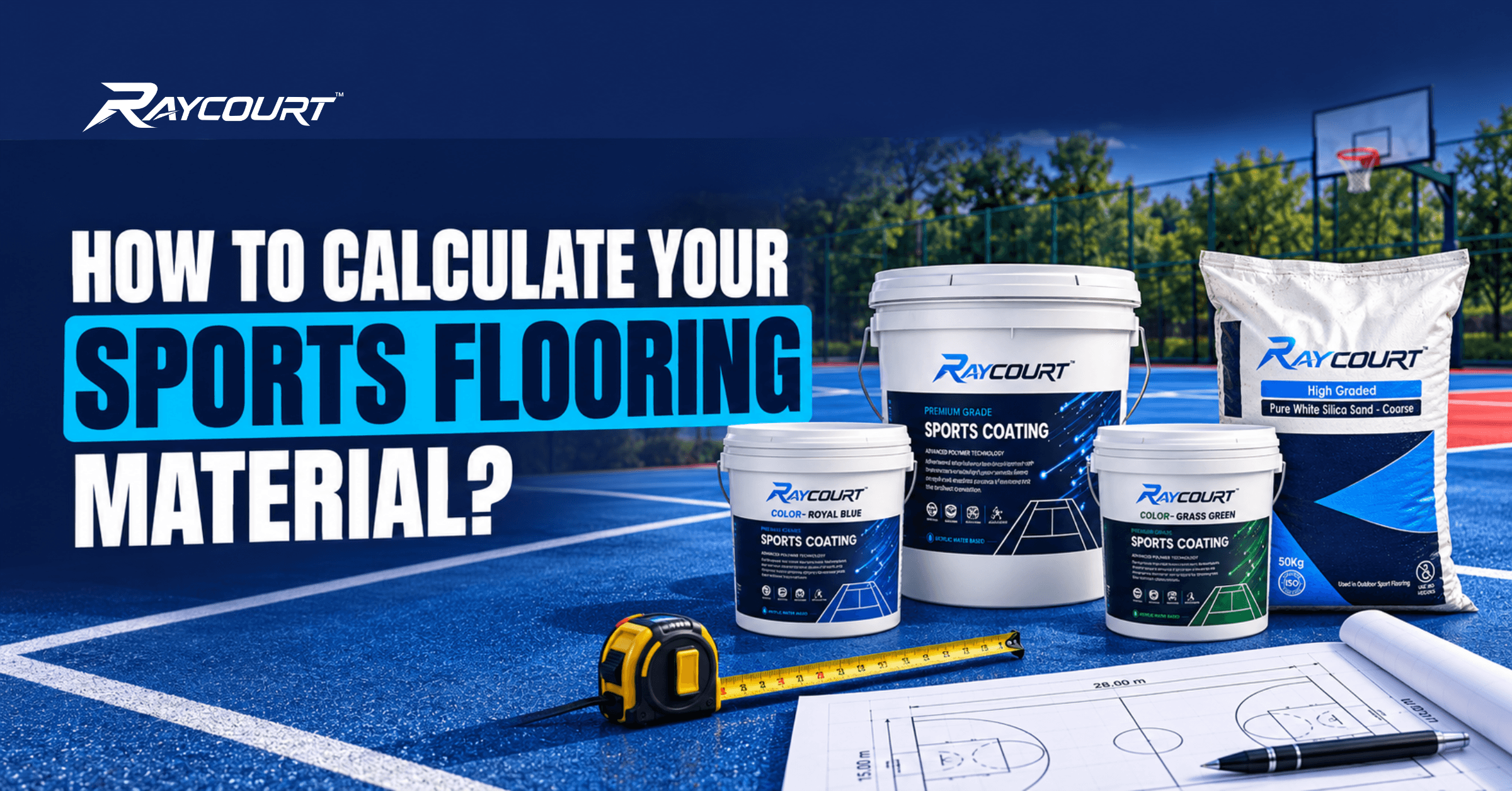
The easiest way to calculate your sports flooring material is the Raycourt Material Calculator. You enter your court details, choose your system and get an instant material estimate. There is no need for long spreadsheets, coverage tables or manual arithmetic.
Traditionally, contractors worked out quantities by hand for every layer. They multiplied areas by coverage rates and coats, then checked the figures again and again. That process takes time and leaves room for mistakes that only show up on site. The Raycourt Material Calculator removes that burden in a few clicks.
In this guide, we explain why accurate material planning matters for every court. Then we show you how the calculator works, what it covers and who benefits most. We also share preparation tips, sport-by-sport guidance and expert advice. By the end, you will know exactly how to calculate your sports flooring material with confidence.
Why Accurate Material Planning Matters for Every Court
Every successful court starts with the right quantity of material on site. When you calculate your sports flooring material accurately, your project runs smoothly from the first coat to the final line. On the other hand, a poor estimate creates problems that ripple through the entire build.
Consider a few common scenarios. A contractor might run short of colour coat halfway through the final layer. A fresh batch could then show a slight shade difference on the finished court. Similarly, a short supply of resurfacer can leave the base uneven under the colour coats. Meanwhile, a large over-order leaves unused material sitting in storage for months.
Accurate planning protects three things on every project:
- Surface quality: Each layer receives the right film build for performance and durability.
- Colour consistency: You can order matching batches together and keep the court uniform.
- Project timelines: Your contractor works continuously without waiting for extra deliveries.
Furthermore, a reliable estimate helps everyone involved plan ahead. Project owners can schedule deliveries and storage space. Contractors can plan their crews and application days. Architects can finalise specifications with clear figures in hand.
This is exactly why Raycourt created a dedicated material calculator. It gives every stakeholder the same reliable starting point. As a result, conversations about the project become clearer, faster and far more productive.
Expert Tip: Treat your material estimate as a core project document. Share it early with your contractor, architect and supplier so everyone works from the same numbers.
The Challenge of Calculating Sports Flooring Material by Hand
Before tools like the Raycourt Material Calculator, most teams relied on manual methods. Those methods work, but they demand time, technical knowledge and careful attention. Let us look at why manual calculation often feels complicated.
Multiple Layers, Multiple Calculations
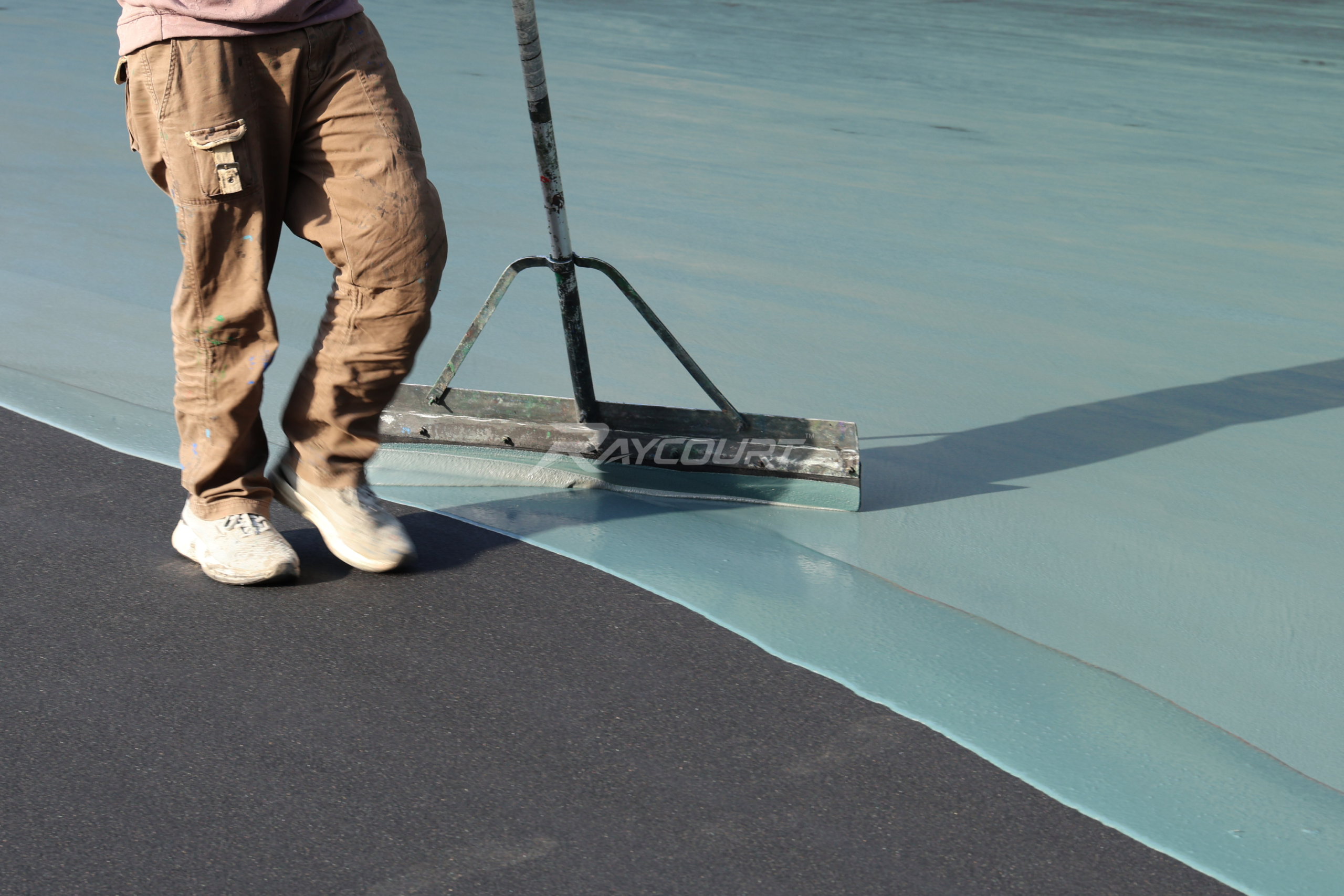
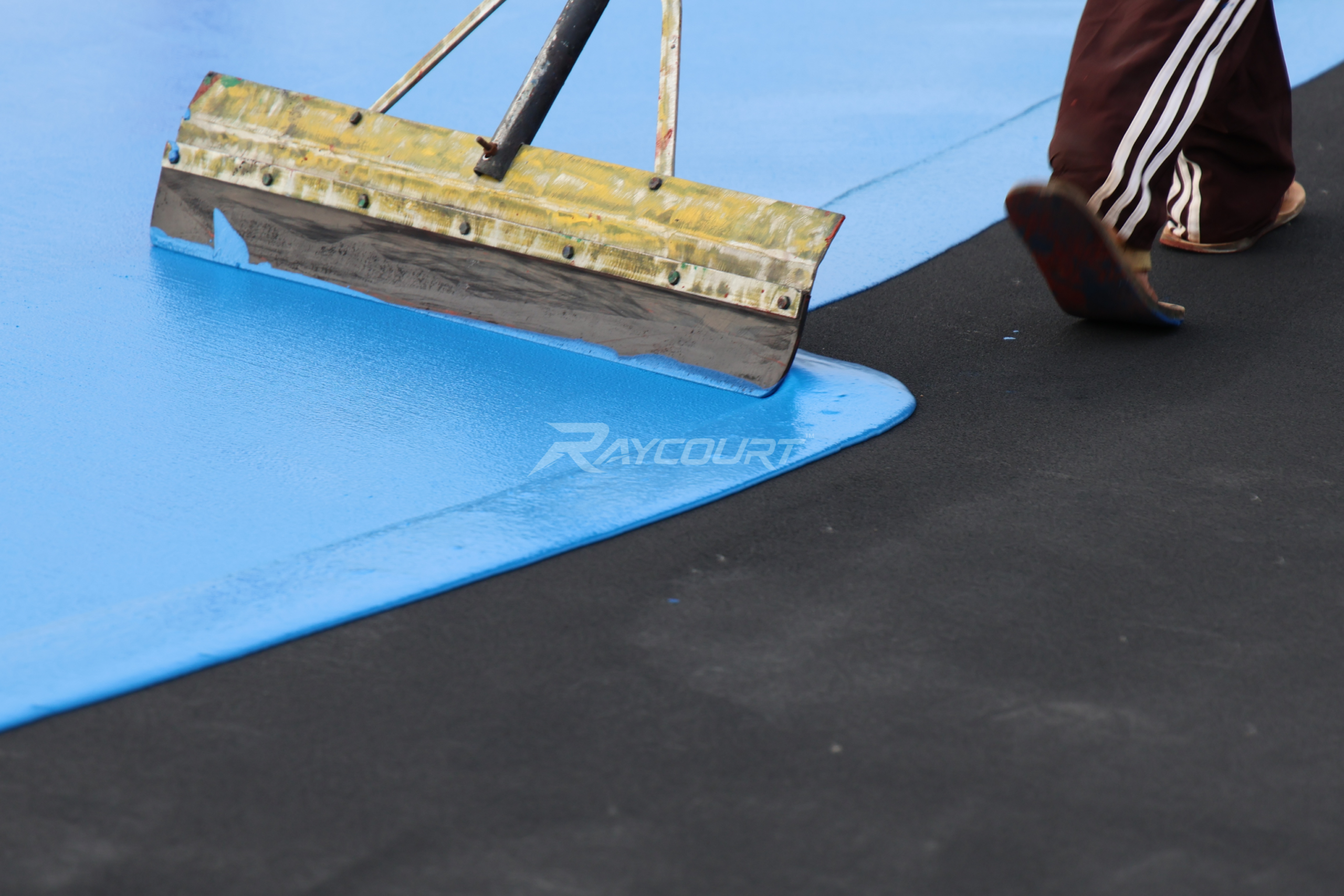
A synthetic acrylic court is not a single coat of paint. Instead, it consists of several thin layers, each with its own job. A typical system may include a primer, resurfacer, cushion coats, colour coats and line marking. Each product has its own consumption rate and coat count. Therefore, a manual estimate needs a separate calculation for every single layer.
Coverage Rates and Mixing Ratios
Every product comes with its own technical data. Some layers mix with water on site, while others take silica sand as well. Reading these figures correctly takes experience. Moreover, a small misunderstanding can push your total far above or below the real requirement.
Different Sports, Different Layouts
Each sport brings its own court dimensions and safety zones. A tennis court needs generous space behind the baselines. A basketball court needs clear space beyond the side and end lines. Consequently, the coated area changes from sport to sport, and so does the material quantity.
Room for Human Error
Finally, manual sums leave space for simple mistakes. A misplaced decimal or a wrong unit can change a whole order. Even experienced contractors double-check their sheets for this reason.
The Raycourt Material Calculator brings all of these steps into one simple tool. You focus on your project details, and the calculator handles the arithmetic.
What Is the Raycourt Material Calculator?
The Raycourt Material Calculator is an online tool on the Raycourt website. It helps you estimate the quantity of flooring material your sports court needs. You will find it in the Court Toolkit section, alongside the Design A Court tool and the Raycourt brochure.
The calculator uses Raycourt’s own product consumption data. That means it reflects how our materials actually perform across a court surface. Because of this, the tool works specifically with Raycourt products. It gives you an estimate tailored to the Raycourt range rather than a generic industry figure.
Built Around Raycourt Products
Raycourt manufactures a complete range of synthetic acrylic court materials. The calculator draws on this range to build your estimate. Key products in the Raycourt system include the following:
| Raycourt Product | Role in the Court System |
|---|---|
| Seal Master | Seals and prepares the base surface |
| Base Refiner | Refines and evens out the base before coating |
| Concrete Primer | Bonds the system to a concrete base |
| Acrylic Resurfacer | Smooths the surface and fills fine texture |
| Proflex Cushion | Adds shock absorption and player comfort |
| Acrylic Colors | Provides the finished colour, texture and grip |
| White Line Marking | Marks playing lines for each sport |
| Silica Sand (Fine and Coarse) | Adds texture and fill to selected layers |
Designed for Real Projects
The calculator suits real-world planning, not just theory. Whether you plan a single residential court or a large multi-court facility, it gives you a fast starting point. You can then refine the estimate with your contractor and the Raycourt technical team.
Expert Tip: Bookmark the calculator page during your planning stage. You will likely run several scenarios before you finalise your court design.
Understanding the Products in Your Calculator Estimate
Your calculator estimate lists Raycourt products by their role in the court system. Knowing what each product does helps you read your results with confidence.
Base Preparation Products
Seal Master, Base Refiner and Concrete Primer prepare the foundation of your court. They help the coating system bond firmly to the base. They also create a stable, even surface for every layer above. A strong start here supports the long-term performance of the whole court.
Acrylic Resurfacer
Acrylic Resurfacer smooths minor surface irregularities and fills fine pores. It creates a tight, uniform base for the cushion or colour layers. On site, contractors typically mix it with water and silica sand.
Proflex Cushion
Proflex Cushion adds shock absorption and comfort underfoot. It reduces stress on players’ joints during long sessions. When your chosen layering system includes cushioning, this product forms a major part of your estimate.
Acrylic Colors
Acrylic Colors give your court its finished appearance and playing texture. They provide grip, colour and resistance to outdoor weather. Many courts use two colours, one for the playing area and one for the surround.
White Line Marking and Silica Sand
White Line Marking defines the playing zones for each sport. Silica sand, in fine and coarse grades, adds texture and fill to selected layers. Together, they complete the system and prepare the court for play.
Expert Tip: Read your estimate layer by layer, from base to lines. This order mirrors how your contractor will apply the system on site.
How to Calculate Your Sports Flooring Material with the Raycourt Calculator
Using the calculator feels simple, even if you have never planned a court before. The process takes only a few minutes once you have your court details ready. Follow these steps to calculate your sports flooring material quickly.
- Open the calculator: Visit the Raycourt Material Calculator page on the Raycourt website.
- Enter your court details: Add the information the form asks for, such as your sport and court dimensions.
- Select your layering system: Choose the Raycourt system that matches your performance needs.
- Calculate: Click the Calculate button to generate your material estimate.
- Review the results: Check the estimated quantity for each Raycourt product.
- Share and confirm: Send the results to your contractor and the Raycourt team for a final review.
Before You Start
A little preparation makes the calculator even more useful. First, measure your total court surface in metres. Next, decide which sport or sports the court will host. Then think about the level of comfort your players need. These three details shape your estimate more than anything else.
After You Get Your Results
Once the calculator shows your estimate, take a moment to review it. Compare it with your project drawings and confirm the court size. If anything looks unusual, simply adjust your inputs and run the calculation again. After that, share the results with your contractor so they can plan their work.
Expert Tip: Save a copy of every calculation you run. A clear record helps you compare options and explain your final choice to stakeholders.
Prepare Accurate Measurements Before You Use the Calculator
The calculator works with the details you provide. Therefore, accurate measurements lead to accurate estimates. This section helps you gather the right figures before you start.
Measure the Full Coated Surface
Many people make one key mistake at this stage. They measure only the marked playing area inside the lines. However, your contractor coats the entire surface, including run-off zones and surrounds. So, always measure the full area that will receive the coating system.
Simple Steps for a Rectangular Court
Most courts follow a simple rectangle. To measure one accurately, follow these steps:
- Measure the full length of the surface along both sides.
- Measure the full width at both ends.
- Compare the readings and note any difference.
- Use the average figures if the surface runs slightly out of square.
- Record each measurement to two decimal places.
Irregular and Combined Spaces
Some sites include odd shapes, curves or attached walkways. In these cases, break the space into simple shapes first. Then measure each shape separately and add the areas together. This approach gives the calculator a reliable total to work with.
Check the Base Condition
The base under your coating system matters too. A new, sound concrete or asphalt base gives the most predictable result. Meanwhile, an older base with cracks or low spots may need extra preparation. Ask your contractor to inspect the base before you finalise your order.
Expert Tip: Mark each measured area on a simple sketch. Your contractor and the Raycourt team can then check your figures in seconds.
Sports Covered by the Raycourt Material Calculator
Raycourt supplies flooring materials for a wide range of sports and recreational surfaces. Our range covers basketball, tennis, pickleball, badminton and volleyball courts. It also covers skating rinks, walking tracks and multi-purpose court flooring.
The table below lists common playing areas for popular sports. Use it as a helpful reference while you prepare your measurements. Always confirm final layouts with your project drawings and the relevant governing body.
| Sport | Standard Playing Area (m) | Typical Total Surface With Run-Off (m) |
|---|---|---|
| Basketball (FIBA) | 28 × 15 | 32 × 19 |
| Tennis (doubles) | 23.77 × 10.97 | 36.57 × 18.29 |
| Pickleball | 13.41 × 6.10 | 18.29 × 9.14 |
| Badminton (doubles) | 13.40 × 6.10 | Varies by venue |
| Volleyball | 18 × 9 | 24 × 15 |
Basketball Courts
A full FIBA basketball court measures 28 m by 15 m inside the lines. Most designers add clear space around the court for player safety. Many residential and school projects also use half-court layouts. In every case, measure the actual surface before you open the calculator.
Tennis Courts
A doubles tennis court measures 23.77 m by 10.97 m inside the lines. However, players need ample room behind the baselines and beside the sidelines. The ITF recommends a much larger total area for a single court. You can explore ITF surface standards on the ITF Classified Surfaces page.
Pickleball Courts
Pickleball continues to grow rapidly across India. A pickleball court measures 13.41 m by 6.10 m inside the lines. With recommended run-off space, most single courts use a larger surface. If you plan several courts side by side, measure the combined area.

More Surfaces You Can Plan with Raycourt Materials
Beyond the most popular court sports, Raycourt materials support several other surfaces. The calculator helps you plan these projects with the same ease.
Badminton and Volleyball Courts
Badminton courts measure 13.40 m by 6.10 m for doubles play. Outdoor and indoor venues vary widely in their surrounding space. Volleyball courts measure 18 m by 9 m, with a recommended free zone around them. For both sports, measure the actual site before you calculate quantities.
Skating Rinks
Skating rinks need a smooth, consistent and durable surface. Their shapes often differ from standard rectangular courts. Some rinks include curved ends or custom outlines. So, break the rink into simple shapes and measure each one carefully.
Walking Tracks
Walking tracks bring a different kind of layout. Instead of a rectangle, you deal with long, narrow paths and gentle curves. Measure the track length along its centre line and multiply by the track width. Then add any connecting paths or rest areas.
Multi-Purpose Courts
Multi-purpose courts host two or more sports on one surface. Start with the largest sport’s layout plus its run-off space. That usually sets your total coated area. Then check that every other sport fits within that space.
Expert Tip: For multi-purpose courts, plan your line colours early. Clear contrasts help players follow the right sport during busy sessions.
Calculate Your Sports Flooring Material in Minutes
Enter your court details, choose your Raycourt layering system and get an instant material estimate for every layer.
Choosing the Right Raycourt Layering System
Your layering system shapes both the playing experience and the material estimate. Raycourt offers 5, 6, 7, 8 and 9 layer systems to suit different projects. The calculator lets you match your estimate to the system you choose.
What Layering Means for Your Court
Each layer in a synthetic acrylic system performs a specific job. Base layers prepare and bond the surface. Cushion layers add comfort and shock absorption. Colour layers deliver the finished look, grip and UV resistance. Finally, line marking defines the playing zones.
As you move up the range, systems typically add more build-up and comfort. Consequently, they also need more material in total. The calculator reflects this difference, so you can see how each choice affects your order.
Matching the System to Your Players
Think carefully about who will use the court and how often. For example, a busy academy court faces long daily sessions and heavy footwork. A residential court may see lighter, occasional use. Similarly, a school court needs durability for many young players.
Questions to ask before you choose a system:
- How many hours per day will players use the court?
- Do players need extra comfort for long training sessions?
- Will the court host one sport or several sports?
- Does the site sit outdoors under strong sun and rain?
Compare Options Side by Side
One of the calculator’s biggest advantages is speed. You can run an estimate for one system, then run another for a different system. This makes comparison easy and helps you make an informed decision.
Expert Tip: If you feel unsure about which system suits your court, contact the Raycourt team. Our technical experts can recommend a build-up based on your sport and site.
Raycourt Calculator Versus Manual Calculation
Many contractors still calculate court materials by hand. Manual methods certainly work, yet they take far more effort. The table below shows how the Raycourt Material Calculator compares with a traditional manual approach.
| Factor | Manual Calculation | Raycourt Material Calculator |
|---|---|---|
| Speed | Slow, layer by layer | Fast, results in moments |
| Technical knowledge | Requires coverage and mixing expertise | Requires only basic court details |
| Risk of arithmetic errors | Higher, especially with decimals and units | Lower, the tool handles the maths |
| Product-specific data | Depends on reading data sheets correctly | Built on Raycourt consumption data |
| Comparing systems | Requires repeating every calculation | Run a new scenario in seconds |
| Consistency across team members | Varies from person to person | Same method every time |
Why the Calculator Wins on Consistency
Consistency matters more than many people realise. When two team members calculate by hand, they often reach slightly different figures. They might choose different coverage values or round numbers differently. The calculator removes that variation. Everyone gets the same result from the same inputs.
Where Manual Knowledge Still Helps
The calculator does the heavy lifting, but your project knowledge still matters. You know your site, your players and your schedule best. So, use the calculator for fast and reliable estimates. Then combine those figures with your contractor’s on-site experience.
Key Benefits of Using the Raycourt Material Calculator
The Raycourt Material Calculator offers practical benefits for every type of project. Here are the advantages that matter most.
Saves Valuable Planning Time
Manual estimates can take hours, especially for multi-court facilities. In contrast, the calculator delivers an estimate in moments. That frees your team to focus on design, scheduling and site preparation.
Reduces Ordering Errors
Shortages and over-orders both disrupt a project. The calculator helps you avoid both by giving a reliable estimate from the start. As a result, your contractor can work through each stage without interruption.
Supports Colour Consistency
Accurate estimates help you order all colour material together. Ordering together keeps your court surface uniform from end to end. Conversely, scattered top-up orders can lead to visible shade differences.
Makes System Comparison Simple
You can test different layering systems within minutes. This helps you balance comfort, durability and project goals with confidence.
Improves Communication Across Teams
A clear calculator estimate gives everyone a shared reference point. Project owners, architects and contractors can discuss the same figures. Consequently, decisions happen faster and with fewer misunderstandings.
Backed by a Trusted Manufacturer
The calculator draws on data from Raycourt, a manufacturer with years of experience. Our ITF Classified systems reflect consistent quality and reliable performance. So, you can trust the foundation behind every estimate.
Who Should Use the Raycourt Material Calculator?
The calculator serves anyone involved in planning a sports surface. Each user group gains something different from it.
| User | How the Calculator Helps |
|---|---|
| Installation contractors | Plan orders, crews and application days with clear figures |
| Architects and consultants | Add reliable material quantities to project specifications |
| Schools and colleges | Plan new or refurbished courts for students with confidence |
| Sports academies and clubs | Compare systems for high-use training courts |
| Residential communities | Plan rooftop, clubhouse or garden courts with ease |
| Facility managers | Plan resurfacing and upgrades for existing courts |
Installation Contractors
Raycourt manufactures materials and does not install courts. Instead, we work alongside skilled installation contractors across India. For these contractors, the calculator speeds up project and order planning. It also helps them confirm quantities before they mobilise a crew.
Project Owners and Stakeholders
Many project owners have little technical background in court surfaces. The calculator gives them a clear view of what their project needs. Moreover, it helps them ask better questions during planning meetings.
Architects and Consultants
Architects often prepare specifications long before construction begins. The calculator helps them include realistic material figures early. That way, the project moves from drawing board to site with fewer surprises.
Calculate Your Sports Flooring Material in Minutes
Enter your court details, choose your Raycourt layering system and get an instant material estimate for every layer.
Tips to Get the Most Accurate Estimate from the Calculator
The calculator gives reliable results when you feed it reliable details. These practical tips help you get the best possible estimate.
Include Every Coated Area
Remember to include run-off zones, surrounds and any connected areas. If your contractor will coat a walkway or apron, include that too. Leaving out these areas is the most common reason for short orders.
Confirm Your Sport and Layout
Check your final court layout before you enter any details. A late change from a half court to a full court changes everything. So, lock your design first, then run the calculator.
Pick the Right System for Your Use
Choose a layering system that matches real player needs. An under-specified system may wear faster under heavy use. Meanwhile, an over-specified system may add build-up your players do not need.
Run More Than One Scenario
Try several options before you decide. For example, compare two layering systems or two court layouts. This approach shows you how each choice affects your material needs.
Talk to Your Contractor
Your contractor understands the site conditions better than anyone. They can spot base issues, drainage needs or access limits. Share your calculator results with them and agree on the final plan together.
Contact Raycourt for Complex Projects
Some projects involve unusual shapes, multiple sports or special requirements. In these cases, our technical team can review your plan with you. Simply share your calculator results and project drawings when you get in touch.
Expert Tip: Use the Design A Court tool alongside the calculator. Planning your colours and layout first makes your material estimate even more precise.
Common Mistakes to Avoid When You Calculate Sports Flooring Material
Even with a smart tool, a few simple mistakes can affect your estimate. Avoid these, and your plan will stay on track.
Mistake 1: Measuring Only Inside the Lines
The playing lines show only part of the surface. Your contractor coats the full area, including safety zones. Always measure the complete surface before you use the calculator.
Mistake 2: Choosing a System Without Considering Use
A system that suits a quiet residential court may not suit a busy academy. Think about usage, comfort and climate before you select a system.
Mistake 3: Ignoring the Base Condition
A damaged or uneven base can affect how the system performs. Inspect the base first and plan any repairs with your contractor.
Mistake 4: Using Calculator Results with Other Brands
The calculator relies on Raycourt product consumption data. Therefore, its results apply specifically to Raycourt materials. Other brands use different formulations and will not match these figures.
Mistake 5: Skipping a Final Review
A quick review catches small input errors before they affect your order. Share your results with your contractor and the Raycourt team before you confirm.
Mistake 6: Ordering Colour Material in Separate Batches
Separate orders can create shade differences on the finished court. Instead, order all colour material for the project together.
From Calculator Results to a Confident Material Order
Once you have your estimate, the next step is turning it into a smooth order. This stage connects your plan with real delivery and site work.
Review the Estimate with Your Team
First, sit down with your contractor and review each product figure. Check that the court size, sport and system all match your final design. If needed, adjust your inputs and run the calculator again.
Connect with Raycourt
Next, share your final estimate with the Raycourt team. Our experts can confirm your product selection and answer technical questions. We also guide you on colours, layering systems and product compatibility.
Plan Delivery and Storage
Raycourt’s new warehouse in Vadodara helps us dispatch materials quickly across Gujarat and neighbouring states. Even so, plan deliveries so materials arrive shortly before each stage of work. Keep acrylic products away from direct sunlight and extreme heat on site.
Keep Your Records
Finally, save your calculator results with your project documents. They become a useful reference for future resurfacing and maintenance. When the time comes to refresh your court, you will already have a strong starting point.
Expert Tip: Label every pack on arrival with its layer and intended use. This simple habit keeps the site organised and prevents mix-ups during application.
Where the Calculator Fits in Your Court Project Timeline
The calculator adds value at several points in a project, not just once. Understanding these moments helps you get the most from it.
- Feasibility stage: Run a quick estimate to understand the scale of material your idea needs.
- Design stage: Compare layering systems and layouts as your court design takes shape.
- Specification stage: Add confirmed material figures to drawings and project documents.
- Pre-order stage: Recheck the estimate against final measurements before you place an order.
- Maintenance stage: Plan future resurfacing using your saved calculations as a reference.
Early Estimates Shape Better Decisions
At the feasibility stage, you may only have rough dimensions. Even so, a quick estimate gives you a sense of scale. It helps you discuss storage, delivery and scheduling from the very beginning.
Final Estimates Keep the Site Running
Later, at the pre-order stage, precision matters most. By then, your layout and system choice should feel final. Therefore, measure the site once more and run a fresh calculation. This final figure becomes the basis of your material order.
Expert Tip: Run the calculator again whenever your design changes. Even a small change in court size or system can shift your material needs.
Using the Calculator for Resurfacing and Court Upgrades
New courts are not the only projects that benefit from the calculator. Many facilities refresh or upgrade existing courts after years of play. The calculator helps these projects too.
Planning a Resurfacing Project
Over time, outdoor courts face sun, rain and heavy footwork. Colour fades, texture wears and lines lose their sharpness. A resurfacing project restores the court’s look and playing quality. Before you start, measure the full surface and discuss its condition with your contractor. Then use the calculator to plan the Raycourt materials your refresh needs.
Upgrading to a Cushioned System
Some facilities want more comfort for their players. For example, an academy may switch from a hard court to a cushioned build-up. In that case, compare your current system with a higher Raycourt layering system. The calculator shows you how the upgrade changes your material requirement.
Converting to a Multi-Purpose Court
Other facilities want one surface to host more sports. A tennis court might add pickleball lines, for instance. Similarly, a basketball court might add badminton or volleyball markings. Plan the new layout first, then use the calculator to confirm your material needs.
Calculate Your Sports Flooring Material in Minutes
Enter your court details, choose your Raycourt layering system and get an instant material estimate for every layer.
Planning Scenarios Where the Calculator Makes a Difference
Every court project is unique, yet some planning situations appear again and again. Here is how the calculator supports a few typical scenarios.
A School Multi-Sport Court
A school may want one outdoor court for basketball, volleyball and badminton. The planning team measures the full surface, including safety zones. Next, they choose a durable layering system for daily student use. The calculator then gives a clear material estimate for the whole surface.
A Rooftop Pickleball Court
A residential community may plan a pickleball court on a clubhouse roof. Space feels tight, so accurate measurement becomes essential. The team measures the usable area and selects a comfortable system. Afterwards, they share the calculator results with their contractor to plan deliveries.
An Academy Tennis Facility
A tennis academy may plan several courts for long daily training sessions. Player comfort ranks high, so the team considers a higher layering system. They run estimates for two systems and compare the results. Finally, they confirm their choice with the Raycourt technical team.
Why Trust Raycourt Materials for Your Court?
A calculator is only as good as the products behind it. Raycourt brings years of experience in manufacturing synthetic acrylic sports court flooring materials. Our focus stays firmly on product quality, technical support and reliable supply.
ITF Classified Surface Systems
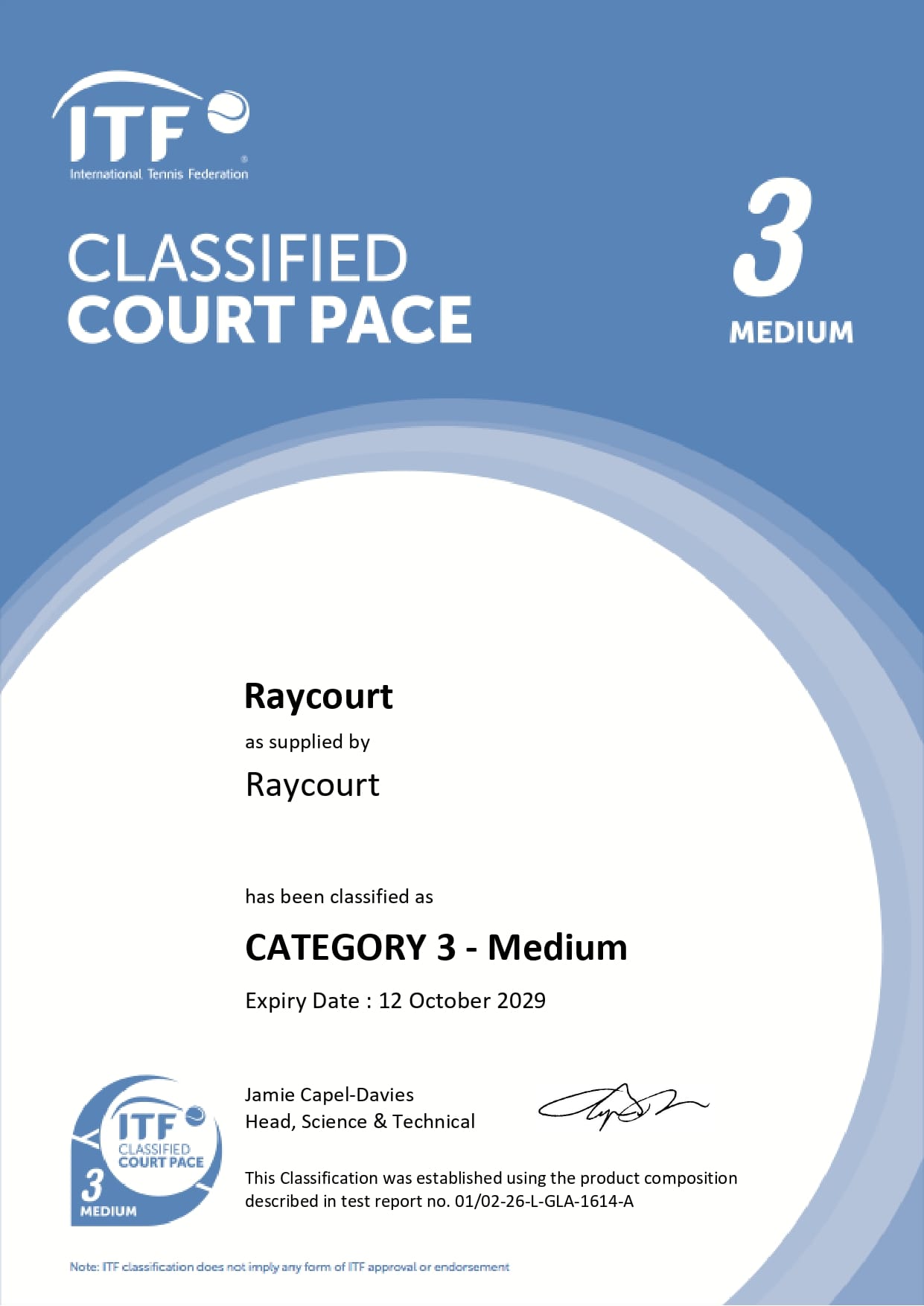
Raycourt holds ITF Classification for its surface systems. This recognition reflects consistent quality and reliable playing characteristics. For tennis projects in particular, it gives owners added confidence in surface performance.
A Complete Product Range
From Seal Master and Concrete Primer to Proflex Cushion and Acrylic Colors, Raycourt covers every layer. Because one manufacturer supplies the full system, every product works together as intended. That compatibility supports durable, high-performing courts.
Technical Guidance at Every Stage
Our team supports project owners, architects and contractors throughout the planning stage. We help you select the right system and understand your material needs. Meanwhile, your chosen contractor handles installation on site.
Practical Tools for Better Planning
Raycourt’s Court Toolkit brings planning resources together in one place. Alongside the Material Calculator, you can use Design A Court to visualise colours and layouts. You can also download the Raycourt brochure for detailed product information.
Frequently Asked Questions
The easiest way is the Raycourt Material Calculator on the Raycourt website. You enter your court details, choose a layering system and click Calculate. The tool then estimates the material your court needs. It saves time and removes the need for manual arithmetic.
No, the calculator works specifically with Raycourt products. It uses Raycourt’s own product consumption data to build each estimate. Other brands use different formulations, so their quantities will differ. For accurate results, use the calculator only for Raycourt materials.
Raycourt materials support basketball, tennis, pickleball, badminton and volleyball courts. They also support skating rinks, walking tracks and multi-purpose courts. Simply measure your surface and enter the details the calculator asks for. Then review the estimate for your chosen system.
No, Raycourt manufactures sports court flooring materials and does not install courts. Your chosen installation contractor applies the system on site. However, our technical team supports you and your contractor throughout the planning stage. We also help you confirm your final material selection.
Conclusion: Calculate Your Sports Flooring Material the Smart Way
Calculating your sports flooring material no longer needs long spreadsheets or complex formulas. The Raycourt Material Calculator turns a technical task into a quick, simple process. You enter your court details, choose your system and receive a reliable estimate.
Along the way, a little preparation makes a big difference. Measure the full coated surface, confirm your layout and choose a system that suits your players. Then share your results with your contractor and the Raycourt team.
With an accurate estimate in hand, your project moves forward with confidence. Your court receives the right materials, consistent colour and lasting performance. That is exactly what every player, coach and facility manager deserves.
Calculate Your Sports Flooring Material in Minutes
Enter your court details, choose your Raycourt layering system and get an instant material estimate for every layer.